Mt. Akagi, located in the Gunma, stands as a prominent volcanic mountain with Kurobi Peak as its highest point at 1,828 m (5,997 ft).
This stratovolcano, is a geological wonder characterized by a large caldera, dating back to its last major eruption approximately 31,000 years ago! Which is probably why it has earned itself the title of being one of the “Three Famous Mountains of Jomo“.
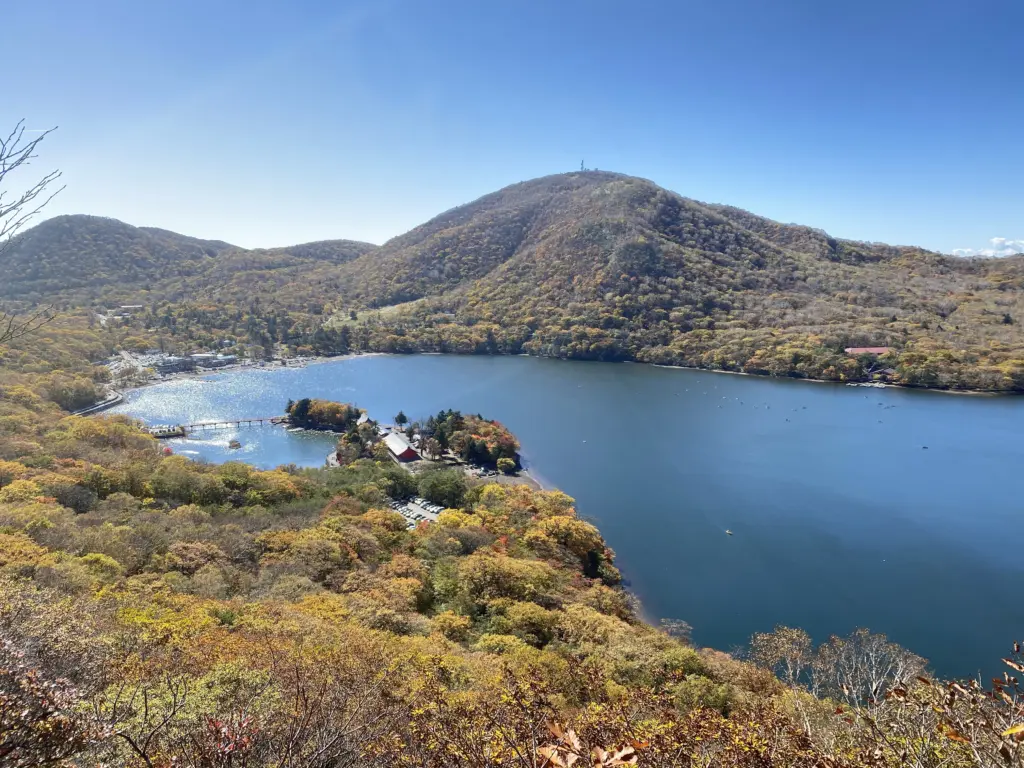
The mountain’s diverse terrain offers a variety of hiking opportunities. The most notable feature within its caldera is Lake Onuma, a crater lake that presents a picturesque setting.
Mt. Akagi is not just a natural attraction though, it’s also a cultural one. The mountain is dotted with several Shinto shrines, including the Akagi Shrine, found after crossing a beautiful red bridge by the river.
For those seeking more challenging treks, the ascent to Kurobi Peak provides steep and rugged paths which you will learn more about in this hiking guide.
Table of Contents
Toggle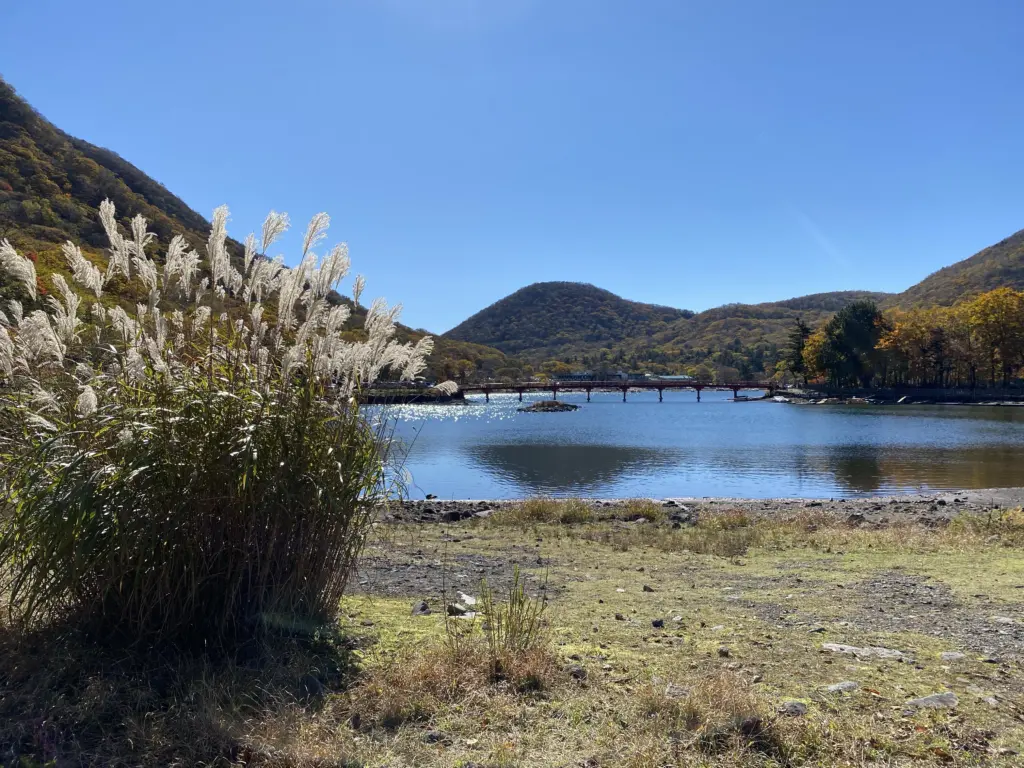
How to Get to the Mt. Akagi
Getting to Mt. Akagi from Tokyo involves a combination of train and bus travel, as there’s no direct train service to the mountain itself. Here’s a guide on how to reach Mt. Akagi from Tokyo:
Start by taking a JR train from Tokyo to Maebashi Station using the JR Shonan-Shinjuku Line or JR Takasaki Line, taking about 1.5 to 2 hours. Train cost is approximately 1,980 JPY one way. A more budget-friendly option is using the Seishun 18 ticket, making the roundtrip JPY 2,410.
From Maebashi Station, take a Kan-etsu Kotsu Bus towards Mt. Akagi, it’s about another hour’s journey to the Akagi Visitor Center. The bus fare is 1,500 JPY one way.
For those preferring more flexibility, renting a car in Tokyo or at Maebashi/Takasaki Station is another option. Driving to Mt. Akagi gives you the freedom to explore the mountain and surrounding areas at your own pace.
Nearby Areas of Interest
Akagi Shrine
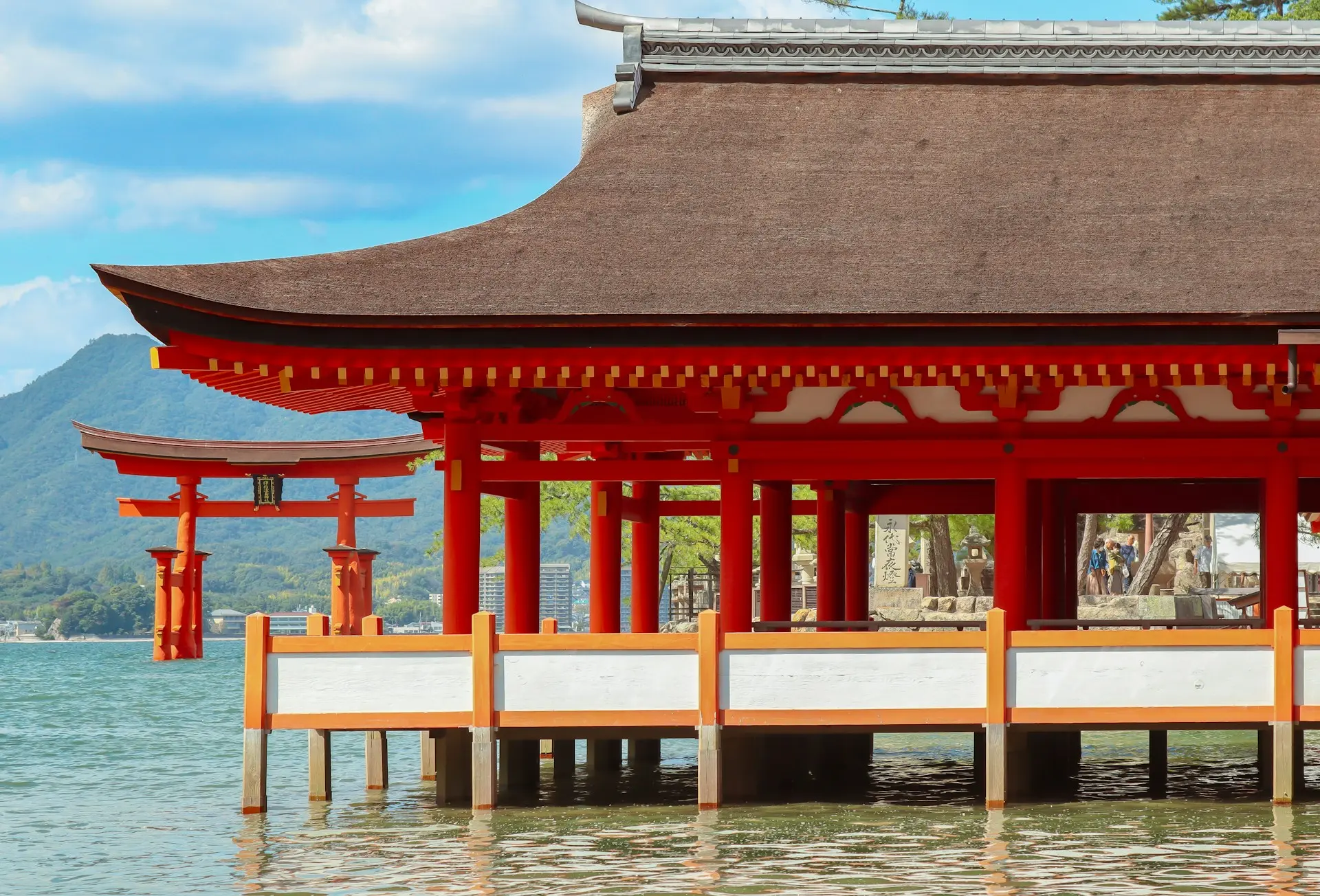
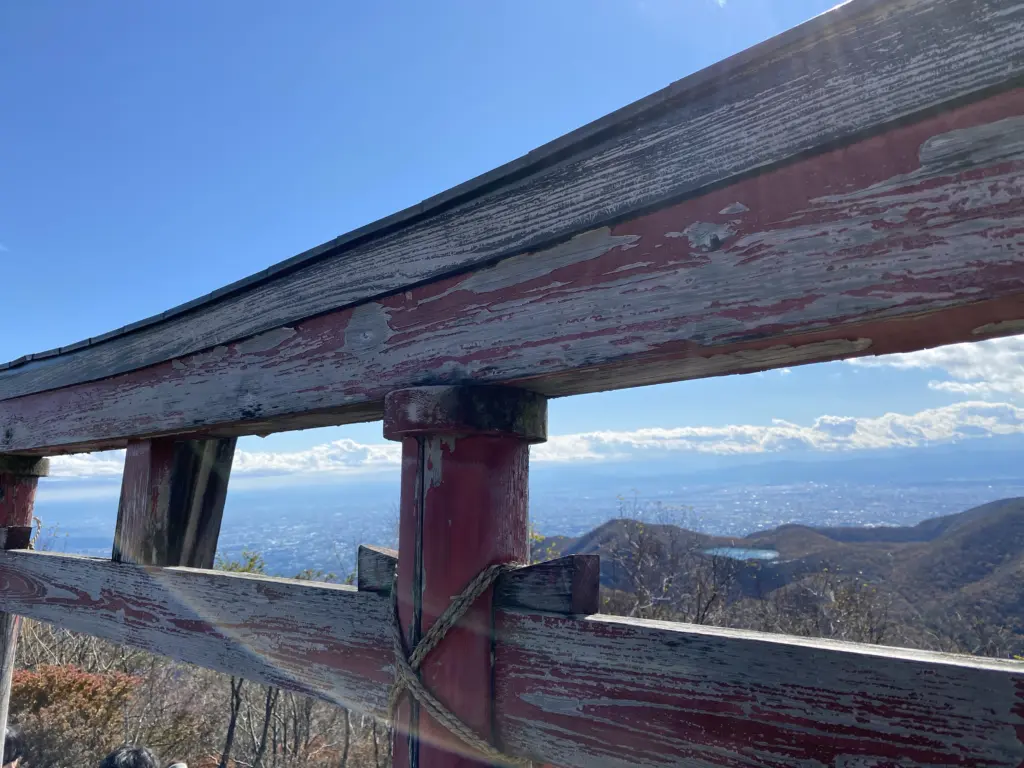
The Akagi-jinja Shrine, resplendent in its vermilion color, is beautifully situated on a half-island at the edge of Lake Onuma. This striking contrast of the red shrine against the deep blue lake offers a breathtaking sight.
The shrine is dedicated to Akagi Daimyojin, considered the deity of the lake.
Throughout the year, Akagi-jinja Shrine becomes the center of various cultural festivities. One of the notable events is the summer festival held in August. This festival is particularly famous for its horseback archery, a traditional Japanese martial art known as Yabusame.
Additionally, the festival includes a serene evening ceremony, where floating lanterns are placed on the lake.
Kakumanbuchi Marsh
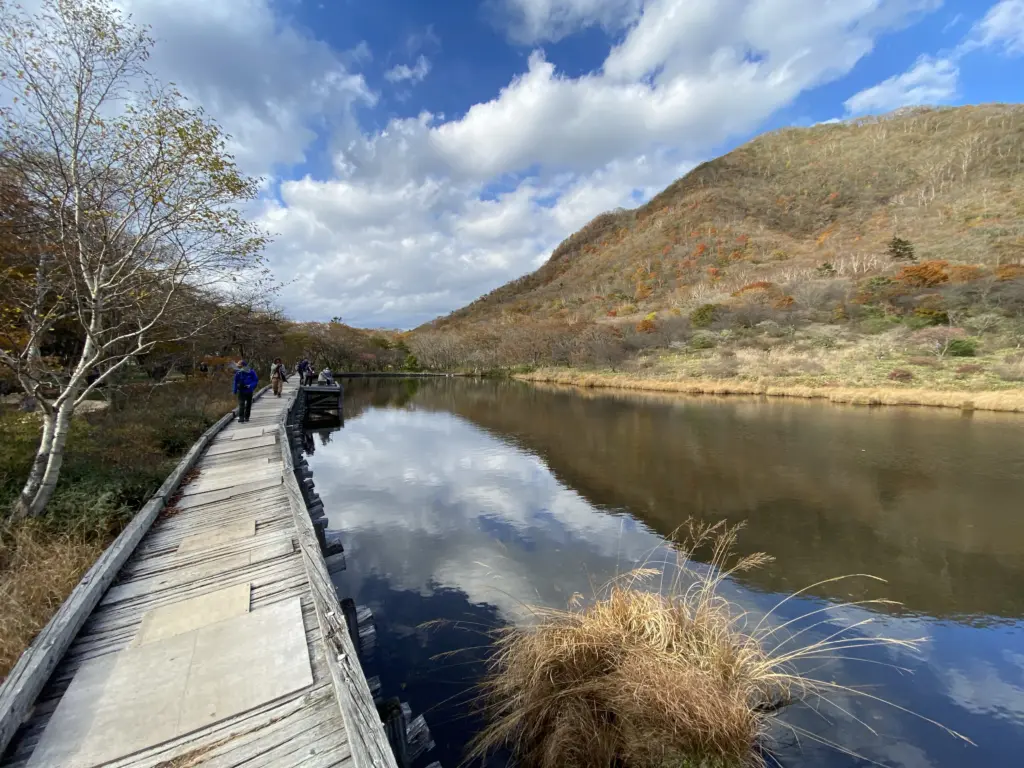
Kakumanbuchi Marsh is a picturesque marshland with a circumference of about 800 meters. This small marsh is a treasure trove of hydrophytes and alpine plants, making it a unique ecological spot.
The marsh is sometimes referred to as “Little Oze” due to its natural beauty and similar vegetation to the famous Oze National Park. There is a boardwalk around the Kakumanbuchi pool, allowing for a casual 30-minute stroll that is ideal for observing the marsh’s unique plant life and tranquil surroundings.
The best times to visit Kakumanbuchi are March for the skunk cabbage, May for the fresh greenery, June for the Japanese azalea, and mid-October for the autumn leaves.
In winter, it is covered with snow, transforming into a white landscape.
What to Know About Mt. Akagi
Difficulty
Departing from the Akagi Visitors Center, the climbing route on Mount Akagi takes you on a journey to Mt. Kurobi, the highest peak of Mt. Akagi, known for its multiple peaks.
This trail follows the road on the east side of Lake Onuma and leads to Mt. Kurobi, and from there, you’ll return to the starting point via Mt. Komagatake.
Mt. Kurobi stands at a height of 1,828 m (5,997 ft), with the hiking route involving an elevation gain of approximately 530 m (1,739 ft). All in all, the hike itself is very beginner friendly.
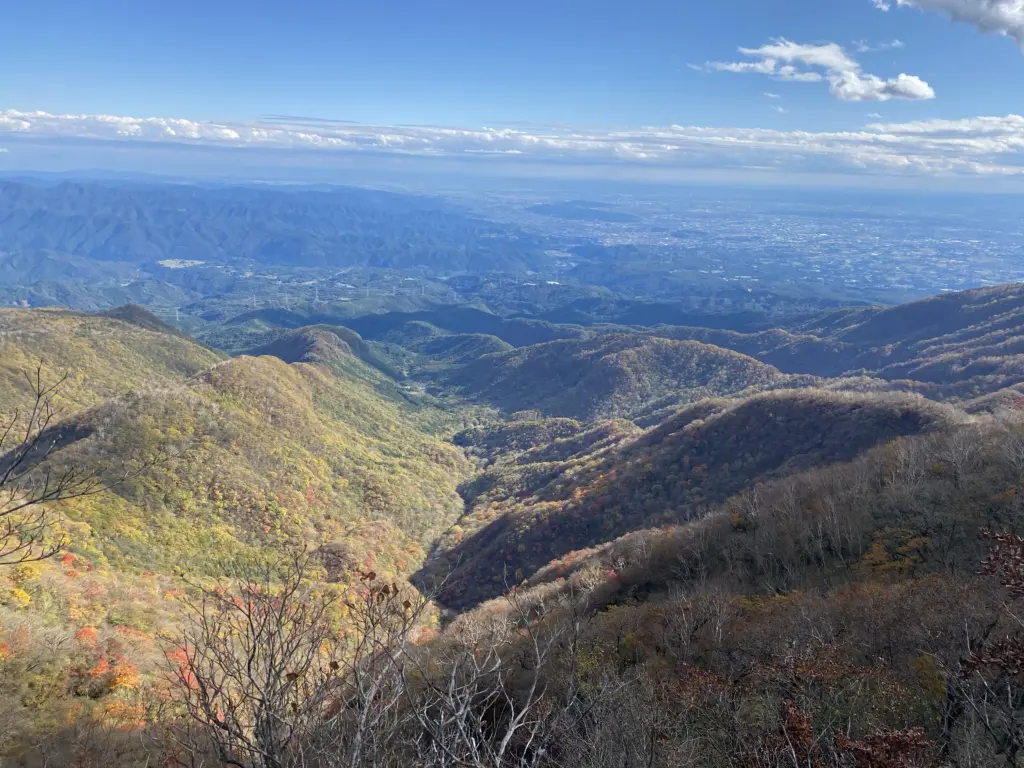
After the first few steep ascents, it starts to flatten out for a long duration so you’ll get to enjoy amazing panoramic views of Mt. Tanigawa and the Oku-Nikko Mountains, without feeling too tired.
It’s important to note the presence of black bears in the entire mountain range of Mt. Akagi. They are particularly active in spring after hibernation and in late autumn as they prepare for hibernation.
Distance
The trek spans a distance of approximately 7 km (4.3 mi). Along the way, you can enjoy the scenic beauty surrounding Lake Onuma, the lush greenery of the mountain forests, and the panoramic vistas from the summit of Mt. Kurobi.
The trail’s length is suitable for a day hike, making it an excellent choice for those looking for a fulfilling outdoor experience without the commitment of a more extended trek.
Duration
For us, the hike took around 4.5 hours.
These 4.5 hours also included the visit to Akagi Shrine with plenty of picture taking and snacks in between the shrine to the summit.
After the hike we then proceeded to Kakumanbuchi Marsh which took another 30 – 45 minutes to go around the whole circumference, we spent a lot of time just sitting by the benches and taking even more photos as this place really was beautiful.
The Mt. Akagi Hike
- Distance: 7 km (4.3 mi)
- Time: 4.5 hours (including Akagi Shrine and Kakumanbuchi Marsh)
- Difficulty: Easy to Moderate
- Summit: 1,828 m (5,997 ft)
- Best Time to Go: Most famous for autumn colors, rightly so. The earlier the better though it’s difficult if you’re coming from Tokyo.
- Crowds: Crowds tend to pick up after 10:00AM, enough to form lines during the hike.
- GPS & Map: Mt. Akagi
Mt. Akagi Hiking Experience
Kanya, a friend from Indonesia, invited me to go hiking with Ogura-sensei. Ogura-sensei is somewhat of a legendary figure from Osaka. A kind-hearted professor who often treats or pays for half of the expenses of exchange students in Japan for various outdoor activities.
It was perfect as it was something that I had been meaning to do especially during autumn. We met up at the train station and went off to Gunma where Ogura-sensei was waiting for us. He was an avid mountain hiker but also a very kind soul, he pays for the hiking expenses of students who are interested in going hiking with him out of his own pocket.
The same applied to me even though I wasn’t even a student.
He didn’t want to wait for the bus as there was a long line so he opted to go for a taxi which was really expensive but we didn’t have to pay anything. We arrived near the trailhead and went near the river and saw a lot of koi fish and ducks swimming about.
There was a famous red bridge leading up to a Shinto shrine where we offered our prayers before climbing.

The hike itself was very easy, though Kanya seemed to have a harder time. There were a lot of people since it was peak autumn period and sometimes there were even lines, a lot of boulders to scale up on but nothing too difficult.
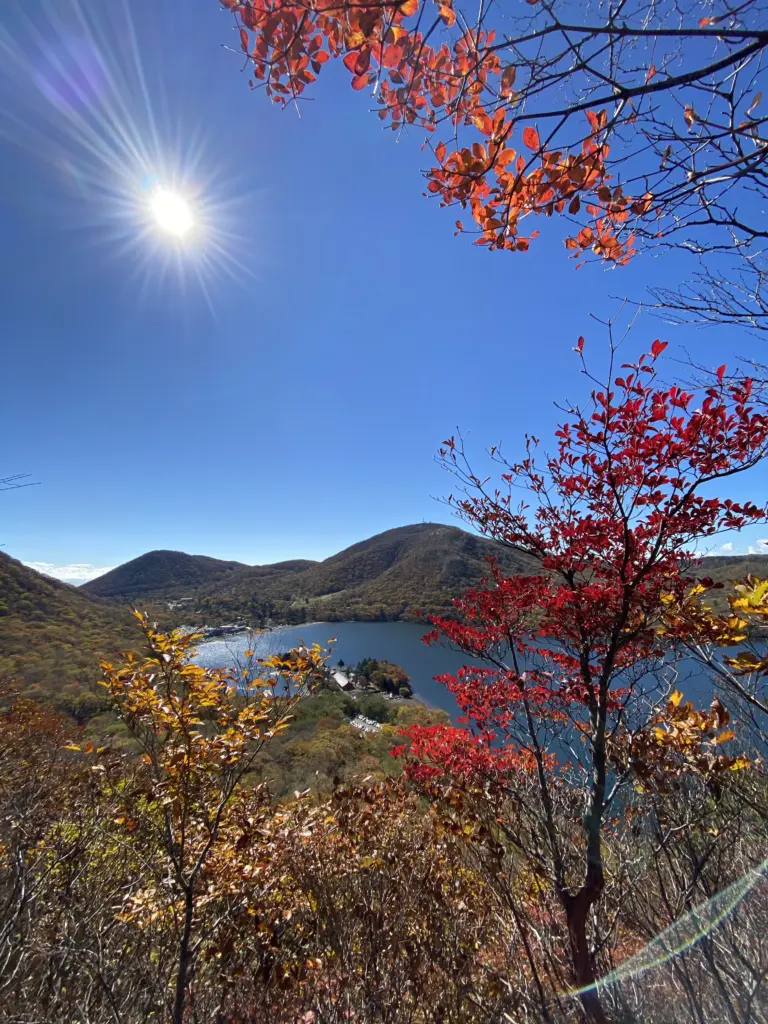
We had some snacks along the way, checking out various view points with stunning visas of brown and yellow trees extending all the way as far as the eye can see.
We also got to see one of the lakes on top of the other side of the mountain. The trail became easier as we got higher, we even saw a pampas grass field!
When we finally go to the summit, we had some more stuff to eat and enjoyed the view before starting the way back down. Downhill always has a bit more added pressure on the knees, my legs were wobbly but we zigzagged all the way back down.
Sensei and I wanted to go to another hike up toward the lake but Kanya was already too pooped so we decided to go to the nearby marshlands instead.
Definitely a better choice walking around the wooden boardwalk, nice views of the mountain and trees. A bit chilly as the sun started to go down.
We got on a bus going to an onsen which is always the perfect idea after a hike. Getting to soak at the outdoor baths while watching the sunset, really felt good. It reminded me of Kusatsu which was also in Gunma Prefecture.
Sensei even treated us to dinner before Kanya and I headed back to Tokyo.
Plan Your Trip to Gunma | Best Travel Resources
Book Your Accommodations
- Booking.com – the world’s leading online booking platform for accomodations around the world, they have an extensive amount of available listings with zero booking fees and best price guarantees.
- Hostelworld – a backpacker’s best friend, Hostelworld has the largest collection of hostels and guesthouses for affordable prices.
Don’t Forget Insurance
- SafetyWing – from Nomad Insurance, an insurance by nomads for nomads. They understand our lifestyle well and have really comprehensive and flexible plans that cater to any traveler.
Find Cheap Flights
- Kiwi.com – my go-to for booking and finding the cheapest flights and it’s helped me save tons of money. They do virtual interlining which is connecting flights from airlines that do not codeshare, so you can find routes that you wouldn’t be able to find normally.
Join Tours & Activities
- GetYourGuide – is one of the best places to find unique tours and activities. I found that it’s an excellent way to meet fellow travelers and create fond memories. They are not only limited to tours as they also offer niche services such as skip-the-line tickets or private transfers.
Catch a Ride
- Rentalcars.com – nothing beats the freedom of the road, Rentalcars.com is the world’s largest online car rental service. They operate across 160 countries so they’re the perfect partner to work with if you find yourself wanting a ride.