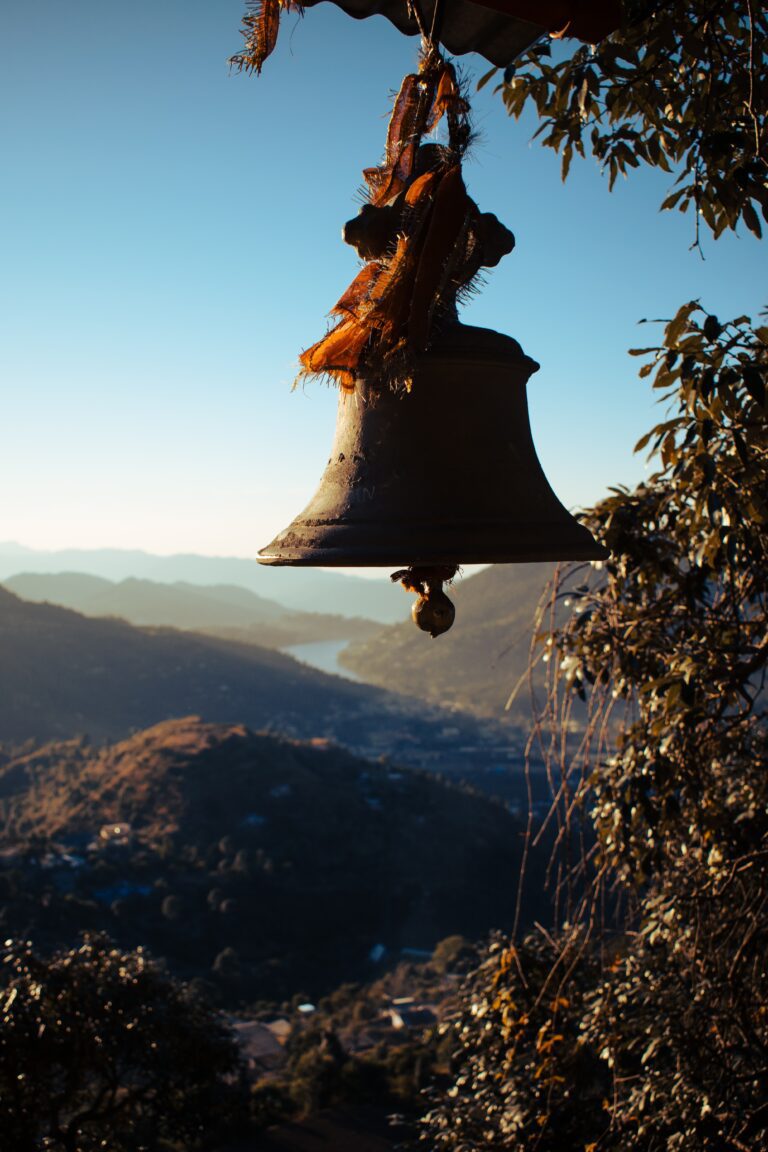
Vienna.
The City of Music.
The kind of place that feels like it was designed for daydreaming—where grand architecture meets the melody of a street violinist, and where every cafe whispers stories of poets, composers, and revolutionaries. It’s elegant without trying, steeped in history without feeling stuck in the past. You don’t just visit Vienna; you sink into it.
This is a city that knows how to take its time. Mornings are for slow sips of coffee in chandelier-lit cafes. Afternoons for wandering through palatial streets, where Mozart and Beethoven once walked. Evenings? Well, they belong to music—the kind that seeps from concert halls, candlelit taverns, and the occasional opera house.
Vienna has a way of drawing you in. So take a deep breath, let the rhythm of the city guide you, and get ready to fall under its spell.
Table of Contents
Toggle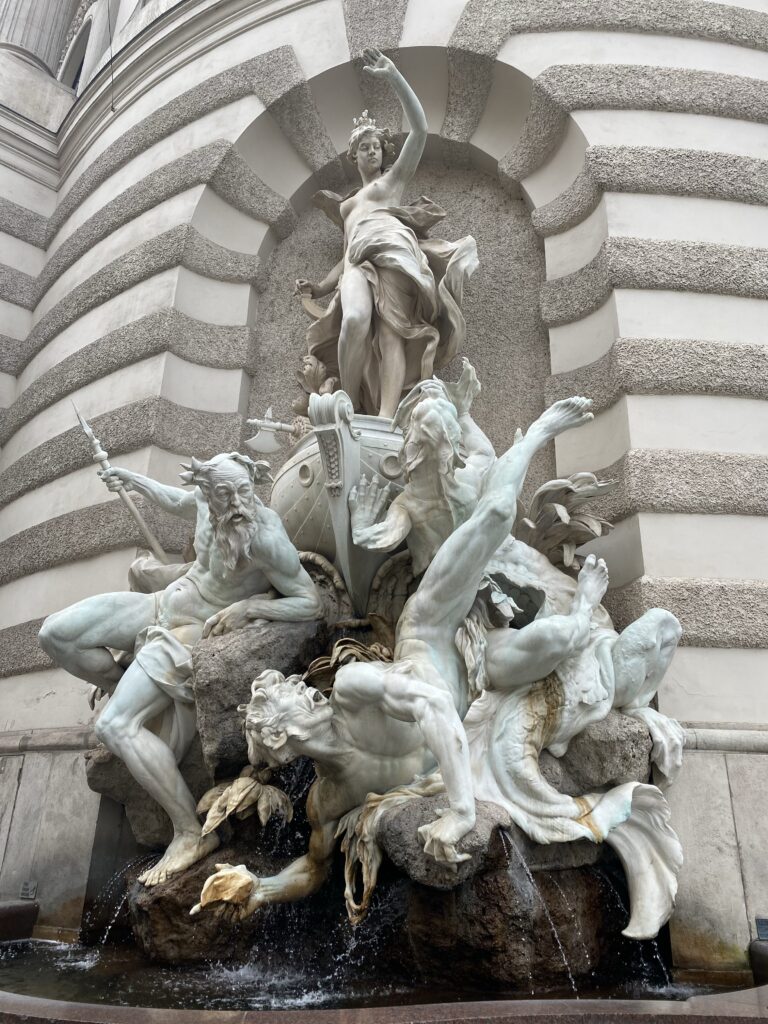
History of Vienna
Once the seat of the powerful Habsburg Empire, this city spent centuries shaping the fate of Europe. From medieval markets to imperial grandeur, from war-torn struggles to modern elegance, Vienna has seen it all—and somehow, it has always emerged with its grace intact.
The city’s story stretches back to Roman times, when it was a military outpost called Vindobona. But it wasn’t until the Middle Ages that Vienna started to gain real importance, eventually becoming the capital of the Habsburg dynasty in the 13th century. For nearly 600 years, the Habsburgs ruled vast swaths of Europe from their seat in Vienna, transforming the city into a political and cultural powerhouse.
By the 18th and 19th centuries, Vienna had become the undisputed capital of art, music, and intellectual thought. This was the golden age of composers like Mozart, Beethoven, and Schubert, whose symphonies still echo through the city today. Meanwhile, coffeehouses buzzed with the theories of Freud, the philosophy of Wittgenstein, and the political debates that would eventually shape modern Europe.
The 20th century brought darker times—Vienna was at the heart of World War I’s aftermath, saw the rise of fascism, and endured Nazi occupation during World War II. But like it always has, the city rebuilt, reinvented, and refined itself. The palaces and opera houses remain, but so do innovative art scenes, contemporary architecture, and a standard of living that regularly ranks among the highest in the world.
Top Things to Do in Vienna
1. Visit Hofburg
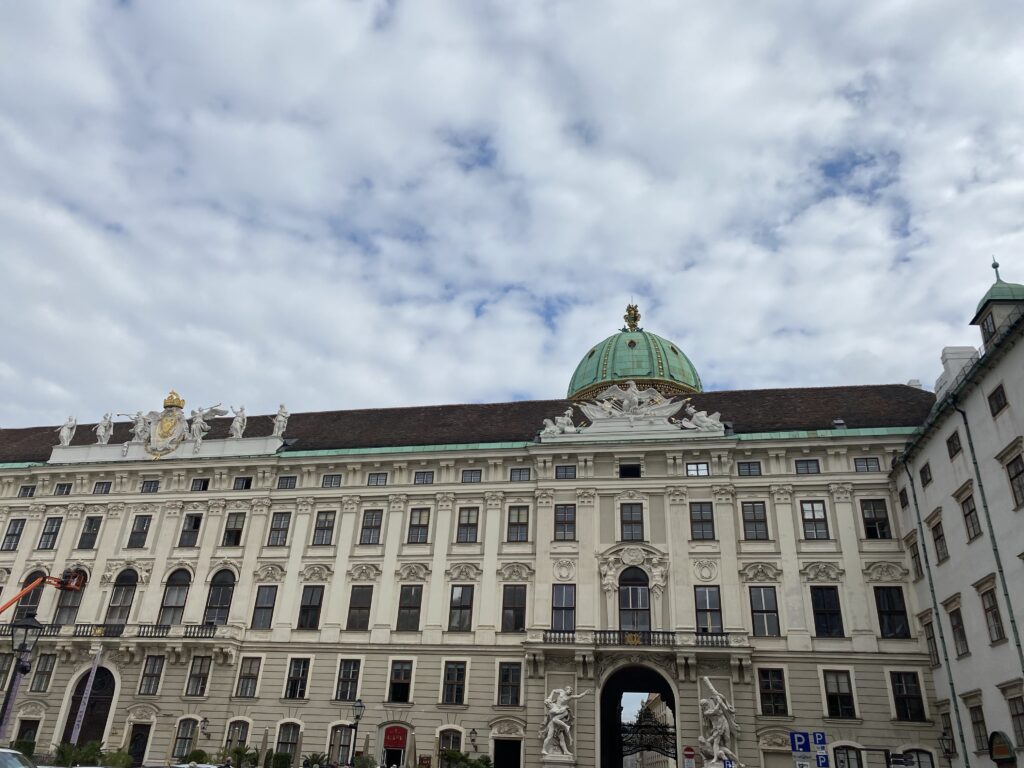
If Vienna had a beating heart, it would be the Hofburg. This sprawling palace complex isn’t just a historic site—it’s a statement. A declaration of power, elegance, and the kind of imperial grandeur that makes you wonder if you were born in the wrong century. For over 600 years, this was the epicenter of the Habsburg dynasty, where emperors ruled, diplomats schemed, and history was written behind opulent walls.
Today, the Hofburg is a time capsule of Austria’s imperial past, but it’s also very much alive. You can stroll through its ornate halls and imagine what it must have been like when the empire was at its peak. Highlights? The Imperial Apartments, where Emperor Franz Joseph and his famously tragic wife, Empress Elisabeth (better known as Sisi), once lived. If you want to dive deeper into Sisi’s fascinating, slightly rebellious life, the Sisi Museum is a must.
Then there’s the Spanish Riding School, where you can witness the world-famous Lipizzaner horses performing their almost balletic movements—a tradition that’s been passed down for centuries. And let’s not forget the Austrian National Library, possibly one of the most beautiful libraries in the world, with towering bookcases, frescoed ceilings, and enough old-world charm to make any book lover swoon.
2. Drop by the Vienna State Opera House
As the City of Music, the Vienna State Opera House (Wiener Staatsoper) is its grandest stage. This isn’t just an opera house—it’s the opera house. A temple to the art of music, where some of history’s greatest composers—Mozart, Mahler, Strauss—once conducted their masterpieces, and where world-class performances still take center stage almost every night.
The building itself is a masterpiece. Opened in 1869 with a performance of Don Giovanni, the opera house boasts a stunning Neo-Renaissance facade, opulent interiors, and a golden-lit auditorium that feels like stepping into another era. It’s the kind of place where chandeliers glisten, velvet seats cradle you in luxury, and the moment the orchestra starts playing, time stands still.
Even if opera isn’t your thing, you don’t need to be an aficionado to appreciate the sheer magic of this place. You can take a guided tour to admire its lavish decor and hear the behind-the-scenes stories—like how the original architects were so heavily criticized that one of them allegedly took his own life. Or, if you’re feeling fancy, snag a ticket to a performance. Surprisingly, standing-room tickets can go for as little as a few euros, meaning you can experience world-class opera for the price of a coffee.
3. Admire St. Charles Church
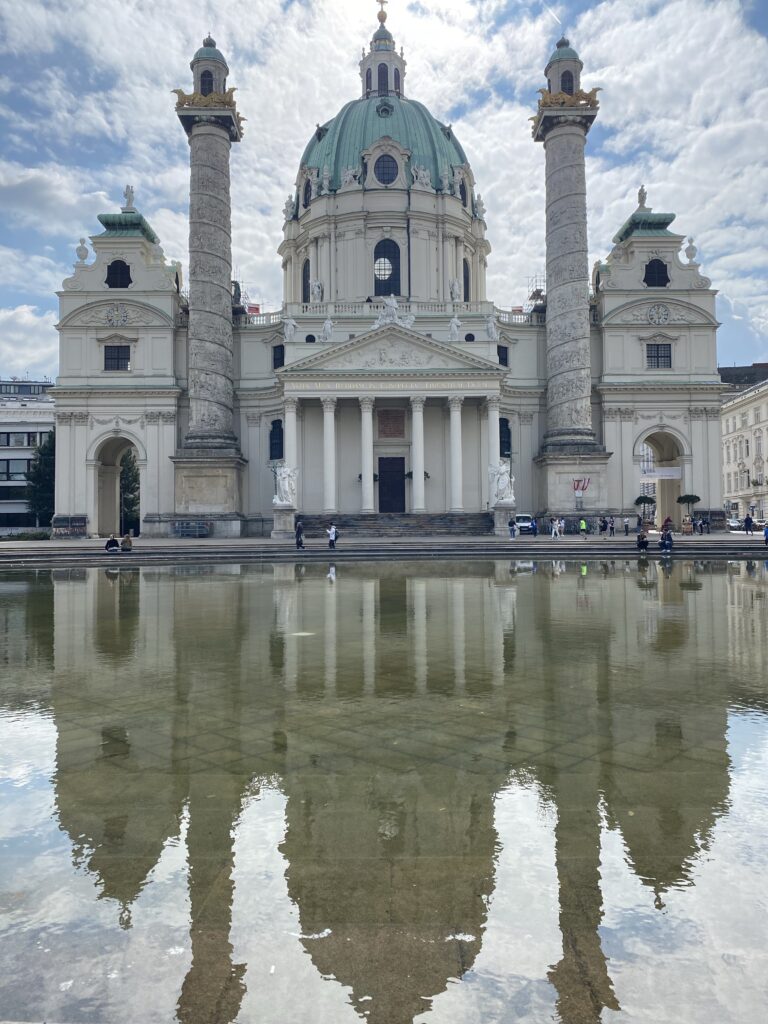
Vienna has no shortage of stunning churches, but St. Charles Church is something special. As a Catholic Church, its dramatic dome and massive columns are inspired by ancient Rome. With a reflection that shimmers in the pond in front of it, this baroque masterpiece stands out in a city full of architectural showstoppers. It’s grand, theatrical, and just a little over-the-top—in the best possible way.
Commissioned in 1713 by Emperor Charles VI, the church was built as a thank-you to Saint Charles Borromeo, who was believed to have helped end the plague that had recently devastated Vienna. And when the Habsburgs built something, they built something. The result? A dazzling fusion of Italian, Greek, and even Asian influences, all wrapped up in a church that looks like it belongs in an epic movie set.
But Karlskirche isn’t just beautiful from the outside—the real magic is inside. The fresco-covered dome is a masterpiece of illusion, painted to look even higher than it actually is. And thanks to a viewing platform (which you can reach by elevator—no grueling staircase here!), you can get right up to those frescoes, admiring the details in a way most churches don’t allow. It’s a rare chance to see baroque art from a perspective usually reserved for restorers or, well, angels.
And if you’re lucky, you might catch a classical concert here in the evening—because in Vienna, even a church doubles as a concert hall. Imagine listening to Vivaldi’s Four Seasons while surrounded by golden light and centuries-old frescoes. It’s the kind of moment that makes Vienna unforgettable.
4. Marvel at Rathaus
Rathaus, the city hall, might sound like just another government building, but don’t let the name fool you—this place is pure fairytale architecture. With its soaring towers, intricate Gothic details, and just the right amount of grandeur, it looks more like a castle than a municipal building. And in true Viennese fashion, it’s not just a place for bureaucracy—it’s a stage for some of the city’s most magical events.
Built in the late 19th century, the Rathaus was Vienna’s answer to the grand town halls of Europe. Its main tower, standing at 98 meters, is topped with the Rathausmann—a knightly figure keeping watch over the city. Inside, the grand halls are dripping with chandeliers and regal staircases, the kind of place where you can easily imagine emperors hosting lavish balls (and, well, they actually did).
But the best part? The Rathaus isn’t just for looking at—it’s for experiencing. Depending on when you visit, it transforms into something completely different. In winter, the entire square in front of it turns into the Vienna Christmas Market, where twinkling lights, mulled wine, and the scent of roasted chestnuts create a festive wonderland. In summer, it becomes an open-air cinema, hosting the Film Festival, where you can watch opera, ballet, and concerts under the stars. And if you visit in the right season, you might even catch Vienna Ice World, a massive skating rink that wraps around the building, making you feel like you’re gliding through a winter dream!
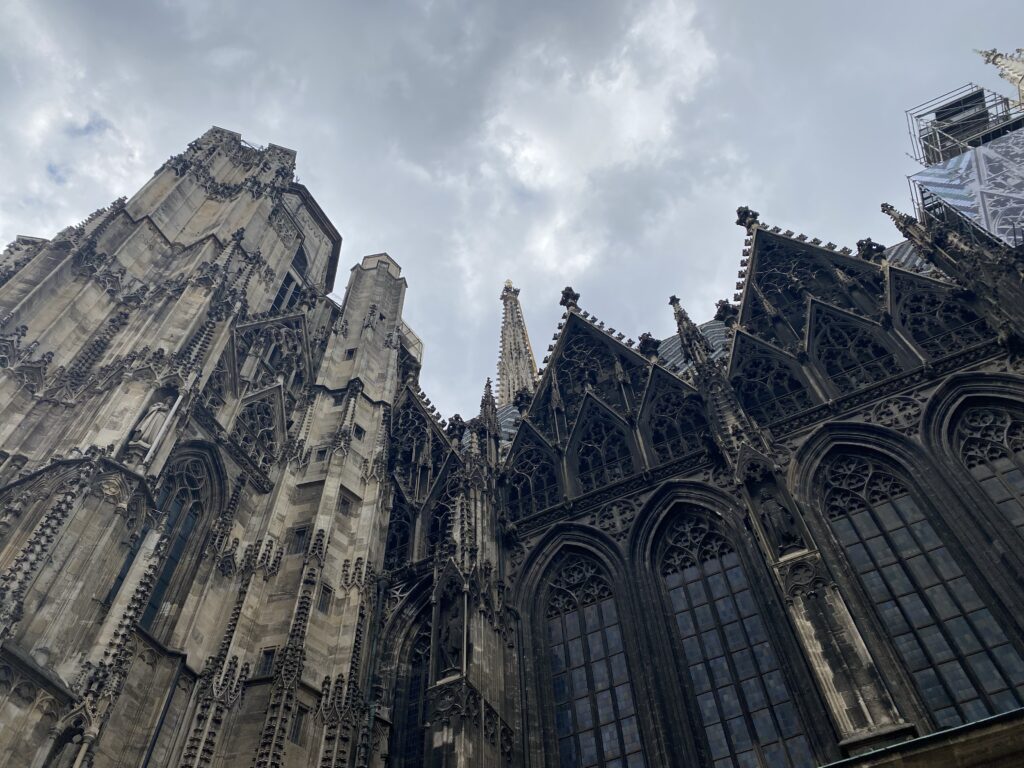
5. Look up St. Stephen's Cathedral
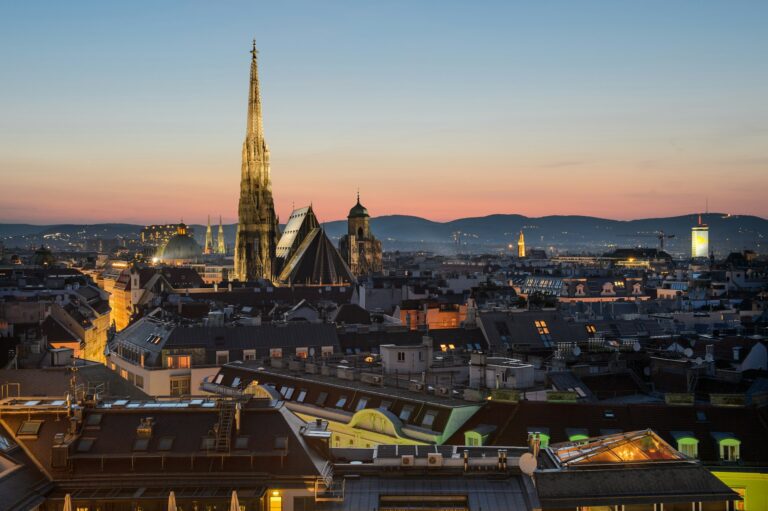
If Vienna had a skyline icon, it would be St. Stephen’s Cathedral. This gothic masterpiece dominates the heart of the city, its towering spire watching over Vienna like a silent guardian. With its intricate stone carvings, dazzling tiled roof, and a history that stretches back nearly 900 years, it’s not just a church—it’s the soul of Vienna.
Standing in front of it, you can’t help but feel small. The sheer scale of the cathedral is overwhelming, from the soaring 137-meter South Tower (which you can climb for a killer city view) to the detailed facade that looks like something straight out of a medieval fantasy. The roof alone is a work of art, covered in over 230,000 colorful tiles arranged in a striking zigzag pattern, including the Austrian eagle.
Inside, it’s just as breathtaking. Dim, atmospheric, and grand, with high-vaulted ceilings and intricate altars, the cathedral has witnessed coronations, royal weddings, and even the funeral of Mozart. Speaking of Mozart, rumor has it he composed parts of his Requiem here, making it a must-visit for music lovers.
If you’re feeling adventurous, head underground to the catacombs, where Habsburg royalty and former bishops are buried in eerie but fascinating crypts. Or, for a less spooky experience, climb the 343 steps of the South Tower for one of the best panoramic views in Vienna.
6. Experience Belvedere Palace
Vienna does palaces like no other, and Belvedere Palace is proof. A masterpiece of Baroque elegance, this place isn’t just a palace—it’s an experience. Picture sweeping gardens, dazzling halls, and enough grandeur to make you feel like Habsburg royalty (if only for an afternoon). And while the architecture alone is worth the visit, what’s inside is just as legendary.
Built in the early 18th century as a summer residence for Prince Eugene of Savoy (one of Austria’s greatest military minds), Belvedere is actually two palaces—the Upper Belvedere and the Lower Belvedere—connected by perfectly manicured gardens that feel straight out of a period drama. Strolling through them, you half expect to see ladies in powdered wigs gossiping under the fountains.
But the real showstopper? Gustav Klimt’s “The Kiss”. Housed inside the Upper Belvedere, this golden, shimmering masterpiece is arguably Austria’s most famous painting, and seeing it in person is a moment in itself. Alongside Klimt, the museum boasts an impressive collection of works from Schiele, Monet, and other greats, making it one of Europe’s best art museums.
If you have time, the Lower Belvedere offers a peek into the lavish life of Prince Eugene, with ornate salons, grand halls, and rotating exhibitions. But honestly, whether you come for the art, the architecture, or just to wander the palace gardens with a coffee in hand, Belvedere Palace is one of those places that makes you pause and soak in just how effortlessly beautiful Vienna really is.
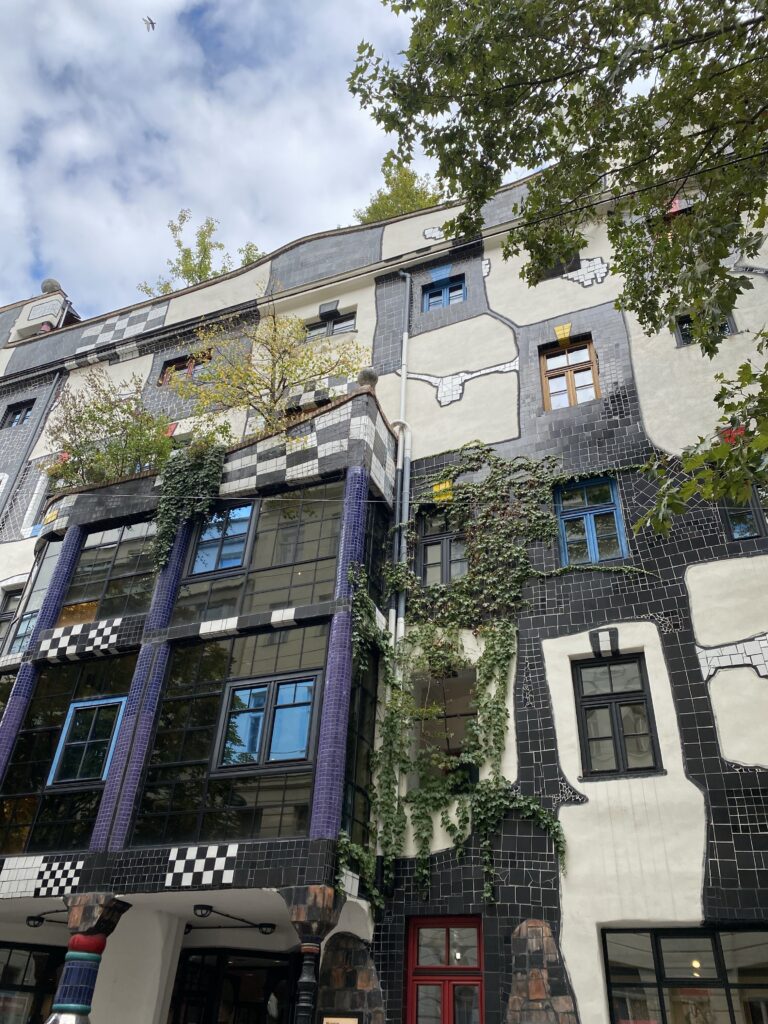
7. Enjoy Hundertwasserhaus
Vienna is full of imperial grandeur, but then there’s Hundertwasserhaus—the city’s rebellious, colorful, and wonderfully weird side. Imagine a building where straight lines are banned, trees grow out of windows, and the walls ripple with vibrant mosaics. It looks more like something out of a fairytale than an apartment complex, but that’s exactly what makes it one of Vienna’s most unique landmarks.
Designed by Austrian artist and architect Friedensreich Hundertwasser, this place is a middle finger to boring, uniform city planning. Built in the 1980s, it was Hundertwasser’s way of proving that architecture could be playful, organic, and in harmony with nature. The result? A whimsical, dreamlike building with curved floors (no, they’re not level on purpose), bright, uneven facades, and greenery growing wherever it pleases. Over 200 trees and shrubs sprout from balconies and rooftops, turning the structure into a living, breathing work of art.
The catch? You can’t go inside—it’s a residential building, and people actually live there (imagine waking up every day in what feels like a real-life painting). But don’t worry, just across the street is the Kunst Haus Wien, a museum dedicated to Hundertwasser’s work, where you can explore his philosophy, art, and more of his signature wavy, colorful designs.
Hundertwasserhaus isn’t just a cool photo spot—it’s a reminder that cities don’t have to be grey and rigid. They can be alive, wild, and a little bit eccentric. And in a city as refined as Vienna, that contrast makes it even more special.
8. Learn More at MuseumsQuartier
Vienna loves its art, and nowhere is that more obvious than MuseumsQuartier (MQ)—a massive cultural playground where classical and contemporary art collide in the most stylish way possible. Set in a former imperial stables complex (because in Vienna, even horse stables were ridiculously elegant), MQ is now one of the largest arts and culture districts in the world. But don’t let the word museum fool you—this place isn’t just about quietly admiring paintings. It’s where Vienna’s creative energy comes to life.
Once you step inside, you’ll find a mix of world-class museums, quirky galleries, outdoor spaces, and buzzing cafes. If you’re into old masters and classic elegance, head to the Leopold Museum, home to one of the best collections of Austrian modern art, including the works of Egon Schiele and Gustav Klimt. Prefer your art a little more experimental? The MUMOK (Museum of Modern Art) is a brutalist concrete cube packed with contemporary and avant-garde pieces that challenge everything you thought you knew about art.
But MQ is more than just its museums. The entire space is designed for people to hang out, relax, and just soak in the atmosphere. In the summer, the open courtyards fill with colorful lounge chairs where locals sip Aperol Spritz, chat with friends, and enjoy live performances. In the winter, the whole area transforms into a cozy wonderland, complete with heated igloos and twinkling lights.
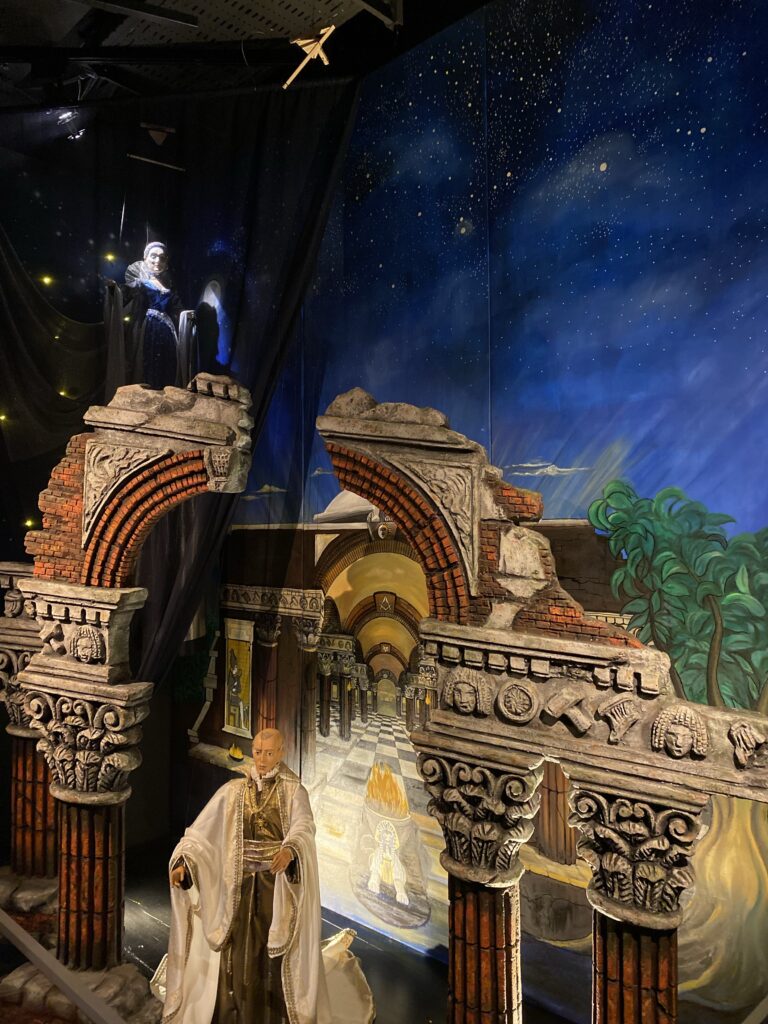
9. Immerse at Museum of Sound
If you’ve ever wanted to see sound, touch music, or conduct an orchestra without years of training, the Museum of Sound is your kind of place. Unlike Vienna’s more traditional museums, this one is playful, interactive, and all about experiencing music in ways you never thought possible.
Tucked away in a historic building near the Vienna State Opera, the Haus der Musik is where science meets art, and where sound becomes something you can explore with all your senses. Spread across multiple floors, the museum dives into everything from the physics of sound to the lives of Vienna’s greatest composers.
One moment, you’re inside a giant ear, learning how sound waves travel. The next, you’re standing on the Stairplay, a staircase that turns every step into a different note, making your climb a musical composition. Want to take it up a notch? Try the Virtual Conductor, where you can step up, wave your hands, and lead the world-famous Vienna Philharmonic Orchestra. If you’re too slow, they’ll speed up. If you’re off-beat, they’ll let you know. No pressure!
And since this is Vienna, the museum naturally pays tribute to the legends—Mozart, Beethoven, Schubert, and the whole gang. You can dive into their stories, hear their compositions in immersive sound rooms, and even let a computer generate your own name into a personalized Mozart-style waltz.
10. Get Lavished at Schonbrunn Palace
Ready to see Vienna at its most imperial? Schönbrunn Palace is the place to go. Think Versailles, but make it Austrian—a golden-hued Baroque masterpiece surrounded by sprawling gardens, lavish fountains, and enough royal drama to fill a Netflix series. Once the summer residence of the Habsburgs, this palace is the ultimate symbol of their wealth, power, and frankly, their very extra lifestyle.
With 1,441 rooms, Schönbrunn isn’t just a palace—it’s a world of its own. Of course, you can’t visit them all (unless you’re secretly Habsburg royalty), but the Grand Tour lets you wander through some of the most jaw-dropping spaces, including the gilded Hall of Mirrors, where a six-year-old Mozart once performed for Empress Maria Theresa. Then there’s the Millions Room, named because its intricate rosewood panels were literally worth millions back in the day. And if you like your palaces with a side of gossip, Empress Elisabeth, Vienna’s most famous royal, spent much of her time here—although, by all accounts, she preferred horseback riding to palace life.
But Schönbrunn isn’t just about fancy interiors—the gardens are just as spectacular. You could spend hours strolling past sculpted hedges, hidden fountains, and flowerbeds so perfectly arranged they look like royal icing on a cake. At the very top of the hill sits the Gloriette, an elegant structure with a panoramic view over Vienna.
If you’re visiting with kids (or just feeling nostalgic), don’t miss the Schönbrunn Zoo—the oldest zoo in the world, originally built for the Habsburgs’ private animal collection. Yes, even their pets lived in luxury.
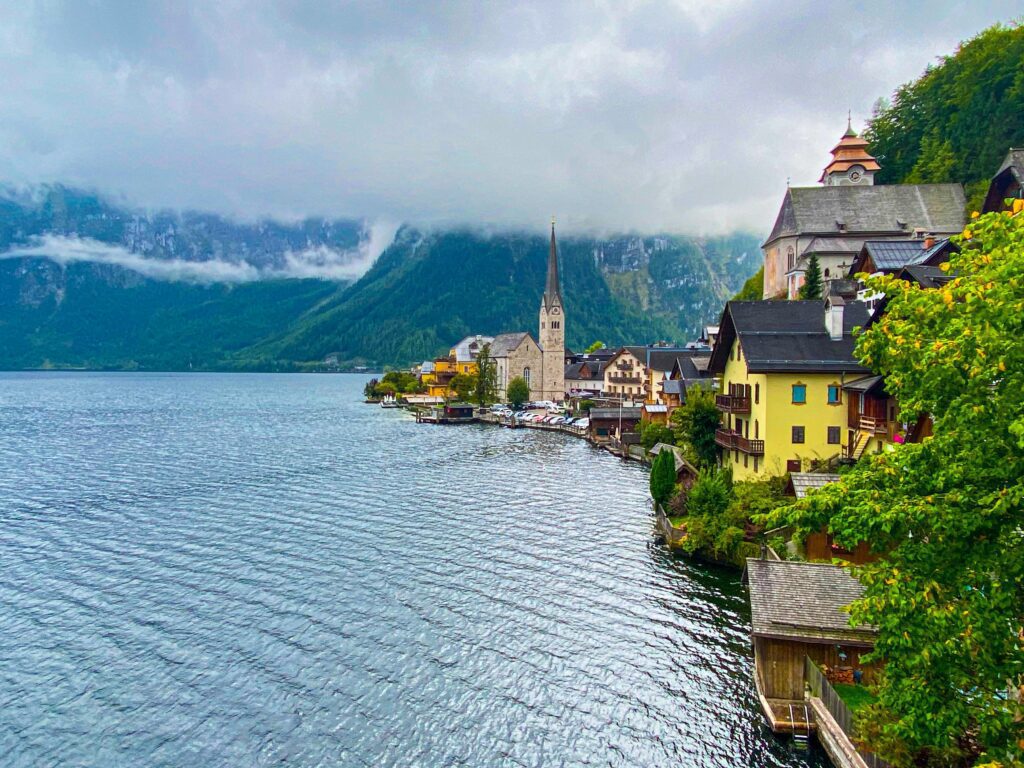
11. Take a Daytrip to Hallstatt
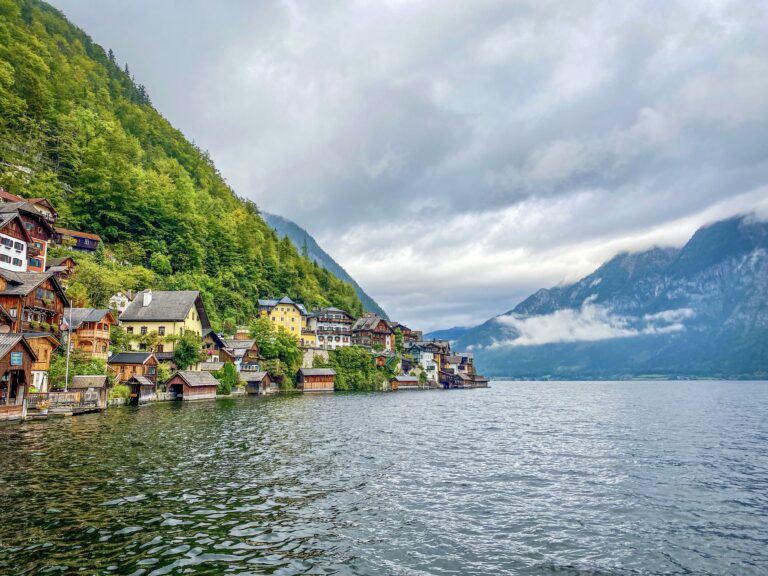
Ever seen a postcard of Austria and thought, there’s no way that place is real? Chances are, you were looking at Hallstatt. This ridiculously picturesque lakeside village, about an hour from Vienna by train, is so stunning that China literally built a replica of it. But trust me, the real thing is way better.
Nestled between the glassy waters of Hallstätter See and the dramatic peaks of the Dachstein Alps, Hallstatt looks like a fairytale frozen in time. Think wooden chalets covered in flowers, swans gliding across the lake, and a church steeple reflecting in the water. It’s the kind of place where you half expect to see elves and talking deer strolling through town.
Despite its tiny size, there’s plenty to do. Stroll through the Marktplatz, where charming cafes and boutique shops line the cobbled streets. Visit the Skywalk, a viewing platform that gives you a jaw-dropping panoramic view over the entire village and lake. If you’re into history, check out the Hallstatt Salt Mine, the world’s oldest, where you can slide down wooden miner chutes and learn how this little village once controlled Austria’s “white gold.”
Hallstatt is a place you visit when you want to escape reality for a few hours. It’s peaceful, absurdly scenic, and one of those places that looks exactly like the travel photos—maybe even better. If you’re in Vienna and want to see a side of Austria that feels like stepping into a storybook, this is the tour to take or you can find out how to do it on your own through my article on it here.
Where to Stay in Vienna
Vienna has a neighborhood for every kind of traveler, whether you’re here for the imperial grandeur, the artsy vibes, or a quiet retreat. The city is easy to navigate, so no matter where you stay, you’re never too far from its famous sights. Choosing where to stay in Vienna is all about matching the city’s energy to your own. Here are some recommendations to get you started:
Best Hotels in Vienna:
- Spark by Hilton – offers a fitness center, shared lounge, terrace, and on-site restaurant. Enjoy air-conditioned rooms with free WiFi, private bathrooms, TVs, and hairdryers. A buffet breakfast is served daily, and the hotel maintains a smoke-free environment. Provides 24-hour reception with multilingual staff available to assist in both German and English.
- Rioca Vienna Posto 2 – offers modern accommodations with access to a fitness room, free WiFi throughout, and on-site private parking. This condo hotel provides full-day security, luggage storage, and an elevator for convenience. Each unit includes a seating area, a flat-screen TV with streaming services, a safe, and a private bathroom with a walk-in shower, hairdryer, and free toiletries. Enjoy a daily buffet or continental breakfast with local specialties, fresh pastries, and fruit, as well as unwind at the snack bar, bar, or lounge.
- RockApart – provides a private entrance for added convenience and offers facilities for disabled guests. Each unit features a sofa, seating area, flat-screen TV with streaming services, a well-equipped kitchenette with a dining area, a safety deposit box, and a private bathroom with a hairdryer. Free WiFi is available throughout. You’ll be provided with bed linen and towels, and a mini-market is available on-site for added convenience.
Best Hostels in Vienna:
- Vienna Boutique Hostel – where I personally stayed. Vienna Boutique Hostel offers a unique and cozy stay, designed with both comfort and charm in mind. Created with love and travel experience, it blends modern amenities with classic Viennese elegance. The high 3.5-meter ceilings allow for spacious, premium beds equipped with privacy curtains (a huge plus), power outlets, USB ports, and dimmable lights. You can enjoy a welcoming atmosphere with top-tier standards and free WiFi throughout the property.
- Hostel Ruthensteiner – a charming, family-run hostel offering a warm, social atmosphere, it features immaculate accommodations, cozy beds, a well-equipped kitchen, and beautiful gardens perfect for relaxing with a drink from the bar. You can enjoy free WiFi, affordable bike rentals, musical instruments, and even a micro-brewed hostel beer. The hostel provides a variety of room options, from dorms to private en-suites, all with fresh linens and access to top-notch amenities.
- Wombat’s City Hostel – offers the perfect mix of historic charm and modern comfort, set in a stunning Art Nouveau building near the Vienna’s largest open-air market. Surrounded by stylish architecture, hip cafes, lively bars, and a multicultural atmosphere, this hostel is in one of the city’s most dynamic neighborhoods. Enjoy ensuite rooms, free WiFi, and a cozy Wombat’s Cafe, featuring their signature roast. The legendary WomBAR is perfect for socializing, while a fully equipped guest kitchen, 24/7 reception, luggage storage, and laundry facilities ensure a convenient stay.

How to Get Around Vienna
Getting around Vienna is as effortless as a perfectly brewed cup of Viennese coffee—smooth, efficient, and with just the right amount of charm. The city is built for easy exploration, whether you’re hopping on a tram, cycling along the Danube, or simply strolling through its historic streets. Here’s how to navigate Vienna like a local.
Vienna’s public transport system (Wiener Linien) is one of the best in Europe—fast, clean, and so punctual you could set your watch to it. The network includes:
- U-Bahn (Subway): The fastest way to zip across the city. Five lines (U1–U6, no U5—long story) run frequently, and trains come every few minutes.
- Trams (Straßenbahn): A Viennese icon. Slow, scenic, and perfect for sightseeing while you ride. The Ring Tram circles the city’s historic center, making it a great option if you want to soak in the views.
- Buses: Mostly for reaching spots the subway doesn’t cover, but still reliable.
- S-Bahn (Suburban Rail): If you’re heading out to places like Schönbrunn Palace or taking a day trip to Hallstatt, this is your go-to.
- Walking: Vienna is a walkable city, especially in the historic center. Many of the best sights—St. Stephen’s Cathedral, Hofburg Palace, the State Opera—are within easy walking distance. Plus, every turn offers something new, whether it’s a hidden courtyard, an old-world cafe, or a street violinist playing Mozart.
- Cycling: Vienna loves cyclists. The city has 1,400 km of bike lanes, and renting a bike is easy. Try Citybike Wien, a bike-sharing system with rental stations all over town. The first hour is free, and it’s a great way to cruise along the Danube or through the Prater Park.
- Taxis: Taxis in Vienna are reliable but pricey, so they’re best saved for late-night rides or airport transfers. Ride-sharing services like Uber and Bolt are available but not as widely used as in other cities.
Pro Tip: Get a Vienna City Card or a 24/48/72-hour public transport pass—they’ll save you time and money. Plus, Vienna’s system runs on the honor system, meaning no ticket barriers. But don’t be fooled—ticket inspectors will check, and fines are hefty.
Best Time to Visit Vienna
Vienna is beautiful all year, but if you want to experience the city at its best, spring and winter are the seasons to go.
Spring in Vienna is like watching the city wake up from a long nap. The air is fresh, the parks are bursting with color, and the cafe terraces start filling up again. The weather is mild, usually between 10 and 22°C (50–72°F), making it perfect for long walks through the historic streets or lazy afternoons by the Danube. The best part? The crowds haven’t arrived in full force yet, so you can enjoy Vienna’s sights without the summer rush. If you visit in May, you’ll also catch the short but glorious Austrian white asparagus season, a local favorite that shows up on menus all over the city.
Winter, on the other hand, is pure magic. From late November to early January, Vienna turns into a Christmas fairytale, with twinkling lights, festive markets, and the smell of roasted chestnuts in the air. Even if you’re not a fan of the cold, which hovers between -1 and 7°C (30–45°F), the cozy coffeehouses and candlelit restaurants make it more than worth it. If you stay past the holidays, you can experience Vienna’s famous ball season, where grand halls fill with music, waltzes, and elegant gowns. And when New Year’s Eve rolls around, the entire city celebrates by dancing in the streets at midnight to the Blue Danube Waltz!
Plan Your Trip to Austria | Best Travel Resources
Book Your Accommodations
- Booking.com – the world’s leading online booking platform for accomodations around the world, they have an extensive amount of available listings with zero booking fees and best price guarantees.
- Hostelworld – a backpacker’s best friend, Hostelworld has the largest collection of hostels and guesthouses for affordable prices.
Don’t Forget Insurance
- SafetyWing – from Nomad Insurance, an insurance by nomads for nomads. They understand our lifestyle well and have really comprehensive and flexible plans that cater to any traveler.
Find Cheap Flights
- Kiwi.com – my go-to for booking and finding the cheapest flights and it’s helped me save tons of money. They do virtual interlining which is connecting flights from airlines that do not codeshare, so you can find routes that you wouldn’t be able to find normally.
Join Tours & Activities
- GetYourGuide – is one of the best places to find unique tours and activities. I found that it’s an excellent way to meet fellow travelers and create fond memories. They are not only limited to tours as they also offer niche services such as skip-the-line tickets or private transfers.
Catch a Ride
- Rentalcars.com – nothing beats the freedom of the road, Rentalcars.com is the world’s largest online car rental service. They operate across 160 countries so they’re the perfect partner to work with if you find yourself wanting a ride.