
There are travel destinations, and then there’s Hallstatt. You know those places that look too good in pictures—so perfect that you assume it must be a heavily filtered, Instagram fever dream?
That’s Hallstatt.
But here’s the thing: it actually looks like that in real life. Maybe even better.
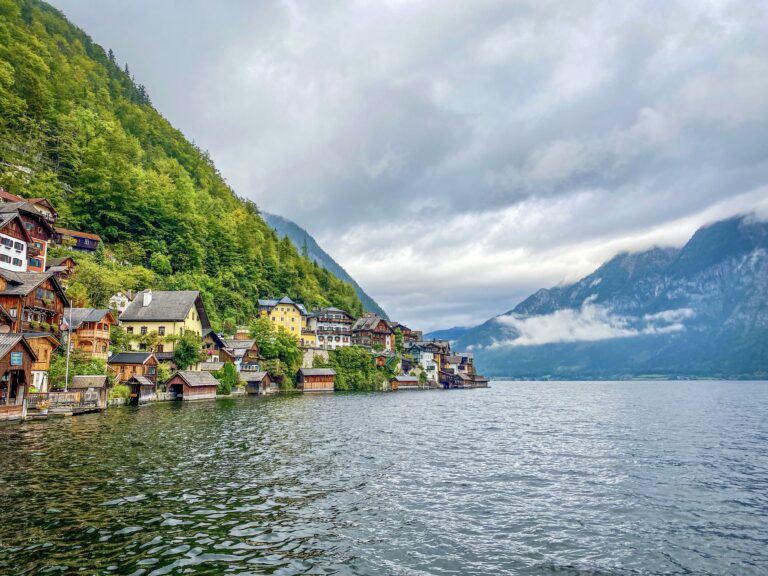
Tucked between a mirror-still lake and towering mountains, this tiny Austrian village is the definition of a fairytale. The streets are straight out of a storybook, the swans on the lake glide around like they’re in a Disney movie, and the air? Fresh. Like, absurdly fresh. The whole place feels like it was designed by someone who said, “Let’s make the most charming village on earth and see how people react.”
So yeah, Hallstatt is ridiculous. In the best possible way. And if you’re even remotely considering a visit, let’s talk about how to make the most of it—because this place deserves more than just a quick photo stop.
Table of Contents
ToggleHistory of Hallstatt
Hallstatt isn’t just a pretty face. This little lakeside gem has been around for over 7,000 years—longer than Rome, longer than the Pyramids, and basically longer than most things we consider “old.”
Why? Salt.
Way before Hallstatt became a tourist hotspot, it was a major player in the ancient salt trade. Back in the day, salt was like gold—people literally fought over it, and Hallstatt had loads of it. The nearby Hallstatt Salt Mine, which you can still visit today, is the oldest known salt mine in the world. This crazy-long history even led to an entire archaeological era being named after the village: the Hallstatt Culture (800–400 BC), a period from the early Iron Age that shaped much of Central Europe.
Fast-forward a few thousand years, and Hallstatt has transformed from a historic salt hub into one of Austria’s most famous travel destinations. It’s a rare place where you can step into a postcard and a history book at the same time.
How to Get to Hallstatt
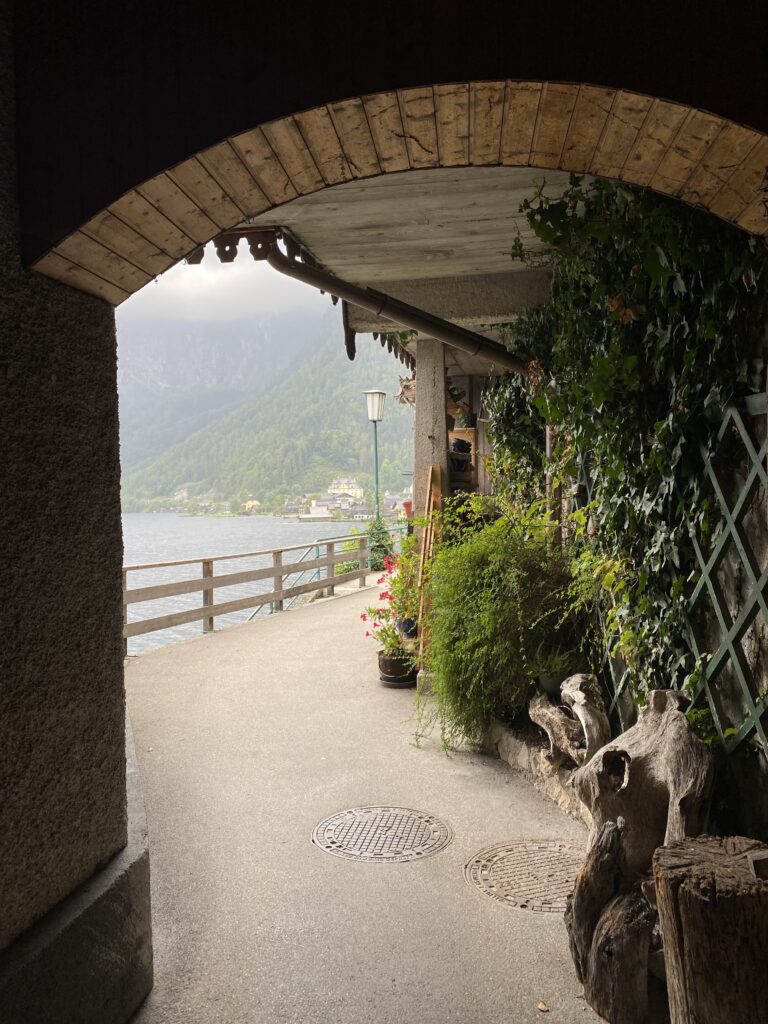
The journey to Hallstatt is all part of the magic. Whether you come by train, car, or bus, every route involves stunning mountain landscapes, lakes, and that oh wow, I’m really in Austria kind of feeling.
By Train + Ferry
If you want the most cinematic arrival, this is the way to do it. Take a train from Vienna or Salzburg to Attnang-Puchheim, then switch to a smaller regional train that winds through the mountains to Hallstatt Station—a tiny stop on the opposite side of the lake from the village.
Once you arrive, you won’t be stepping straight into Hallstatt. Instead, you’ll hop on a ferry that glides across the water, slowly revealing the village as you approach. It’s hands-down the best first impression of Hallstatt—you, on a boat, watching the town appear like a dream in front of you.
- Travel time from Salzburg: 2.5 hours
- Travel time from Vienna: 3.5 hours
By Car
If you’re doing a road trip through Austria, driving to Hallstatt is a great option—just know that the village itself is mostly car-free, so you’ll need to park outside and walk in. There are designated parking areas (P1, P2, and P3) just outside of town, but in peak season, they fill up fast, so arrive early.
Driving is also the best way to visit nearby spots like the Dachstein Ice Caves and Five Fingers Lookout, giving you total flexibility to explore beyond the village. Just be prepared for some narrow, winding mountain roads—it’s Austria, after all.
- Drive time from Salzburg: 1.5 hours
- Drive time from Vienna: 3.5 hours
By Tour
If you’re short on time and based in Salzburg or Vienna, there are plenty of day tours to Hallstatt. Such as this one if you’re coming from Vienna, or this one if you’re coming from Salzburg.
Top Things to Do in Hallstatt
1. Wander Around the Old Town
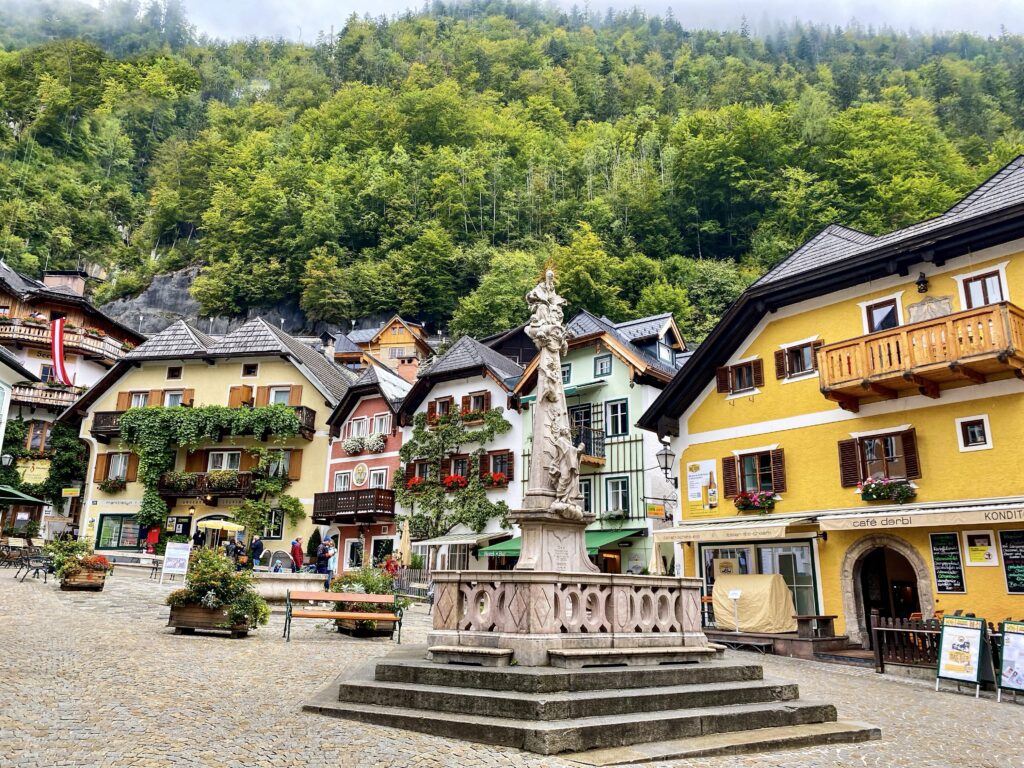
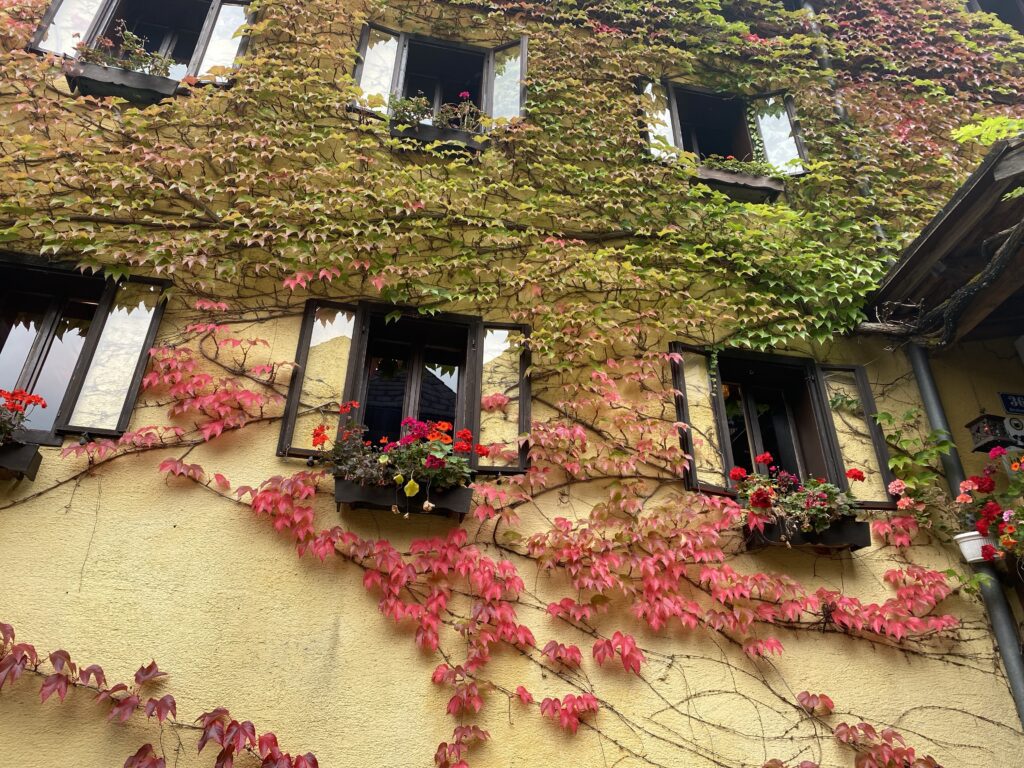
If Hallstatt is a fairytale, then Old Town is its enchanted heart. This is the part of the village where you’ll feel like you’ve stepped straight into a painting—cobbled streets, flower-boxed windows, and an almost absurd level of charm packed into a tiny lakeside square.
The best way to explore? Wander. No itinerary, no rush. Just stroll through the narrow alleys, past pastel-colored houses that have been standing for centuries, and soak in the atmosphere. You’ll find little cafes serving fresh pastries, tiny shops selling handcrafted souvenirs, and an overall vibe that makes you want to stay forever.
It doesn’t matter how many times you’ve seen Hallstatt in pictures—standing in the middle of Old Town, looking up at the mountains and the lake, feels surreal. And the best part? It’s small enough to explore at a slow, dreamy pace, so you can really take it in.
2. Visit the Hallstatt Salt Mine
You can’t talk about Hallstatt without mentioning salt—white gold. It’s literally the reason this village exists. And the best way to experience that history? Go straight to the Hallstatt Salt Mine, the oldest operational salt mine in the world, sitting high above the village on Salzberg Mountain.
Getting there is half the fun. You take a funicular ride up the mountain, which gives you some of the best panoramic views of Hallstatt and the lake below. Once you reach the top, you’ll hike a bit through the forest before arriving at the entrance of the mine, where things get really interesting.
Inside, it’s like stepping into a different world. Wooden tunnels, some dating back over 3,000 years, stretch deep into the mountain, and you’ll learn about the ancient Celts who started mining salt here long before Austria was even a thing. There’s even a prehistoric salt-preserved man (yes, an actual human from the Iron Age) discovered in these mines, proving just how long people have been working here.
One of the best parts? The miners’ slides—instead of just walking down staircases, you get to slide down smooth wooden chutes like an old-school salt miner. It’s ridiculously fun. And at the end of the tour, there’s even a mini train that takes you back out. Because why just walk when you can slide and ride?
3. Check out the Hallstatt Ossuary
Now, this might not be the first thing that comes to mind when you think of Hallstatt, but if you’re up for something unique (and slightly eerie), the Hallstatt Ossuary—also known as the Bone House—is absolutely worth a visit.
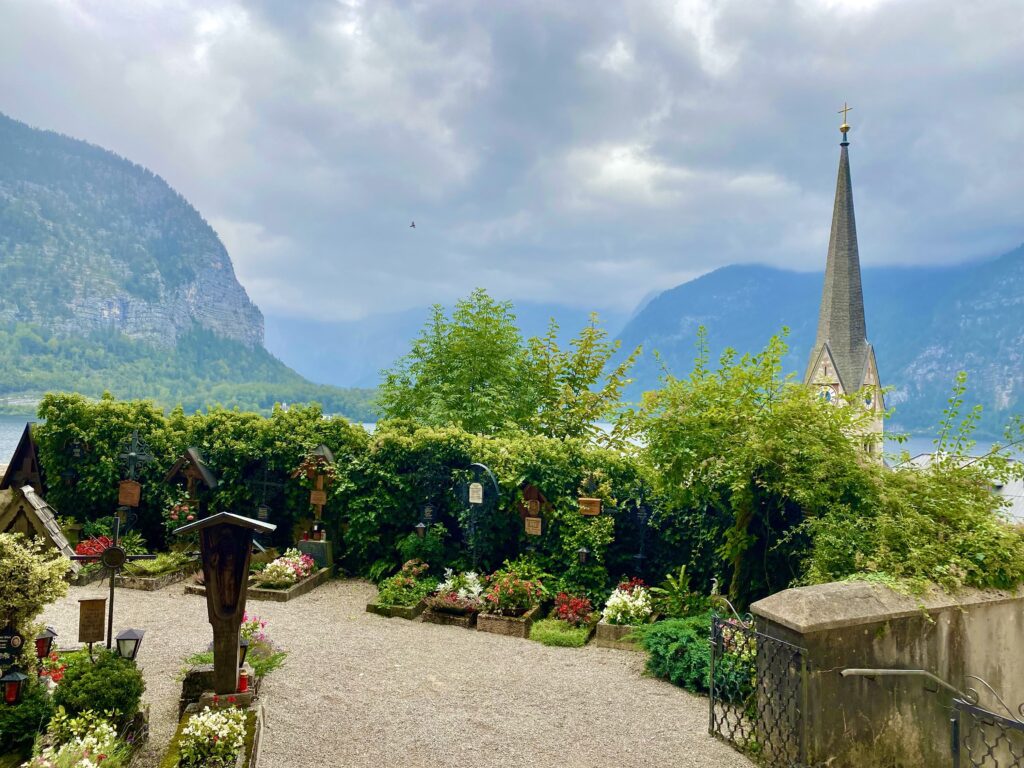
Tucked away inside St. Michael’s Chapel, this tiny room holds over 1,200 human skulls, many of them delicately painted with intricate floral patterns, crosses, and the names of the deceased. It’s not just some random display of bones—this is an old Hallstatt tradition that dates back centuries.
See, Hallstatt is beautiful, but it’s also tiny, which meant there wasn’t much room for graves. So, after about 10-15 years, bodies were exhumed, their skulls were carefully cleaned and painted, and they were moved to the Ossuary to make space for new burials. The painted skulls weren’t meant to be scary—they were a way of honoring the dead, keeping their memory alive in a deeply personal way.
Despite its macabre theme, the Ossuary has a strangely peaceful atmosphere. It’s not about death—it’s about remembrance, tradition, and a fascinating glimpse into Hallstatt’s past.
4. Take the Hallstatt Skywalk
If you think Hallstatt is beautiful from the ground, just wait until you see it from 984 feet (300 meters) above. The Hallstatt Skywalk is an absolute must-visit, offering a jaw-dropping, floating-in-the-sky kind of view that makes the whole village, lake, and surrounding mountains look even more unreal.
Getting up there is easy—just hop on the same funicular that takes you to the salt mine. But if you’re up for it, there’s also a steep but scenic hike through the forest. Either way, once you reach the viewing platform, you’ll understand why people call this the “World Heritage View”. The platform extends out over the cliff, giving you an uninterrupted panorama of Hallstatt, the deep blue lake, and the towering Dachstein Alps in the background.
The best time to go? Early morning or just before sunset. That’s when the light hits just right, and you won’t have to fight for space with crowds of selfie-takers. And trust me, you’ll want a moment to just stand there, breathe in the crisp mountain air, and take it all in. Because this isn’t just a great view—it’s one of those rare, life-pauses-for-a-second moments.
5. Find the Hallstatt Postcard Shot
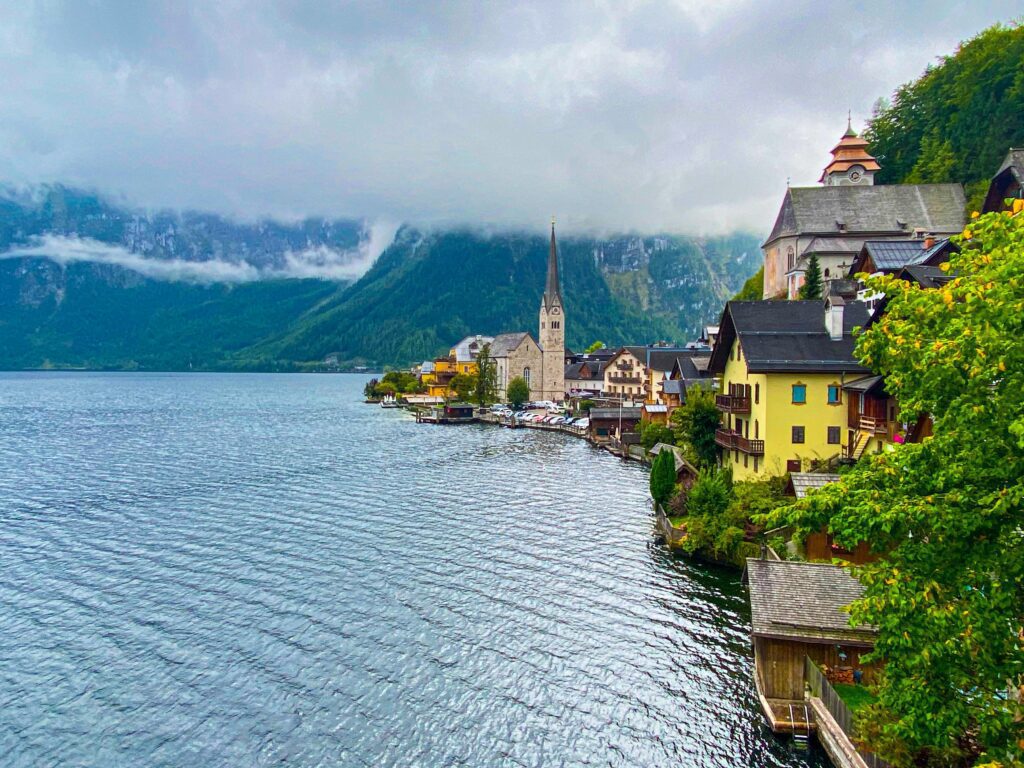
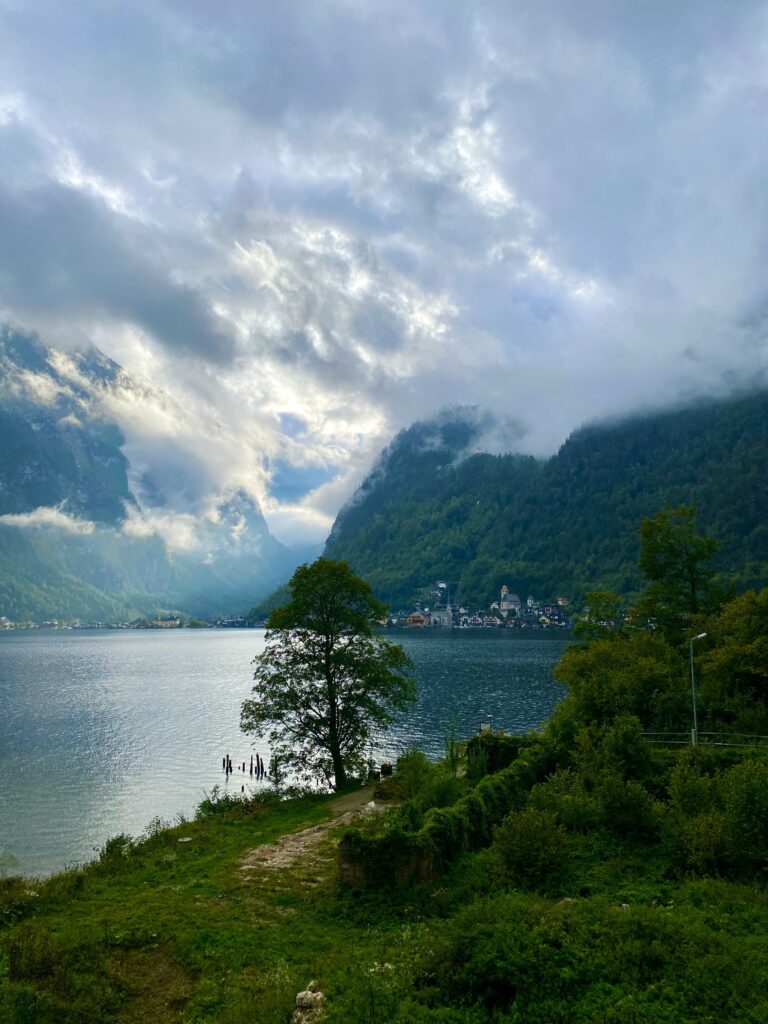
Let’s be honest—Hallstatt is one of the most photographed places in the world, and if you’re here, you have to get that iconic postcard shot. You know the one: the fairy-tale village nestled against the lake, the church spire reaching up, the mountains towering in the background. It’s the kind of view that makes people ask, “Is this even real?”
Lucky for you, getting this shot is easy. The exact spot you’re looking for is a viewing point along Gosaumühlstraße, just a short walk from the Market Square. From here, you get the perfect angle of Hallstatt’s most famous scene—the Evangelical Church, colorful alpine houses, and the lake stretching off into the distance.
6. Marvel at the Dachstein Ice Caves
Just when you think Hallstatt couldn’t get any more magical, you realize there are actual ice caves tucked into the Dachstein mountains. And not just any ice caves—these are some of the largest and most spectacular in the world.
Getting there is an adventure in itself. You’ll take a cable car up into the Dachstein mountain range, already treating you to incredible alpine views. Then, after a short hike, you enter the cave system, where things get seriously otherworldly. Inside, it’s a frozen wonderland of massive ice formations, towering frozen waterfalls, and glistening ice cathedrals that look like something straight out of Game of Thrones.
The temperature inside stays below freezing year-round, so bring a warm jacket, even if it’s summer. The guided tours take you through the caves’ most stunning sections, like the Parsifal Dome, a cavern filled with shimmering ice sculptures, and the Great Ice Chapel, where the ice formations are so surreal you half expect to see a frost-covered throne.
For the truly adventurous, there’s also the Mammoth Cave, a separate system of limestone tunnels nearby, known for its dramatic rock formations and underground rivers. But if you’re here for the ice (and honestly, why wouldn’t you be?), the Dachstein Ice Caves are an absolute must. It’s not every day you get to walk through a frozen underworld high up in the Austrian Alps.
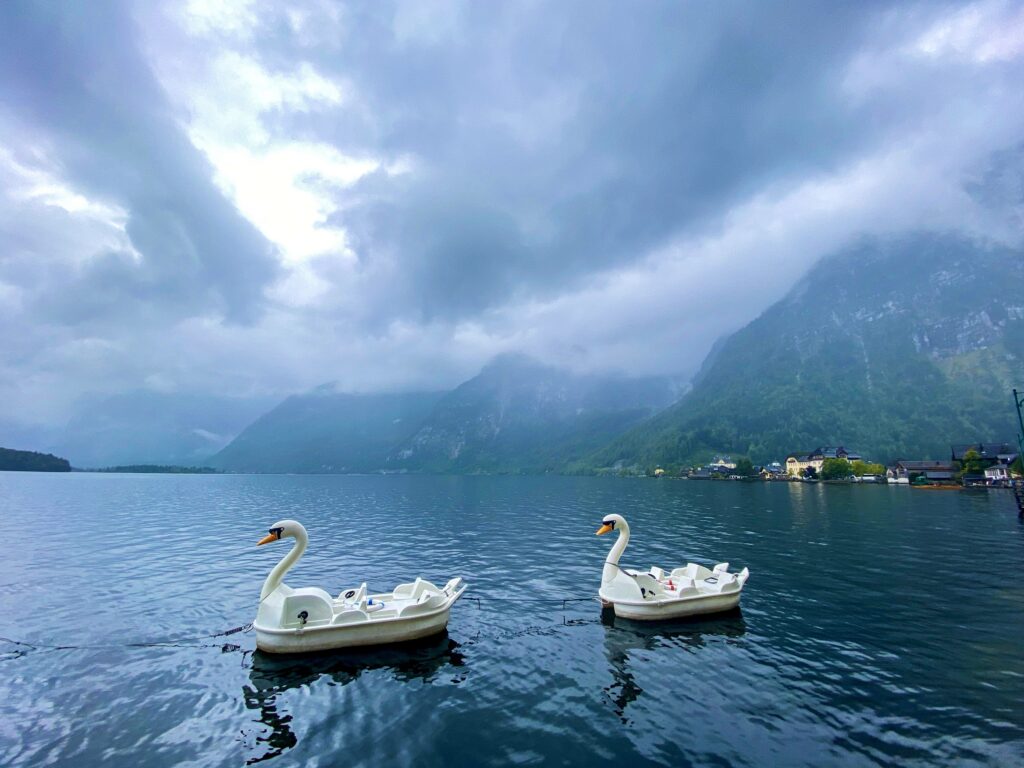
7. Enjoy a Boat Ride on Lake Hallstatt
If there’s one thing you absolutely have to do in Hallstatt, it’s getting out onto Lake Hallstatt. Sure, the village is stunning from the shore, but from the water? Next level. This is the kind of boat ride where you don’t just admire the views—you feel them.
You’ve got a few ways to cruise the lake. The classic option is hopping on a traditional wooden boat, known as a Plätte, which locals have been using for centuries. It’s slow, quiet, and gives you that perfect cinematic moment of gliding across still waters with the mountains reflecting around you. If you want something a bit quicker, there are also electric boats and swan pedal boats for rent, so you can take control and explore at your own pace.
One of the best times to go is early morning or late afternoon, when the lake is calm and the crowds haven’t taken over. If you’re here in autumn, the golden trees reflecting off the water make the whole scene look straight out of a painting. In winter, when the peaks are snow-covered and the lake is misty, the vibe is pure magic.
8. Dare to Scale the Five Fingers Lookout
If you’re after a view that makes you feel like you’re standing at the edge of the world, Five Fingers Lookout is where you need to be. This isn’t just any scenic overlook—it’s a dramatic, adrenaline-inducing platform that juts out over a 400-meter (1,300-foot) drop, giving you one of the most insane panoramas in Austria.
The name comes from the five individual platforms, each extending out like fingers over the abyss, offering different perspectives of the Dachstein Alps and Hallstatt below. One has a glass floor, so you can look straight down (if you dare), another has a telescope, and another is designed as a giant picture frame, because, well, this place deserves to be framed.
To get here, you’ll take the Dachstein Krippenstein cable car up the mountain, followed by a relatively easy 20-30 minute hike. Along the way, you’ll pass alpine meadows, rugged peaks, and maybe even a few ibex if you’re lucky. Once you step onto the platforms, though, everything else fades away—just you, the wind, and a view that stretches for miles.
9. Drop by the Hallstatt Museum
For a tiny village, Hallstatt has an absolutely massive history, and if you want to truly understand the place beyond its picture-perfect scenery, the Hallstatt Museum is where you need to go. This isn’t just a collection of old artifacts—it’s a journey through 7,000 years of human civilization, packed into a surprisingly modern and engaging museum.
Remember? Hallstatt isn’t just famous for its beauty, it’s also the namesake of the Hallstatt Culture, a major prehistoric era from the early Iron Age (800–400 BC). Inside the museum, you’ll find ancient tools, weapons, jewelry, and even fully reconstructed burial chambers from that time. The exhibits take you from the very beginnings of salt mining to the Roman and medieval periods, all the way up to Hallstatt’s modern-day UNESCO World Heritage status.
One of the coolest parts? The museum actually connects to the nearby prehistoric burial site, where archaeologists unearthed thousands of graves, some dating back nearly 4,000 years. It’s wild to think that Hallstatt has been continuously inhabited for millennia, and this museum helps bring that history to life.
10. Pray at Evangelical Church of Hallstatt
Even if you don’t know this church by name, you’ve definitely seen it. The Evangelical Church of Hallstatt is the defining landmark of the village—the one with the tall, pointed spire that anchors every classic postcard shot of Hallstatt.
Originally built in the 19th century, this church has a unique story. Unlike many old European churches that date back to the Middle Ages, this one was constructed relatively “recently” (by Hallstatt standards) as a place of worship for the local Protestant community. During the Habsburg era, Catholicism was the dominant religion, and Protestants in Austria weren’t allowed to openly practice their faith until the late 1700s. When that restriction was lifted, Hallstatt’s Protestant population finally built this stunning church, right on the edge of the lake, where it stands today.
While the outside is what gets most of the attention—the inside is worth a quick visit too. It’s simple, peaceful, and has a warmth that contrasts with the dramatic, towering mountains outside. If you happen to visit during a Sunday service, you might even hear the organ playing!
Where to Stay in Vienna
You’ll most likely be coming from Vienna when visiting Hallstatt. Choosing where to stay in Vienna is all about matching the city’s energy to your own. Here are some recommendations to get you started:
Best Hotels in Vienna:
- Spark by Hilton – offers a fitness center, shared lounge, terrace, and on-site restaurant. Enjoy air-conditioned rooms with free WiFi, private bathrooms, TVs, and hairdryers. A buffet breakfast is served daily, and the hotel maintains a smoke-free environment. Provides 24-hour reception with multilingual staff available to assist in both German and English.
- Rioca Vienna Posto 2 – offers modern accommodations with access to a fitness room, free WiFi throughout, and on-site private parking. This condo hotel provides full-day security, luggage storage, and an elevator for convenience. Each unit includes a seating area, a flat-screen TV with streaming services, a safe, and a private bathroom with a walk-in shower, hairdryer, and free toiletries. Enjoy a daily buffet or continental breakfast with local specialties, fresh pastries, and fruit, as well as unwind at the snack bar, bar, or lounge.
- RockApart – provides a private entrance for added convenience and offers facilities for disabled guests. Each unit features a sofa, seating area, flat-screen TV with streaming services, a well-equipped kitchenette with a dining area, a safety deposit box, and a private bathroom with a hairdryer. Free WiFi is available throughout. You’ll be provided with bed linen and towels, and a mini-market is available on-site for added convenience.
Best Hostels in Vienna:
- Vienna Boutique Hostel – where I personally stayed. Vienna Boutique Hostel offers a unique and cozy stay, designed with both comfort and charm in mind. Created with love and travel experience, it blends modern amenities with classic Viennese elegance. The high 3.5-meter ceilings allow for spacious, premium beds equipped with privacy curtains (a huge plus), power outlets, USB ports, and dimmable lights. You can enjoy a welcoming atmosphere with top-tier standards and free WiFi throughout the property.
- Hostel Ruthensteiner – a charming, family-run hostel offering a warm, social atmosphere, it features immaculate accommodations, cozy beds, a well-equipped kitchen, and beautiful gardens perfect for relaxing with a drink from the bar. You can enjoy free WiFi, affordable bike rentals, musical instruments, and even a micro-brewed hostel beer. The hostel provides a variety of room options, from dorms to private en-suites, all with fresh linens and access to top-notch amenities.
- Wombat’s City Hostel – offers the perfect mix of historic charm and modern comfort, set in a stunning Art Nouveau building near the Vienna’s largest open-air market. Surrounded by stylish architecture, hip cafes, lively bars, and a multicultural atmosphere, this hostel is in one of the city’s most dynamic neighborhoods. Enjoy ensuite rooms, free WiFi, and a cozy Wombat’s Cafe, featuring their signature roast. The legendary WomBAR is perfect for socializing, while a fully equipped guest kitchen, 24/7 reception, luggage storage, and laundry facilities ensure a convenient stay.
How to Get Around Hallstatt
Hallstatt is tiny. That’s part of its charm—no traffic, no honking cars, just cobblestone streets, lakeside pathways, and breathtaking mountain views at every turn.
Once you’re in Hallstatt, your feet are your best friends. The village is so compact that you can explore everything on foot. Wandering through the Old Town, getting lost in the side alleys, and stopping by little bakeries or lakeside benches is half the fun. Just be ready for a few steep paths and staircases.
Best Time to Visit Hallstatt
The best time to visit Hallstatt is late September to early October. The summer crowds have disappeared, but the weather is still cool and pleasant, with golden autumn leaves making the village even more breathtaking. Daytime temperatures range from 10–20°C (50–68°F), while nights can be crisp at 5–10°C (41–50°F). It’s the perfect time for peaceful lake views, hiking, and exploring without feeling rushed.
For a truly magical experience, winter in Hallstatt is unbeatable. From December to February, the village transforms into a snow-covered wonderland, especially around Christmas when twinkling lights reflect off the lake. The cold can be intense, with daytime temperatures between -5 to 5°C (23–41°F) and nights dropping as low as -8°C (17°F). Some attractions close for the season, but if you want Hallstatt without crowds and don’t mind bundling up, this is when the village feels like a real-life fairytale.
What to Know Before Going to Hallstatt
Hallstatt might look like a dream, but there are a few things you should know before you get here—because this fairytale village comes with some plot twists.
- Hallstatt has been insanely popular with Chinese tourists ever since it was featured on Chinese TV, and—fun fact—there’s even a full-scale replica of Hallstatt in China’s Guangdong province. That being said, the village sees a huge number of tour groups from China, South Korea, and other parts of Asia, especially between 10 AM and 4 PM, when day trips flood in from Salzburg and Vienna.
- Hallstatt has about 700 residents—yes, that’s it. Many of them aren’t thrilled about their tiny town being overrun by thousands of visitors daily. Be mindful of noise, avoid trespassing on private property (some homes look like picture-perfect attractions but are actual houses), and respect the fact that people live here year-round.
- Hallstatt is not a big city, and the restaurant scene reflects that. During peak season, restaurants can get packed, and reservations are recommended if you want a sit-down meal. Otherwise, grab some freshly baked pastries or a pretzel from a local bakery and enjoy it by the lake.
- Hallstatt’s mountain setting means the weather can flip fast. A sunny morning can turn into a foggy, rainy afternoon, even in summer. Winters can be stunning but cold, with snow-covered rooftops and icy paths. Bring layers, a rain jacket, and good shoes—even in warmer months.
- Tempted to capture Hallstatt from the sky? Don’t. Hallstatt has banned drones due to the high number of tourists and privacy concerns for residents. Stick to taking photos from the many scenic viewpoints.
- Lake Hallstatt isn’t just for admiring—it’s swimmable. The water is crystal clear and super refreshing in summer, though keep in mind that this is an alpine lake, so it stays cold even when it’s warm outside. There’s a designated swimming area near Obertraun, just across the lake, if you’re up for a dip.
Plan Your Trip to Austria | Best Travel Resources
Book Your Accommodations
- Booking.com – the world’s leading online booking platform for accomodations around the world, they have an extensive amount of available listings with zero booking fees and best price guarantees.
- Hostelworld – a backpacker’s best friend, Hostelworld has the largest collection of hostels and guesthouses for affordable prices.
Don’t Forget Insurance
- SafetyWing – from Nomad Insurance, an insurance by nomads for nomads. They understand our lifestyle well and have really comprehensive and flexible plans that cater to any traveler.
Find Cheap Flights
- Kiwi.com – my go-to for booking and finding the cheapest flights and it’s helped me save tons of money. They do virtual interlining which is connecting flights from airlines that do not codeshare, so you can find routes that you wouldn’t be able to find normally.
Join Tours & Activities
- GetYourGuide – is one of the best places to find unique tours and activities. I found that it’s an excellent way to meet fellow travelers and create fond memories. They are not only limited to tours as they also offer niche services such as skip-the-line tickets or private transfers.
Catch a Ride
- Rentalcars.com – nothing beats the freedom of the road, Rentalcars.com is the world’s largest online car rental service. They operate across 160 countries so they’re the perfect partner to work with if you find yourself wanting a ride.


7 Responses
Simply wish to say your article is amazing.
Your blog is a constant source of inspiration for me. Your passion for your subject matter shines through in every post, and it’s clear that you genuinely care about making a positive impact on your readers.
Wow superb blog layout How long have you been blogging for you make blogging look easy The overall look of your site is magnificent as well as the content
Your ability to distill complex concepts into digestible nuggets of wisdom is truly remarkable. I always come away from your blog feeling enlightened and inspired. Keep up the phenomenal work!
I just wanted to take a moment to express my appreciation for your incredible content. Your ability to blend information with inspiration is truly exceptional. Looking forward to more!
Every time I read your blog, I come away with a fresh perspective. Your ability to break down intricate ideas and present them so clearly is truly impressive. Keep up the fantastic work!
Reading your blog is always a rewarding experience. Your unique perspective and eloquent style make learning a joy. Keep sharing your brilliance with the world!