

Few romances can ever surpass that of the granite citadel on top of the beetling precipices of Machu Picchu, the crown of Inca Land.
– Hiram Bingham
Peru is a place where the past and present collide in the most magical ways. It’s not just another spot on the map—it’s a country that grabs hold of your heart and doesn’t let go.
Standing among ancient Inca ruins, where every stone holds stories worth a hundred years. Walking through these sites, you can’t help but feel a deep connection to the people who built them, who looked up at the same stars, and who carved out their existence in these rugged mountains.
Then there are the Andes, towering and majestic. Hiking here, you feel the cool, crisp air fill your lungs as you take in the sweeping vistas. The sense of scale and beauty is humbling. Every step is a reminder of nature’s grandeur, and every moment spent here is a chance to reconnect with something larger than yourself.
Peru isn’t just a place you visit; it’s about the feeling you get when you stand at the edge of an ancient city, looking out over the same landscapes the ancient ones once did. It’s about the thrill of exploring untouched natural beauty and the joy of connecting with a culture that is rich and very much alive.
Peru in a Nutshell
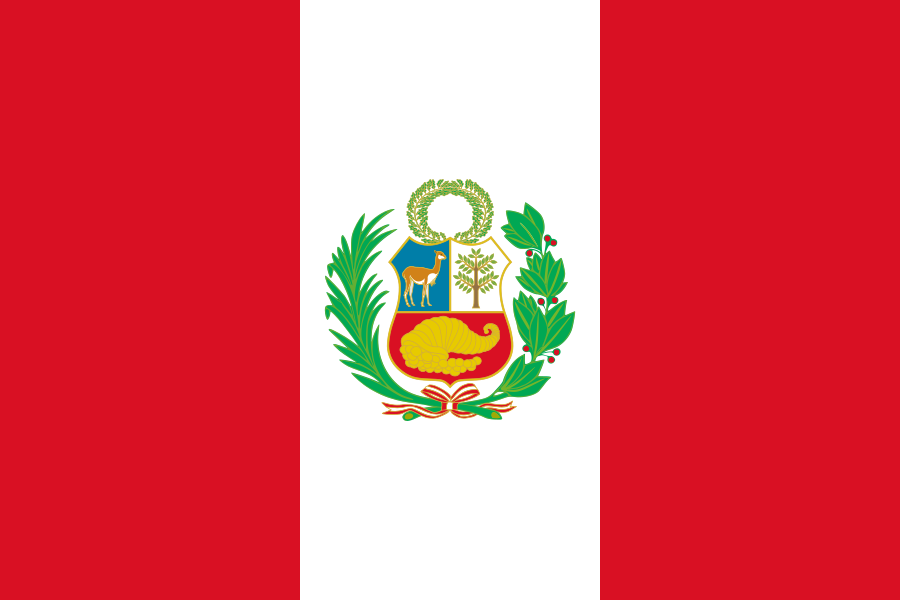
The flag of Peru features the coat of arms and three vertical bands, two red bands on the sides and a white band in the center. Here’s a deeper look:
Want to get in touch? Feel free to fill in the form below or drop me an e-mail at connect@wefreespirits.com