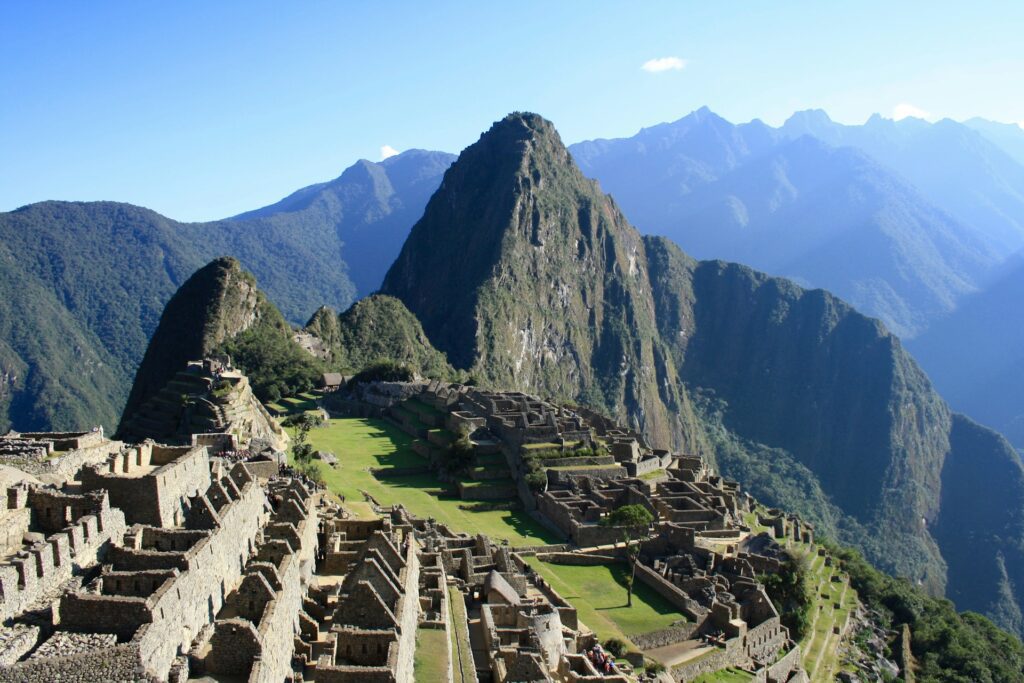
Machu Picchu is a destination that captures the imagination of travelers worldwide. This ancient Incan city, often shrouded in mist and surrounded by lush green peaks, is not only a UNESCO World Heritage Site but also one of the New Seven Wonders of the World.
While many visitors opt for the convenience of a train ride to reach this iconic site, for those seeking a deeper connection with the land and its history, trekking to Machu Picchu is the ultimate pilgrimage. Among the various trekking routes available, the Inca Trail and the Salkantay Trek stand out as the most popular choices. Each offers a unique journey through the Andes of Peru, but they differ significantly in terms of experience, difficulty, and what they offer to the intrepid traveler.
This guide is designed to help you navigate the decision-making process by providing a comprehensive comparison of the Inca Trail and the Salkantay Trek. Explore the key aspects of both treks to help you choose the path that best aligns with your preferences and expectations.
Table of Contents
ToggleTrek Overview
Inca Trail
The Inca Trail is renowned as the original pilgrimage route used by the Incas to reach Machu Picchu. This ancient path was part of the larger Inca road system, known as Qhapaq Nan, which connected the vast Inca Empire. The trail is dotted with archaeological sites, many of which are only accessible through this trek, offering a unique glimpse into the Incan civilization’s engineering prowess and spiritual traditions.
The Inca Trail typically starts near the village of Ollantaytambo. The trail takes trekkers through diverse Andean landscapes, including cloud forests, alpine tundra, and dense jungle. One of the highlights of this route is the arrival at Machu Picchu via the Sun Gate (Inti Punku), which offers a breathtaking first view of the ancient citadel at dawn. The Inca Trail is considered a moderate to challenging trek due to its steep ascents and descents. It’s typically completed over four days and three nights, with an additional day dedicated to exploring Machu Picchu. The trail requires a good level of physical fitness and acclimatization to the high altitude before starting the journey.

Salkantay Trek
The Salkantay Trek is widely regarded as a popular alternative to the Inca Trail, offering a more rugged and less crowded route to Machu Picchu. This trek is particularly favored by those seeking a more adventurous experience, as it traverses a diverse range of landscapes, from snow-capped mountains to lush cloud forests.
The Salkantay Trek begins near the village of Mollepata and unlike the Inca Trail, which ends directly at Machu Picchu, the Salkantay Trek concludes in the town of Aguas Calientes. From there, trekkers typically visit Machu Picchu the following day. The trek is usually completed over five days and four nights, though variations in the itinerary can extend or shorten the duration. Given its length and the challenging nature of the terrain, the Salkantay Trek is considered a strenuous hike, suitable for experienced trekkers.
Inca Trail vs Salkantay Trek
Distance and Elevation
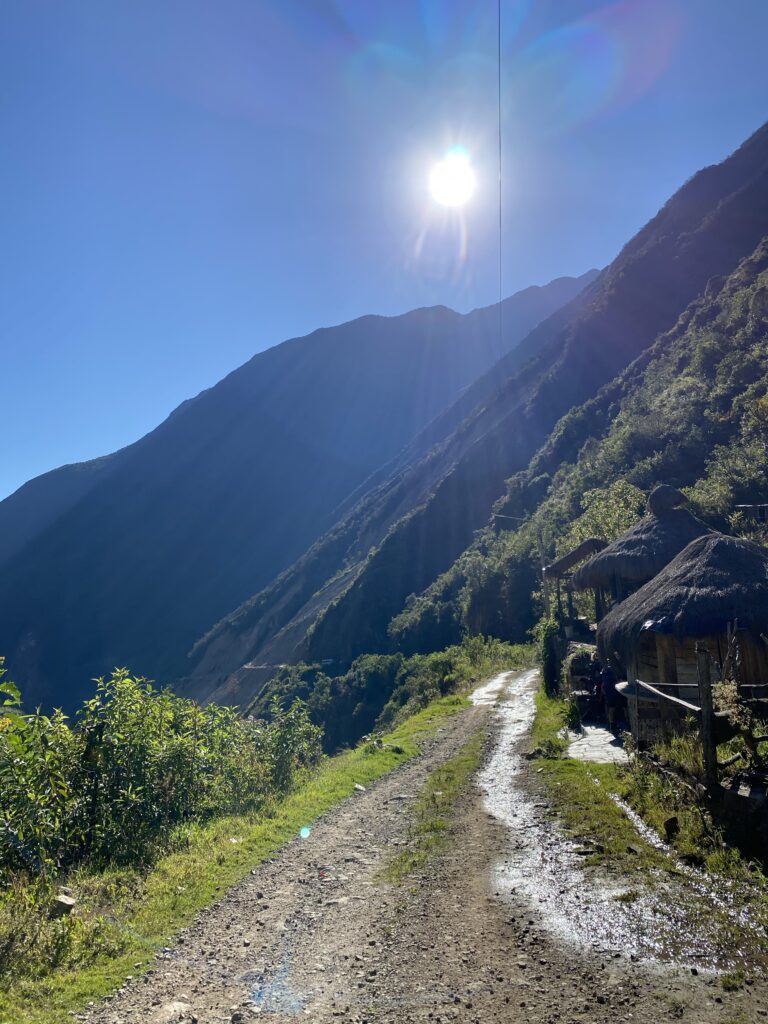
The Inca Trail covers a distance of approximately 42 to 46 kilometers (26 to 28.6 miles) depending on the specific route taken, while the Salkantay Trek spans a much longer distance of 70 to 83 kilometers (43.5 to 52 miles). This difference in distance alone makes the Salkantay Trek a more demanding option, requiring trekkers to be prepared for longer days on foot and more extensive terrain.
- The highest point on the Inca Trail is Dead Woman’s Pass, which stands at 4,215 meters (13,829 feet) above sea level. This pass, known as Abra de Huarmihuanusca in Quechua, is renowned for its steep ascent and descent, making it one of the most challenging sections of the Inca Trail. Despite its difficulty, the Inca Trail generally remains within a lower elevation range compared to the Salkantay Trek, which may be a crucial consideration for those concerned about altitude sickness.
- The Salkantay Trek, on the other hand, reaches its highest elevation at the Salkantay Pass, towering at 4,630 meters (15,190 feet). This pass is nearly 400 meters higher than Dead Woman’s Pass, and the trek overall exposes hikers to higher altitudes for more extended periods. The Salkantay Pass often presents a more rugged and remote experience, with the possibility of encountering snow and more extreme weather conditions, especially at the pass itself.
Difficulty
Acclimatization is crucial for both treks, but it is particularly important for the Salkantay Trek due to the extended time spent at higher elevations. Trekkers on both routes are advised to spend a few days in Cusco before starting their trek to help their bodies adjust to the thinner air. Altitude sickness can affect anyone, regardless of fitness level, and symptoms such as headaches, nausea, and shortness of breath can make the journey more challenging. Your guides will most likely have some coca leaves for you to chew on, they help a lot, trust me!
- The Inca Trail is generally classified as a moderate hike, making it accessible to trekkers with a decent level of fitness. The trail’s challenges primarily come from its steep ascents and descents, particularly at Dead Woman’s Pass, the highest point of the trek. Despite these challenges, the Inca Trail is well-trodden and maintained, with defined paths and staircases that make navigation straightforward.
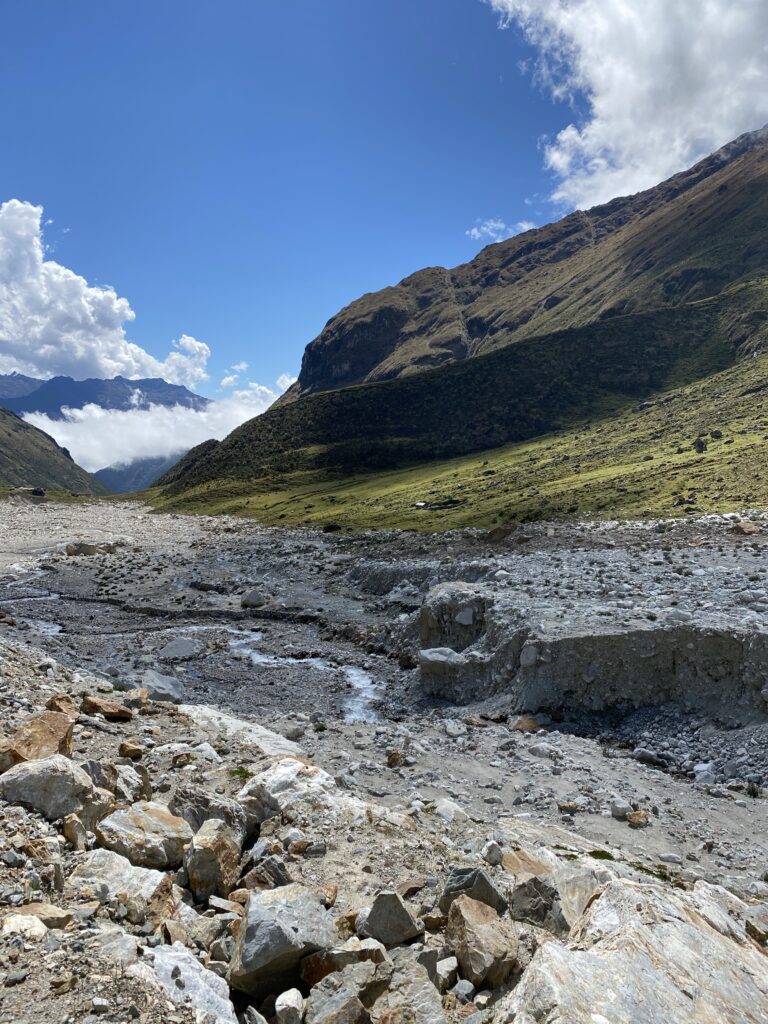
- In contrast, the Salkantay Trek is considered strenuous, requiring a higher level of physical fitness and endurance. The terrain is more varied and rugged, with portions of the trail leading through remote, less-developed paths. The altitude on the Salkantay Trek is also a major factor in its difficulty. With the highest point at Salkantay Pass.
Scenic Variety
- On the Inca Trail, trekkers are treated to a rich blend of cloud forests, dramatic mountain passes, and significant Incan ruins, all of which contribute to the trail’s legendary status. The route begins at Km 82 and quickly ascends into the Andean highlands, where the landscape is dominated by lush, mist-shrouded cloud forests. As you hike, you pass through dense vegetation interspersed with vibrant flowers. The trail also provides glimpses of snow-capped peaks like Veronica (Wakay Willka) at 5,893 meters (19,334 feet). The path is dotted with ancient Incan ruins which are seamlessly integrated into the natural landscape.
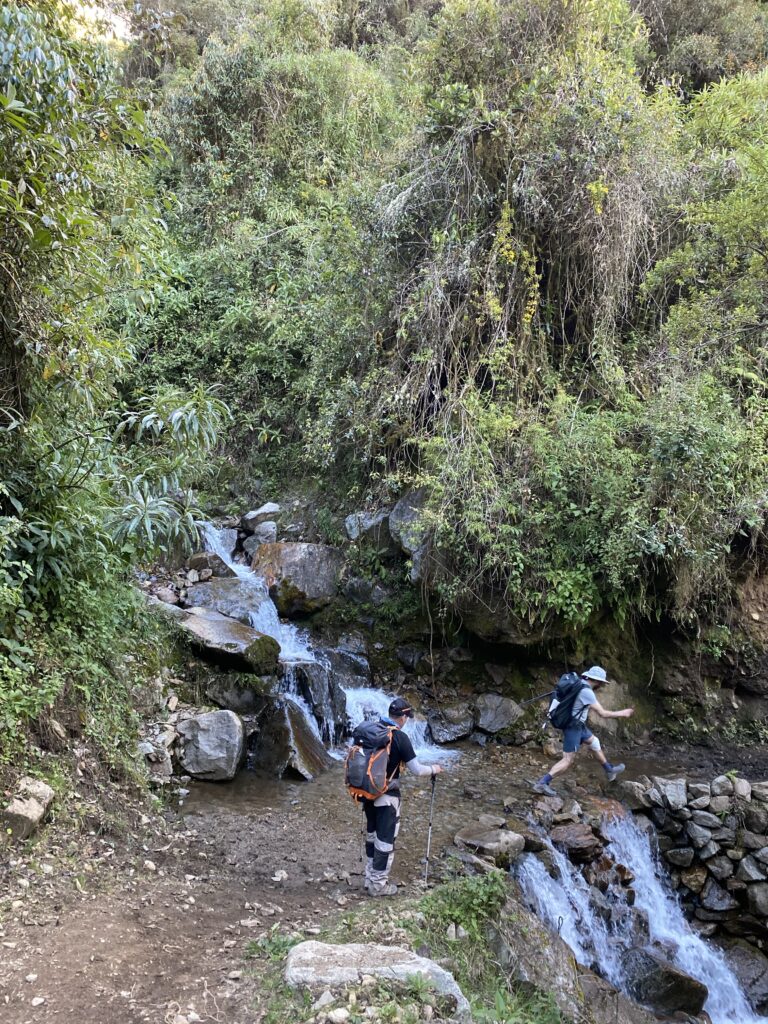
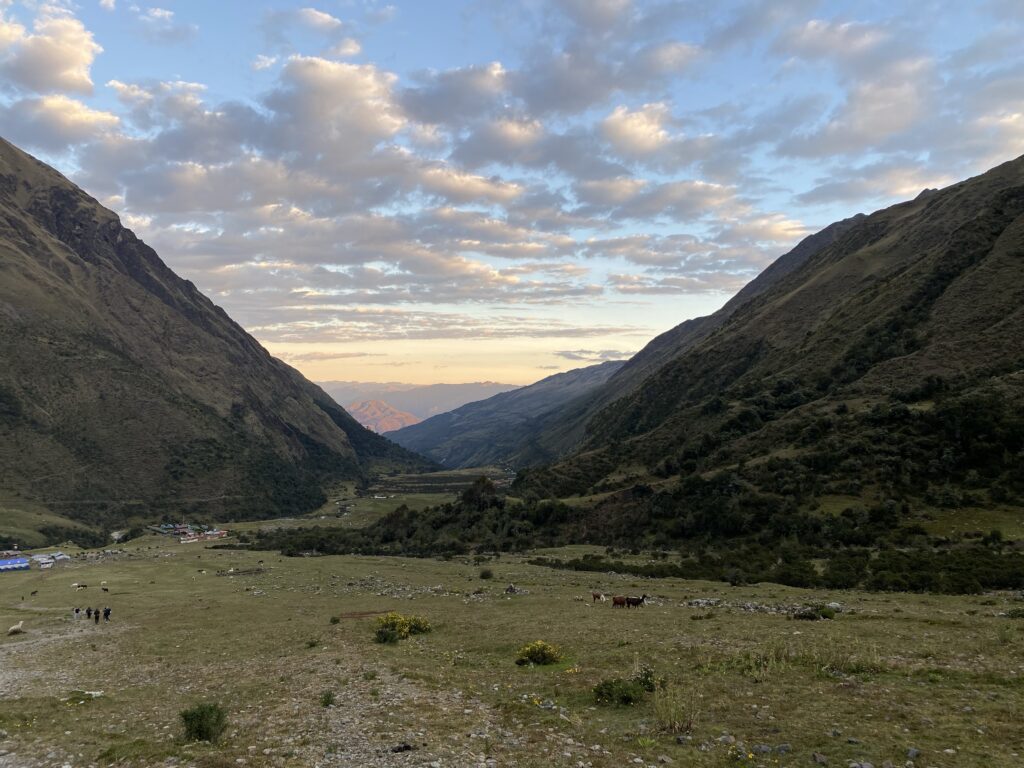
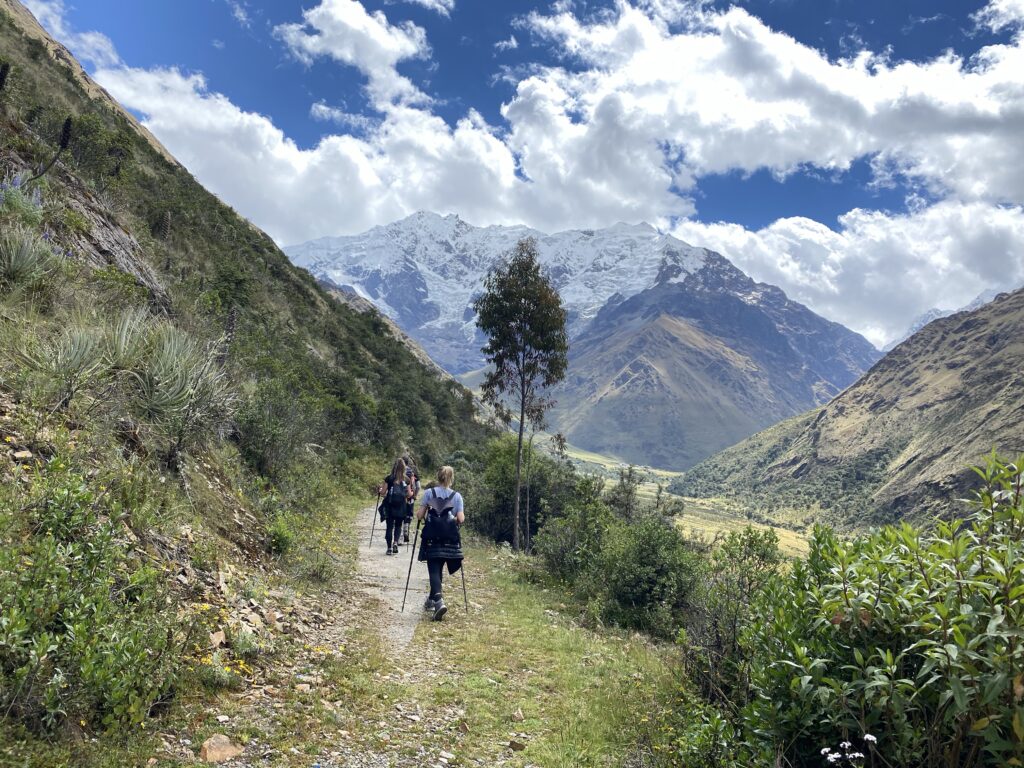
- The Salkantay Trek, on the other hand, is renowned for its diverse ecosystems and more varied landscapes, ranging from the towering, snow-capped peaks of the Vilcabamba Range to the lush, subtropical forests near Machu Picchu.The journey begins in the high Andes, where you’ll encounter the imposing Salkantay Mountain, standing at 6,271 meters (20,574 feet) with panoramic views of the surrounding glaciers and rugged terrain (You might even spot a condor!) As you descend, the landscape gradually shifts, leading you through cloud forests rich with wildlife, and yes, there are plenty of llamas and alpacas to see! You’ll also pass by the stunning Laguna Humantay, known for its turquoise waters. The lower elevations bring you into the humid, green valleys of the Amazon basin, where you’ll hike through coffee plantations and banana groves.

Historical Significance
- As you trek the Inca Trail, you’ll encounter several significant archaeological sites, each with its own story. Early on, there is the circular ruin of Runkurakay, believed to have been a watchtower, which offers panoramic views of the surrounding valleys. Further along, you’ll reach Sayacmarca, a well-preserved site with intricate stonework that suggests it may have served as a ceremonial center. Phuyupatamarca, known as the “Town above the clouds,” is another highlight, perched on a mountainside and offering stunning views, along with its terraces, baths, and residential areas. However, the most impressive site before Machu Picchu is Winay Wayna, which features steep agricultural terraces, residential sectors, and ceremonial areas. This site is inaccessible to those not on the Inca Trail, making it an exclusive and rewarding experience for those who take this route.
- In contrast, the Salkantay Trek is less focused on historical ruins and more on natural scenery and the diverse ecosystems of the Andean and Amazonian regions. That said, the trek does not entirely lack historical elements. Near the end of the Salkantay Trek, trekkers have the option to visit Llactapata, an Incan site that, while less renowned than the ruins along the Inca Trail, still offers a fascinating glimpse into the past. Llactapata is strategically located on a ridge with a view of Machu Picchu, and from this site, you can see the ruins of the famous citadel in the distance.
Accommodation Options
- The Inca Trail offers a more uniform experience when it comes to accommodations, as all trekkers are required to camp along the route. This creates a shared, communal atmosphere among hikers, with campsites designated by the government to manage the number of visitors and protect the environment. Each day, porters move ahead of the group to set up camp, ensuring that tents, food, and other necessities are ready upon arrival. This logistical support is a significant aspect of the Inca Trail experience, allowing trekkers to focus on the journey itself rather than the challenges of carrying heavy gear or setting up camp. The campsites are basic but functional, with tents typically shared between two people. Facilities can be limited, often with simple toilet blocks and no showers, though some tour operators might offer portable toilet tents for additional comfort.
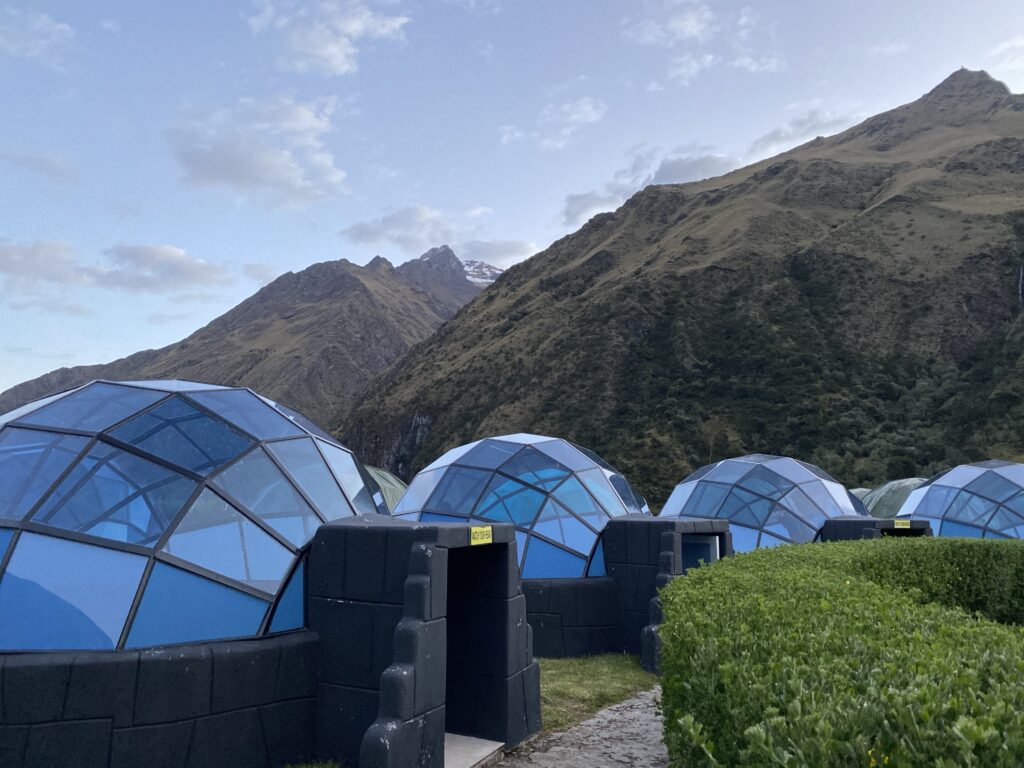
- Meanwhile, the Salkantay Trek provides a much wider range of accommodation options, catering to different levels of comfort and budget. While camping is still a common choice, particularly for those looking to immerse themselves fully in the rugged Andean environment, it is by no means the only option. Trekkers on the Salkantay route can choose from a variety of accommodations, including glamping sites with more luxurious tents and better amenities, as well as rustic lodges that offer beds and hot showers. These lodges are often located in stunning natural settings, providing a higher level of comfort while still maintaining a close connection to the surrounding landscape.
Trekking Style
- The Inca Trail is a highly regulated trek that requires all hikers to join a guided group tour. This rule is enforced by the Peruvian government to protect the historical integrity of the trail and manage the environmental impact of the large number of trekkers. As a result, trekkers on the Inca Trail must book their journey through a licensed tour operator, which includes securing a permit, arranging for porters, and organizing all logistics. This guided group format fosters a strong sense of camaraderie among hikers, as everyone progresses along the trail together, sharing in the physical challenges and the collective experience of reaching Machu Picchu. The presence of knowledgeable guides also adds to the richness of the journey, as they provide historical context and insights into the various Incan sites along the way. However, this structure can limit the flexibility and independence of the experience, as trekkers must adhere to the group’s pace and schedule.
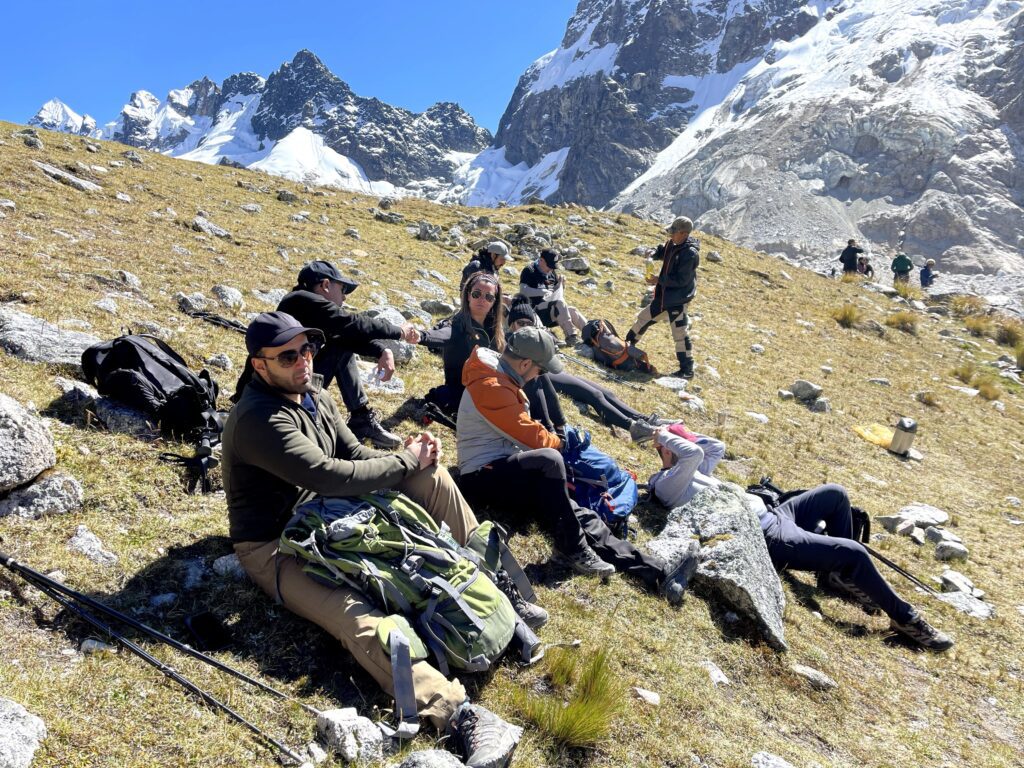
- On the other hand, the Salkantay Trek offers far more flexibility in terms of how it can be undertaken. While many trekkers opt to join a guided tour, similar to the Inca Trail, the Salkantay route can also be done independently. This option appeals to more experienced and confident hikers who prefer the freedom to set their own pace, choose their own campsites or lodges, and potentially explore alternative routes. Independent trekkers can still hire guides or muleteers to assist with navigation and carrying gear, but these services are not mandatory, allowing for a more personalized and self-directed adventure. The ability to hike the Salkantay Trek solo or with a small, self-organized group adds to its appeal for those seeking solitude or a more intimate connection with the natural surroundings. This flexibility also makes the Salkantay Trek accessible to a broader range of travelers, from those who prefer the support and social aspect of a group tour to those who seek the challenge and independence of trekking on their own.
Local Immersion
- The Inca Trail offers limited opportunities for interaction with local communities. Most of the interaction along the trail is with the porters and guides who are part of the organized trekking groups. These porters, many of whom come from nearby villages, are responsible for carrying the bulk of the gear and setting up campsites, and they often perform rituals at certain Incan sites along the way. The guides provide valuable insights into the history, culture, and environment of the region, but since the trail itself is largely remote and follows an ancient path primarily through mountainous and forested areas, there are few opportunities to engage with local communities outside of the trekking group.
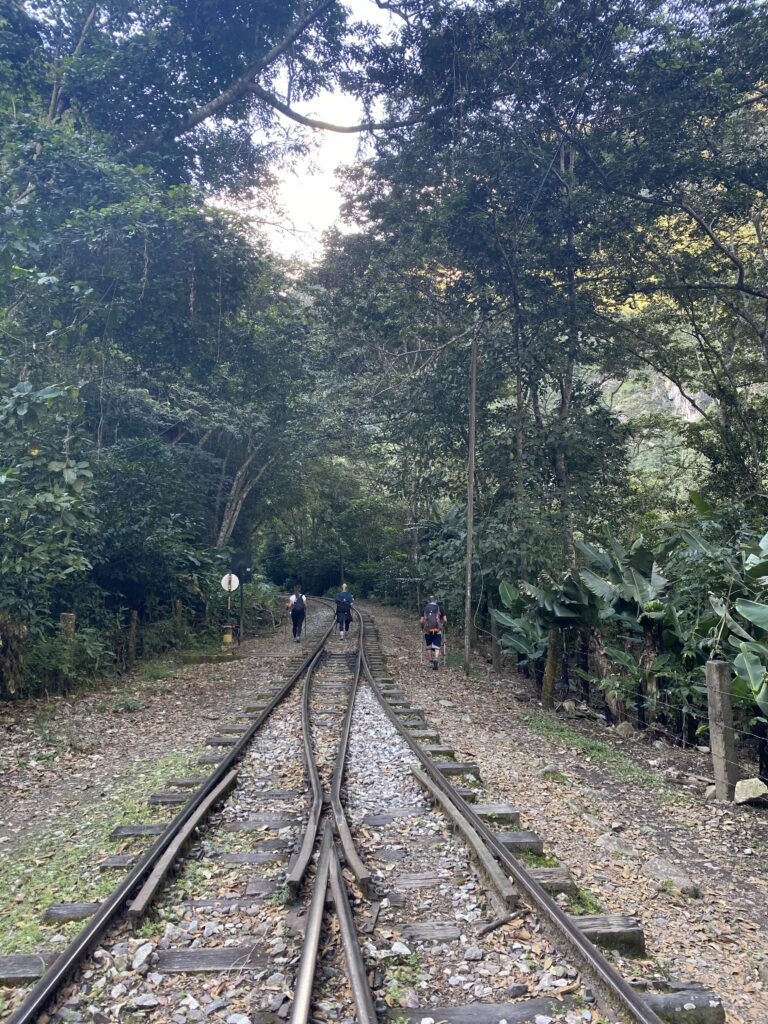
- The Salkantay Trek passes through more populated and diverse areas, allowing for greater interaction with local people. As the route winds through rural villages and farmlands, trekkers have the chance to meet and engage with residents of these communities. Whether stopping at a small family-run lodge, purchasing snacks from local vendors, or simply exchanging greetings with villagers along the trail, the Salkantay Trek offers a more immersive experience in the daily life of the Andean people.
Cost
- The Inca Trail is generally more expensive due to the required permits, the need for a guided tour, and its exclusivity as a historical path. Trekkers must secure permits well in advance, often up to six months before their intended departure, especially during peak season. The cost of the Inca Trail typically includes the permit, guided tour, porters, and camping equipment, contributing to its higher overall price.
- The Salkantay Trek is a more budget-friendly option. Since it doesn’t require permits, the trek can be booked at the last minute, offering greater flexibility for travelers. While guided tours are available, it’s also possible to trek independently, further reducing costs. The Salkantay Trek’s lower price point reflects its broader range of accommodation options, from basic camping to luxury lodges, allowing trekkers to tailor their experience according to their budget.
Where to Stay in Cusco
Whether you’re seeking luxury accommodations with breathtaking views, a cozy boutique hotel in a historic neighborhood, or a budget-friendly hostel close to the action, Cusco offers a wide range of options to suit every traveler’s style and budget. Let’s explore the best places to stay in this vibrant Andean city:
Best Hotels in Cusco
- Casa Cristobal Siete Cuartones Casona Colonial – features a garden. The hotel is near key attractions and you can can enjoy amenities such as a 24-hour front desk, airport transportation, room service, and free WiFi. Rooms come with a patio, closet, and flat-screen TV. Bed linen and towels are provided.
- Amaru Colonial – a charming colonial inn that features a beautifully lit central courtyard with a colorful flower garden. Rooms are decorated with bold Peruvian accents and offer private bathrooms and central heating, with free WiFi available in public areas.
- MOAF Cusco Boutique Hotel – enjoy a 24-hour front desk, airport transportation, a shared kitchen, and free WiFi throughout the property. Room offer city views and all are equipped with a private bathroom, flat-screen TV, and hairdryer. A buffet, continental, or American breakfast is served daily.
Best Hostels in Cusco
- Samay Wasi Youth Hostels – offers a safe, clean, and comfortable stay with stunning views of the city. The hostel provides cozy single, double, and shared rooms, all with private bathrooms and heating. You enjoy free internet, breakfast, cable TV, a fully equipped kitchen, and 24-hour hot water.
- Viajero Kokopelli Hostel – housed in a unique 200-year-old building with a focus on providing everything a traveler needs, the hostel offers free WiFi throughout, 24/7 reception and security, and a range of amenities including a restaurant, bar, and live music events.
- Pariwana Hostel Cusco – where high-quality accommodation meets affordability, ensuring an exceptional stay without breaking the bank. Pariwana offers both shared and private rooms with exceptional comfort, putting you close to the vibrant local culture. With a variety of daily activities and the chance to connect with travelers from around the world, your time here promises to be an exciting adventure.
Best Time to Go
The best time to trek both the Inca Trail and the Salkantay Trek is generally between April and October, which coincides with the dry season in the Peruvian Andes. During these months, trekkers can expect more stable weather conditions with clearer skies and less rainfall, making for more comfortable hiking and better visibility of the stunning landscapes along both routes.
For the Inca Trail, the dry season offers the most favorable conditions, with daytime temperatures being mild and nights becoming cooler. However, the Inca Trail is closed every February for maintenance and to allow the environment to recover, so planning your trek outside of this month is essential. Additionally, because of its popularity and the strict permit system, the Inca Trail requires booking well in advance, particularly for peak season months like June, July, and August.
The Salkantay Trek, on the other hand, remains open year-round, but trekking during the rainy season (November to March) can present challenges. Heavy rains can lead to muddy and slippery trails, making the trek more strenuous and less enjoyable. The higher elevations, such as the Salkantay Pass, can also experience snowfall during this time, adding another layer of difficulty. Despite these challenges, some trekkers choose the Salkantay Trek during the shoulder months of March and November when the weather can still be favorable, but the trails are less crowded.
Which Trek is Right for You?
When deciding between the Inca Trail and the Salkantay Trek, it ultimately comes down to a few key factors: your fitness level, interest in historical sites, scenic preferences, budget, and the type of experience you want—whether that’s more solitude or a more social journey. The Inca Trail is perfect for those who prioritize history and want to walk in the footsteps of the ancient Incas, while also enjoying a slightly shorter, guided trek. It’s ideal for travelers who enjoy group experiences and are willing to plan months in advance to secure their spot on this iconic trail.
On the other hand, if you’re looking for a longer, more physically challenging adventure with fewer crowds and more varied scenery, the Salkantay Trek is an excellent choice. It offers flexibility in terms of accommodation and timing, making it a great option for trekkers who want a bit more independence or who are on a tighter budget.
In the end, both treks provide a once-in-a-lifetime opportunity to experience the majestic beauty of the Peruvian Andes and the wonder of Machu Picchu. Whichever you choose, the experience will be unforgettable—so pick the trek that best aligns with your personal preferences and embark on the adventure of a lifetime!
Plan Your Trip to Peru | Best Travel Resources
Book Your Accommodations
- Booking.com – the world’s leading online booking platform for accomodations around the world, they have an extensive amount of available listings with zero booking fees and best price guarantees.
- Hostelworld – a backpacker’s best friend, Hostelworld has the largest collection of hostels and guesthouses for affordable prices.
Don’t Forget Insurance
- SafetyWing – from Nomad Insurance, an insurance by nomads for nomads. They understand our lifestyle well and have really comprehensive and flexible plans that cater to any traveler.
Find Cheap Flights
- Kiwi.com – my go-to for booking and finding the cheapest flights and it’s helped me save tons of money. They do virtual interlining which is connecting flights from airlines that do not codeshare, so you can find routes that you wouldn’t be able to find normally.
Join Tours & Activities
- GetYourGuide – is one of the best places to find unique tours and activities. I found that it’s an excellent way to meet fellow travelers and create fond memories. They are not only limited to tours as they also offer niche services such as skip-the-line tickets or private transfers.
Catch a Ride
- Rentalcars.com – nothing beats the freedom of the road, Rentalcars.com is the world’s largest online car rental service. They operate across 160 countries so they’re the perfect partner to work with if you find yourself wanting a ride.