Dahshur is a remarkable archaeological site that offers a quieter, more contemplative experience compared to its more famous counterparts at Giza.
Dahshur’s expansive desert landscape is punctuated by several pyramids, including the Bent Pyramid and the Red Pyramid, two of the oldest, largest, and best-preserved monuments built during the reign of Pharaoh Sneferu, the father of Khufu, who constructed the Great Pyramid.
The great thing is that Dahshur is often less crowded, providing a unique opportunity to explore the genesis of pyramid construction in a serene setting that has stood the test of time.
Prepare to leave the chaos of Cairo behind and venture into the sands of time, Dahshur awaits with its ancient secrets.
Table of Contents
ToggleWhere is Dashur?
Dahshur is located in Egypt, approximately 40 kilometers (about 25 miles) south of Cairo, the capital city. It’s part of the extensive necropolis for ancient Memphis, which was the capital of the Old Kingdom of Egypt.
Dahshur lies on the west bank of the Nile River, positioned in the desert and bordered by fertile land closer to the river.
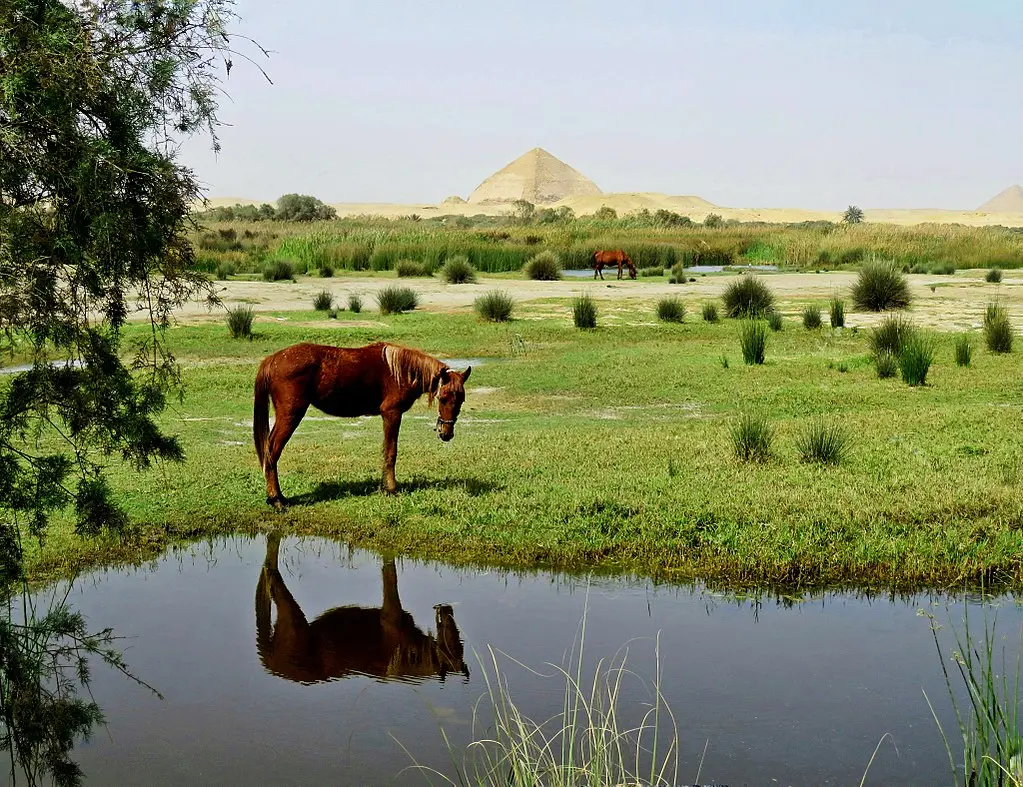
What to Know About Dashur
Here’s what you should know about Dahshur before visiting:
- Architectural Evolution: The site showcases the evolution of pyramid construction techniques leading up to the achievement of the true smooth-sided pyramid seen in the Red Pyramid.
- Royal Burial Ground: Dahshur was an important royal burial ground, where pharaohs and high officials were interred.
- Preserved State: The pyramids at Dahshur are some of the best-preserved examples of early pyramid construction, with some interiors accessible to the public.
- UNESCO World Heritage Site: Dahshur is part of the Memphis and its Necropolis is a UNESCO World Heritage Site.
- Best Time to Visit: The best time to visit Dahshur is during the cooler months from October to April.
How to Get to Dashur
To get straight to the point, the easiest and most convenient way to reach Dashur is by Uber. The driver took me all the way there and they would no doubt wait for you. Just be sure to let them know about your plan before hand and they would most likely be down for it as the earning potential for them is much higher since you’ll still be needing a ride back. It’s a win-win. Overall, for a roundtrip from Cairo to Dashur, I paid around around 300 EGP which is around 9 USD.
Compared to actual tours which could cost up to a hundred dollars, it’s a bargain. Not to mention the Uber cabs in Egypt are all air-conditioned. Watch out for touts or fake tour guides that will demand for some baksheesh!
- A tour is certainly the way to go if you’re really interested in learning more about the culture and history with a guide. (Or you can use the information found on this guide before going!)
- Rental cars are also an option, the parking spaces are vast and empty.
Where to Stay near Dashur
If you plan to visit Dashur, then staying in Cairo would be the most optimal choice as there isn’t much infrastructure in the countryside and Dashur is just a short drive away from the city.
Here are some options for you:
Best Hotels in Cairo:
- Steigenberger Hotel El Tahrir – boasts a prime position in El Tahrir Square, directly adjacent to the Egyptian museum and just moments from Khan El Khalili Bazar. Spanning 21,633 sqm, the hotel has 295 lavishly adorned rooms and suites, making it a top choice for both business and social gatherings. Additionally, it offers a range of dining options, a swimming pool, gym, and event facilities.
- Life Pyramids Inn – features amenities like a bar, restaurant, and terrace. With a 24-hour front desk, the inn provides room service, airport transportation, a communal kitchen, and complimentary WiFi. Each guest room comes equipped with air conditioning, a satellite flat-screen TV, a fridge, an electric tea pot, a shower, and storage space. Bed linen and towels are standard in every room.
- Queen Pyramids View Inn – offers a range of amenities including an ATM, a terrace, a 24-hour front desk, airport transportation, and complimentary WiFi throughout. Air-conditioned rooms come equipped with a closet, electric tea pot, fridge, safety deposit box, flat-screen TV, and a private bathroom with a bidet. All rooms come with bed linen and towels. The inn serves a choice of continental, vegetarian, or halal breakfast.
Best Hostels in Cairo:
- Dahab Hostel – emulating the ambiance of a Sinai beach camp, its distinctive rooftop is adorned with whitewashed huts. Within, the hostel exudes a relaxed, cozy atmosphere. Its outdoor garden is perfect for mingling with fellow travelers, enjoying the cool breeze and the undeniable vibe. The rooftop, reminiscent of a Bedouin corner, is a haven for artistic travelers who can bask in the sun, listen to reggae tunes, and indulge in Shisha. The hostel offers free, optimized WiFi throughout the premises.
- Holy Sheet Hostel – huge plus for the name alone. The communal areas are designed for relaxation and socializing, complete with Netflix and a PlayStation 4. Additionally, a fully-equipped communal kitchen is at your disposal anytime. Perks include a 24/7 reception, no curfew, complimentary breakfast from 8-11AM, and free WiFi throughout the hostel. Rooms are air-conditioned, and they also provide services like laundry, free hair dryer usage, and bed linen.
- Madina Hostel – aptly named after the Arabic word for “City”, is a family-run sanctuary established in 2020. Its 21 beds, spread across private and dormitory-style rooms, come equipped with modern amenities such as A/C, soundproof windows, and artwork from local talent. Madina offers complimentary breakfast, a fully-stocked kitchen, tour arrangements, and 24/7 services like airport transfers and reception.
The 3 Pyramids of Dashur
Dahshur offers a glimpse into the experimental age of pyramid construction, where pharaohs and architects alike pushed the boundaries of their ambitions towards the heavens.
Here, in the silence broken only by the whispering sands, you can walk in the footsteps of the past, tracing the contours of monumental dreams hewn from stone.
The best part is that you can enter the pyramids for free, exploring its dark corridors and feeling the eerie atmosphere. The experience is unlike any you’d get over at Cairo.
Here’s a look at what’s in store:
Bent Pyramid
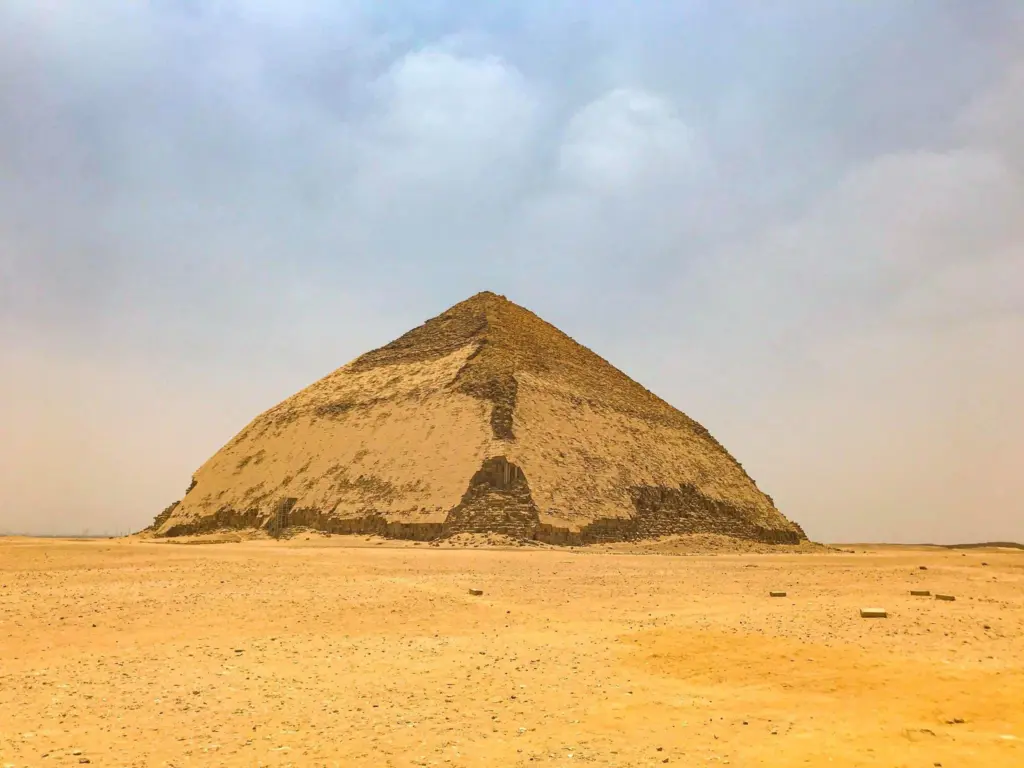
The Bent Pyramid stands as a striking paradox of ancient Egyptian ambition and architectural learning. Its enigmatic shape captures a transformative moment in ancient engineering, a tangible representation of the transition from stepped to smooth-sided pyramids. This unique pyramid, built under the rule of Pharaoh Sneferu around 2600 BCE, holds within its bent slopes the evolving understanding of eternity and the divine.
The Bent Pyramid’s design is unprecedented and unrepeated. With a height of 104 m (344 ft), its lower half rises from the desert at a steep 54-degree incline, but the top half suddenly tapers off at a more modest 43 degrees.
Some suggest that the initial angle was too steep, compromising the structure’s stability, leading the builders to adjust the top to prevent collapse. Others believe that it could reflect a time-saving decision when Pharaoh Sneferu’s reign was nearing its end. The true purpose behind this distinctive profile remains a mystery.
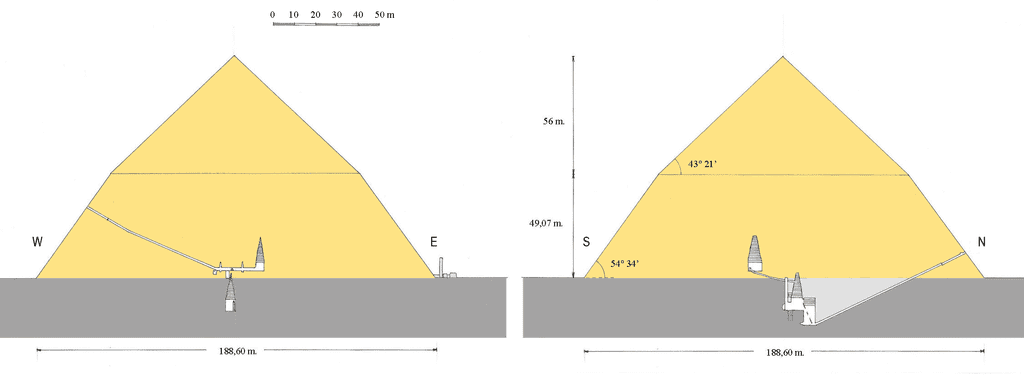
Another unique feature of the Bent Pyramid is its two entrances. Unlike any other pyramid before or after, one entrance is on the northern side, typical of pyramids of the era, while the other is on the western side. This architectural quirk adds to the structure’s mystery, with some proposing it was designed to align with celestial bodies, while others suggest it was simply an experimental element.
Inside, the Bent Pyramid are two separate burial chambers, each with its own corridor system, another anomaly in pyramid construction. The corbelled ceilings of the chambers, designed to redistribute the weight of the massive stone blocks, reflect a mastery that would be perfected in later pyramids.
Primarily, the Bent Pyramid was intended as a tomb for Pharaoh Sneferu. However, evidence suggests it may never have served this purpose. The reasons behind this are lost to time.

Red Pyramid
The Red Pyramid stands as a triumph of ancient Egyptian pyramid construction that paved the way for the Great Pyramids of Giza. Named for the reddish hue of its limestone blocks, the Red Pyramid is Egypt’s third-largest pyramid and is believed to be the first successful attempt at constructing a true smooth-sided pyramid.
This pyramid represents the culmination of Sneferu’s architectural experiments, following the lessons learned from his previous endeavors, like the Bent Pyramid. It stands as a herald of the classical period of pyramid construction in ancient Egypt and a direct forerunner to the Great Pyramid of his son, Khufu.
Sneferu’s architects mastered the art of pyramid construction with the Red Pyramid. With its sides rising at a gentle 43-degree angle, the pyramid reaches a height of about 105 m (345 ft). Unlike the Bent Pyramid, the Red Pyramid’s design does not alter halfway up, resulting in the first successful smooth-sided structure of its kind. This consistent angle and the pyramid’s completion are considered major advancements in the understanding of weight distribution and structural integrity.

The Red Pyramid’s internal structure is simplistic yet grand. A single, long corridor descends from the northern face of the pyramid, opening into a series of corbelled chambers. The largest chamber, with its high vaulted ceiling, was likely intended to be the burial chamber of the pharaoh.
The Red Pyramid was first opened in antiquity, and it has been explored numerous times throughout history. The first modern exploration was conducted by John Shae Perring in 1839, but it was Gaston Maspero in 1881 who first entered the chambers. Despite these explorations, no mummy or complete sarcophagus of Sneferu has been found within, leading to speculation about the actual resting place of the pharaoh.
While it is widely accepted that the Red Pyramid was built as the final resting place for Sneferu, the absence of his remains raises questions about its use.
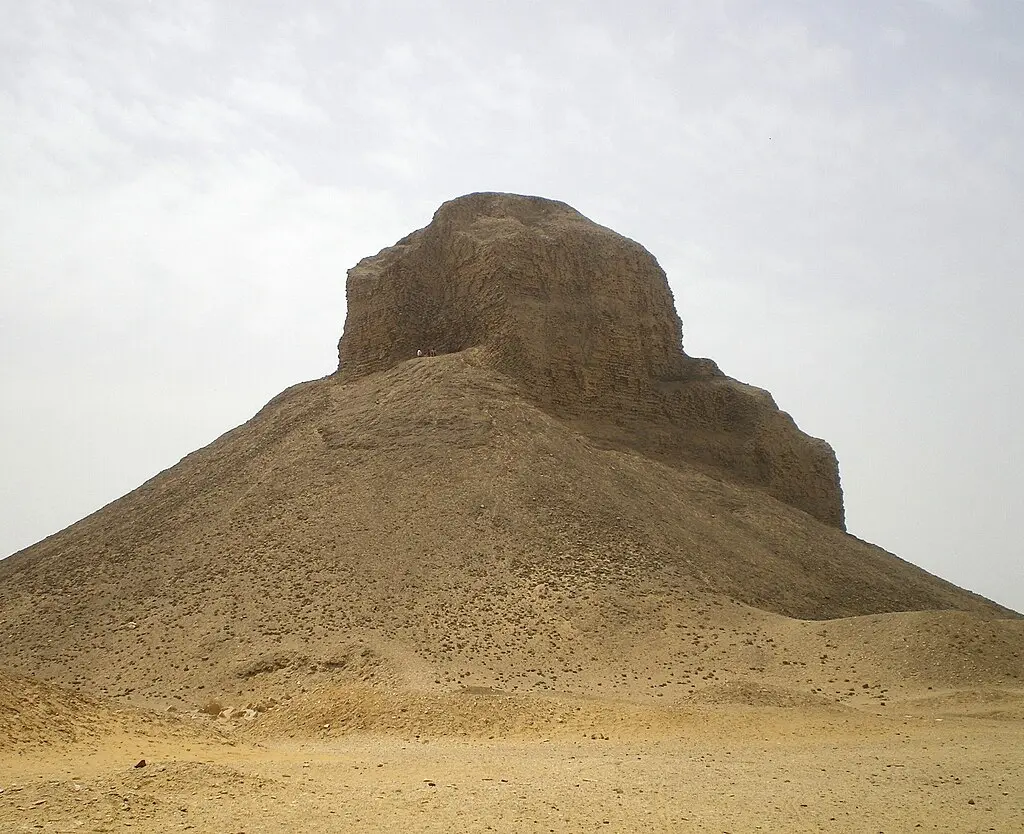
Black Pyramid
The Black Pyramid is known as the Pyramid of Amenemhat III. Built for, you guessed it, Pharaoh Amenemhat III of the Twelfth Dynasty, this pyramid marked a significant shift from the Old Kingdom’s monumental pyramid constructions to a new era where the focus was on the complexity of internal structures and the use of mudbrick, lined with a casing of limestone, which unfortunately did not withstand the test of time.
The Black Pyramid dates back to the Middle Kingdom, around the 19th century BCE. Pharaoh Amenemhat III commissioned the pyramid as part of a larger funerary complex, which included temples, canals, and other pyramids in the vicinity.
The use of mudbrick as the core material for the Black Pyramid was a significant departure from the solid stone construction of earlier pyramids. This choice was likely due to economic factors and the decline in the state’s ability to mobilize the massive workforce required for stone pyramids. The exterior limestone casing, which originally gave it a smooth, polished appearance, has eroded away over the centuries, exposing the darker rubble core and lending the pyramid its name.
The Black Pyramid is an example of the construction challenges faced by Egyptian builders as they adapted to new materials. Its current dilapidated state is partly due to the inherent instability of its mudbrick core, which failed to support the weight of the massive superstructure, causing the pyramid to collapse inward. This collapse led to the unique mound-like appearance it has today.
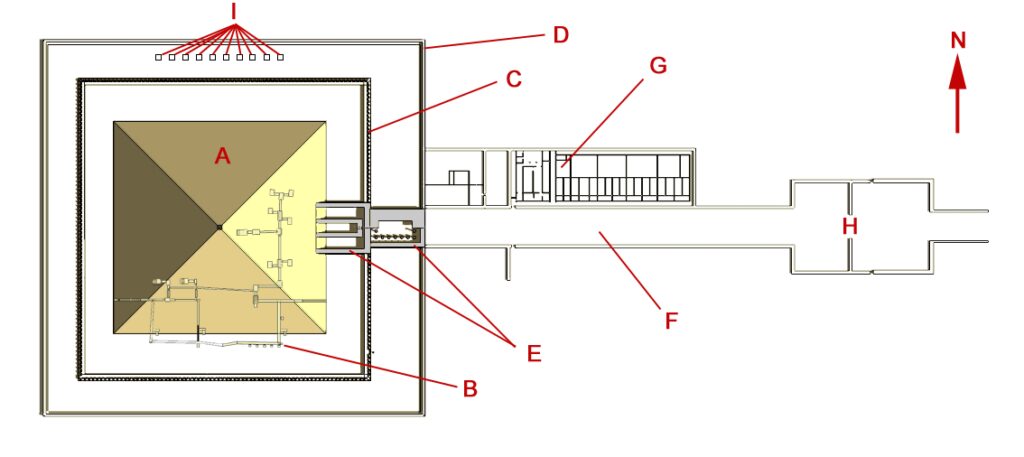
Unlike the geometric precision of the Red and Bent Pyramids, the interior of the Black Pyramid was a complex labyrinth of chambers and corridors. This elaborate internal plan was designed to thwart tomb robbers, a growing threat during Amenemhat III’s time. These passages lead to a central burial chamber, which was once lined with granite and sealed with a 45-ton quartzite slab.
The first attempts to enter the Black Pyramid in modern times were made by Karl Richard Lepsius in the mid-19th century. However, it was not until the early 20th century that the Egyptologist Gustave Jequier was able to conduct a more detailed investigation. Despite these efforts, like the Red Pyramid, the Black Pyramid did not yield the remains of its intended occupant, leading to speculations about the success of ancient robbers or a change in burial plans.
The Dashur Experience
I got sick in Cairo, yet even feeling a bit off, I was still determined to go out and do something today.
First, I had to exchange some cash, so I searched and booked an Uber and had my first experience in an Egyptian bank. They offered me cigarettes but I declined.
Good service though, I got my cash and off I went with my driver for the day, he took me to Dashur as I requested, he was surprised to find out that there were Pyramids there.
The journey to Dashur was interesting, I got to see outside Cairo. It’s sad to say life outside seemed to be much impoverished, even the donkeys seemed malnourished. It was quite sad to see this part of Egypt but also necessary.
We arrived at the Unesco World Heritage Site and it was a pleasant surprise to see it was empty, I had the entire desert and pyramids to myself. I started with the Red Pyramid, and encountered a French couple inside who apparently hired a full day driver for a couple of hundred dollars. Uber was definitely a much cheaper alternative.
My next stop was the Bent Pyramid, I totally Indiana Jones’d that place, it was really fun and even a bit scary to be inside that dark and narrow labyrinth all by my lonesome.
I found myself to be out of breath quite fast, I wanted to continue on to Saqqara but my body wouldn’t let me, so I told the driver to head back and stop by McDonald’s (the only place in Egypt that seemed to have air-condition.) I got my food and we went our separate ways.
Plan Your Trip to Egypt | Best Travel Resources
Book Your Accommodations
- Booking.com – the world’s leading online booking platform for accomodations around the world, they have an extensive amount of available listings with zero booking fees and best price guarantees.
- Hostelworld – a backpacker’s best friend, Hostelworld has the largest collection of hostels and guesthouses for affordable prices.
Don’t Forget Insurance
- SafetyWing – from Nomad Insurance, an insurance by nomads for nomads. They understand our lifestyle well and have really comprehensive and flexible plans that cater to any traveler.
Find Cheap Flights
- Kiwi.com – my go-to for booking and finding the cheapest flights and it’s helped me save tons of money. They do virtual interlining which is connecting flights from airlines that do not codeshare, so you can find routes that you wouldn’t be able to find normally.
Join Tours & Activities
- GetYourGuide – is one of the best places to find unique tours and activities. I found that it’s an excellent way to meet fellow travelers and create fond memories. They are not only limited to tours as they also offer niche services such as skip-the-line tickets or private transfers.
Catch a Ride
- Rentalcars.com – nothing beats the freedom of the road, Rentalcars.com is the world’s largest online car rental service. They operate across 160 countries so they’re the perfect partner to work with if you find yourself wanting a ride.