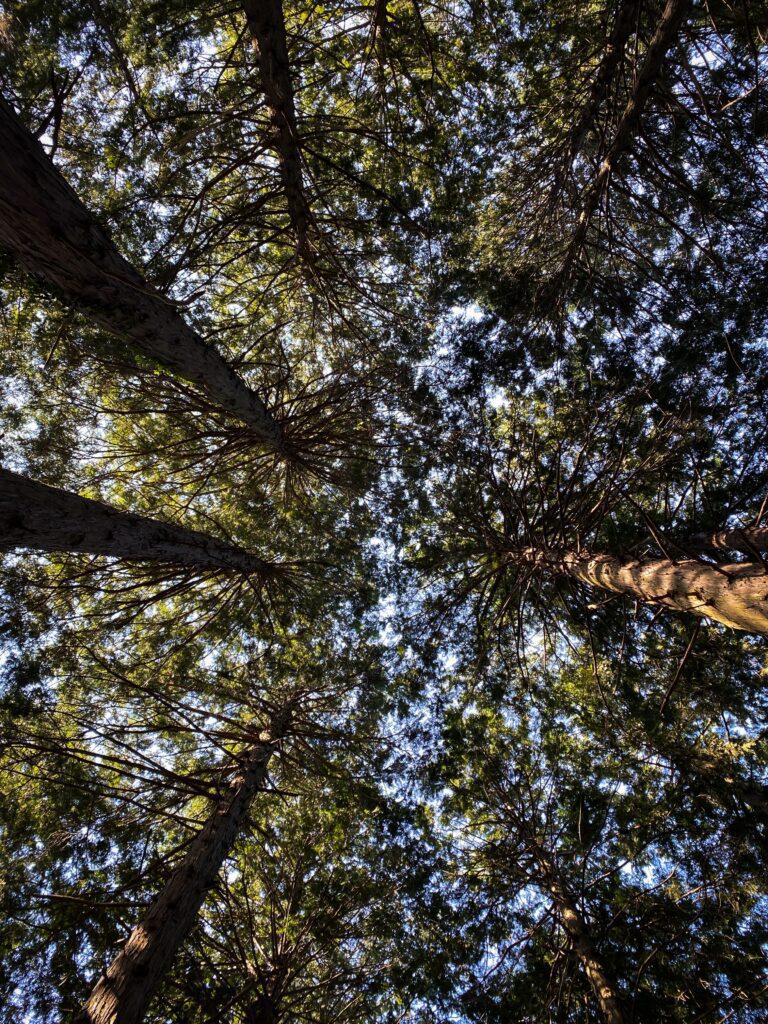
In the heart of Jeju Island stands Hallasan, a dormant volcano and South Korea‘s tallest mountain.
Stretching up to 1,947 m (6,388 ft), Hallasan is the pulsating core of Jeju’s natural and spiritual essence. Crowned by a vast crater and adorned with diverse ecosystems, the mountain transforms into a mesmerizing winter wonderland as the seasons turn.
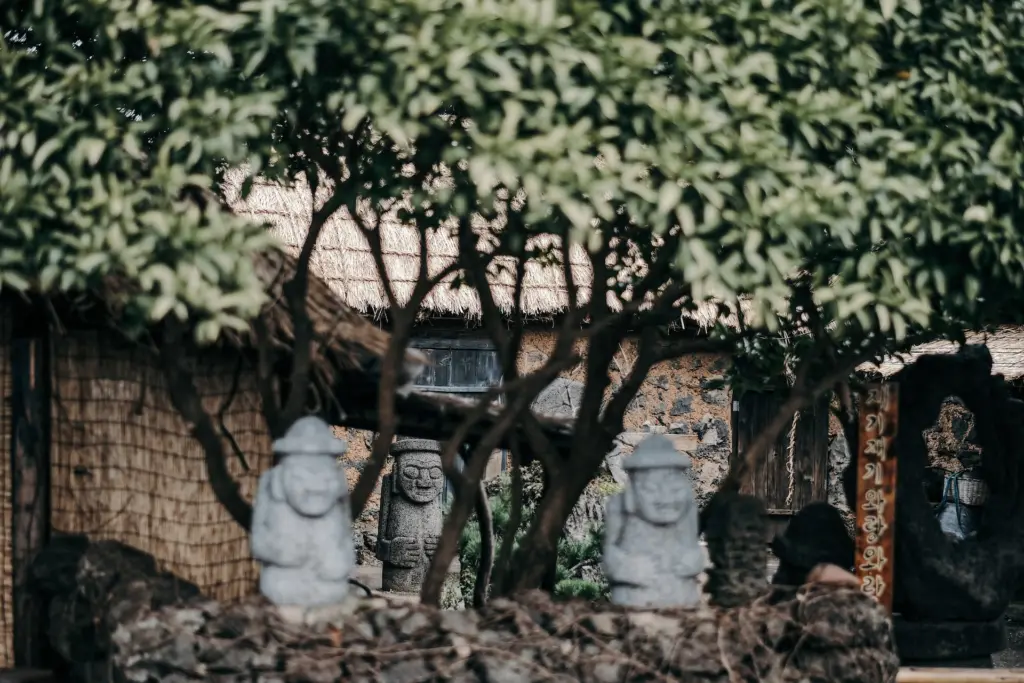
As the first frost of the year sets in, Hallasan’s trails glisten under a blanket of snow, and its forests echo with the crunch of winter boots. The chill in the air only adds to the exhilaration of ascending to the mountain’s peak, where panoramic views of the snow-covered island await. You might even see some Dol Hareubang along the way, be sure to ask for some blessings!
Hiking Hallasan during winter offers an almost ethereal experience, blending the tranquility of pristine snowy landscapes with the thrill of a challenging climb. If this is something that appeals to you, read on.
This guide will bring you across this icy adventure, while ensuring a safe and memorable journey to the pinnacle of Jeju Island.
Table of Contents
ToggleWhy is Mt. Hallasan Sacred?
Just like the holy Fujisan in Japan, Hallasan is also considered to be a sacred mountain.
Said to be the birthplace of creation, the first men emerged from the peak, astonished to find themselves in existence. They soon encountered women, who had been delivered to the shores of the island by the waves of the ocean. Together, these first humans discovered the bounties of the island – fruits, grains, fowls, and animals.
Beyond just myths, the locals have, for generations, regarded the mountain with deep reverence. For them, it isn’t just a mountain, but the abode of spirits. Some believe that the very bosom of Hallasan houses the gods of the island, watching over its inhabitants.
In fact, the idea that a sacred spirit resides at its pinnacle, whose face no one can behold without facing dire consequences, has deterred many from attempting to conquer its summit.
Adding to its enigma, atop the mountain lies the crater lake, often seen as a mirror reflecting the heavens, is said to be profoundly deep, with some even speculating it as an entrance to the underworld.

What to Know Before Hiking Mt. Hallasan
For a stress-free Hallasan hiking experience, timing is key! To enjoy the hike and stay on the safe side, it’s good to know when to start and when to head back.
Rangers monitor the mountain for the safety of all hikers. Be aware of the cut-off times as rangers will start ushering people down to ensure everyone’s safety. Another thing to note is that each trail offers different distances and duration so plan accordingly.
Here’s a quick glance at the best times based on the season:
|
|
Winter
|
Spring & Autumn
|
Summer
|
|---|---|---|---|
|
Recommended Start Time
|
9:00
|
9:30
|
10:00
|
|
Mt. Hallasan Summit Closing Time
|
13:30
|
14:00
|
14:30
|
|
Witse Oreum Shelter Closing Time
|
15:00
|
16:00
|
17:00
|
|
Nambyeok Turning Point Closing Time
|
14:00
|
14:30
|
15:00
|
Which Hallasan Trail is Best?
Mt. Hallasan offers 7 trailheads that cater to different hiking preferences and skill-level, but only 2 will take you all the way to the top. Here’s an in-depth look:
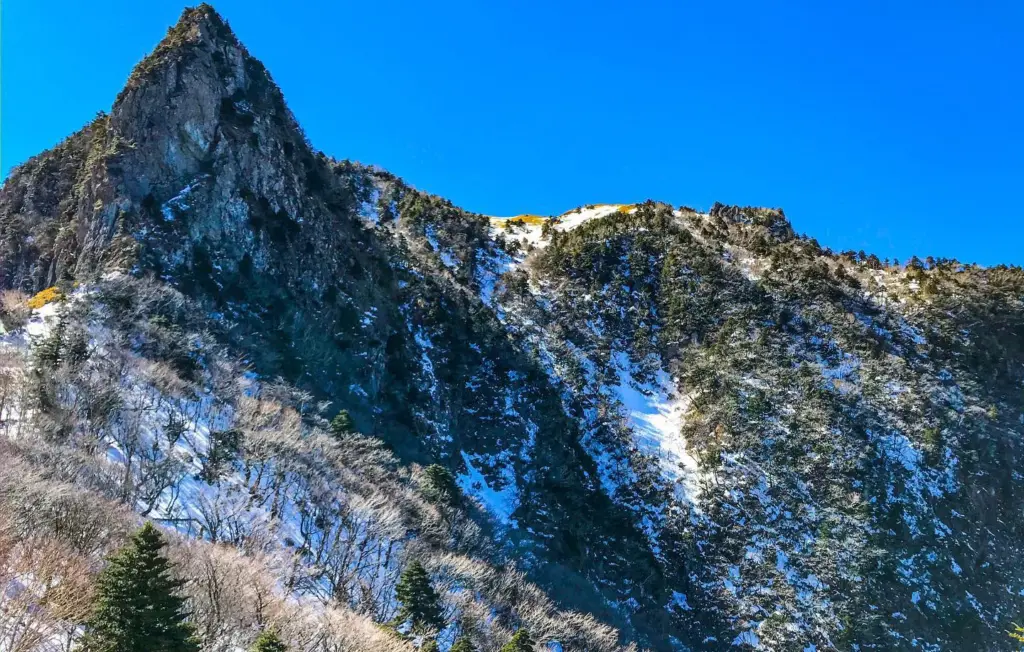
1. Seongpanak Trail
Why Choose the Seongpanak Trail:
Seongpanak Visitor Center: Here, you’ll find restrooms, parking facilities, and a small shop where you can buy snacks, drinks, and basic hiking supplies.
Forest Path: Initially, the trail is gentle, through a lush forest.
Lava Ridge: You’ll encounter lava ridges, remnants of past volcanic activity. Unique, but challenging to navigate.
Shelter: About two-thirds of the way up, there’s a shelter. It’s a good spot to take a break.
The Seongpanak Trail spans an approximate distance of 9.6 km (6 mi) one way. If you’re setting out to conquer this trail, you should allocate around 4.5 hours for ascent and a similar time for the descent, making it a full day’s trek.
There’s also a side trail going to Sara Oreum Observatory. This is the route I went with going up and I recommend opting for this first and then going down via Gwaneumsa to see both sides of the mountain, though you can certainly do an out and bike hike as well, but that’s not so fun now isn’t it?
Do note that you have to make a reservation to hike up Seongpanak. You can do it through the Hallasan website.
2. Gwaneumsa Trail
Why Choose the Gwaneumsa Trail:
-
Starting Point: The trail commences from the Gwaneumsa Temple (A Korean Buddhist Temple from the Mahayana Tradition). In addition to its spiritual ambiance, the temple area offers a campsite right at the trail entrance. It’s an ideal spot for relaxation before or after the hike.
-
Forest Bathing Experience: As you begin your hike, the trail offers an immersive forest bathing experience.
-
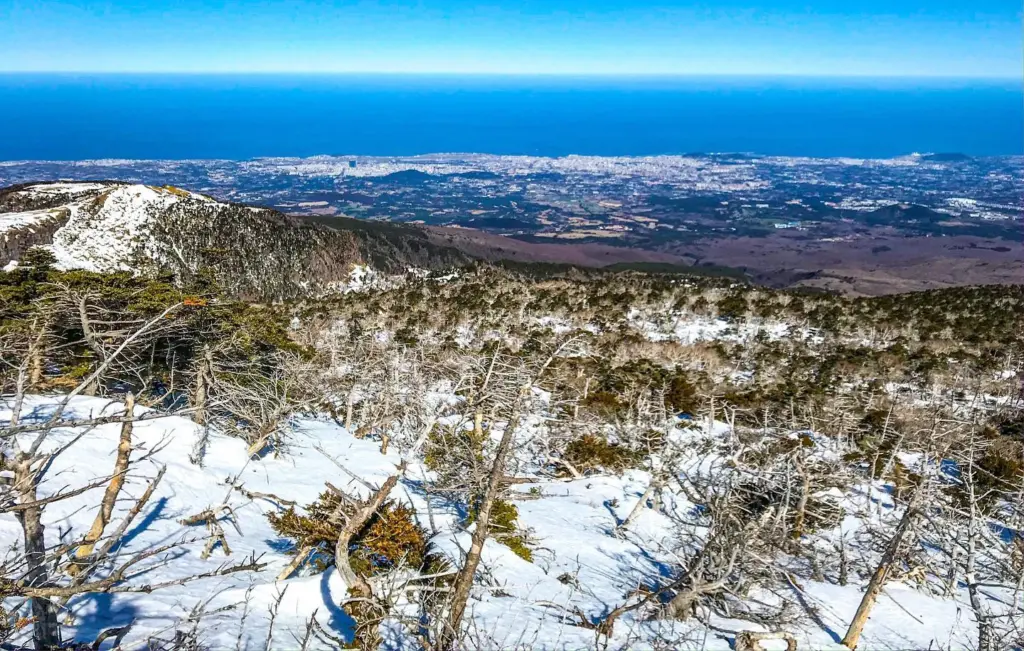
Ascending Views: While the Seongpanak trail has its lava ridges, the Gwaneumsa Trail is renowned for its continuously changing and captivating views.
The Gwaneumsa Trail, winding its way from the northern side of Mt. Hallasan, is often regarded as the most picturesque path leading to the mountain’s summit. This trail promises a visual treat, serving dramatic vistas at almost every turn.
As you embark on this journey, you’ll cover a distance of 8.7 km (5.4 mi), which typically takes about 5 hours to complete one way.
Given the trail’s length and intermittent challenges, starting your hike early is crucial. In the summer months, it’s better to start no later than 10 am and aim to reach the upper shelters by 1 pm.
However, during the winter season, it’s best to set a goal of noon for the same checkpoint, considering the shorter days and potentially harsher weather conditions. I started my hike just before sunrise even.
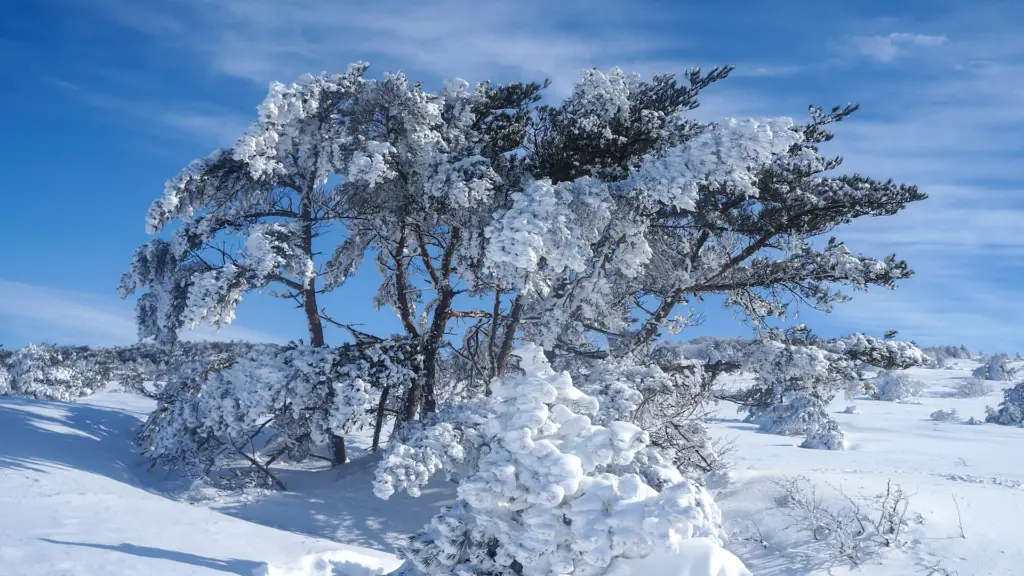
3. Eorimok Trail
Why Choose the Eorimok Trail:
-
High Starting Point: The entrance of the Eorimok Trail is situated at an elevation of 970m above sea level.
-
Oak Tree Passage: One of the significant attractions of this trail is the beautiful oak trees that line the path.
-
Gradual Ascent: Unlike some of the steeper trails on Hallasan, the Eorimok Trail has a relatively shallow incline.
-
Nambyeok Bungijeom: The trail concludes at Nambyeok Bungijeom, which stands at an elevation of 1,600m above sea level. Though not the peak of Hallasan, this point still offers satisfying views and a sense of accomplishment.
The Eorimok Trail is a serene path that stretches approximately 6.8 km (4.2 mi). Typically, it takes about 3 hours to traverse this trail one way.
With a gentle incline and enveloped by beautiful oak trees, you’ll find youself in a canopy that offers shade and a delightful ambiance. It’s often chosen by hikers looking for shorter expeditions.
It’s worth noting that it doesn’t lead you to the peak of Mt. Hallasan, only Seongpanak and Gwaneumsa do. Nevertheless, the tranquility and natural beauty it offers make it a worthwhile trek if you’re looking to immerse in nature without the challenge of reaching the mountain’s summit.

4. Yeongsil Trail
Why Choose the Yeongsil Trail:
Vantage Points: As the trail elevates, there are several vantage points offering breathtaking views of the western side of Jeju. These spots are perfect for taking pictures and short breaks.
Rock Formations: Unique rock formations dot the Yeongsil Trail, Hallasan is a volcano after all.
End Point: The trail concludes at the Witse Oreum junction. From here, hikers can decide whether to continue onto another trail or head back down.
Yeongsil Trail, stretching 3.7 km (2.3 mi) would take around 1.5 hours to accomplish. It is often celebrated as the finest route for witnessing the splendor of autumn foliage.
It starts off gentle and gradually becomes a bit more demanding, introducing an uphill route that meanders alongside steep mountain ridges. This captivating ascent will bring you up close to the expansive Yeongsilgyegok Valley and imposing rock walls which suggest the remnants of a once-majestic volcanic entrance.
As you climb, the intriguing cluster of volcanic formations known as Yeongsilgiam emerges, dotting the landscape with their peculiar shapes that seem to reach out to the heavens. The trail then introduces hikers to the iconic Byeongpungbawi Rock before leveling out towards the Witsaeoruem Rest Area.
Not to be missed is the Sajebi Hill, where you can refresh with a sip of mineral spring water before descending towards Eorimok.

5. Donnaeko Trail
Why Choose the Donnaeko Trail:
Near Seogwipo City: The Donnaeko Trail commences at the Visitor Information Center situated 500 meters above sea level in Seogwipo City.
Lack of Spring Water: Though not necessarily a good thing, it’s worth noting that there’s no spring water available on this trail, so come prepared with ample drinking water.
Nambyeok Circulation Route: This trail links to Witse Oreum and gives you the option to continue your descent via the Eorimok and Yeongsil Trails.
The Donnaeko Trail stretches out for approximately 7 km (4.3 mi). For those planning to embark on this journey, expect a hike duration of about 3.5 hours one way.
The trail brings with it a specific set of challenges, particularly in the form of unpredictable weather changes near the Nambyeok Junction area. Hence, it’s always wise to adhere strictly to the marked trails.
The scenic value of the Donnaeko Trail thought not as good as the other trails, does offer a unique perspective into the dense forests.
6. Eoseungsaengak Trail
Why Choose the Eoseungsaengak Trail:
Short and Sweet: This trail stands out as the shortest hike on Hallasan
Eoseungtaeng Oreum Views: Here, the vistas open up, offering expansive views of Jeju’s plains and even the peak of Hallasan on clear days.
The Eoseungsaengak Trail offers a quick yet memorable journey. The path stretches for a modest 1.3 km (0.8 mi). Unlike the more demanding trails of Hallasan, Eoseungsaengak requires just about 30 minutes of hiking one way, making it a perfect choice for those short on time or new to hiking.

7. Seokgulam Trail
Why Choose the Seokgulam Trail:
Trail Features: As one of the shorter trails, Seokgulam is perfect for those seeking a light hike.
Seokgulam Temple: The trail leads to Seokgulam Temple, a serene location surrounded by nature.
With a duration of just about 50 minutes one way, the Seokgulam Trail, stretching over a distance of 1.5 km (0.9 mi), is an inviting path frequented by people eager for a gentle and quick immersion into the natural landscapes of Hallasan.
Originating from the Chunghon Memorial Site parking lot, this trail is an ideal choice for a light hike, especially appealing to families.

How to Get to Mt. Hallasan
By Bus:
- To Seongpanak Trailhead: Take bus 281 or 181 from Jeju Intercity Bus Terminal bound for Seogwipo. Get down at the Seongpanak trailhead bus stop.
- To Gwaneumsa Trailhead: Take bus 281 to Seogwipo and get off at Jeju University. Switch to bus 475 and get off at Gwaneumsa trailhead bus stop.
- To Eurimok Trailhead: Take bus 240 towards Jungmun and get off at Eorimok. It’s another 15 minute walk to the trailhead.
- To Yeongsil Trailhead: Take bus 240 towards Jungmun, get off at Yeongsil Ticket Office. Walk 45 minutes to the trailhead.
- To Donnaeko Trailhead: Take bus 281 bound for Seogwipo and get off at Seogwipo Industry Science Highschool. Transfer to city bus 611 or 612 and get off at Chunghon Cemetry Square. Walk another 20 minutes towards Donnaeko’s trailhead.
- To Eoseungsaengak Trailhead: Take bus 240 and get off at Eorimok.
- To Seokgulam Trailhead: Take bus 240 towards Cheonwangsa Temple.
By Rental Car or Taxi: If you prefer a direct route, renting a car or taking a taxi from anywhere on Jeju Island is convenient. Both Seongpanak and Gwaneumsa trailheads have parking areas.
- By Tour: There are also tours you can join that will take you to Mt. Hallasan for a short nature hike and other sites around the island.
Where to Stay on Jeju Island
Thankfully, Jeju offers plenty of accommodation choices for all sorts of travelers. I recommend staying within the city center if you plan to make use of public transportation or utilize hotel-pick ups from tours.
If you have a rental car, you can find cheaper rates around the city outskirts, win-win!
Here are some of my recommendations on where to stay in Jeju:
Best Hotels on Jeju Island:
- Grand Hyatt – provides a premium experience with its air-conditioned rooms, complimentary WiFi, and private parking. This 5-star resort boasts round-the-clock services, from a 24-hour front desk to an ATM. Enjoy amenities like indoor and outdoor pools, a fitness center, and an in-house restaurant. Each elegantly furnished room features comforts like a flat-screen TV, safety deposit box, and a well-equipped private bathroom.
- Ramada by Wyndham – marvel at the Halla Mountain views from the year-round open rooftop garden. The rooms come equipped with floor-to-ceiling windows, a seating area, a work desk, and modern amenities including a flat-screen TV. The en-suite bathrooms offer a luxurious walk-in shower and complimentary bath products.
- Ventimo Hotel & Residence Jeju – ensures a seamless experiencewith complimentary Wi-Fi throughout its premises, a fitness center, and gratis private parking. This 4-star establishment stands out with its picturesque garden and specialized family rooms. Each room, perfectly cooled with air conditioning, boasts a cozy seating area, a contemporary flat-screen TV, a secure safety deposit box, and an en-suite bathroom equipped with modern conveniences like a bidet and hairdryer.
Best Hostels on Jeju Island:
- Jeju Guesthouse – offers a blend of traditional Korean culture and modern comforts. Easily explore the island thanks to convenient transport links from their location. Enjoy free Wi-Fi, a community space, and a daily breakfast spread from 06:00 – 10:00. If you want a quiet place to stay, away from the parties. This is the place to be.
- Yesjin Guesthouse – offers separate spacious dormitory rooms for men and women. A hearty breakfast with a dedicated period for house cleaning and sheet changes. Please note, the guesthouse maintains a smoke-free policy; smokers are kindly asked to use the area across the street.
- Jeju Hiking Inn and Gudeok Guesthouse – the pioneering guesthouse of Jeju, prioritizes its rich character over modern luxury. With a legacy that respects tradition, it may not offer the ultra-modern comforts of new hotels, but ensures a homely atmosphere, you’ll be treated like family.
What to Bring for Mt. Hallasan
Conquering Hallasan, like any mountain hike, demands preparation. Depending on the season, your checklist will vary, but there are some essentials you shouldn’t leave behind. Here’s a tailored list to help you pack:
- Hiking Boots: A sturdy pair of hiking boots is a must. Ensure they’re comfortable and have a good grip. Unfortunately, my shoes got stolen right after I did the hike!
- Backpack: A lightweight, water-resistant backpack to carry all your essentials.
- Water & Snacks: Always hydrate. Energy bars, nuts, and chocolates can give you that much-needed boost.
- First-Aid Kit: Basic first aid materials in case of minor injuries.
- Rain Gear: Weather can be unpredictable. It’s best to be prepared with a poncho or rain jacket.
- Travel Insurance: Accidents can happen. Ensure you’re covered, especially if you’re not a local resident. I recommend getting SafetyWing!
For winter, the terrain of Hallasan changes and offers its own set of unique challenges with awesome rewards. Here’s what to pack if you’re attempting this hike during the snowy months.
- Warm Clothing: Layering is the key. Think thermals, fleece jackets, and a windproof outer layer.
- Hat, Gloves & Scarf: Protect those extremities from the biting cold.
- Crampons: These traction devices will prevent slipping on icy paths. In fact, everyone was wearing one on the way up to the summit.
- Ski Poles: These can assist in maintaining balance on snowy terrains.
- Sunglasses & Sunscreen: Yes, even in winter! The snow can reflect UV rays.
- Hot Packs: Handy to warm up your hands and pockets on particularly cold days. The summit was extremely cold.
Mt. Hallasan Hiking Experience
I woke up very early the next day, took my shower and went out to find the bus stop. It was still very dark and cold. Very different from the weather back at Seoul. I waited for a bit and got on the bus. I tried to get whatever rest I could but I was quite nervous. I didn’t know what to expect since it was gonna be my first time hiking in the snow.
I arrived at the trailhead, a bit lost as to where the entrance was since I couldn’t see a thing but I followed where the people were going and found the starting point.
I was now hyped, ready to go and started a good pace going up, there were a lot of stairs and I found myself taking breaks every now and then but maintaining a steady momentum.
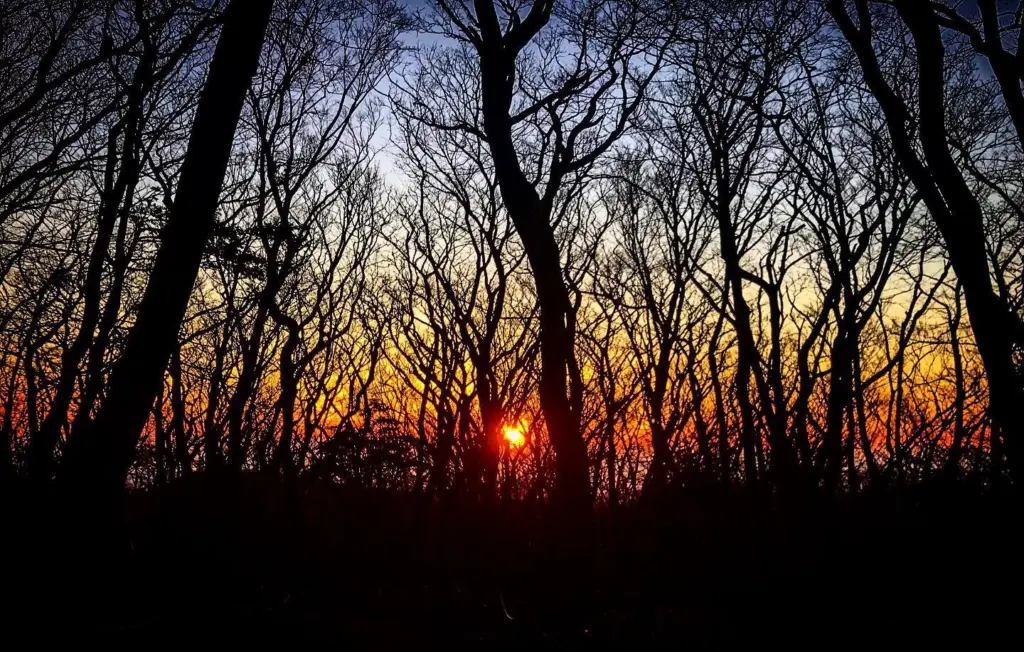
The sunrise started and gave me much needed sight, illuminating the dark forest and casting silhouettes on the trees, it was quite a sight to behold.
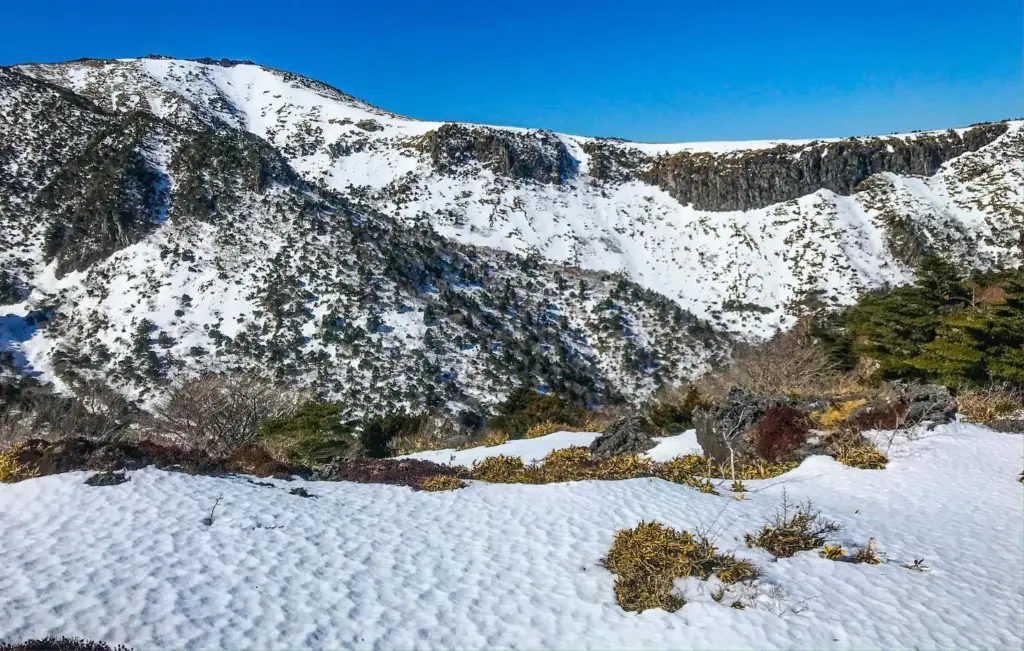
After an hour or so of constant uphill, patches of snow started to appear. The soil was slowly being covered up as I went higher and higher. It also started to feel a bit of the fatigue from the all the climbing but I was also excited as I wanted to see more snow.
I passed a few stations, eating my sandwiches along the way. Halfway through the hike, I realized I wouldn’t be able to find food or rent snow shoes at one of the stations.
I saw the signs that warned proceeding without crampons would be perilous. Now, I wasn’t just going to go up and turn back so I decided to push for it and continued onward through the now winter wonderland landscape of Hallasan.
It definitely got harder as I found myself slipping on the slippery ice and snow, it took its toll on my body more as I had to really grip hard on the rope to support myself going up while others passed by me seamlessly.
This continued on for a long time with some flats in between. The final stretch was soon in front of me, there were soldiers also doing the hike but they were simply running through it like it was nothing.
As for me, the wind blared and the cold felt like a slap on my face, I clutched on the rope and did my best to put one foot forward and the next, slipping a bit each time. Eventually, I did make it to the top.
Here, the wind was at its most fierce.
I didn’t have much time to celebrate until the cold started to seep in my body, so I tried to see as much of the crater and summit as I could, I asked an old man to help me take my picture and I quickly hurried down.
Downhill was also quite difficult for me, I was tired and very hungry. I certainly did not bring enough food.
I managed to get to a view point and begged a middle-aged man for some food and got some kimchi gimbap from him. I was overjoyed, this could keep me going for a while.
Another guy overheard my predicament and also offered me some chocolate, which I accepted without hesitation. The kindness of strangers have filled me up and I found myself cruising for a bit more, encountering the chocolate guy several times in various resting points.
I have also devised a way to go down at a much faster and easier pace: sliding through the snow. As I laid my butt and pushed, I flowed like water downhill, saving my legs from a lot of fatigue and downhill pressure.
I continued to do this for who knows how long, there was a close call where I ended up gaining too much speed and crashed a couple of times, having to grab at some branches or rope.
There was one incident where I literally stopped myself before sliding off the cliff. It was at this point that I made the wise decision of stopping this tomfoolery and to just walk.
Walking also proved to be challenging with the slippery snow and ice and my shoes were not made for it at all, especially going through narrow cliffs. I wonder how many lives I would have lost if not for my sheer dumb luck.
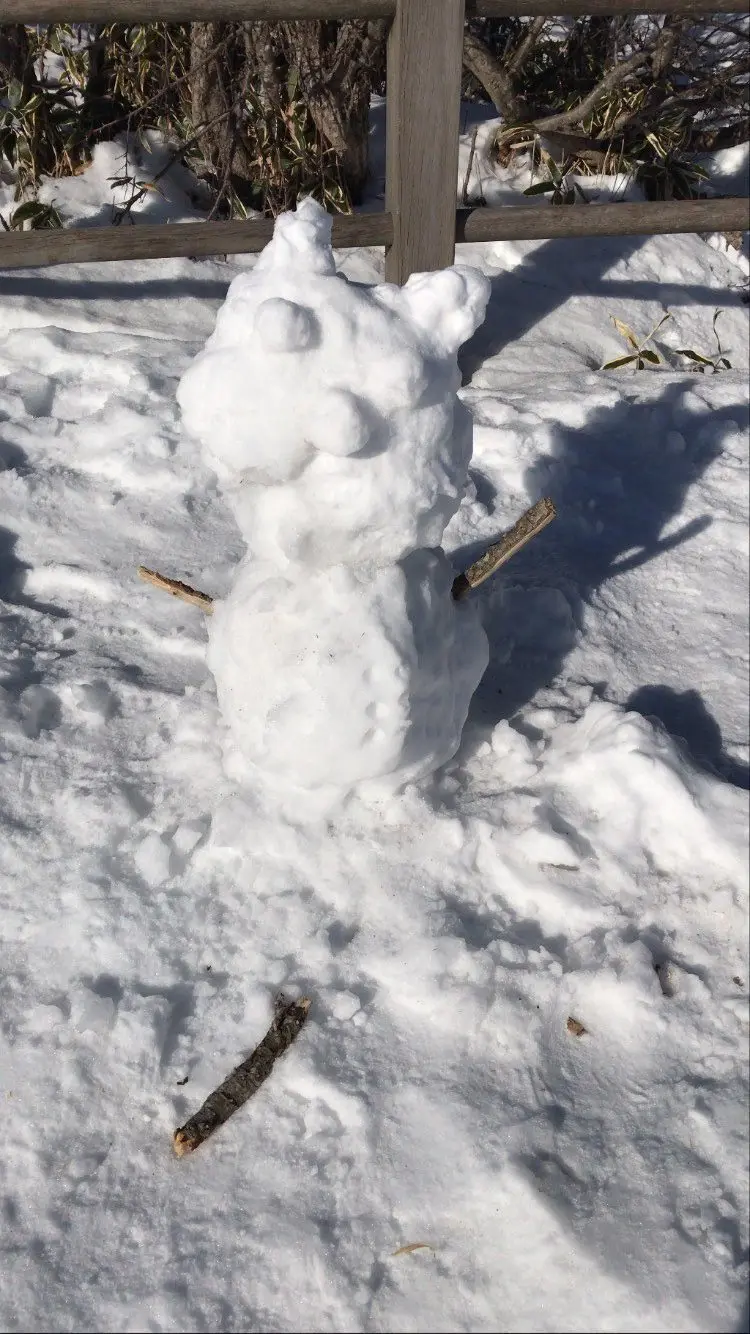
Soon, the snow started to pave way to mud and it was back to good old soil. A very welcome terrain after such a hard experience.
I was glad the worst was behind me, there were beautiful rivers flowing, some caves by the valleys and lush vegetation again.
The only problem was some paths had such spikey rocks, it made it so hard and borderline painful to just walk. I kept at it for so many hours, losing my gloves somewhere along the way as I stopped by several resting points.
My legs were aching and I was very hungry again, eventually I made it to the exit. Finally, it was over and I still had much time to spare.
I decided to head to Gwaneumsa Temple, a Mahayana Buddhist temple, since it was close by. I dragged my crying legs to more uphill slopes until I reached the temple grounds.
Just walking a few meters would already tire me out and I took every opportunity to just rest and sit down. The temple grounds itself was amazing, the main attraction was a giant golden Avalokiteshvara statue surrounded by hundreds of other Buddha stone statues.
I explored the place a bit more and waited for my bus back to town, praying I got the right one as there was no English at all and I just had to rely on comparing the Hangul on a Korean map app.
Fortunately, it was the right one.
Plan Your Trip to Jeju Island | Best Travel Resources
Book Your Accommodations
- Booking.com – the world’s leading online booking platform for accomodations around the world, they have an extensive amount of available listings with zero booking fees and best price guarantees.
- Hostelworld – a backpacker’s best friend, Hostelworld has the largest collection of hostels and guesthouses for affordable prices.
Don’t Forget Insurance
- SafetyWing – from Nomad Insurance, an insurance by nomads for nomads. They understand our lifestyle well and have really comprehensive and flexible plans that cater to any traveler.
Find Cheap Flights
- Kiwi.com – my go-to for booking and finding the cheapest flights and it’s helped me save tons of money. They do virtual interlining which is connecting flights from airlines that do not codeshare, so you can find routes that you wouldn’t be able to find normally.
Join Tours & Activities
- GetYourGuide – is one of the best places to find unique tours and activities. I found that it’s an excellent way to meet fellow travelers and create fond memories. They are not only limited to tours as they also offer niche services such as skip-the-line tickets or private transfers.
Catch a Ride
- Rentalcars.com – nothing beats the freedom of the road, Rentalcars.com is the world’s largest online car rental service. They operate across 160 countries so they’re the perfect partner to work with if you find yourself wanting a ride.