Chitwan stands as a majestic gateway to a world of wildlife wonders! Home to the charming town of Sauraha, which serves as a convenient base for exploring the park, Chitwan offers an escape into the wild. The question is: Are you ready for it?
Chitwan is renowned for its protected populations of one-horned rhinoceroses and the elusive Bengal tigers, making it one of the best places for wildlife safaris in Asia!
Beyond the thrill of wildlife spotting, Chitwan National Park is a place of conservation, where diverse ecosystems create a haven for over 500 species of birds, making it a bird watcher’s paradise.
Whether you’re navigating through the tall grasses or cruising down the river, Chitwan offers a profound connection to nature that resonates long after the adventure ends.
Table of Contents
Toggle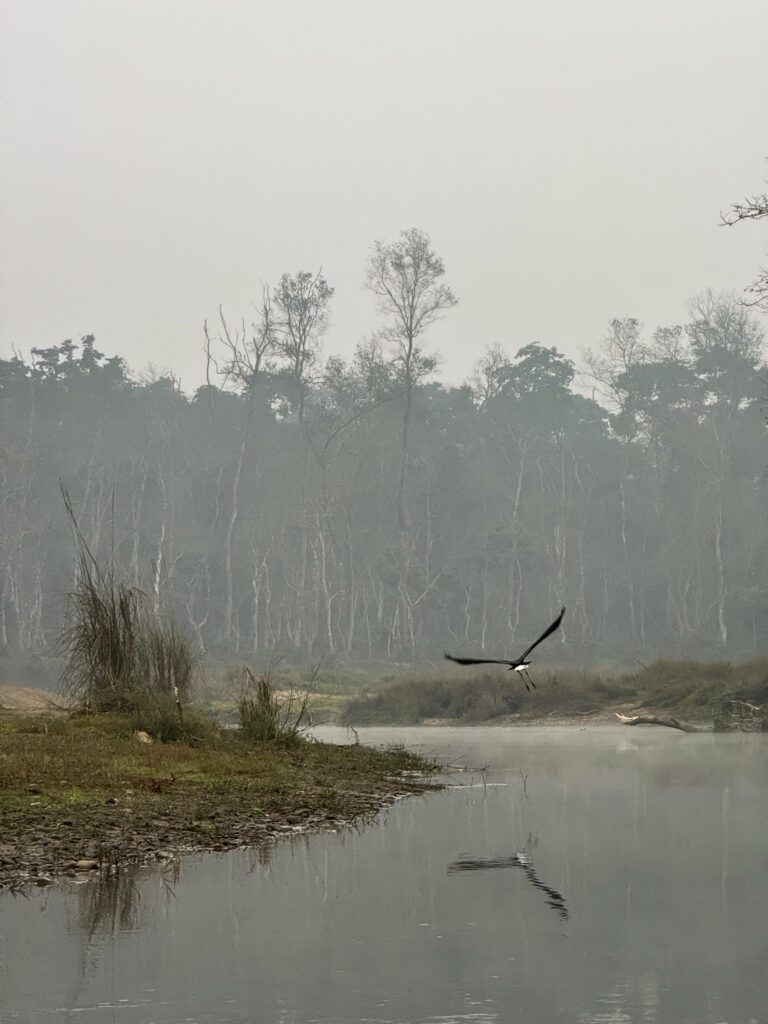
History of Chitwan
Chitwan National Park was established in 1973 and recognized as a UNESCO World Heritage site in 1984. Originally, the area served as an exclusive hunting ground for Nepalese royalty and visiting dignitaries. During the late 19th and early 20th centuries, these royal hunting parties were grand events that significantly impacted the local wildlife populations.
The transition from a royal hunting preserve to a protected conservation area started to take shape in the 1950s and 1960s, as wildlife numbers began to dwindle alarmingly. This shift in perspective was largely driven by a growing awareness of the importance of conservation and the need to protect Nepal’s diverse ecosystems.
By the 1970s, with support from international organizations like the World Wildlife Fund (WWF), the Nepalese government formally established Chitwan National Park.
Top Things to Do in Chitwan
1. Visit Chitwan National Park
Let’s understand just how awesome Chitwan National Park really is. First off, it’s a sanctuary for an impressive diversity of wildlife and plant species, set within the lush Terai lowlands of Nepal.
The park is most famous for its protection of the one-horned rhinoceros, a species that once faced severe threat from poaching. Through rigorous conservation efforts, the rhino population in Chitwan has become one of the largest in Asia.
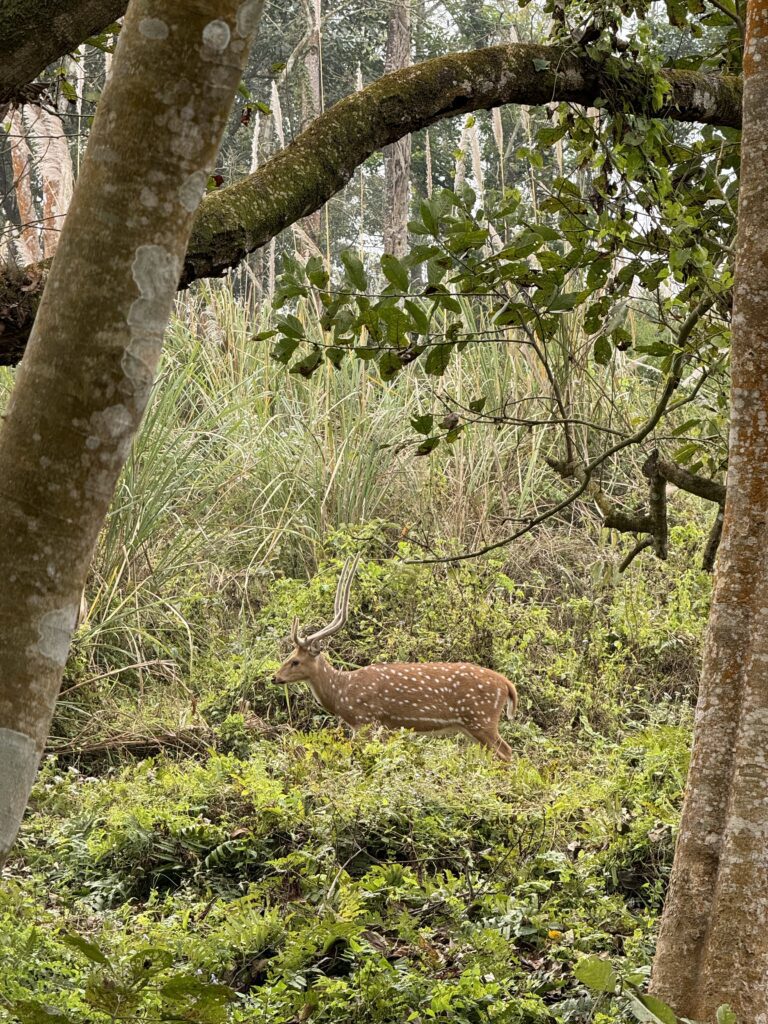
Chitwan is also home to four species of deer including the spotted deer, sambar, barking deer, and the hog deer, as well as other mammals like sloth bears, leopards, and the gharial crocodile.
Finally, the park’s flora is just as varied with its dominant sal forests, which cover about 70% of the park, interspersed with grasslands and riverine forests!
2. Watch the Tharu Culture Program
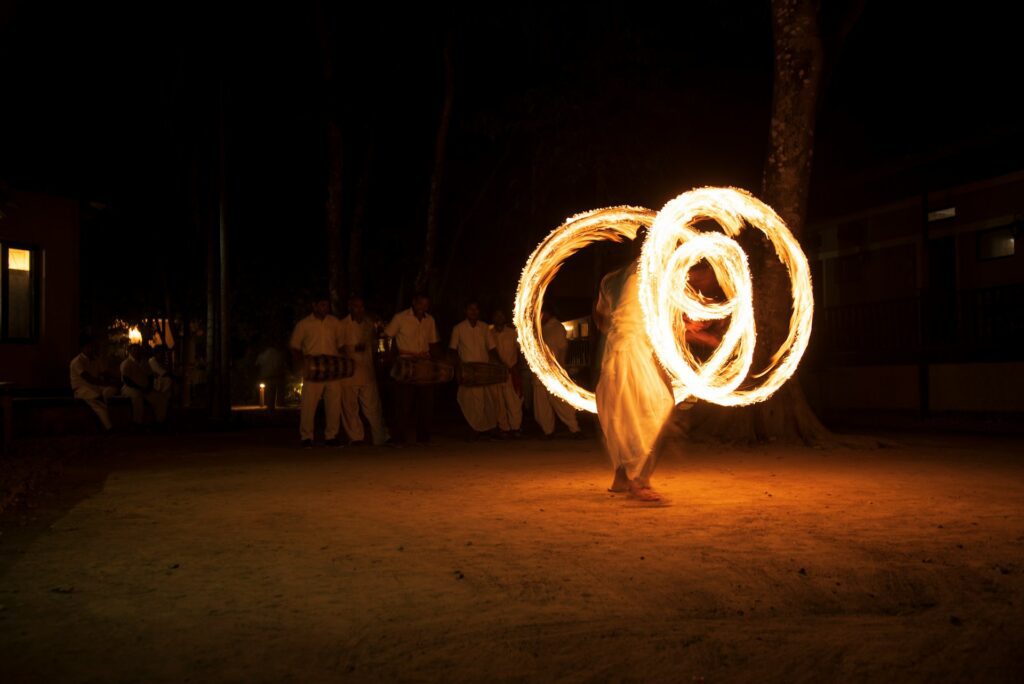
Experiencing the Tharu Culture Program offers a vivid window into the rich cultural heritage of the Tharu people, indigenous inhabitants of the Terai region. These programs are held in the evenings and provide an engaging glimpse into the traditional lifestyle, customs, and crafts of the Tharu community.
The Tharu dance forms are deeply symbolic, often mimicking the movements of animals which is reflective of their close connection to nature. Among these, the Stick Dance, Peacock Dance, and Fire Dance are particularly captivating!

3. Go on a Jeep Safari
Embarking on a jeep safari is one of the most thrilling ways to explore the vast and diverse landscapes of this renowned wildlife sanctuary.
Jeep safaris in Chitwan allow you to cover both the dense forests and open grasslands, where the opportunities to spot wildlife are abundant. These safaris are conducted in sturdy, open-top vehicles, designed to navigate the rugged terrains of the park.
Typically conducted early in the morning or late in the afternoon to coincide with times when animals are most active.
4. Take a Walking Safari
Guided by experienced naturalists, a walking safari in Chitwan allows you to tread along paths less traveled, where the sounds and sights of the jungle can be appreciated without the intrusion of vehicle noise. This closer contact with the earth and its inhabitants encourages a deeper connection and a greater appreciation for the subtleties of the forest, from identifying animal tracks and plant species to observing the behaviors of smaller wildlife that might be overlooked from a vehicle.
During a walking safari, you have the chance to see a variety of wildlife such as different deer species, monkeys, and possibly even rhinoceroses up close.
Safety is a priority on these walks, and guides are well trained in navigating the terrain and ensuring that all safety protocols are followed, especially when encountering larger animals. Don’t worry, they’ll teach you how to run from a rhino if it starts charging at you, but for a tiger? Well now.
5. Ride a Canoe
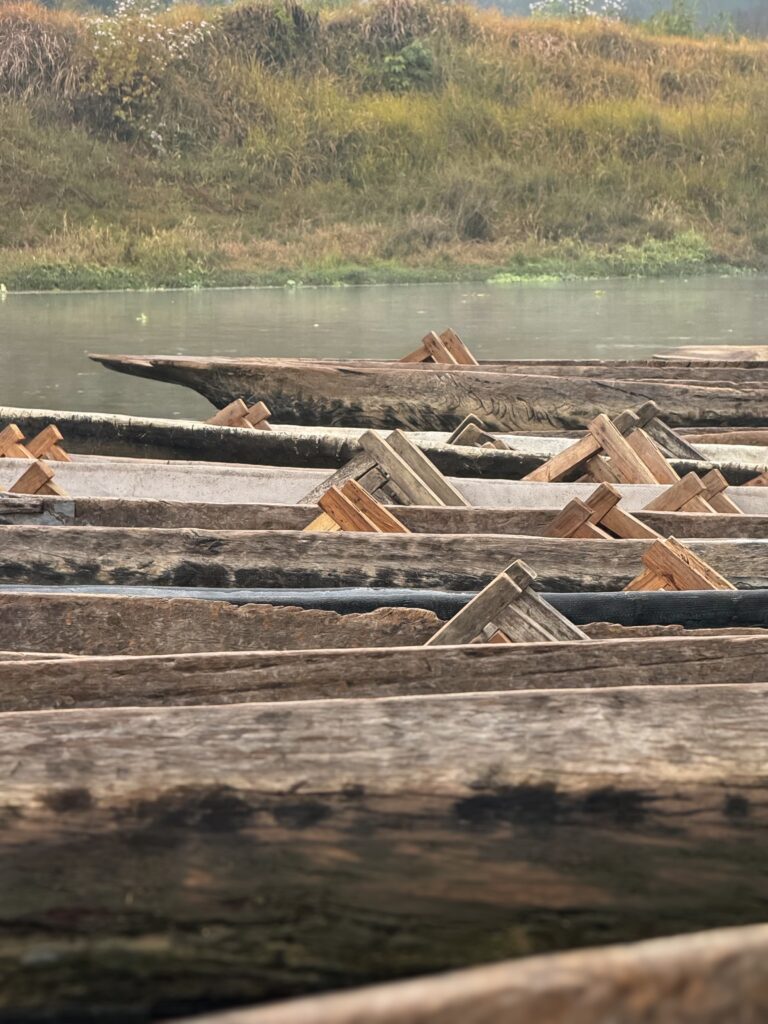
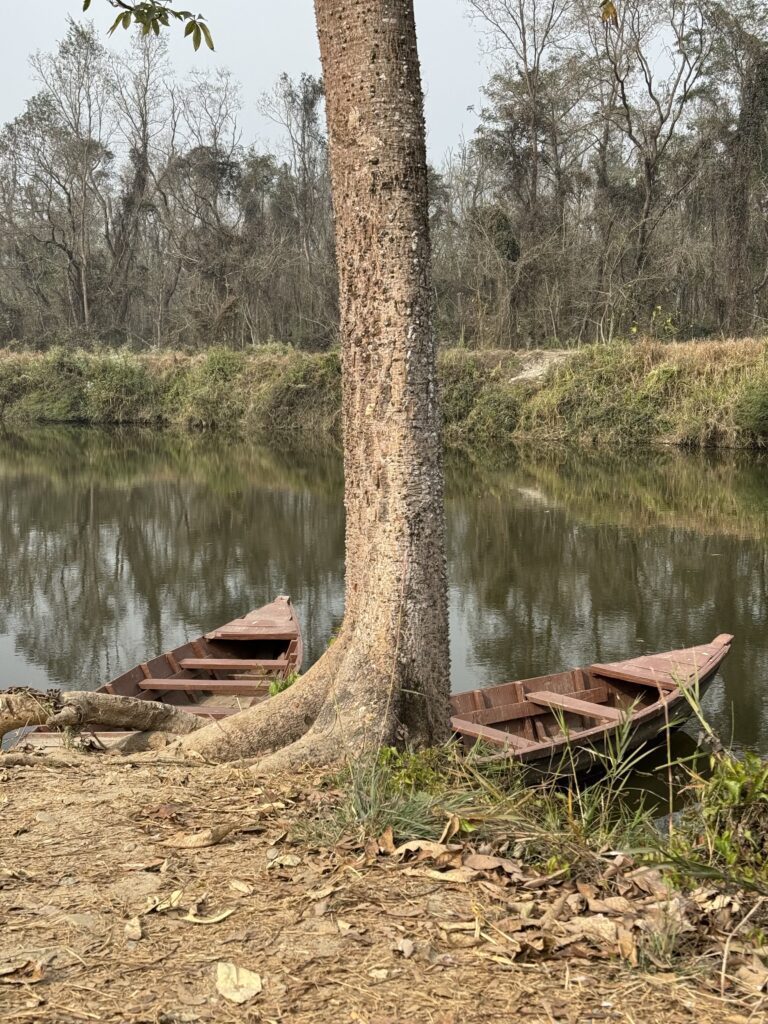
Riding a canoe down the tranquil waters of the Rapti River early in the morning is one of the most serene ways to experience the wildlife. Your hotel can book this along with the other safaris (walking and jeep) for you or you can join from any of the other tour agencies around Sauraha.
The calm flow of the river provides a peaceful setting that contrasts sharply with the often rugged and noisy jeep safaris. As you float along, your guide will point out various features of the river ecosystem, discuss the importance of water bodies within the park, and share insights into the behaviors of the creatures that inhabit the river and its surroundings.
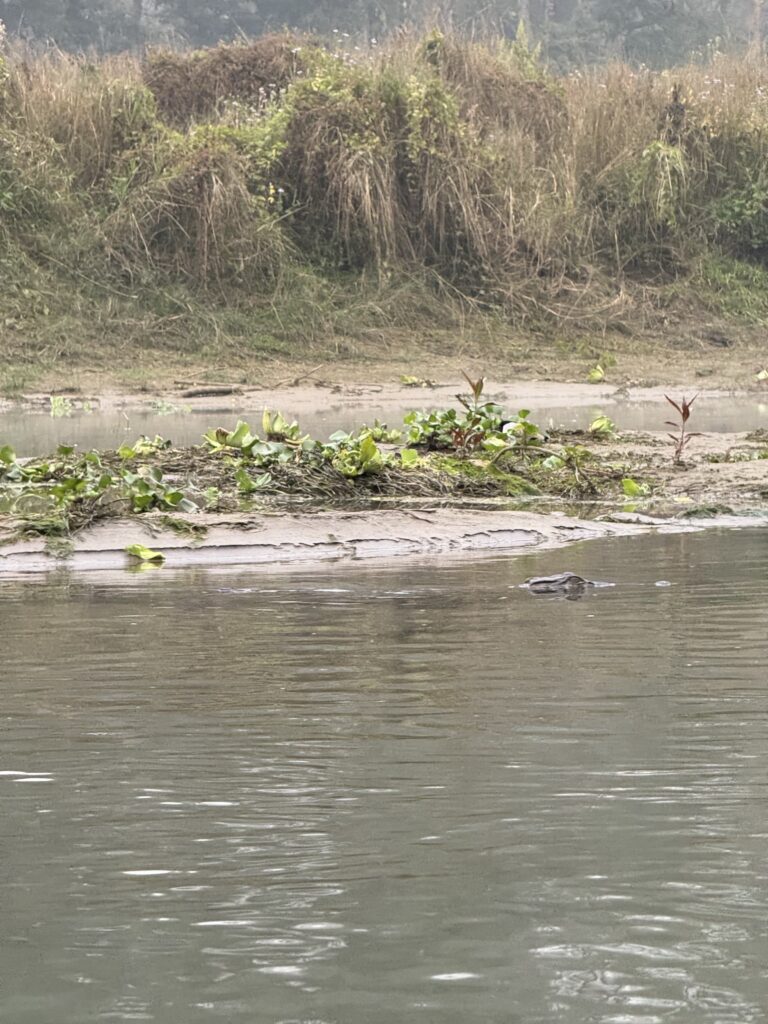
You’d be surprised at just how close the crocodiles are to the canoe before you even notice them!

6. Walk with Elephants
Make sure to visit Stand Up 4 Elephants, an elephant sanctuary dedicated to the humane treatment and conservation of elephants. Unlike traditional elephant rides or bathing sessions, which often compromise the well-being of these animals, this sanctuary provides a responsible alternative that prioritizes the health and natural behaviors of the elephants.
At Stand Up 4 Elephants, you’ll have the opportunity to learn about the elephants’ histories, behaviors, and the challenges they face in captivity and the wild. The sanctuary’s approach focuses on observation and interaction in a way that respects the elephants’ space and natural tendencies.
You can book a tour to walk alongside these gentle giants in their natural habitat, observing how they interact with their environment, forage for food, and socialize with each other.
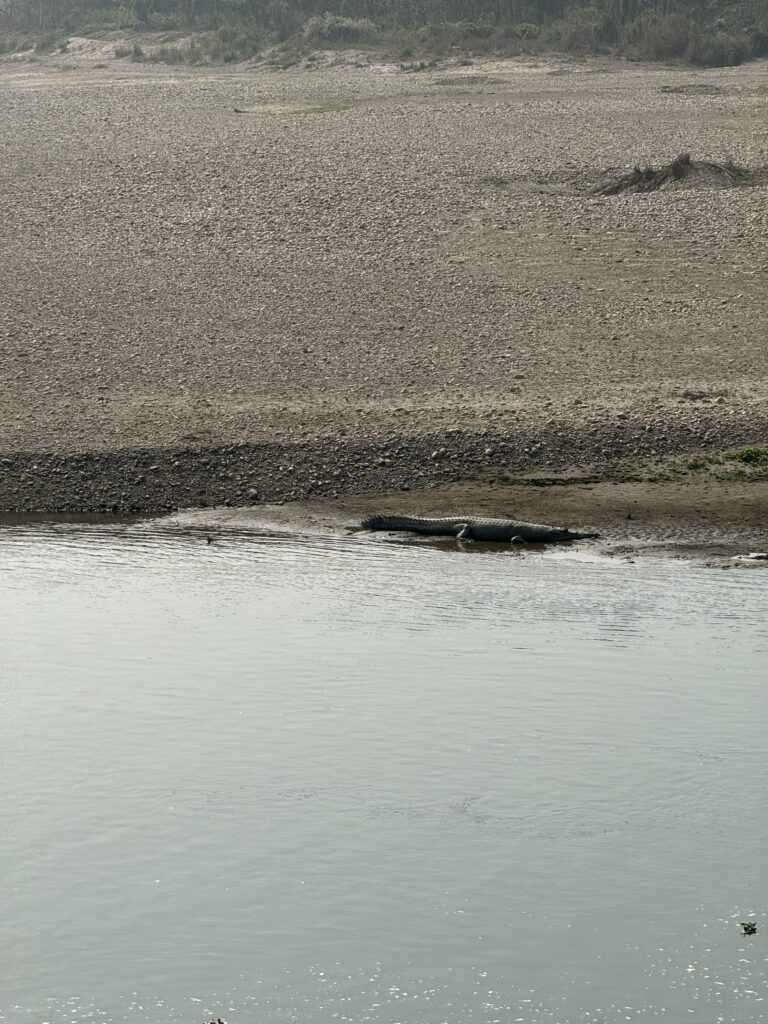
7. Check out the Gharial Breeding Center
The Gharial Breeding Center is dedicated to the preservation of the gharial crocodile, a critically endangered species distinguished by its long, narrow snout and a population that has been dramatically declining due to habitat loss, fishing nets, and the depletion of riverine prey.
The center’s efforts focus on the breeding and rearing of gharials in a protected environment with the goal of eventually reintroducing them into their natural habitats to bolster the wild population.
8. Trip with Chitwan Shrooms
For those adventurous souls interested in a different kind of natural exploration, Chitwan offers a unique and somewhat mystical experience with its locally famous mushrooms. The famed Chitwan shrooms, are notable for being found in the poop of the park’s ancient residents—elephants and rhinos.
You can read more about my experience on that here.

9. Watch the Sunset
Catching a sunset in Chitwan National Park is like watching nature paint its masterpiece—one you definitely don’t want to miss! The sun slipping behind a dense jungle backdrop, casting a golden glow that dances across the surface of the Rapti River. It’s the kind of sunset that makes you want to stop everything just to soak in every second.
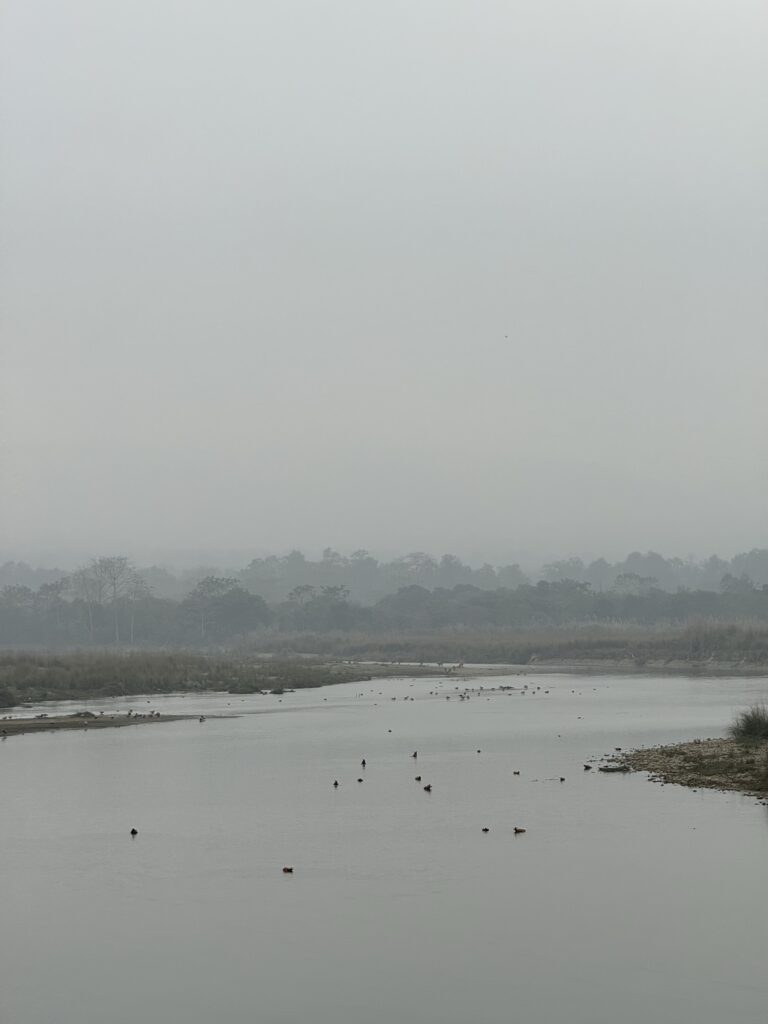
10. Have Lunch by Rapti River
There’s something truly special about enjoying a meal right by the Rapti River. It’s not just about the food; it’s the whole experience that counts. Sitting at a rustic table, with the gentle river flowing right in front of you. It’s peaceful, picturesque, and a perfect way to really soak in the natural beauty around you.
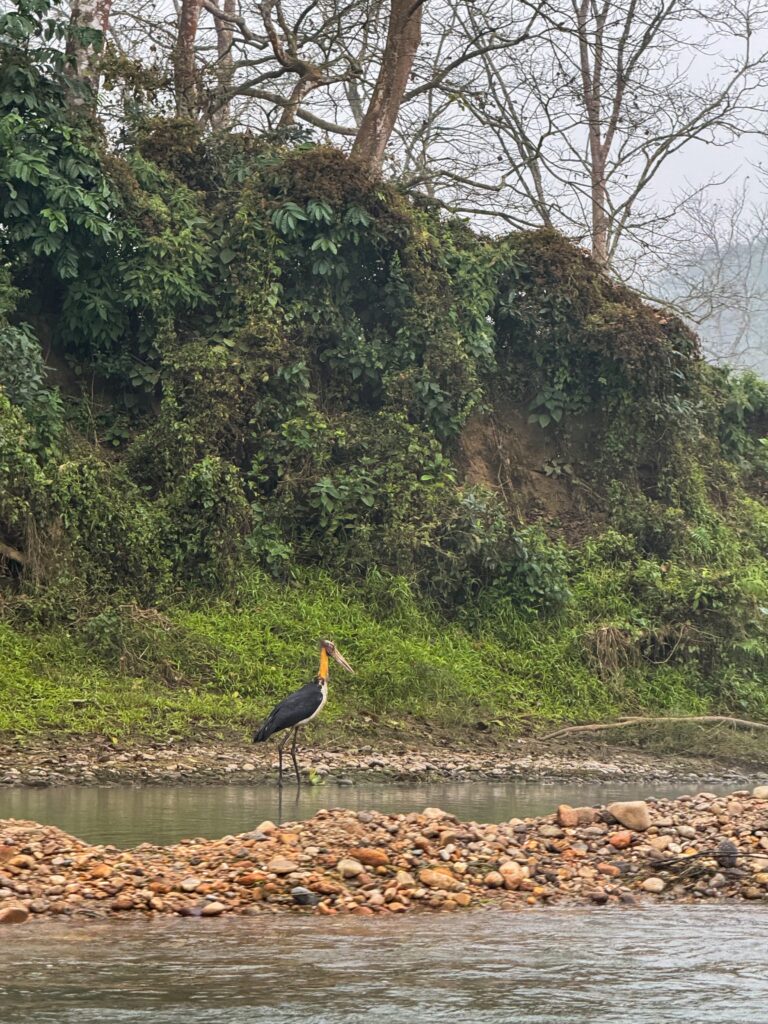
As you dig into some delicious local dishes, maybe some dal bhat or momos, you’ll have front-row seats to the vibrant life of the river. Keep your eyes peeled for a variety of birds swooping down to the water, and never mind all the crocodiles sunbathing by the shores!
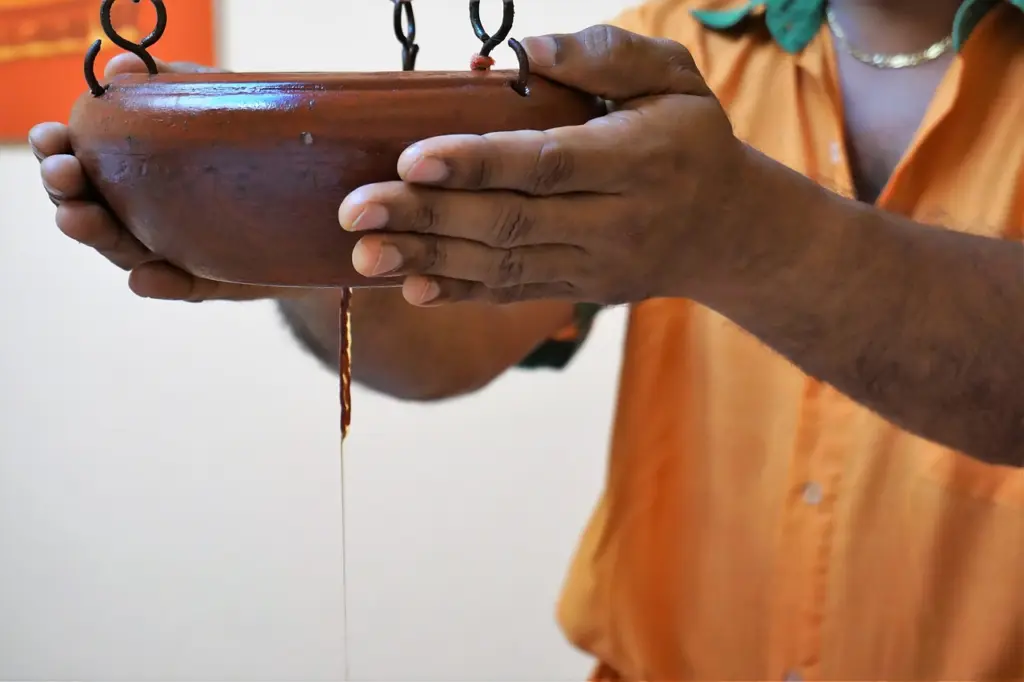
11. Experience an Ayurveda Massage
After a day filled with jungle treks and wildlife spotting, there’s no better way to unwind than with an Ayurveda massage. This traditional form of medicine, rooted in the ancient practices of the Indian subcontinent, focuses on balancing the body, mind, and spirit to promote overall well-being.
Experiencing an Ayurveda massage in Chitwan is particularly special because it often incorporates local herbs and oils, which are sourced directly from the surrounding forest and farmlands. These natural ingredients are known for their healing and rejuvenating properties, making the massage not only a relaxing experience but also a very therapeutic one!
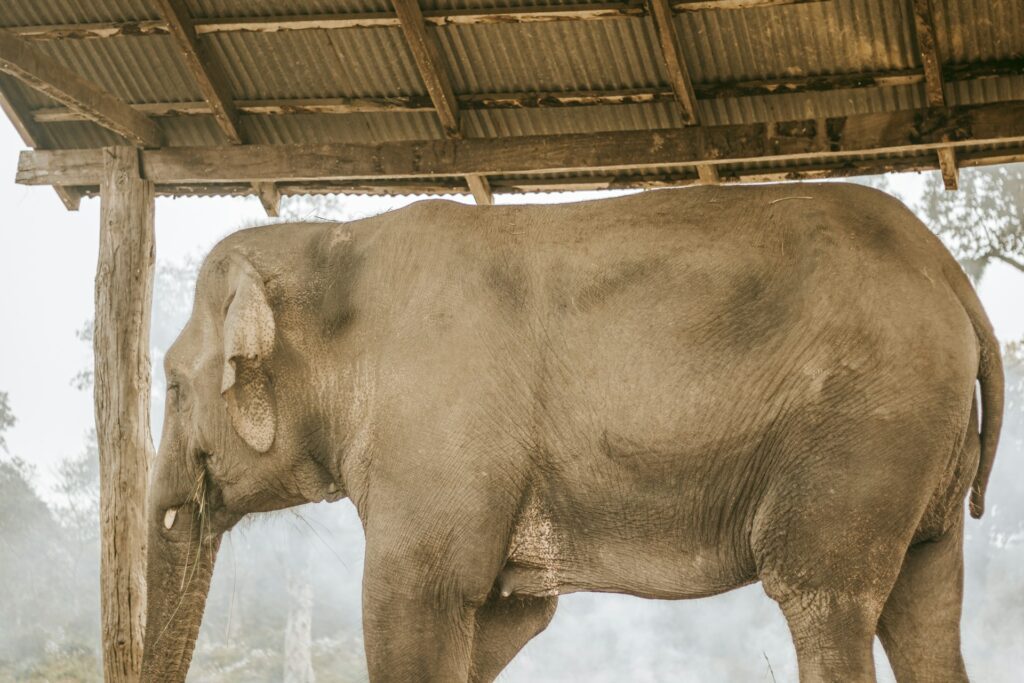
12. Learn Tons at the Elephant Breeding Center
Don’t miss the chance to visit the Elephant Breeding Center—it’s an eye-opener in many ways! This place isn’t just about seeing these magnificent creatures up close; it’s about diving deep into the world of elephant conservation.
The center is one of the few of its kind in the world and plays a crucial role in securing a future for Asian elephants, which are unfortunately facing numerous threats in the wild. As you walk through the facility, you’ll learn about the breeding program that helps increase the population of these gentle giants. It’s fascinating to see the care and science that go into this important work.
But it’s not all science and statistics. The center also gives you a chance to meet the elephants, including the playful and adorable calves!
13. Immerse Yourself at the Tharu Village
Diving into the local culture is a must, and there’s no better place to start than at the Tharu Village. This immersive experience offers a unique glimpse into the lives of the Tharu people, if the cultural program wasn’t enough for you.
As you wander through the village, you’ll notice the distinctive architecture of the Tharu homes, built from local materials like mud, bamboo, and elephant grass, all designed to keep the interiors cool in the scorching heat.
The Tharus are known for their hospitality and are often eager to share their customs with visitors!
Where to Stay in Chitwan
Accommodation around Chitwan is actually not that expensive, with hotels having almost the same price as hostels in Kathmandu, except you’re getting so much more bang for your buck.
Here are some of the best places to stay in around Sauraha:
Best Hotels in Chitwan:
- Jungle Wildlife Camp – if you can, I highly encourage you to try out Jungle Wildlife Camp. It’s where we stayed and it’s probably the best place to stay in Chitwan and let me tell you why. First the rooms are huge, with big private bathrooms as well. The main draw here though is the fact that you’re right beside the river and you can just go out of your room to watch the sun set by the jungle. I also liked the fact that all the staff here were dressed as if they were in a jungle safari, they’re all super knowledgeable about animals as well. Why? Because it’s not uncommon to see wildlife right in front of the hotel. Rhinos, birds, and what not, especially during breakfast, which is why the staff always carry binoculars on hand. Another thing that I liked was that the manager was extremely professional and honest with the prices of the safaris and other activities around the area. It was half the price I was quoted online so definitely give them a chance!
- River View Jungle Camp – right along the Rapti River bordering Chitwan National Park, this property features a barbecue, terrace, and an on-site bar, with free WiFi and private parking available. All rooms come with a private bathroom, slippers, free toiletries, and a flat-screen TV with cable. Additional conveniences include a 24-hour front desk and the option to hire a car.
- Hotel National Park – this tranquil homestay in Chitwan provides garden views, a bar, free private parking, and WiFi. It features a terrace, and services such as free shuttle, full-day security, and currency exchange. Each unit has a private entrance, soundproofing, a bathroom with shower, slippers, and free toiletries, as well as provided bed linen and towels.
How to Get Around Chitwan
The area around Sauraha is relatively small so here’s how you can navigate Chitwan:
- Walking: Most of the restaurants and the main riverfront of Sauraha should be walking distance from your hotel. While most safaris would have a direct pick-up and drop-off.
- Tuk-tuks: For covering greater distances, tuk-tuks are a popular and convenient mode of transportation in and around Chitwan. It’s also most likely what you would use if you arrived in Bharatpur by land or air.
Best Time to Visit Chitwan
The best time to visit Chitwan is during the cooler dry months from October to March. Since the area is more tropical as compared to the highlands like Kathmandu and Pokhara, this period offers more temperate weather, ideal for wildlife viewing and exploring the park comfortably.
Starting in October and continuing through December, the weather begins to cool down after the monsoon season, with daytime temperatures typically ranging from about 25°C to 30°C (77°F to 86°F). As you move into January through March, the weather cools further. Daytime temperatures hover around 20°C to 25°C (68°F to 77°F).
With high visibility and lower water levels in rivers, animals are more frequently seen at common water sources. The sparser vegetation during these months further improves chances of spotting wildlife such as the one-horned rhinoceros and the elusive Bengal tiger. Plus, it’s the low-season so you’ll have Chitwan without the crowds!
How to Get to Chitwan
Getting to Chitwan National Park from Kathmandu or Pokhara is straightforward, with several transportation options available to suit different preferences and budgets:
From Kathmandu:
- Bus: There are regular tourist buses departing from Kathmandu to Chitwan, specifically to the town of Sauraha, which is a popular entry point to the national park. The journey takes approximately 5 to 6 hours depending on traffic and road conditions. Buses range from standard to deluxe services, with the more comfortable buses offering features like air conditioning and more spacious seating.
- Plane: For those looking to save time, there are daily flights from Kathmandu to Bharatpur Airport, which is just a short drive from Chitwan. The flight takes about 25 minutes, and from Bharatpur, you can take a tuktuk to the Sauraha.
From Pokhara:
- Bus: There are also several bus services from Pokhara to Bharatpur. The journey usually takes about 5 to 6 hours. We had to take this route because our flight got cancelled. It was worth it though! After that, take a tuktuk to Sauraha and you’re all set.
- Plane: You can also fly from Pokhara to Bharatpur which also takes around 30 minutes or so. From there, take a tuktuk to Sauraha which takes another 30 minutes or so.
Plan Your Trip to Nepal | Best Travel Resources
Book Your Accommodations
- Booking.com – the world’s leading online booking platform for accomodations around the world, they have an extensive amount of available listings with zero booking fees and best price guarantees.
- Hostelworld – a backpacker’s best friend, Hostelworld has the largest collection of hostels and guesthouses for affordable prices.
Don’t Forget Insurance
- SafetyWing – from Nomad Insurance, an insurance by nomads for nomads. They understand our lifestyle well and have really comprehensive and flexible plans that cater to any traveler.
Find Cheap Flights
- Kiwi.com – my go-to for booking and finding the cheapest flights and it’s helped me save tons of money. They do virtual interlining which is connecting flights from airlines that do not codeshare, so you can find routes that you wouldn’t be able to find normally.
Join Tours & Activities
- GetYourGuide – is one of the best places to find unique tours and activities. I found that it’s an excellent way to meet fellow travelers and create fond memories. They are not only limited to tours as they also offer niche services such as skip-the-line tickets or private transfers.
Catch a Ride
- Rentalcars.com – nothing beats the freedom of the road, Rentalcars.com is the world’s largest online car rental service. They operate across 160 countries so they’re the perfect partner to work with if you find yourself wanting a ride.