Haniwa are terracotta clay figures that hold a unique place in Japan. These intriguing sculptures, ranging from simple cylindrical shapes to elaborate representations of people, animals, and objects, emerged during the Kofun period. If you’re ever played Animal Crossing before, you may have encountered a character named Coco who is modeled after Haniwa figurines!
The study of Haniwa offers a remarkable window into the lives, beliefs, and artistic sensibilities of ancient Japan. These clay figures not only adorned the surfaces of burial mounds but also served as symbols of spiritual protection, social status, and ritualistic connection with the afterlife. This article dives into the multifaceted significance of Haniwa, shedding light on their enduring legacy as cultural artifacts that bridge the ancient and modern worlds.
Table of Contents
Toggle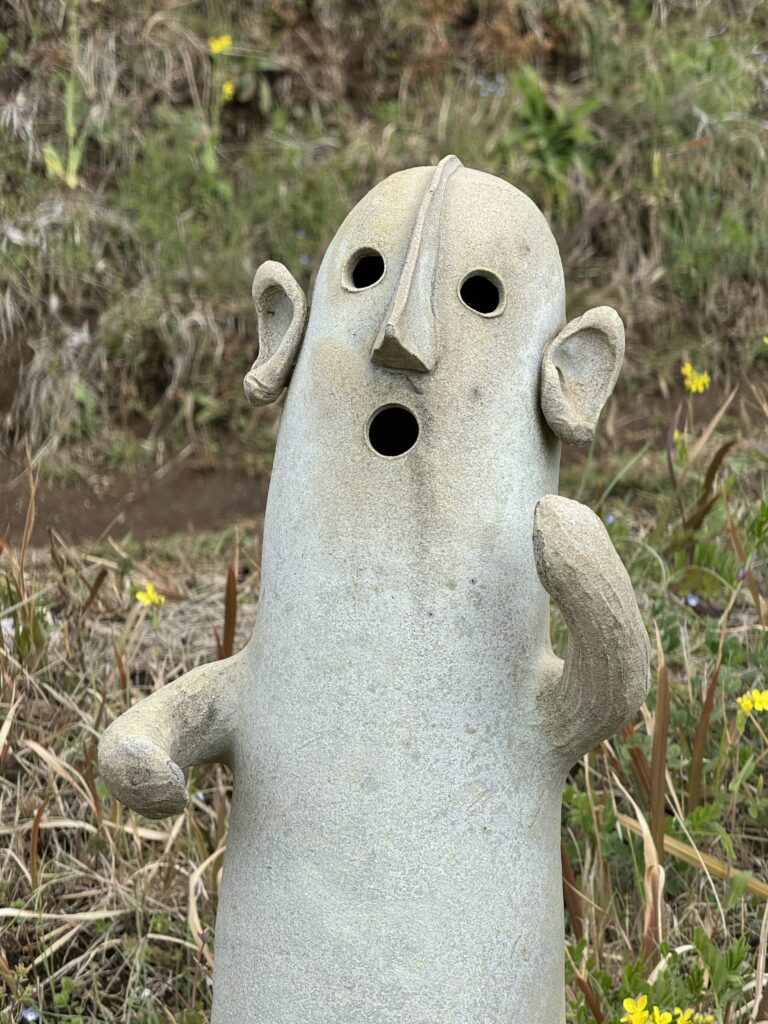
Origins of Haniwa
The origins of Haniwa can be traced to the transitional period between the late Yayoi and early Kofun periods. During the Yayoi period, burial practices began to reflect a growing emphasis on social stratification, with evidence of increasingly elaborate grave goods and burial mounds. Haniwa emerged as an innovation of this evolving funerary culture, first appearing as simple cylindrical clay forms placed on the perimeters of burial mounds.
These early Haniwa likely served practical and symbolic purposes, stabilizing the mounds’ structure while demarcating sacred spaces associated with the deceased.
During the Kofun period, a defining era in Japanese history that spanned from approximately 250 to 538 CE., the role and design of Haniwa evolved in tandem with the sociopolitical landscape. Early cylindrical shapes gave way to more intricate figurative forms, including representations of humans, animals, houses, and tools.
The Kofun period was a time of centralization and consolidation of power, marked by the rise of a ruling elite who exerted authority over vast territories. The construction of massive kofun burial mounds—often adorned with Haniwa—reflected this newfound political cohesion and the elites’ desire to project their power into the afterlife.
The Haniwa
Materials & Production
Haniwa were crafted from a coarse, reddish-brown clay. This clay, unglazed and left in its natural state, provided the durability necessary for the figures to endure exposure to the elements atop burial mounds.
The crafting of Haniwa involved a technique known as coil-building, a method widely used in ancient pottery. Artisans would create Haniwa by rolling clay into long, snake-like coils and stacking them in layers to build up the desired form. These layers were then smoothed and shaped to create the figure’s contours and details. The simplicity of the coil-building method allowed for the production of both cylindrical forms and more complex figurative designs. Artisans used additional tools to carve, refine, and add intricate details to the figures, such as facial expressions, clothing, or the texture of animal fur.

Forms
Haniwa can be broadly categorized into two main types: cylindrical and figurative, each serving distinct purposes within the burial practices of the Kofun period.
The earliest and most basic form, cylindrical Haniwa, consisted of simple clay tubes that were placed in rows along the edges of burial mounds. These forms were primarily functional, stabilizing the mound’s structure while also demarcating it as a sacred space. Over time, these cylindrical shapes became more decorative, sometimes featuring incised patterns or symbolic carvings. As Haniwa evolved, they took on figurative forms, which included human figures, animals, and objects such as houses, shields, and boats.
Human-shaped Haniwa often depicted people in various roles, such as warriors, farmers, dancers, or priests, adorned in detailed clothing and accessories that reflected their societal positions. These figures were more than mere representations; they symbolized the deceased’s status, lineage, or profession, projecting their influence into the afterlife.
Animal-shaped Haniwa, including horses, birds, and dogs, served as protectors or companions for the deceased, aligning with beliefs in spiritual guidance. Objects like houses and tools, rendered in Haniwa form, suggested the continuation of earthly comforts and activities in the afterlife.
The symbolism embedded in Haniwa reveals their deep connection to Shinto beliefs and ancestor worship, central tenets of Japanese spiritual life during the Kofun period.

Function
In addition to their symbolic and ritualistic significance, Haniwa served practical functions. Arranged atop or around burial mounds, they acted as grave markers, delineating the sacred boundaries of the tomb. Their presence was believed to offer protection for the deceased, warding off evil spirits and ensuring a safe passage to the afterlife. Furthermore, Haniwa served as spiritual conduits, facilitating the connection between the living, the dead, and the divine.
Regional Variations
As Haniwa became more widespread, regional variations in style and production techniques emerged, reflecting local traditions, resources, and artistic preferences. For instance, in the Kansai region, which was a political and cultural center during the Kofun period, Haniwa often featured highly detailed representations of human figures and animals, showcasing the region’s wealth and craftsmanship. Meanwhile, in other areas like Kyushu or the Kanto region, Haniwa designs tended to emphasize simpler forms or objects related to daily life, possibly indicating differences in ritual practices or artistic focus.

Where to See Haniwa
Among the most significant sites to see the Haniwa is the Mozu-Furuichi Kofungun, a UNESCO World Heritage Site that houses an extensive cluster of keyhole-shaped burial mounds in present-day Osaka. This site, comprising dozens of kofun of varying sizes, has yielded a wealth of Haniwa figures, including both cylindrical and figurative forms.
Other notable sites include the Saitobaru Burial Mounds and the Haniwa Garden in Miyazaki and the Ichinomiya Senzuka Kofun Cluster in Nara. These sites have revealed regional variations in Haniwa design, as well as evidence of the widespread use of these clay figures in funerary contexts.
We were also able to see it while hiking around Matsuda during the cherry blossom festival.