Smudging, a ritualistic practice of burning sacred plants to purify and cleanse spaces, is rooted in various global cultures, each with its unique traditions.
At the heart of this practice are two widely recognized and revered materials: Palo Santo and Sage.
This article aims to explore and compare these two powerful botanicals, shedding light on their distinct characteristics, historical uses, and enduring relevance in both spiritual and health-related practices.
By understanding Palo Santo and Sage, we delve into a centuries-old tradition that continues to influence modern spiritual and therapeutic practices, helping us to appreciate the deep cultural heritage that informs our current approaches to holistic health.
Table of Contents
ToggleUnderstanding Palo Santo
What is Palo Santo?
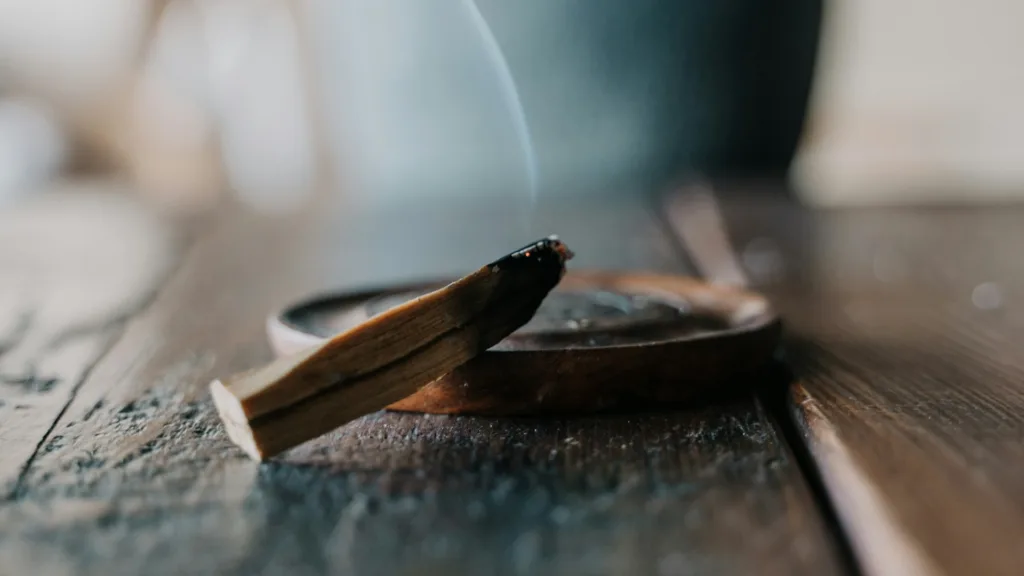
Palo Santo, which translates to “holy wood” in Spanish, is a revered tree native to the dry tropical forests of South America, particularly found in Peru, Ecuador, and parts of Central America. Scientifically known as Bursera graveolens, this tree belongs to the same family as frankincense and myrrh, known for its resinous heartwood that exudes a distinctive, sweet, and woodsy aroma when burned.
Botanical Profile
Palo Santo trees are notable for their twisted trunks and a striking appearance with smooth, gray bark that easily peels away to reveal a rich, aromatic, yellowish wood underneath. They can grow up to 20 m (66 ft) high and are adapted to dry, tropical climates, which contributes to the development of their aromatic resins. The wood of the Palo Santo tree is dense and heavy, with a unique sweet and citrusy scent that intensifies when the wood is burned. The tree is known for its resilience and ability to thrive in tough environmental conditions, often regenerating itself from the root system after the main trunk has died.
Harvesting Process
Traditionally, Palo Santo wood is only harvested from trees that have died naturally and lain on the ground for a period of 4 to 10 years. This period allows the wood to develop its characteristic aroma and properties.
Indigenous communities have regulations that prohibit the cutting of living Palo Santo trees, a practice deeply ingrained in their cultural respect for nature.
Cultural and Spiritual Uses
Palo Santo has long been used by the Incans to purify spaces from negative energies and spirits. Ritualistically, it’s often lit during ceremonial practices to welcome positive energy, facilitate healing, and as an invocation for peace. The smoke from burning Palo Santo is believed to have both metaphysical and therapeutic properties, helping to clear misfortune and calibrate emotional unease.
For example, in Ecuador and Peru, it is common to burn Palo Santo sticks during cleansing ceremonies known as “limpias,” intended to cleanse a person’s aura. Healers, known as “curanderos,” use the smoke to cleanse homes of bad energy, especially after a disagreement, illness, or death has disturbed the peace.
Therapeutic Benefits
Palo Santo’s therapeutic properties are largely attributed to its essential oil, which is rich in limonene, a terpene known for its anti-inflammatory, antioxidant, and anti-anxiety effects. This makes Palo Santo a popular choice for those seeking natural remedies for stress.
Additionally, Palo Santo oil contains other beneficial compounds such as menthofuran, which help in calming the nerves. The presence of alpha-terpineol and terpinolene adds to its therapeutic profile by offering additional antioxidant and antiseptic properties.
Physically, it is used to relieve symptoms of common ailments such as colds, headaches, and inflammation, primarily due to its analgesic and anti-inflammatory properties.
Mentally, Palo Santo has a calming effect on the mind, which can help reduce anxiety and enhance clarity. This makes it particularly useful in practices like meditation or yoga, where a clear, calm mind is essential.
Scent Profile
The aroma of Palo Santo is uniquely sweet and woody, with hints of citrus and mint, which many find profoundly soothing. The scent is not just pleasant but functional; it is known to elevate the mood. Users often report a sense of relaxation and grounding when inhaling the scent of Palo Santo.
How to Use Palo Santo
Here’s a simple, step-by-step guide on how to use Palo Santo effectively for smudging:
Select Your Palo Santo Stick: Choose a stick of Palo Santo that feels right to you. Each piece varies in size and shape but typically, a stick that fits comfortably in your hand is ideal.
Set Your Intentions: Before you begin, take a moment to set your intentions. What are you hoping to cleanse or achieve with this smudging session? Keeping a clear intention in mind enhances the spiritual efficacy of the smudging process.
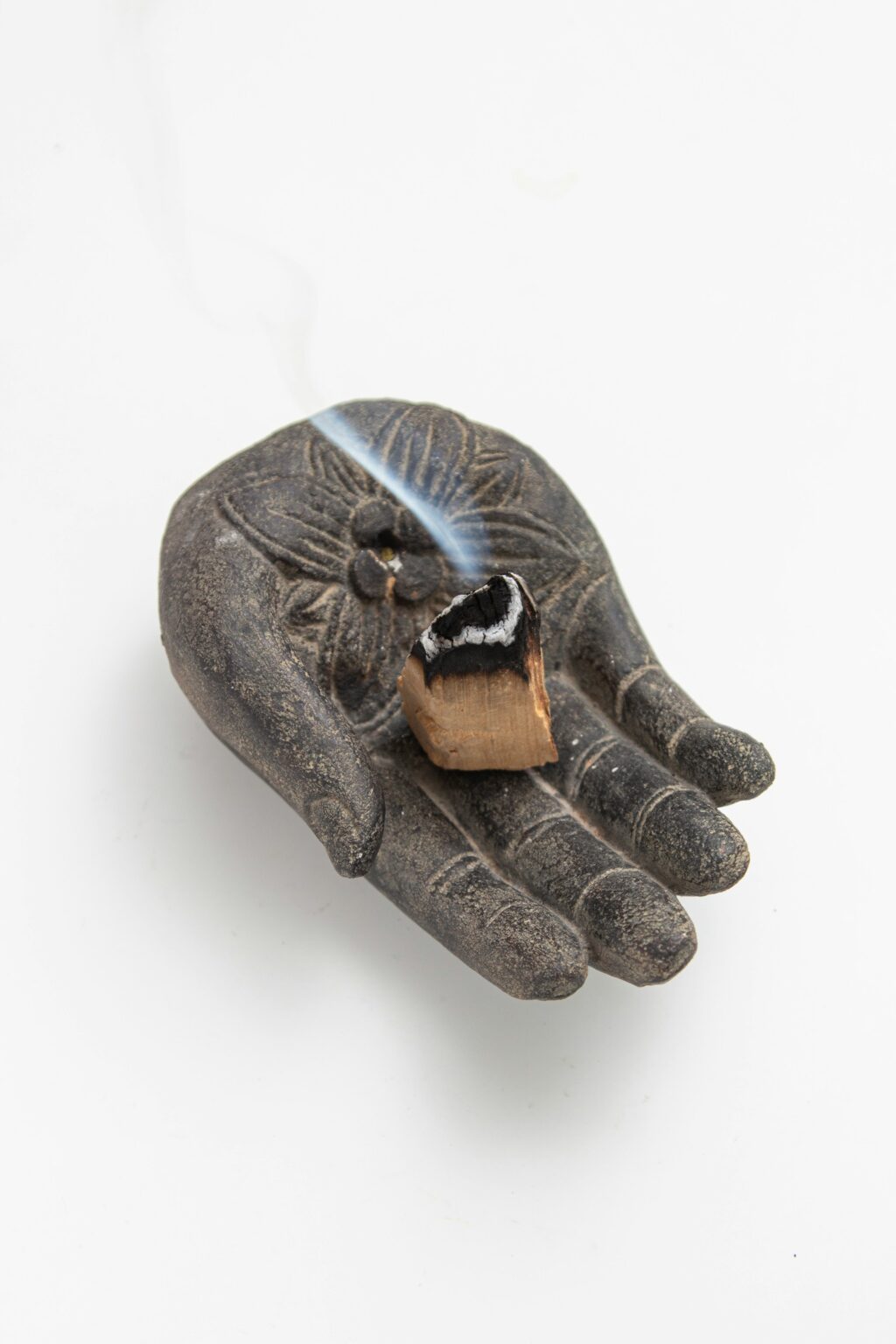
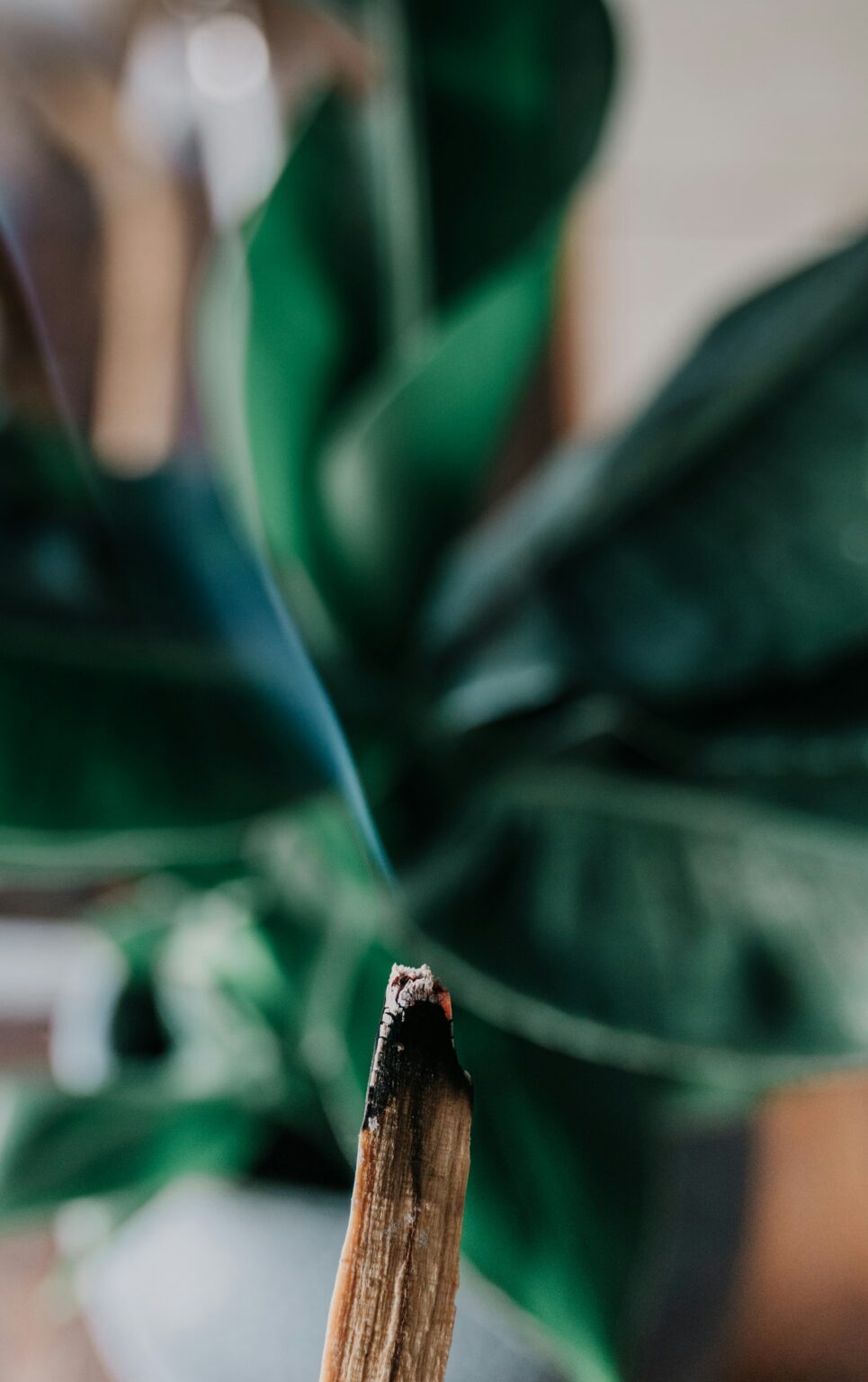
Light the Stick: Hold the Palo Santo stick at a 45-degree angle and light the tip with a candle, match or lighter. Allow it to burn for about 30 seconds to one minute, then gently blow out the flame or wait for it to go out on its own, allowing the stick to smolder and produce smoke.
Begin Smudging: Start at the front door of your home or the entrance to the room and move around the space methodically. Wave the smoldering stick so the smoke drifts into corners, under furniture, and over windowsills—areas where negative energy can accumulate.
Use a Heatproof Dish: As you walk around with the Palo Santo, it’s wise to carry a heatproof dish or a shell to catch any falling ashes.
Complete the Ritual: Once you’ve smudged all desired areas, return to the starting point and gently extinguish your Palo Santo stick by snuffing it out in the heatproof dish. Or if you prefer, you can also just let it burn out naturally.
Air Out the Space: After smudging, open windows or doors to allow fresh air to enter and energy to flow freely.
Understanding Sage
What is Sage?
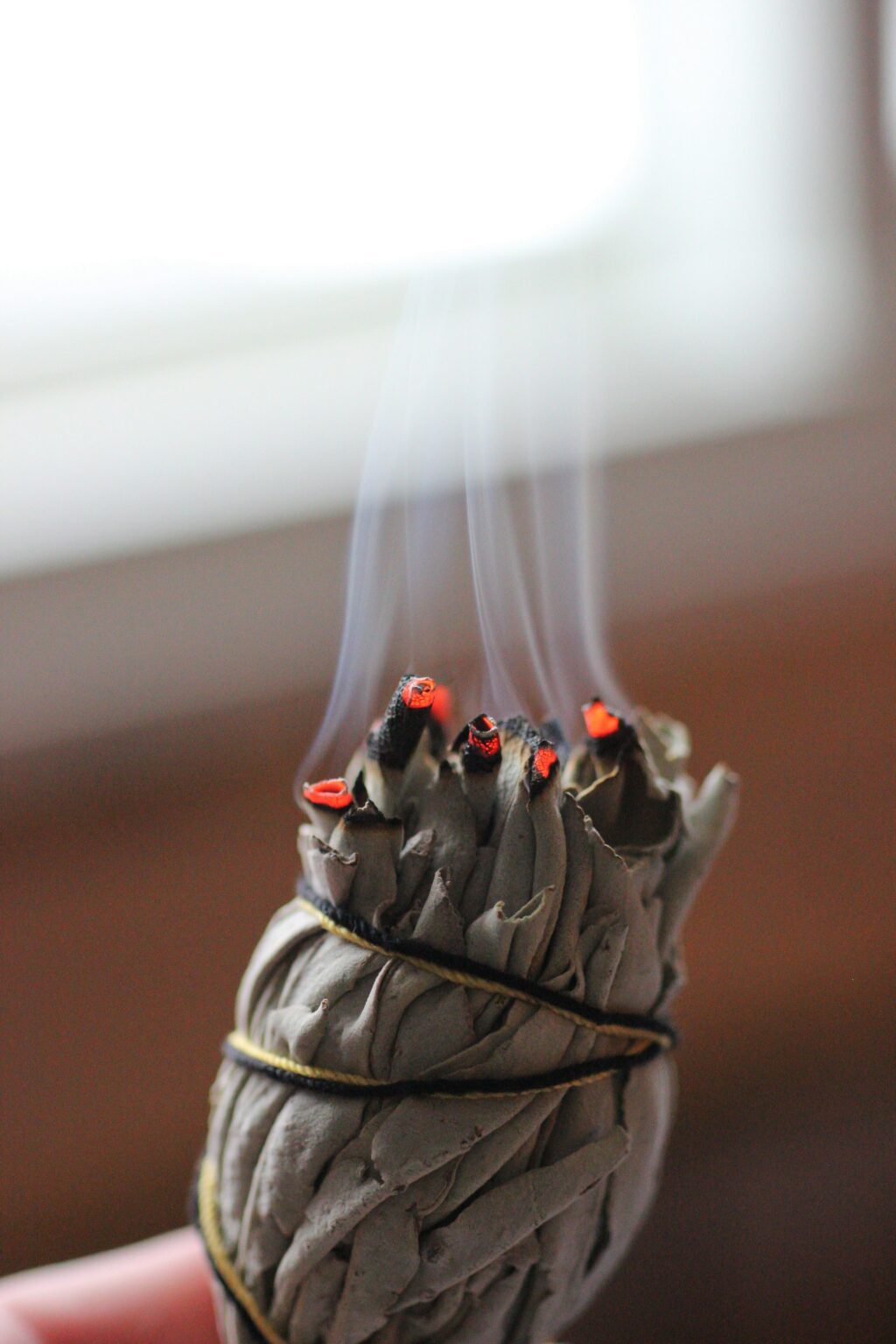
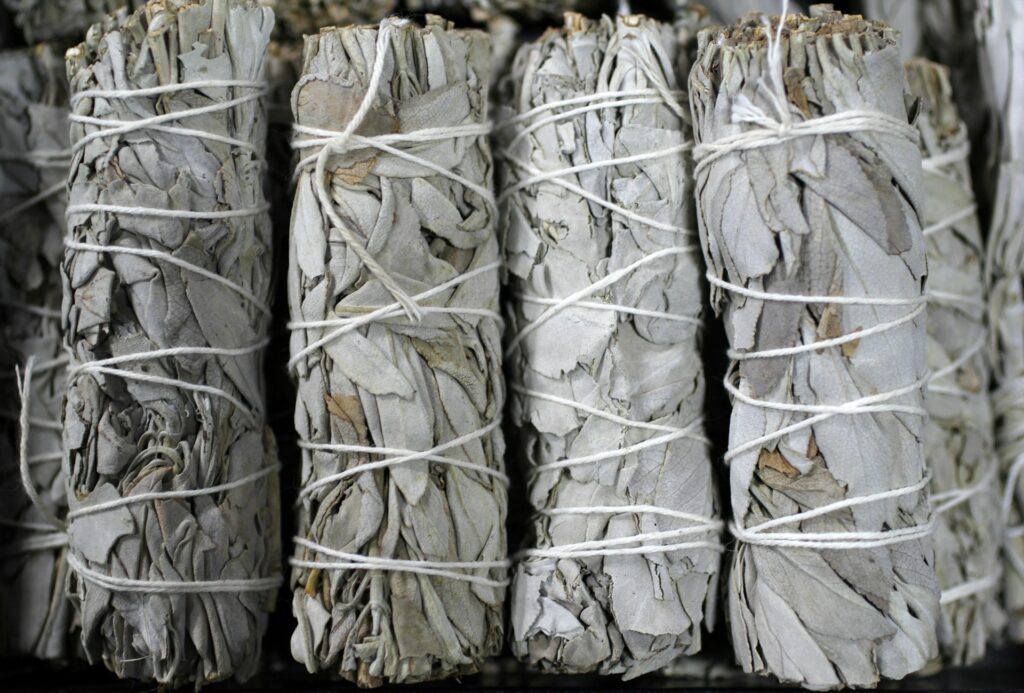
Sage, especially the variety known as white sage (Salvia apiana), is a perennial shrub native to the southwestern United States and northwestern Mexico. Recognized by its silvery-gray leaves and a strong, earthy fragrance, white sage is the most commonly used type for smudging. This plant thrives in the arid climates of the region, and its robust, dense foliage is often bound into smudge sticks that are burned for their smoke.
The practice of burning sage has profound roots in Native American cultures, particularly among tribes such as the Chumash, Cahuilla, and other groups from the Mojave and Sonoran deserts.
Botanical Profile
White sage is distinguished by its lush, silver-green leaves that are thick, waxy, and covered with fine hairs. This adaptation helps the plant conserve moisture in the arid environments of the American Southwest. White sage plants can grow into substantial clumps up to 1.5 m (5 ft) tall and just as wide. The plant produces tall flower stalks in the late spring and summer, which are adorned with white to light lavender flowers that attract a variety of pollinators.
Harvesting Process
Native American tribes harvest sage in a manner that is mindful of the plant’s ability to regenerate. This often involves taking only the parts of the plant needed while leaving the rest to continue its growth cycle.
Harvesters are encouraged to cut sage stems above a leaf node, allowing the plant to regrow from the remaining stem. This method ensures that the sage bush remains healthy and productive for future harvests.
Cultural and Spiritual Uses
Native American tribes have historically used sage in ceremonies designed to cleanse spaces, objects, and individuals from negative energies. The burning of sage is a ritualistic practice where the smoke is believed to carry away the unwanted energy, making room for positive spirits and influences.
In these traditional contexts, sage is often part of a broader ritual that includes prayers, songs, and other ceremonial actions.
For instance, during the smudging ceremonies, participants might pass through the sage smoke or direct it over specific objects, using feathers or their hands to guide the smoke. This practice is considered essential for healing after sickness, before significant events, or as routine spiritual maintenance.

Therapeutic Benefits
Sage is rich in essential oils and active compounds that contribute to its broad range of therapeutic properties. Among these, thujone is one of the most notable, recognized for its psychoactive effects that can influence mood and cognition. Additionally, cineole, or eucalyptol, is present in sage and known for its expectorant qualities, aiding in clearing the respiratory system while offering anti-inflammatory and antibacterial benefits.
Another important compound, camphor, not only defines much of sage’s distinctive aroma but also supports the respiratory system and has antimicrobial properties. These components make sage a valuable herb in traditional medicine, widely used for its potential to relieve respiratory conditions, reduce inflammation, and support overall well-being.
Native American healers have used it to treat wounds, alleviate cold symptoms, and aid digestion.
Psychologically, sage has a calming effect that can be beneficial for reducing stress and enhancing mental clarity. It’s often used in practices like meditation.
Scent Profile
The aroma of white sage is intensely herbal and somewhat pungent, with earthy, slightly astringent notes that many find cleansing and grounding. When burned, the smoke from sage is dense and rich, capable of permeating a space quickly and creating an atmosphere of purity and renewal.
The scent of sage is often associated with a deep cleaning process, not just physically but emotionally and spiritually, helping to clear away lingering negativity. Users frequently describe the experience of sage smudging as uplifting and liberating, noting an immediate improvement in their mood and a sense of lightness in their environment.
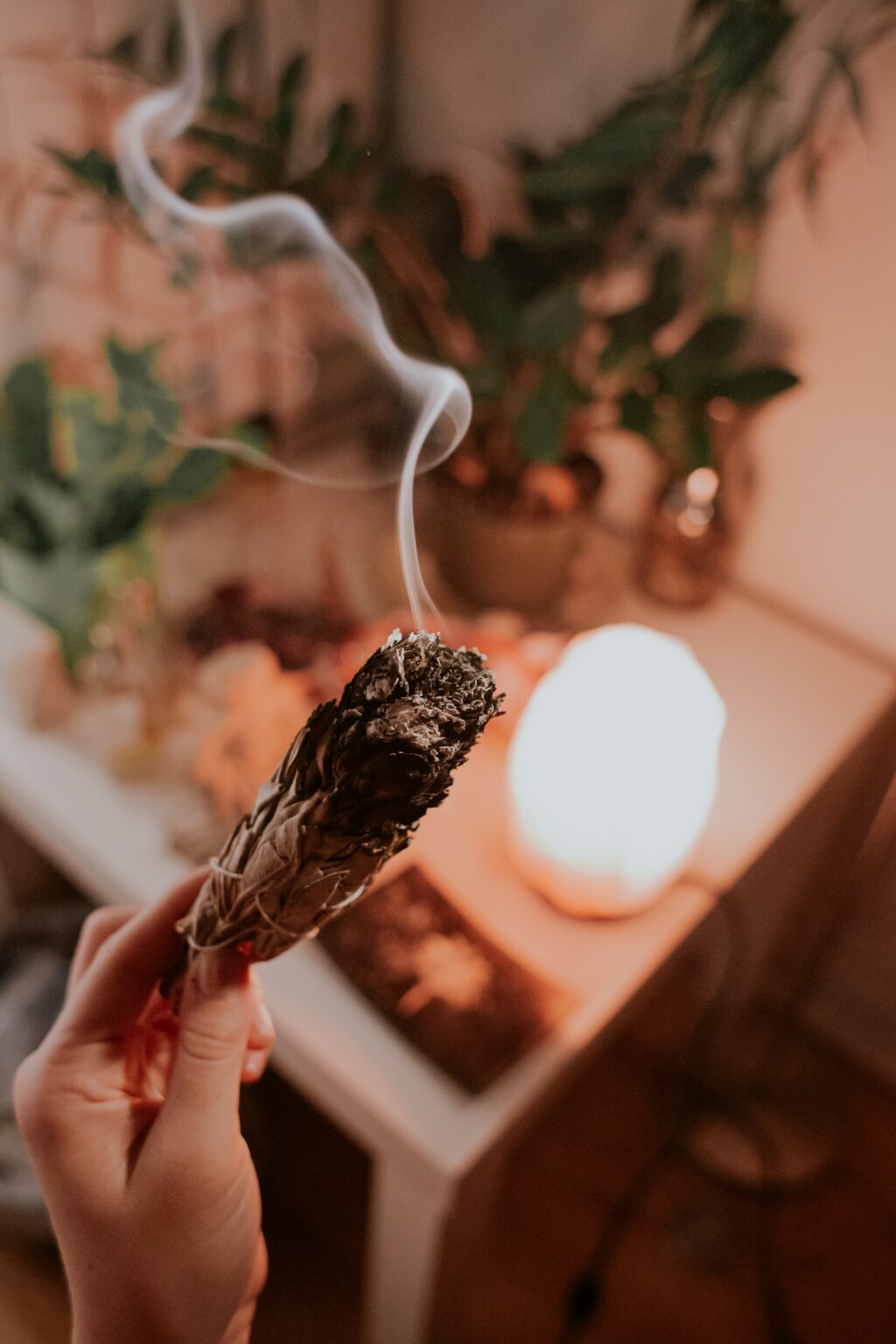
How to Use Sage
Here’s how you can use sage effectively for smudging to ensure a smooth experience:
Choose Your Sage: Start by selecting a sage bundle, often referred to as a smudge stick. White sage is commonly used for smudging, but other varieties can also be effective.
Prepare the Space and Yourself: Ensure the area is well-ventilated by opening windows or doors. This not only helps the smoke escape but also draws in fresh energy. Take a few moments to center yourself and reflect on your intentions for the smudging.
Light the Sage: Hold the smudge stick at one end and light the other end with a candle, match or lighter. Let it burn for a few seconds and then gently blow out the flame or wait for it to go out on its own to allow the sage to smolder and produce smoke.
Begin the Smudging: Start at the entrance of your home or the room you are cleansing. Move clockwise around the space, allowing the smoke to drift into air corners, across doorways, and into shadowed spaces.
Use a Heatproof Dish: Carry a heatproof dish or an abalone shell (the shell constitutes as the water element. With sage as earth, smoke as air, and burning as fire).
Conclude the Ceremony: Once you’ve covered all necessary areas, extinguish the sage by stubbing the smudge stick in the dish or gently pressing it against a fire-safe surface until the smoke stops. Alternatively, you can let it burn out naturally in a controlled environment.
Close the Ritual: Close your ritual with a moment of gratitude or a closing statement that reaffirms your intention and acknowledges the completion of your cleansing.
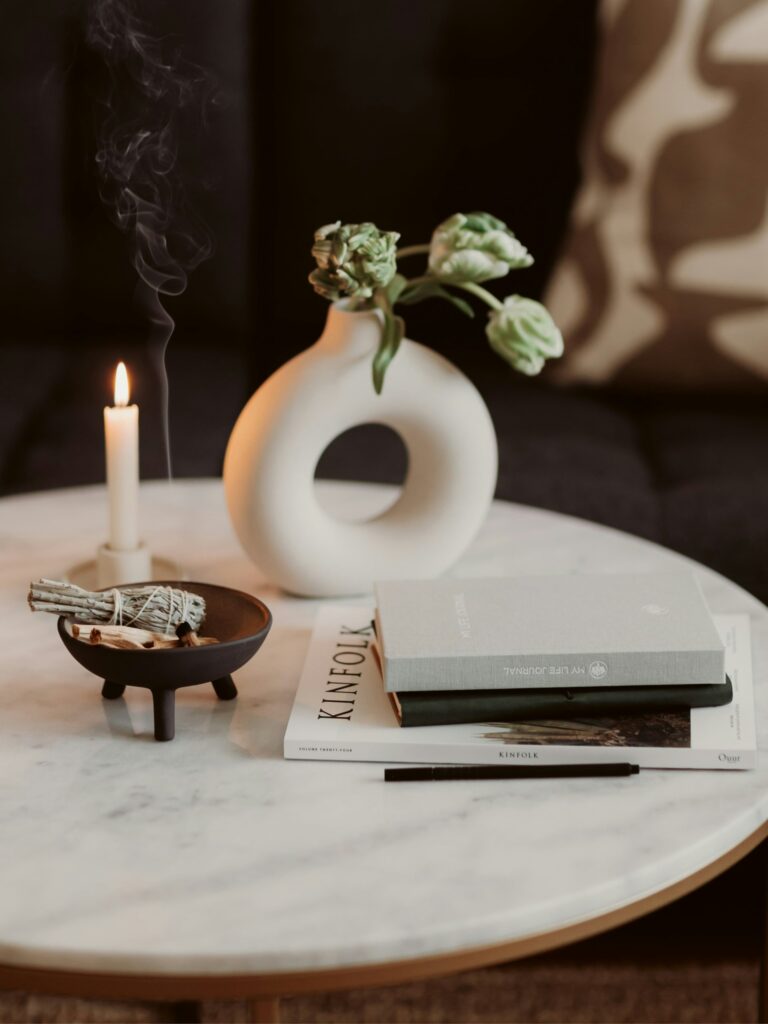
Can You Smudge with Palo Santo and Sage Together?
Yes, you can smudge with both Palo Santo and sage together, and many people find this combination to be particularly powerful for cleansing and purifying spaces. Each has its own distinct aromatic properties and spiritual significances, and when used together, they can complement each other’s effects. Here’s how you might approach using both in a smudging ritual:
Start with Sage: Begin by burning sage to cleanse the space. Sage is known for its strong purifying properties and is believed to banish negative energies effectively.
Follow with Palo Santo: After you have smudged with sage, follow up with Palo Santo to bring a more uplifting, soothing energy into the space. Palo Santo is often used not just to cleanse but also to infuse the space with a sense of calm and positivity. Its sweet, woodsy aroma can also help to settle the more pungent scent of sage, creating a balanced atmosphere.
Set Intentions: As you smudge with both sage and Palo Santo, it can be helpful to voice or mentally focus on your intentions for cleansing.
Allow Natural Flow: Let each stick burn until it naturally extinguishes or you feel that your ritual is complete. Some prefer to close the ritual with a moment of silence, a prayer, or by expressing gratitude.
Environmental and Ethical Considerations
Palo Santo trees are not listed as endangered by international bodies such as CITES (Convention on International Trade in Endangered Species of Wild Fauna and Flora), but in some areas, they are considered threatened due to overharvesting and habitat loss. The tree’s natural regeneration process, where it only produces aromatic resin after its natural death, means that sustainable harvesting practices are crucial.
White sage, particularly, has seen a surge in popularity for smudging practices. Unlike Palo Santo, white sage is facing more significant threats from overharvesting driven by commercial demand, which has led to concerns about its sustainability in the wild. The plant’s popularity in spiritual practices has outpaced the growth of regulated, sustainable cultivation.
The commercial demand for both Palo Santo and sage has increased significantly, driven by global interest in natural wellness and spiritual practices. This demand has led to unsustainable harvesting practices, particularly for sage, where entire plants are often uprooted, and for Palo Santo, where illegal cutting of live trees can occur. Such practices endanger the long-term survival of these species in their natural habitats and disrupt the ecological balance.
To ensure ethically sourced Palo Santo and sage, look for suppliers who certify that their product is sourced from trees that have died naturally and have been left to cure over several years. For sage, look for sources that grow the plants sustainably or gather them in ways that allow the plants to regenerate. Prefer products that benefit the local communities traditionally associated with the harvesting and use of these plants. This not only helps preserve cultural practices but also promotes economic sustainability in those regions.