Ancient Egypt stands out as a land of pyramids, pharaohs, and of course, the Nile. But there’s more to this civilization than just mummies. It was a society deeply ingrained with the natural world, where animals were integral parts of culture, religion, and everyday life.
From the mighty lion to the humble scarab, each creature had its role. Yet, among this diverse animal kingdom, one species purred its way into a uniquely revered status – the cat.
Cats have been padding softly through human history for thousands of years. Across different ancient civilizations, from the far reaches of China to the heart of Rome, cats have no doubt curled up in our homes and hearts.
In some societies, they were praised for their hunting skills, keeping granaries free from rodents. In others, they were symbols of mystery and magic. But nowhere did they climb higher in social and spiritual status than in Ancient Egypt.!
Here, they weren’t just furry friends; they were symbols of divine protection, family members, and even representatives of the gods themselves.
Curious? Read on to learn more!
Table of Contents
Toggle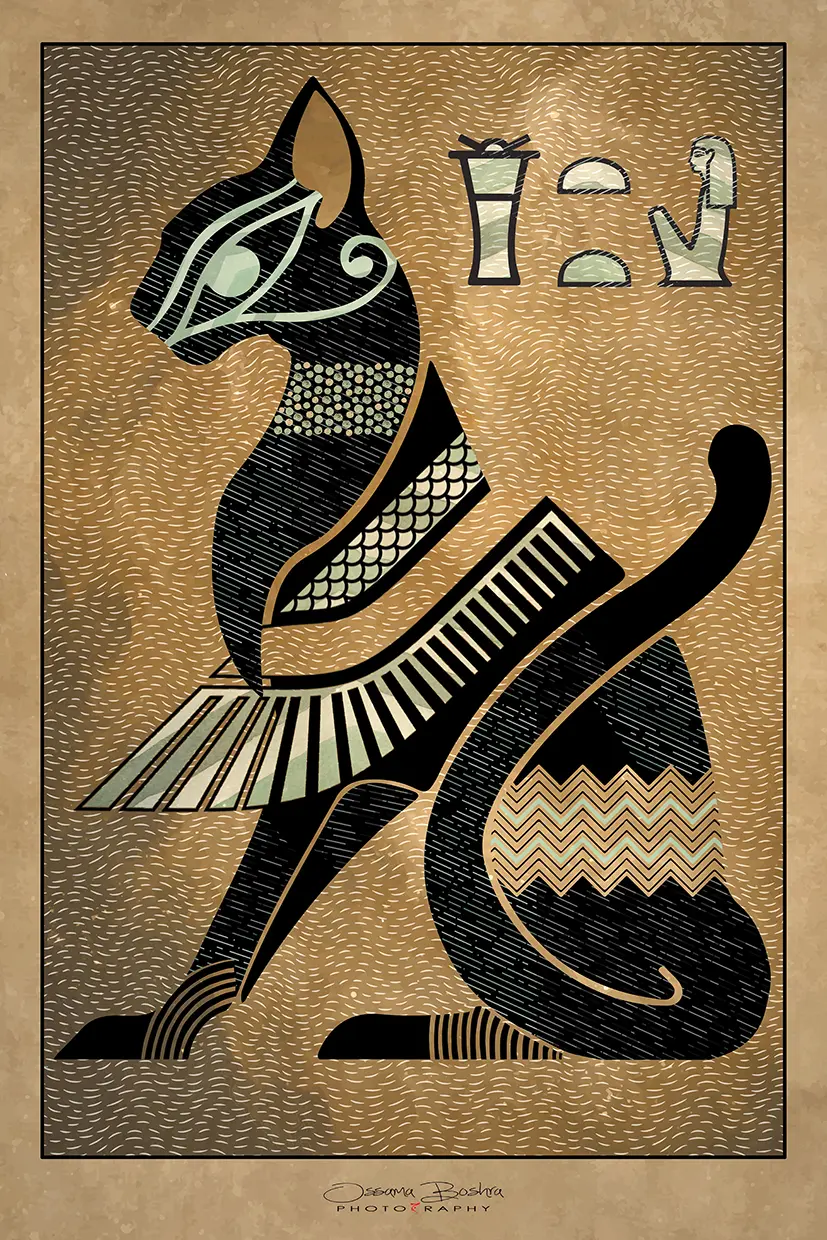
10 Fun Facts About Cats in Ancient Egypt
1. The Purr-fect Partnership
Believe it or not, the story of cats’ domestication starts with a “mouse” – or rather, a whole lot of them! Around 4,000 years ago, as Ancient Egyptians shifted from nomadic life to farming, they faced a common problem: pesky rodents munching on their precious grain stores.
Enter the wildcat, a sleek and skillful hunter, drawn to these granaries brimming with easy prey. It was a match made in heaven; the cats got a steady food supply, and the Egyptians got top-notch pest control.
But how did these wildcats turn into the affectionate, nap-loving furballs we know today? It’s believed that over time, the friendliest felines, those most comfortable around humans, stayed close to the villages. This proximity allowed a bond to form, a relationship depicted in ancient Egyptian art where cats are seen sitting under chairs and even being fed by their human companions.
2. Bastet - The Divine Feline
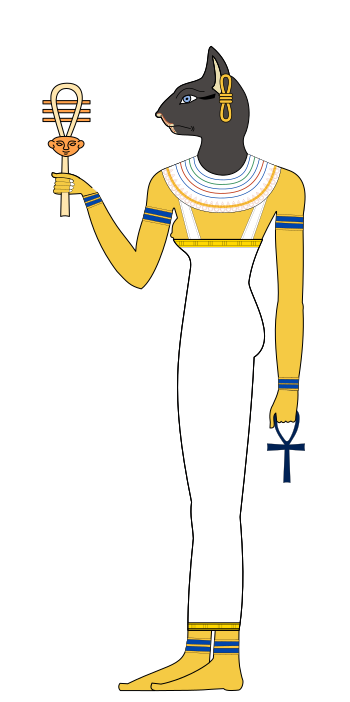
In Ancient Egypt, if you were looking for a deity who embodied the grace and poise of a cat, you wouldn’t have to look further than Bastet. Often depicted as a lioness or as a woman with the head of a lioness (or even a domestic cat), Bastet was the ultimate cat lady.
She was the goddess of home, fertility, childbirth, and, you guessed it, cats!
In early depictions, she was shown as a fierce lioness, a protector of the king and a warrior goddess who could unleash her claws when needed. Over time, her image softened, becoming more associated with domesticity and protection in the gentle, nurturing sense. This transformation from fierce to nurturing mirrors the journey of cats themselves from wild hunters to beloved companions. In the photo above, she is depicted carrying the Ankh of Life, a prominent symbol in Ancient Egypt.
The reverence for cats went beyond Bastet. These creatures were seen as guardians against evil spirits. Cats were so important that families would often mourn their passing as they would for a human relative.

3. Artistic Paws of History
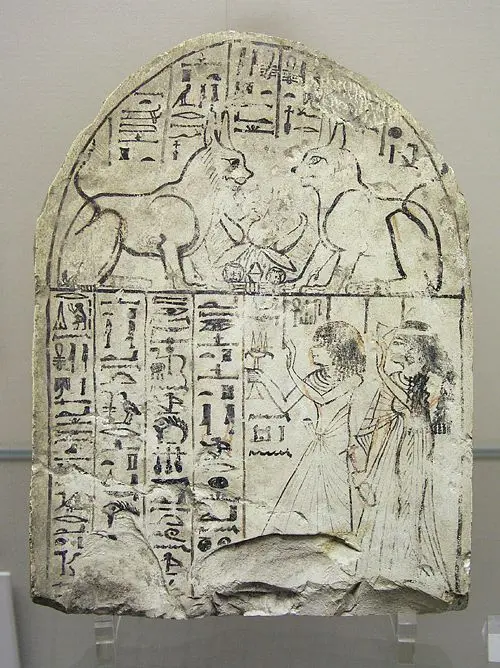
If a picture was worth a thousand words, then a hieroglyph of a cat was worth a million more. Cats in Egyptian art were stars! You could find them in the most elegant wall paintings, sitting regally beside their owners, or even in the form of sculptures that oozed sophistication.
Cats were often depicted doing what they do best: being effortlessly graceful. Whether they were shown sitting with perfect poise, meticulously grooming themselves, or hunting with agile precision, cats symbolized balance and grace.
Cats made their mark, quite literally. The Egyptian word for cat was “mau”, and it had its own hieroglyph, looking like a seated cat. It was often used to convey ideas of femininity, fertility, and protectiveness.
In statues and sculptures, cats were often depicted with a gold earring or necklace, suggesting they were members of the household with a status to flaunt. Some sculptures even showed cats sitting next to the god Ra, highlighting their divine connection.
4. Journey to the Afterlife
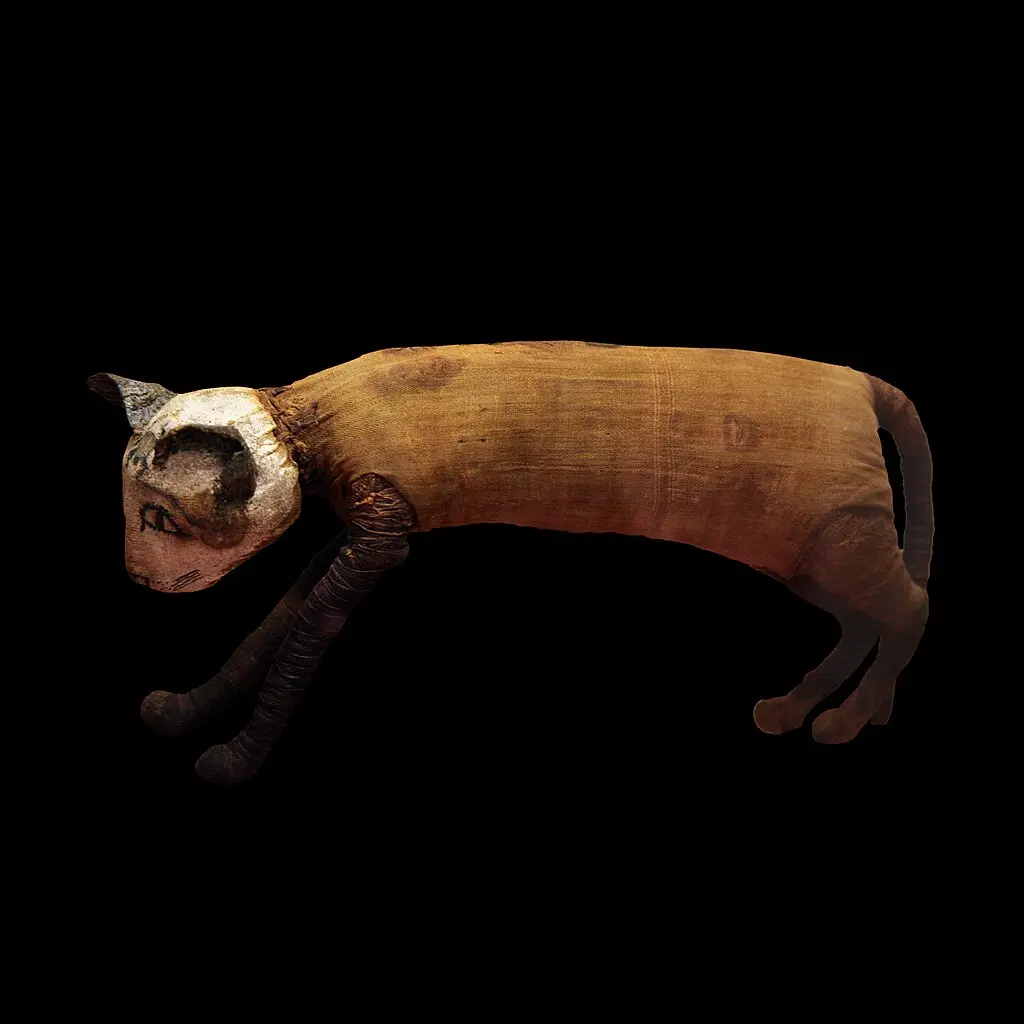
The end of a cat’s nine lives was just the beginning of a mystical journey. Death was not seen as the end, but a transition to another world, and this applied to cats too. The Egyptians believed that, like humans, cats had a soul and could journey to the afterlife.
The process of mummifying a cat was similar to that of humans, involving embalming and wrapping in linen. It was like preparing them for the ultimate catnap, one that would last for eternity. These mummified cats were often placed alongside their owners in tombs, ensuring that they would have their beloved companions with them in the afterlife.
Along with the mummified cats, various offerings and grave goods were included in the burial. These could include small statues, food, or even toys – essentially, playthings to keep them entertained in the afterworld.
The discovery of cat cemeteries, such as the one at Bubastis, a city dedicated to the goddess Bastet, shows the extent of the cat cult. Here, tens of thousands of mummified cats have been found, indicating the widespread practice of offering mummified cats to the gods, especially Bastet.
5. Royal Companions
Cats were more than just pets to the pharaohs; they were symbols of divine connection, protectors, and sometimes, even political allies.
Pharaohs, viewed as semi-divine beings, often surrounded themselves with cats, a reflection of their association with gods like Bastet. A cat in the pharaoh’s court was a symbol of his or her divine right to rule, a living embodiment of the gods’ favor.
Thutmose III, one of the greatest warrior pharaohs of Ancient Egypt, is said to have had a deep affection for his cats. Legend has it that he went to great lengths to ensure their comfort and safety, seeing them as integral to his household and royal duties. His cats were often depicted in reliefs and paintings, indicating their prestigious status.
Cleopatra, the last pharaoh of Egypt, known for her intelligence and charm, was also a noted cat lover. As a ruler during the time when the cult of Bastet was at its peak, she understood the symbolic power of cats. Cleopatra’s association with cats enhanced her image as a seductive and powerful leader, intertwining her legacy with these revered creatures.
Ramses II, another prominent pharaoh, is believed to have had a special bond with cats. He saw them as protectors not just of his household but of the entire kingdom. Cats were often present in his court and in his military campaigns, serving as symbols of good luck and divine protection.

6. Cats in Egyptian Lore
For the Ancient Egyptians, cats were the stuff of legends!
One of the most captivating tales is that of the “Great Cat,” a lioness deity who protected Ra. According to legend, each night as Ra journeyed through the underworld, he was attacked by the serpent Apophis. The Great Cat, often associated with the goddess Bastet, would come to Ra’s aid, slaying the serpent with her fierce claws.
Mafdet, another feline deity, predates even Bastet in Egyptian mythology. She was represented as a lioness or cheetah and was revered as a protector against venomous creatures and evil spirits. Mafdet’s swift and lethal justice made her a symbol of royal authority and protection, a sort of divine bodyguard for the pharaohs. In the image above, aside from the Ankh, she is also seen carrying the Was Scepter, a symbol of power.
There’s also folklore connecting cats to the moon. It was believed that cats, with their glowing eyes, held the moon’s magic. This belief was so strong that some thought cats could predict the future and were able to influence the tides and fertility.
7. Graceful Status Symbols
Owning a cat was a statement of style and status. Cats, with their sleek coats, graceful movements, and poised demeanor, were seen as the epitome of elegance and sophistication. To have a cat by one’s side was akin to wearing a symbol of aristocracy.
The care and keeping of cats in Ancient Egypt often reflected the wealth and status of their owners. The more well-kept and healthy a cat appeared, the more it signified the prosperity of its household. In a way, cats were walking status updates.
8. A Crime Against Cats, A Crime Against the Divine
Cats enjoyed a level of legal protection that was quite extraordinary for the time. They were totally revered and safeguarded by law.
Harming, killing, or even accidentally injuring a cat was considered a grave offense. Such acts were often equated with crimes against the gods themselves. Punishments for these crimes were severe and could even include the death penalty.
The reverence for cats was so profound that it influenced international relations. Historical accounts suggest that exporting cats out of Egypt was strictly forbidden. In fact, there were instances where the Egyptian government sent official emissaries to retrieve cats that had been smuggled out of the country.
Cats were regarded with such esteem that they were often involved in legal proceedings. There are records of cats being brought to courtrooms as a form of spiritual guidance. Their presence was believed to bring truth and honesty to the proceedings.
9. The Majestic Mau
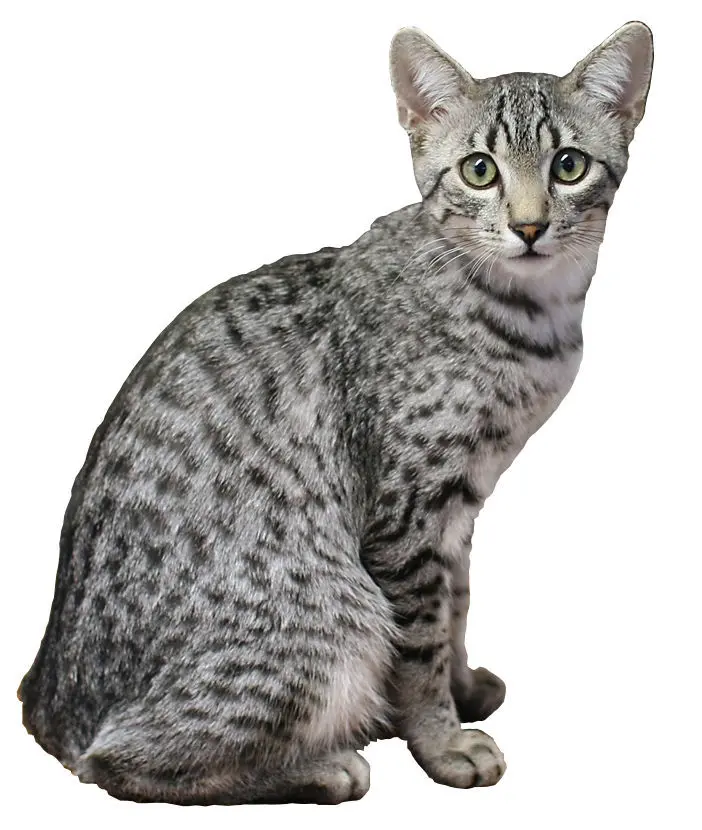
The most famous breed that hails from Ancient Egypt is the Egyptian Mau. This breed is often considered a direct descendant of the ancient feline residents of the Nile valley. The Mau is distinguished by its spotted coat, which is believed to be a naturally occurring pattern.
The Egyptian Mau is known for its incredible speed and agility – it’s one of the fastest domestic cat breeds, capable of running up to 30 miles per hour. Maus are also known for their striking green eyes, a trait that’s been admired for centuries.
Another breed that likely contributed to the domestic cats in Ancient Egypt is the African Wildcat. These cats are larger and more robust than the average domestic cat and were revered for their hunting prowess. It’s believed that these wildcats interbred with the domesticated cats, leading to the diverse feline population in ancient Egypt.
Egyptian cats were not just admired for their physical attributes; they were also valued for their temperament. They were known for being loyal, intelligent, and playful, traits that made them perfect companions in both royal courts and average households.
10. Breeding, A Sacred Industry for the Gods
The breeding of cats was often a sacred duty. This was particularly true for temple cats, who were bred for religious purposes. The temples dedicated to Bastet, like the famous one at Bubastis, were known to breed cats in her honor. The kittens born here were considered blessed and were often offered to the goddess as a sign of devotion.
As mentioned earlier, cats were so revered in Ancient Egypt that their exportation was strictly forbidden. This was not just a matter of preserving a beloved animal; it was about protecting a cultural and religious symbol. Cats were seen as national treasures, and their export could be equated to the theft of sacred objects.
Despite the ban, there was a lucrative black market for Egyptian cats. Neighboring civilizations coveted these feline companions for the mystical qualities attributed to them. Smuggling cats out of Egypt was a risky business, but it did happen.
There are historical accounts of pharaohs taking extraordinary measures to retrieve cats that had been smuggled out of the country. This included diplomatic missions and, in some cases, military interventions. The retrieval of these cats was a matter of national pride!