The scarab beetle, a symbol that resonates with the profound mystique of ancient Egyptian culture, holds a place of high reverence not only in the annals of ancient history but also in the modern imagination.
This small, unassuming insect, carries with it a wealth of symbolic meaning that transcends representation.
Central to the cultural beliefs of ancient Egyptians, the scarab beetle was more than just a recurring motif in their art. It was a potent symbol, deeply embedded in the spiritual landscape of the people.
Revered for its connection to the sun god Ra, the scarab was a powerful emblem of creation, resurrection, and transformation.
In this exploration of the scarab beetle’s meaning and symbolism in ancient Egypt, we delve into its mythological significance, its ubiquitous presence in the relics of the past, and how this humble creature came to be an enduring symbol of life’s perpetual renewal.
Table of Contents
ToggleSymbolism of the Scarab Beetle
Ra & Khepri
In the pantheon of ancient Egyptian deities, Ra stands as a towering figure. Known as the god of the sun, Ra was revered not just as a powerful force in the heavens but as the architect of the universe, the king of the gods, and the master of all creation.
His significance in Egyptian mythology cannot be overstated, with his daily journey across the sky seen as a fundamental rhythm of life, a celestial dance that brought light and warmth to the world.
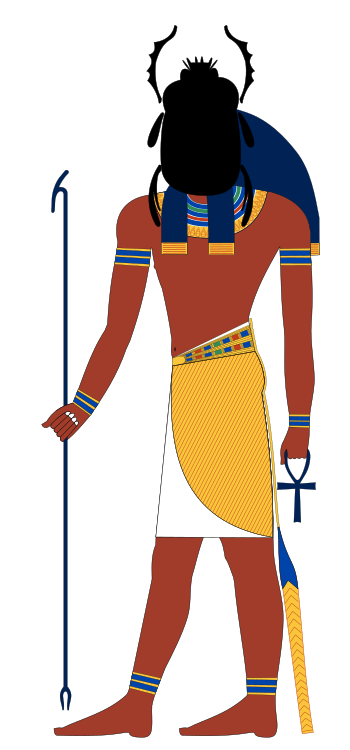
Among the many symbols and creatures associated with Ra, one of the most intriguing is the scarab beetle, known in ancient Egyptian as “Khepri.”
But how did this small, unassuming insect carry a weight of meaning far beyond its size?
Khepri, in ancient beliefs, was closely linked to the rising sun, embodying the dawn and the early morning aspect of Ra. As a deity, Khepri represented the eternal cycle of life.
The connection between Khepri and Ra is beautifully illustrated in the behavior of the scarab beetle itself, particularly the dung beetle species.
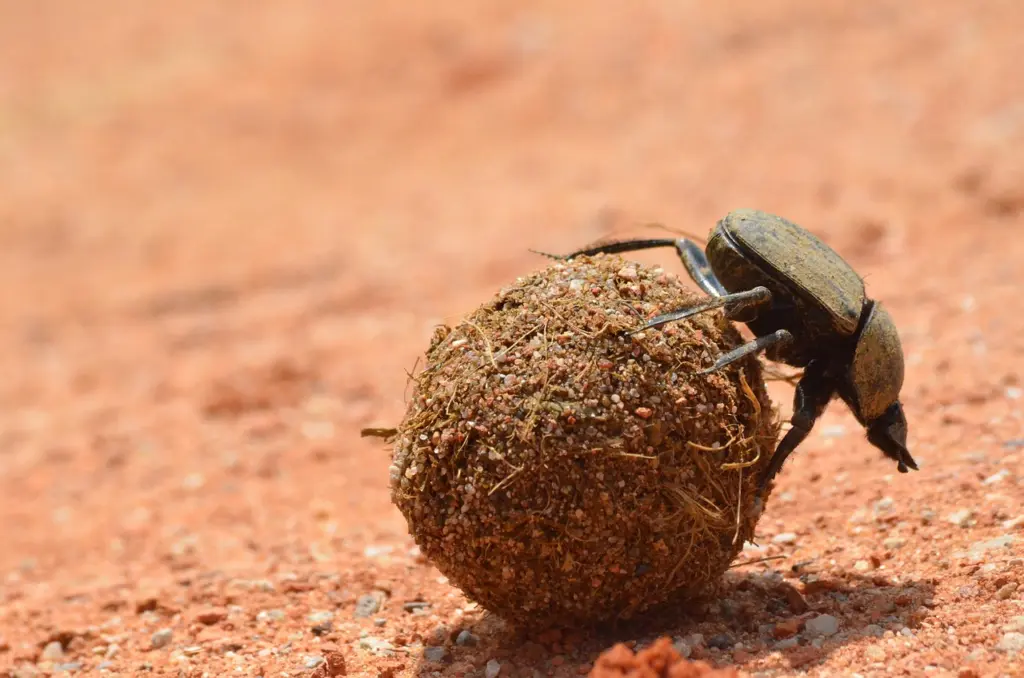
These beetles, observed rolling balls of dung across the ground, became living metaphors for the sun’s movement in the sky. Just as the beetle rolls the dung ball, Ra, in the form of Khepri, was believed to roll the sun across the horizon at dawn, bringing light to dispel the darkness and renewing life with the dawn of each day.
In this way, the scarab beetle, a humble creature going about its daily task, was seen as a symbol of the sun’s life-giving energy and the eternal cycle of life, death, and resurrection.

Rebirth
The scarab beetle was far more than just an emblem linked to the deity Khepri; it was a powerful symbol of the cycle of life, death, and rebirth. This symbolism was deeply ingrained in the Egyptian understanding of the world and the afterlife, a reflection of the natural cycles they observed and revered.
The life cycle of the scarab beetle, particularly its metamorphosis, was a source of endless inspiration to the ancient Egyptians. Observing these beetles emerge transformed from the earth, the Egyptians saw a parallel to their own beliefs about life, death, and rebirth.
The beetle’s journey from larva to adult, disappearing into the earth and emerging anew, was a compelling metaphor for the human soul’s journey through the afterlife and its eventual rebirth.
This process of transformation and renewal embodied by the scarab beetle resonated deeply with the Egyptian concept of the afterlife. The Egyptians believed in a form of spiritual regeneration, where the soul would undergo a transformation and ultimately be reborn.
In this context, the scarab became a symbol not just of physical rebirth, but of spiritual renewal and eternal life.
Protection
The scarab beetle also emerges as a character in various myths, playing roles that further cemented its significance in the Egyptian consciousness.
The prominence of the scarab in Egyptian mythology is evident in numerous stories, where it often appears as a symbol of protection. The “Book of the Dead,” a collection of funerary texts intended to guide the deceased through the afterlife and into the afterworld, frequently mentions the scarab.
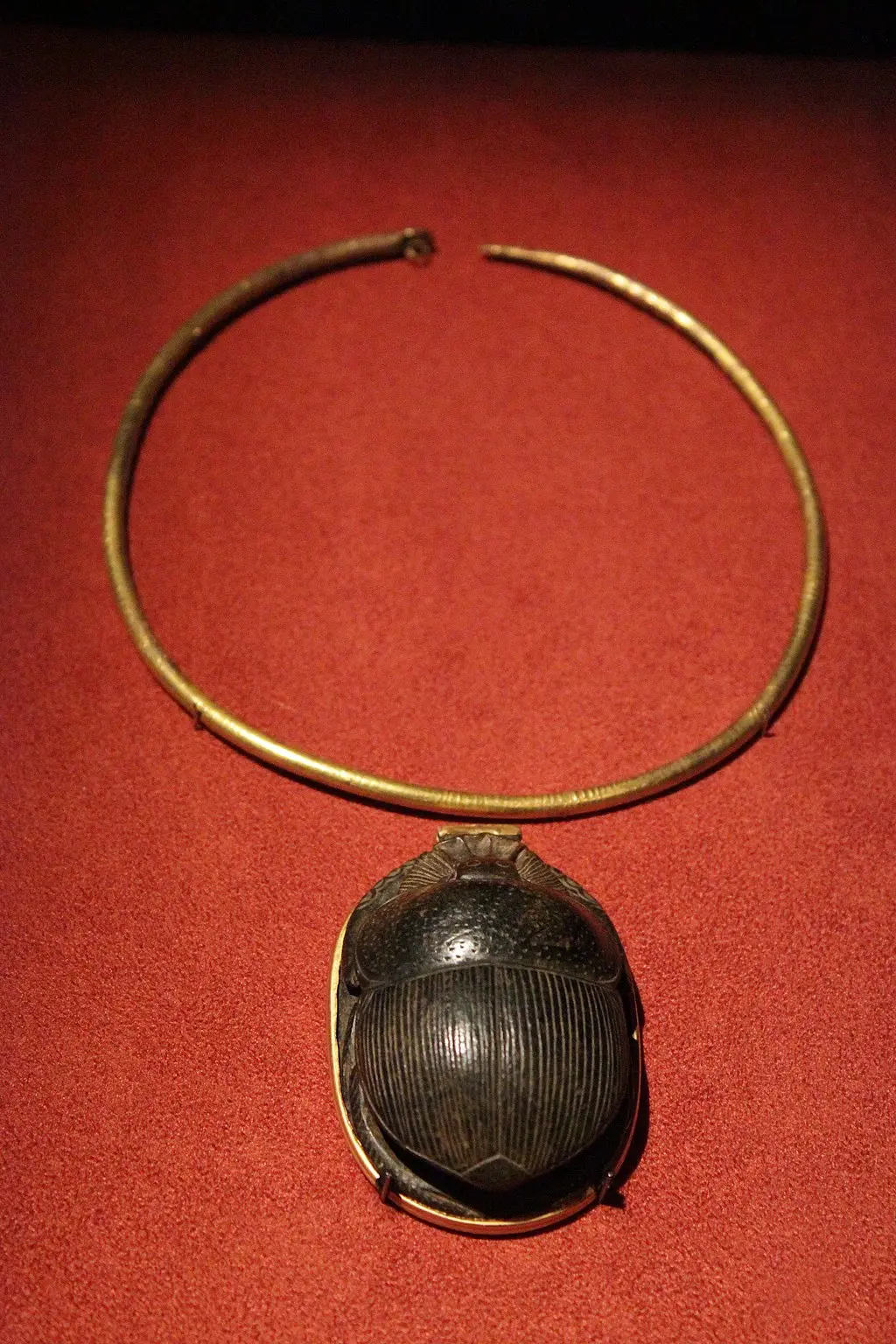
One of the most notable mentions of the scarab in the “Book of the Dead” is in the context of the heart scarab amulet. This amulet was inscribed with a spell and placed on the mummified body’s heart.
The spell was intended to ensure that the heart would not betray the deceased during the weighing of the heart ceremony, a critical step in achieving a favorable judgment in the afterlife. The scarab, thus, was an active protector, safeguarding the deceased’s journey to eternity.
The Scarab was often depicted as a defender against evil forces, a guardian against the dangers lurking in the underworld. In some stories, the scarab is seen rolling the sun through the underworld at night, ensuring its safe passage and eventual rise in the morning. This act symbolized the triumph of life and light over darkness and chaos, another theme central to Egyptian mythology.
Usage in Ancient Egypt
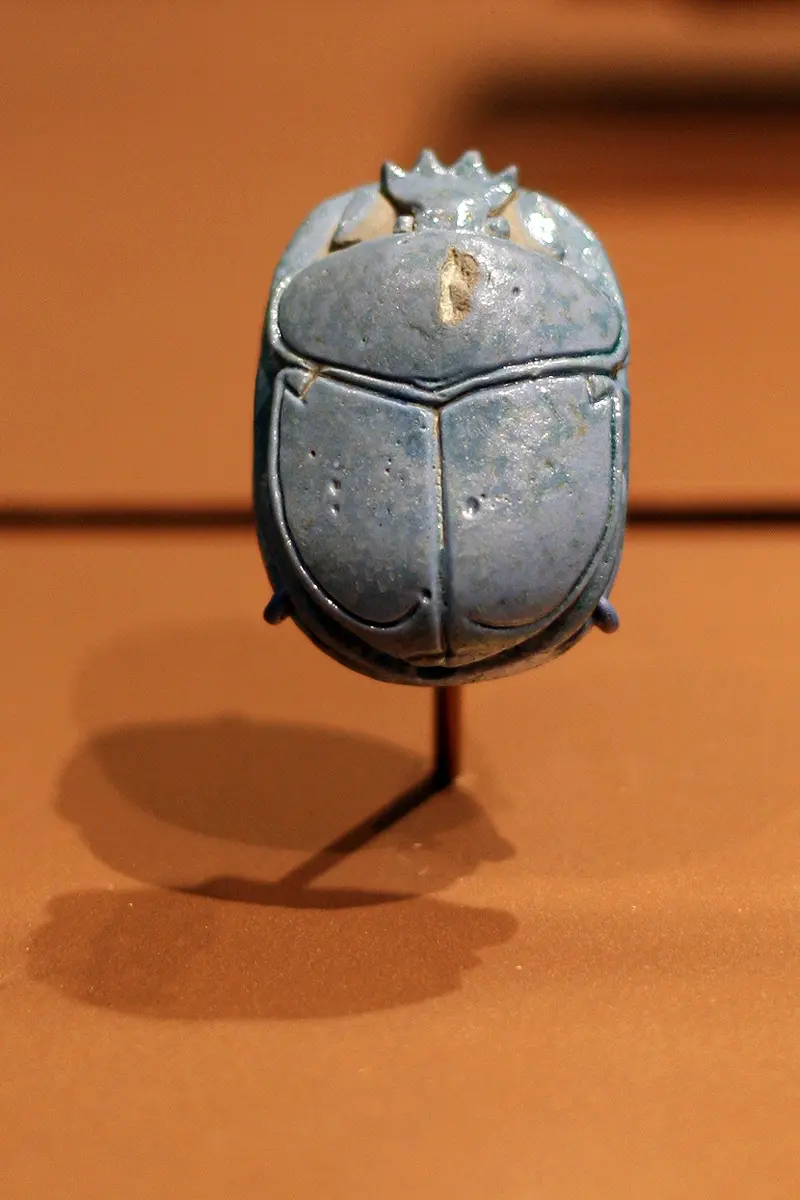
- In ancient Egypt, the use of scarabs in jewelry was widespread, with these beetles being fashioned into necklaces, bracelets, and rings. Made from materials such as gold, semi-precious stones, or faience, scarab jewelry was believed to bring good fortune and protection.
- The scarab amulets, often intricately designed and inscribed with spells, served as powerful talismans. Worn by the living or placed with the dead, these amulets were thought to ward off evil, promote healing, and ensure prosperity.
- Scarabs were often featured in seals, used by pharaohs to stamp official documents. These seals symbolized the pharaohs’ divine power to uphold cosmic order. The scarab in this context was a reminder of the pharaoh’s connection to the cycle of life and his role in maintaining the balance of the universe.
- In hieroglyphic inscriptions, the scarab was a recurrent motif, representing concepts of existence, manifestation, development, and growth. Its image, a visual shorthand in these ancient scripts, conveyed messages about the eternal nature of life and the divine.
- Tthe scarab beetle was frequently depicted alongside the Ankh, symbolizing life, reinforcing the scarab’s role in the eternal cycle of life and rebirth. In conjunction with the Eye of Horus, representing protection. Its association with the Was Scepter, a symbol of power, underscored the divine authority embodied by the pharaohs. Additionally, the integration of the scarab with the Djed Pillar, emblematic of stability, highlighted the enduring nature of the soul and tying deeply into the mythology of Osiris as the god of resurrection.

Comparative Symbolism
The symbolism of the scarab beetle in ancient Egypt is not an isolated cultural phenomenon. Many ancient civilizations across the globe have revered similar symbols, each representing parallel themes in their respective cultural contexts. This comparative look reveals the universal human fascination with the cycles of life and the mysteries of renewal:
- The Phoenix: The phoenix, a mythical bird in Greek mythology, is known for its cycle of death and rebirth, rising anew from its ashes. This mirrors the scarab’s association with regeneration.
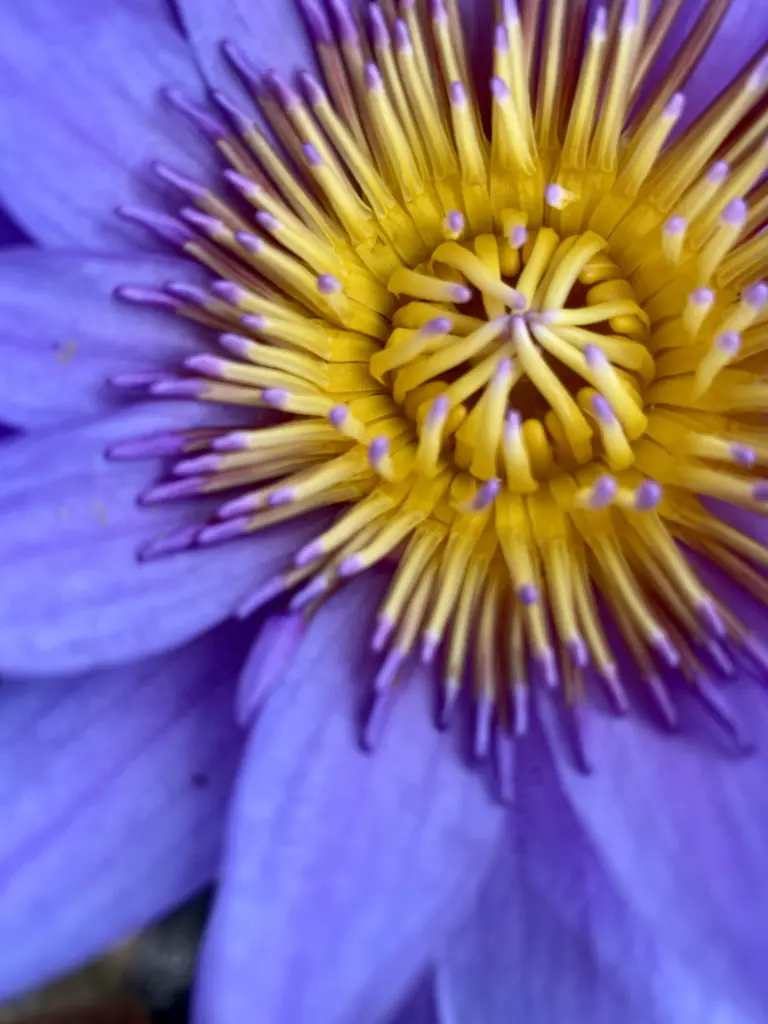
- The Lotus: In Buddhist and Hindu culture, the lotus flower, emerging pristine from the muddy waters, symbolizes purity, enlightenment, and rebirth, akin to the scarab emerging from the ground.
- The Butterfly: Various Native American tribes view the butterfly as a symbol of transformation and renewal due to its metamorphosis, similar to the life cycle of the scarab.
Conclusion
The journey through the world of the scarab beetle reveals a symbol that is deeply entrenched in the cultural and spiritual fabric of one of the world’s most fascinating civilizations.
From its association with the sun god Ra and its representation of the cycle of life, death, and rebirth, to its pervasive presence in art, amulets, and royal insignia, the scarab beetle emerged as a powerful emblem of regeneration, protection, and eternal life.
In exploring the scarab’s significance, we’ve seen how this humble insect was elevated to a symbol of divine power and cosmic order.
The scarab beetle stands not just as a relic of the past but as a bridge to a deeper understanding of ancient Egyptian thought. Its story is symbolic of humanity’s quest to find meaning in the natural world and our continual pursuit of understanding life’s great mysteries.