South America is like a magical zoo of wildlife, bursting with some of the coolest animals you’ll ever see. Among these, the stars of the show are the four camelids: llamas, alpacas, vicunas, and guanacos.
Hike through the Andes and you’ll spot a llama with its quirky smile, visit a local farm and you’ll see fluffy alpacas that produce some of the softest wool on Earth. Vicunas might be a bit more shy, but their super-fine fleece was once considered fit for Inca royalty. And guanacos, the wild ancestors of llamas, add a dash of untamed beauty to the South American landscape.
These camelids are much more than cute faces; they’re deeply embedded in the culture of the Andean people. For us travelers, meeting these animals is often a highlight, providing a genuine connection to the heart and soul of South America. So get ready for an adventure as we dive into the world of these amazing camelids!
Table of Contents
Toggle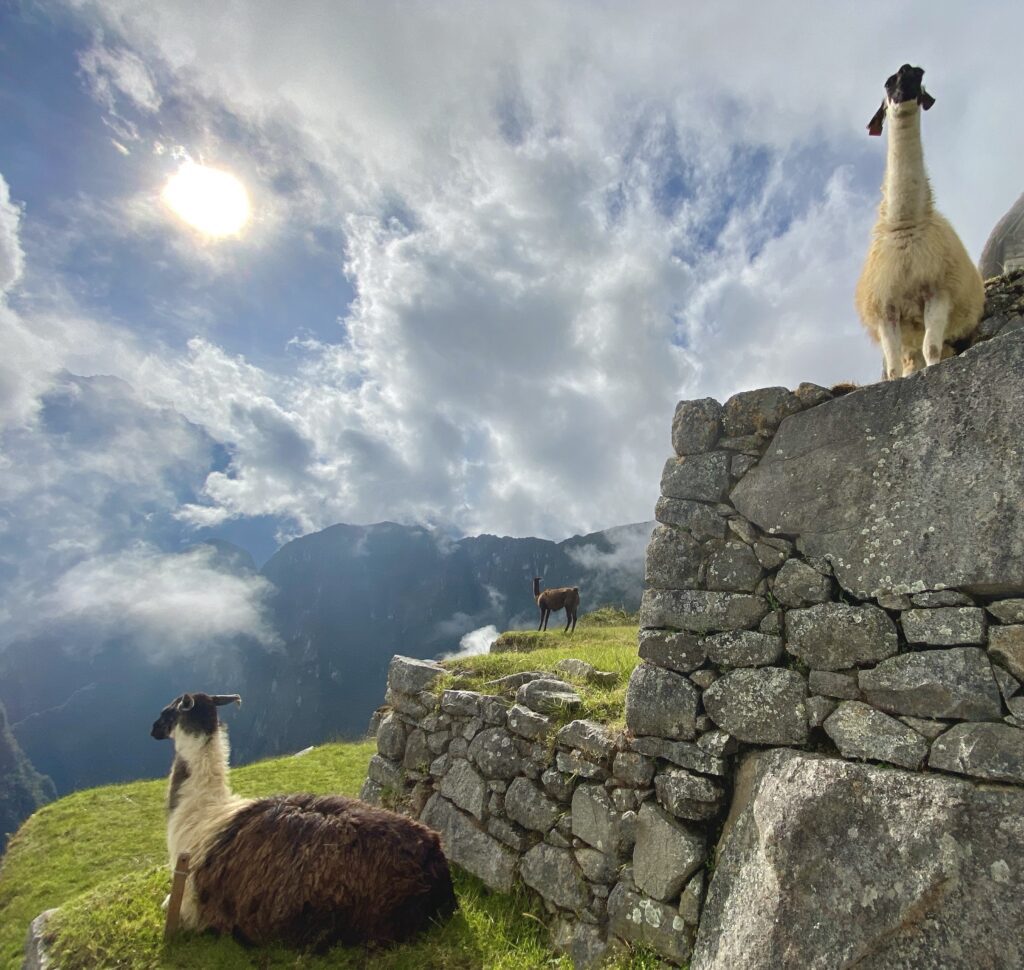
What are Camelids?
Camelids are a unique family of animals that include both the iconic camels of the deserts and their lesser-known South American relatives. Unlike their hump-backed cousins, South American camelids are adapted to the high-altitude environments of the Andes mountains. These animals are characterized by their long necks, slender bodies, and soft, warm fleece.
In South America, they have been domesticated and revered for thousands of years, providing wool, meat, and even companionship to the Andean people. Their gentle nature and unique adaptations make them fascinating creatures to learn about and encounter.
The 4 Camelids of South America

1. Llamas
Llamas are perhaps the most recognizable of the South American camelids, known for their long necks, expressive faces, and sturdy bodies. They can stand up to 6 feet tall and weigh between 250 and 450 pounds. Their thick, woolly coats can come in a variety of colors, from white and black to shades of brown and even spotted patterns.
Llamas are native to the high plains and mountainous regions of the Andes in Peru, Bolivia, Ecuador, Chile, and Argentina. They thrive at altitudes between 7,500 and 13,000 feet, where they graze on a variety of grasses. Their adaptability to harsh, high-altitude environments makes them perfect pack animals for the rugged Andean terrain.
If you want to meet them, popular tourist destinations like Machu Picchu and the Sacred Valley in Peru offer numerous opportunities to see llamas. These animals are often used in trekking tours, where they carry supplies for hikers.

Llamas in Andean Culture
Llamas have been an integral part of Andean communities for thousands of years. They were domesticated by the ancient inhabitants of the region, primarily for their ability to carry heavy loads across the steep and rocky mountains. A single llama can carry up to 75 pounds, making them invaluable for transporting goods.
In addition to their role as pack animals, llamas provide wool for textiles. Their fleece is coarser than that of alpacas, but it is still used to make blankets, ropes, and clothing. Llamas are also a source of meat, and their dung is used as fuel and fertilizer.
During the annual “Qoyllur Rit’i” pilgrimage in Peru, llamas accompany the faithful on their journey to the sacred mountain of Sinakara. This pilgrimage blends Catholic and indigenous beliefs.
2. Alpacas
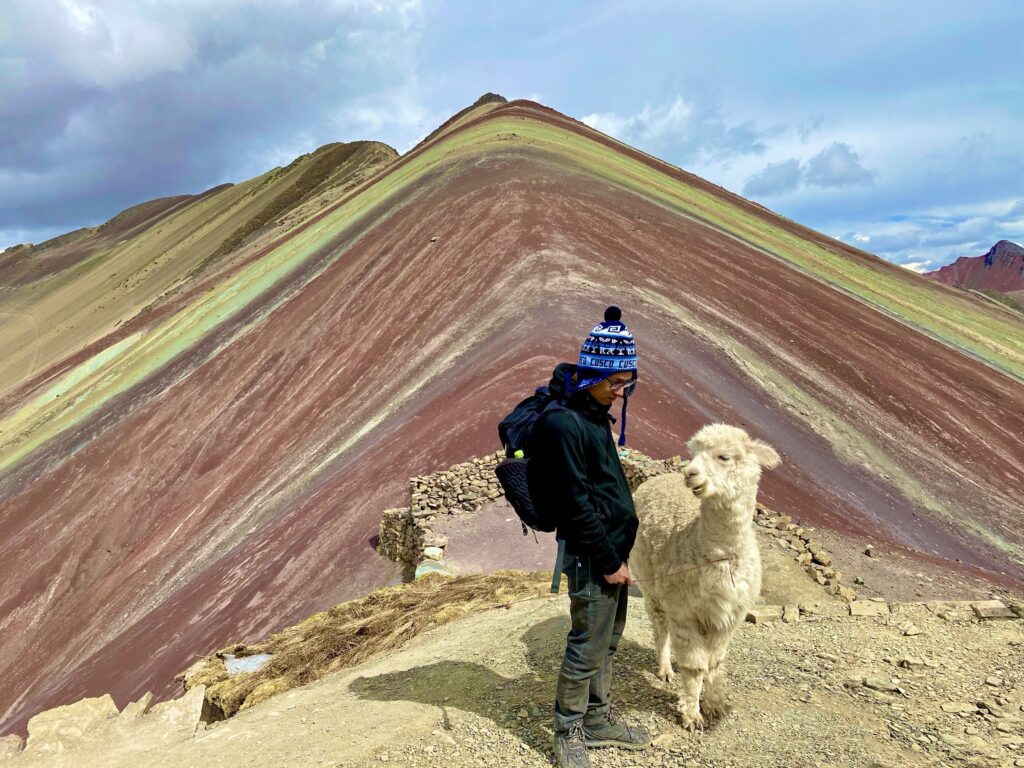
Alpacas are the adorable, fluffy members of the camelid family, often stealing the spotlight with their cute, doe-eyed looks and soft fleece. Smaller than llamas, these gentle creatures typically weigh between 100 and 200 pounds and stand about 3 feet tall at the shoulder. Their woolly coats come in a dazzling array of colors, from pure white to jet black, and everything in between. Alpacas live in family groups consisting of a male, several females, and their offspring. These groups communicate through a series of gentle humming sounds, and watching their interactions can be a delightful experience! The ones I met over at Rainbow Mountain were especially cute!
Alpaca wool is like gold in the Andes – not just because it’s incredibly soft and warm, but because it’s a vital part of local economies. For centuries, Andean communities have relied on alpacas for their luxurious fleece, which is used to make everything from traditional clothing to high-end fashion items sold around the world. This wool is renowned for its quality, often compared to cashmere for its softness and warmth.
Alpacas come in two breeds: Huacaya and Suri. Huacaya alpacas have fluffy, crimped fleece that gives them a teddy bear-like appearance, while Suri alpacas have long, silky locks that hang down in elegant strands. Both types are highly valued, but the Suri’s fleece is particularly prized for its rarity and luster. Popular spots to see alpacas include the Sacred Valley and the region around Cusco in Peru, where many local farms offer tours.

Alpacas in Andean Culture
Alpacas are seen as gifts from Pachamama, symbolizing abundance and harmony. In local folklore, these animals are gentle guardians of the mountains. Alpacas are also believed to bring good fortune, and their presence is a sign of prosperity and peace.
3. Vicunas
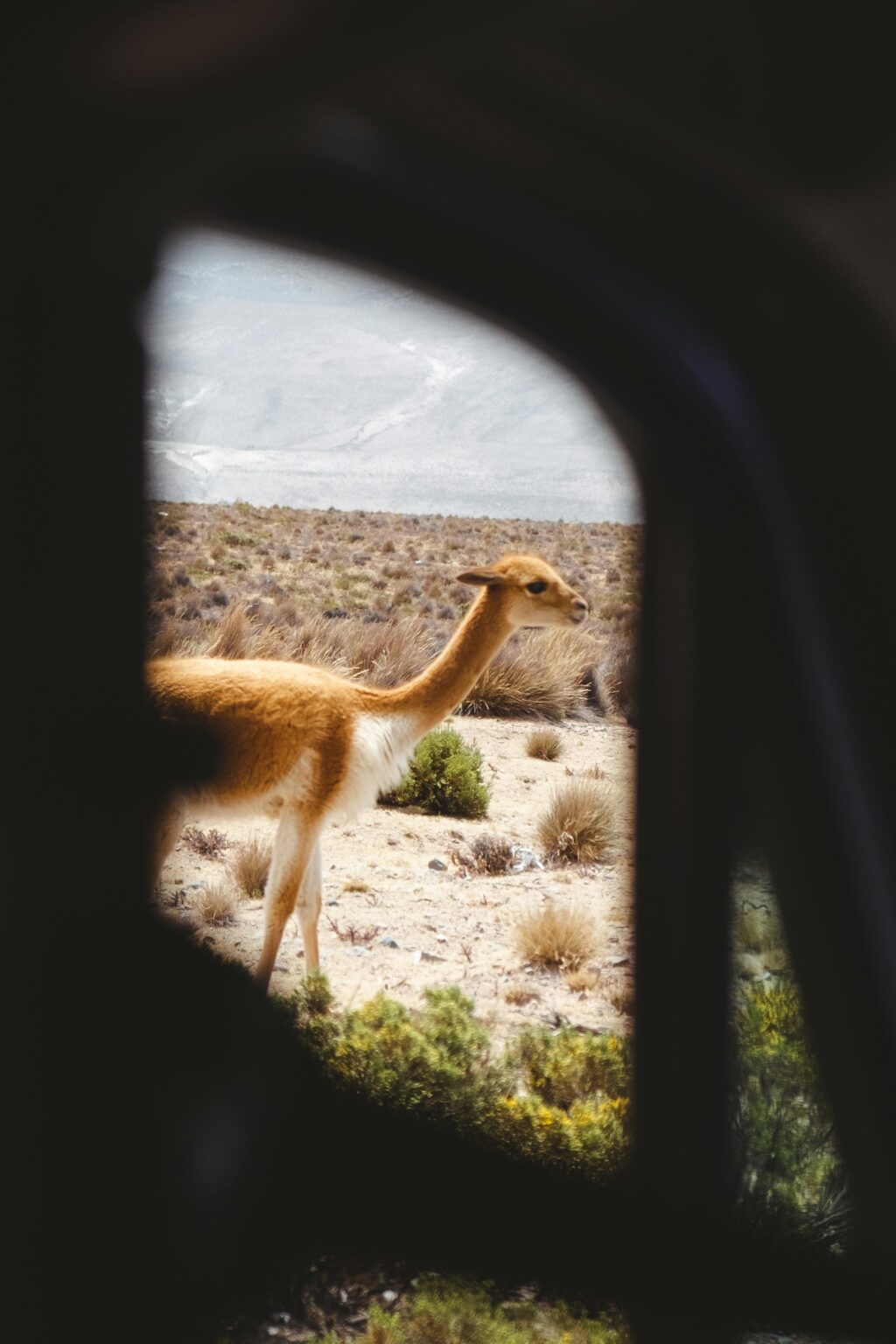
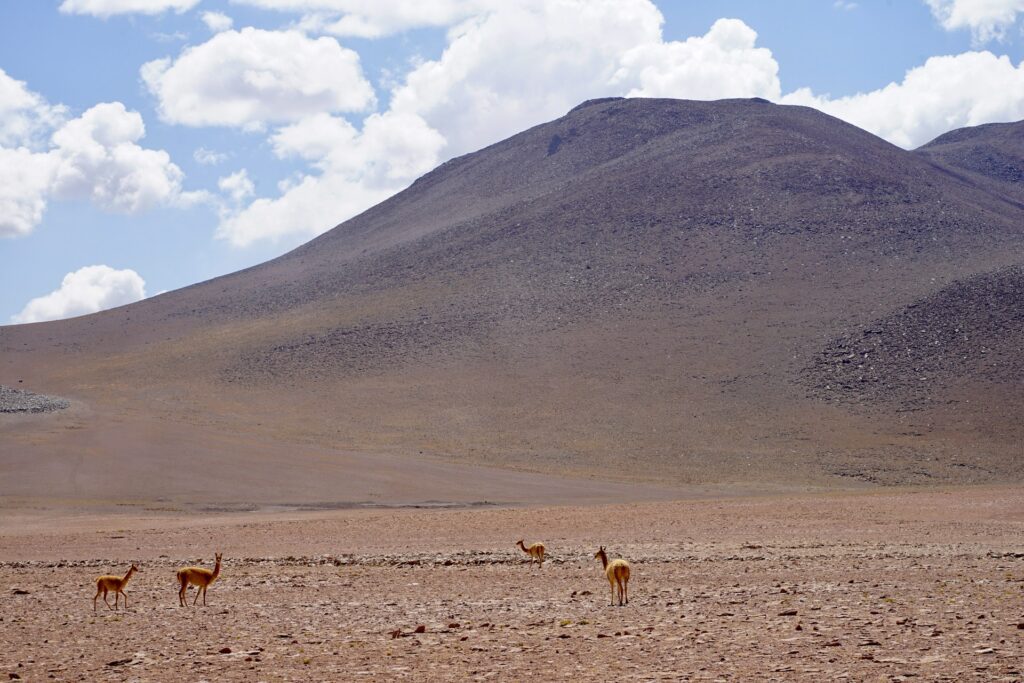
Vicunas are the wild and delicate members of the camelid family, often considered the crown jewels of the Andes due to their incredibly fine and valuable fleece. Smaller and more graceful than their domesticated cousins, vicunas weigh between 70 and 150 pounds and stand about 3 feet tall at the shoulder. Their coats are a beautiful golden-brown color, blending seamlessly with the rugged high-altitude landscapes they call home.
In fact, the value of vicuna wool nearly led to their extinction. By the 1960s, poaching for their wool had dramatically reduced their numbers to fewer than 6,000. International conservation efforts, including the establishment of protected areas and strict regulations on wool harvesting, have helped vicuna populations recover. Today, their numbers have rebounded to around 350,000.
Protected areas like the Pampa Galeras-Barbara D’Achille National Reserve in Peru offer a chance to observe these elegant animals in the wild.
Vicunas in Andean Culture
In ancient times, vicunas were highly prized by the Inca civilization for their wool, which was reserved exclusively for royalty. This luxurious fiber, known as “the fiber of the gods,” is one of the finest natural fibers in the world, known for its exceptional softness and warmth.
The Chaccu, an ancient practice revived in modern times, involves the community gathering to herd and shear vicunas in a sustainable manner. This practice is both a cultural celebration and a conservation effort, blending tradition with ecological awareness.

4. Guanacos
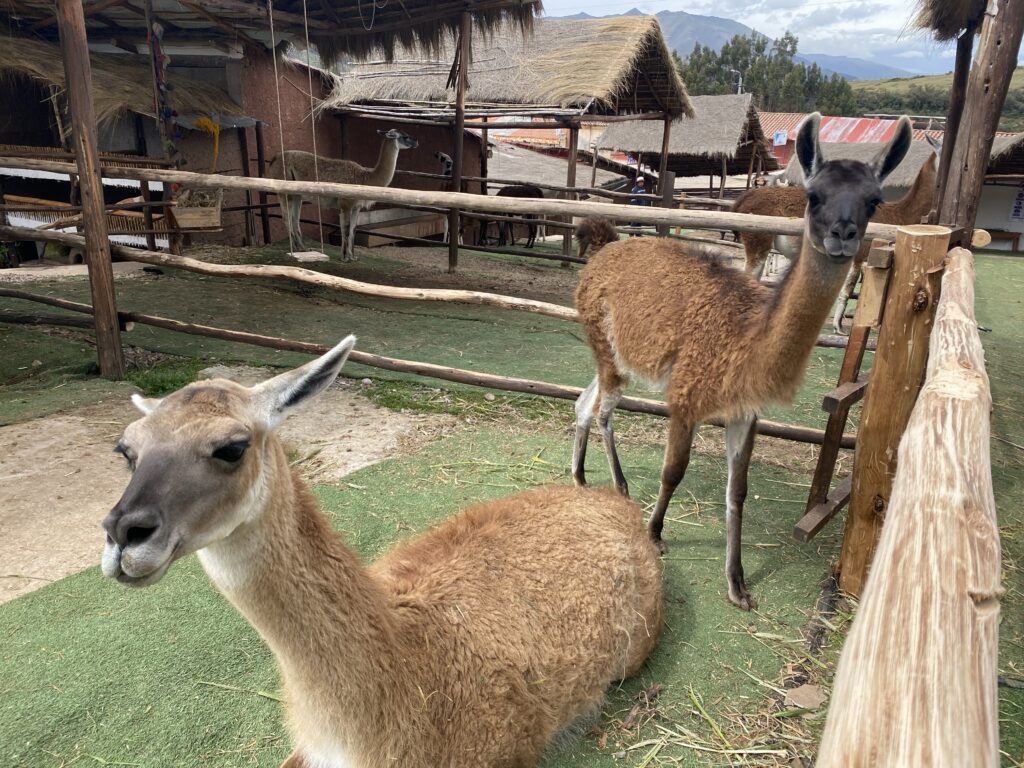
Guanacos are the wild and resilient ancestors of domesticated llamas. These elegant creatures are slightly smaller than llamas, weighing between 200 and 300 pounds and standing around 3 to 4 feet tall at the shoulder. Their coats are a distinctive light brown or cinnamon color, with white undersides and faces.
They thrive in diverse habitats, from the coastal deserts of Peru to the grassy plains of Patagonia and the mountainous regions of the Andes. Their adaptability to various environments is remarkable, allowing them to survive in some of the continent’s harshest climates.
Guanacos have a unique social structure. They live in family groups consisting of a dominant male, several females, and their offspring. Younger males form bachelor groups until they are mature enough to challenge for dominance. Guanacos communicate using a range of vocalizations and body language, including a distinctive high-pitched alarm call used to warn the herd of potential dangers.
Guanacos in Andean Culture
Historically, they were an essential resource for indigenous peoples, providing meat, hides, and wool. Their hides were used to make clothing and shelters, while their meat was a crucial source of protein. In many ways, guanacos are seen as the embodiment of the rugged landscapes they inhabit, resilient and enduring.