Ever stumbled upon a secret that feels almost too good to share, but you just can’t help yourself?
Well, Dambulla is kind of like that—a gem tucked away in the heart of Sri Lanka, whispering tales of ancient kings, sacred caves, and murals that have watched over silent prayers for centuries. It’s the kind of place where every stone has a story to tell, if only you’re willing to listen.
So, what’s the big deal about Dambulla? It’s where you’ll find the Dambulla Cave Temple, a majestic complex that has been a pilgrimage site for over 22 centuries!
But, let’s not spill all the secrets just yet because that’s not all there is to this magnificent place. Read on to uncover Dambulla’s best!
Table of Contents
Toggle
History of Dambulla
The genesis of Dambulla’s story is traced back to the 1st century BCE. It was then that the caves, naturally formed and nestled in the bosom of a towering rock, became a place of refuge for King Valagamba of Anuradhapura during his 14-year exile.
The caves’ solemn quietude and natural fortress-like qualities provided sanctuary. In gratitude, once reclaimed his throne, the king transformed these caverns into splendid rock temples, laying the foundation for what would become a continuous thread of devotion through centuries.
As time unfurled, the caves witnessed further embellishments under the patronage of various rulers. Today, they house over 150 statues of Buddha, effigies of Sri Lankan kings, and depictions of Hindu deities, all enveloped by murals that stretch across vast swathes of rock, narrating the life of the Buddha and the virtuous ideals of Buddhism.
Declared a UNESCO World Heritage site in 1991, the Dambulla cave temple complex is an archaeological treasure, and its sanctity undiminished by the passage of time.
Yet, Dambulla’s allure extends beyond the confines of its caves. The city is a nexus from which the cultural and natural wonders of Sri Lanka radiate—be it the royal citadel of Sigiriya or the elephant gatherings of Minneriya. It stands as a crossroads where history and spirituality meet the vibrant rhythms of the present.
Top Things to Do in Dambulla
1. Visit the Dambulla Cave Temples
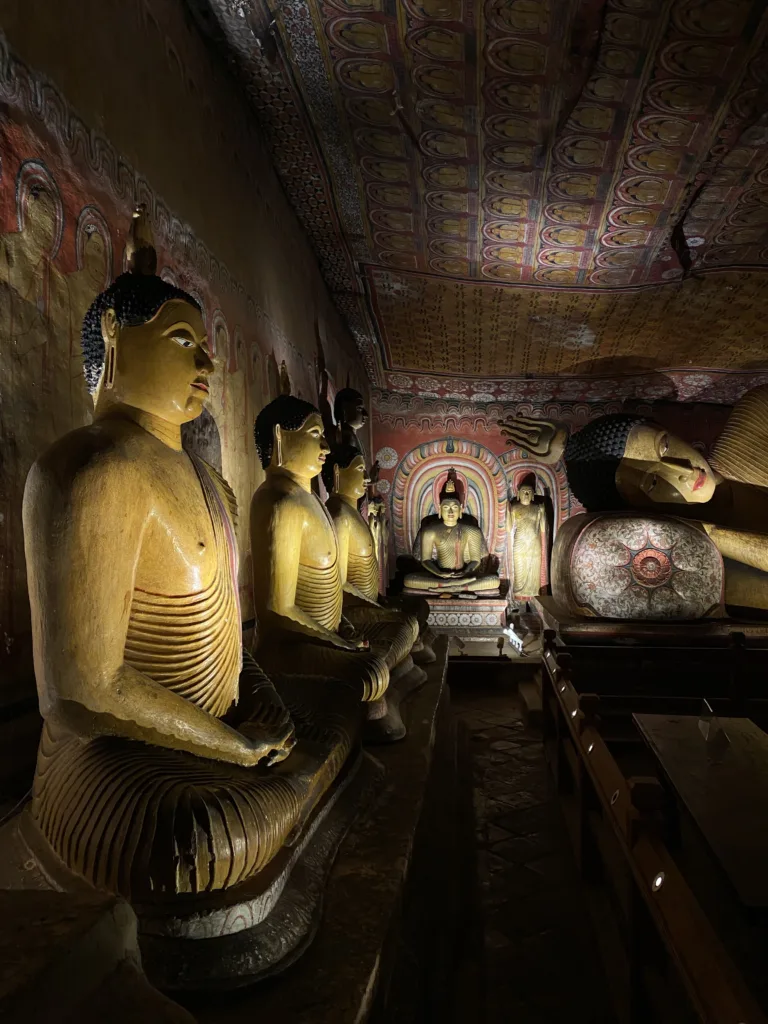
Nestled atop a massive rock, this network of caves has been a sanctuary of peace for over two millennia. As you ascend the gentle slope leading to the temples, the world’s bustle fades, replaced by the serene calm of sacred grounds.
You’ll have to leave your shoes before entering. They were quite strict in that even bringing them inside your bags aren’t allowed. There will be someone to watch over your shoes and you will have to pay him a tip after, the lowest denomination is alright as I asked some locals regarding this as well.
The complex consists of five main caves, each with its own unique atmosphere and collection of artifacts. The first cave, known as the Cave of the Divine King, houses a 14-meter-long statue of the reclining Buddha, alongside murals that cover every inch of the ceiling, narrating tales from the Buddha’s life.
Other notable caves include the Cave of the Great Kings and the Great New Monastery. If you’re keen, you can join a highly-rated tour that visits the Cave Temples and a traditional Sri Lankan Village through here.
2. Admire the Golden Buddha
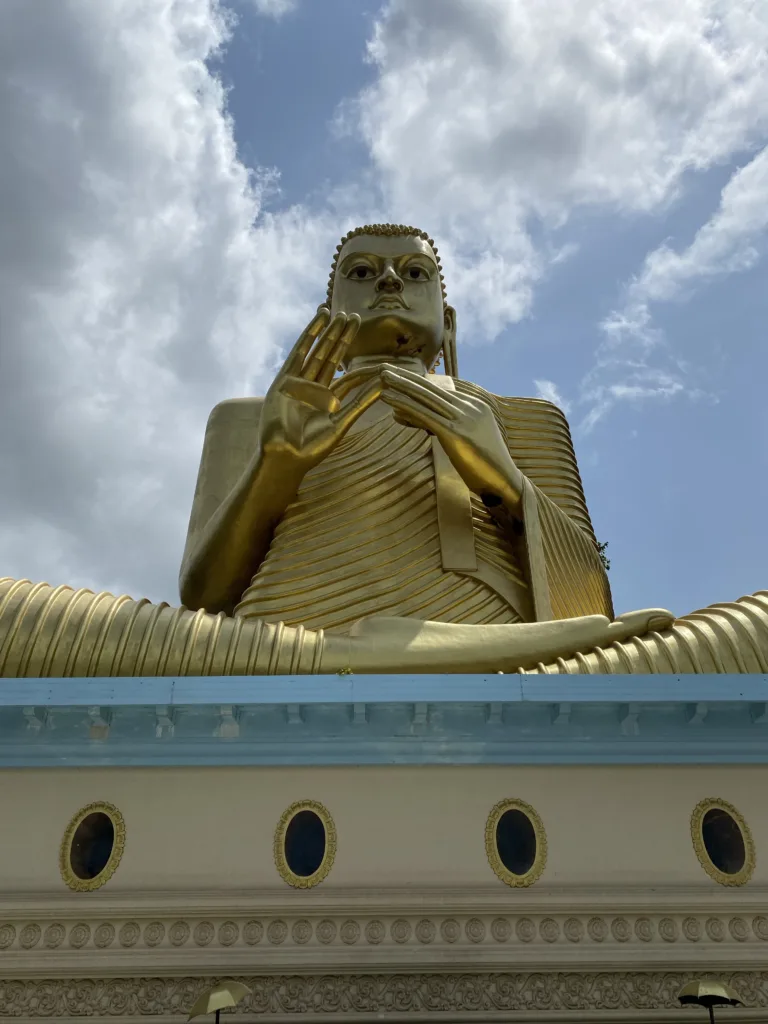
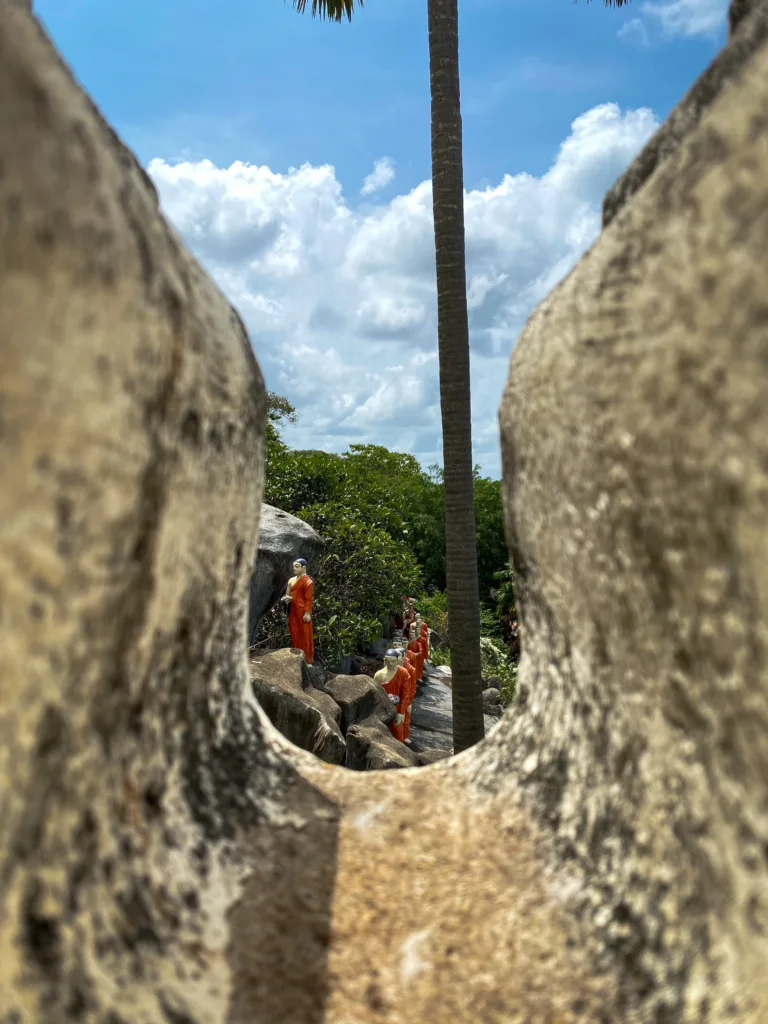
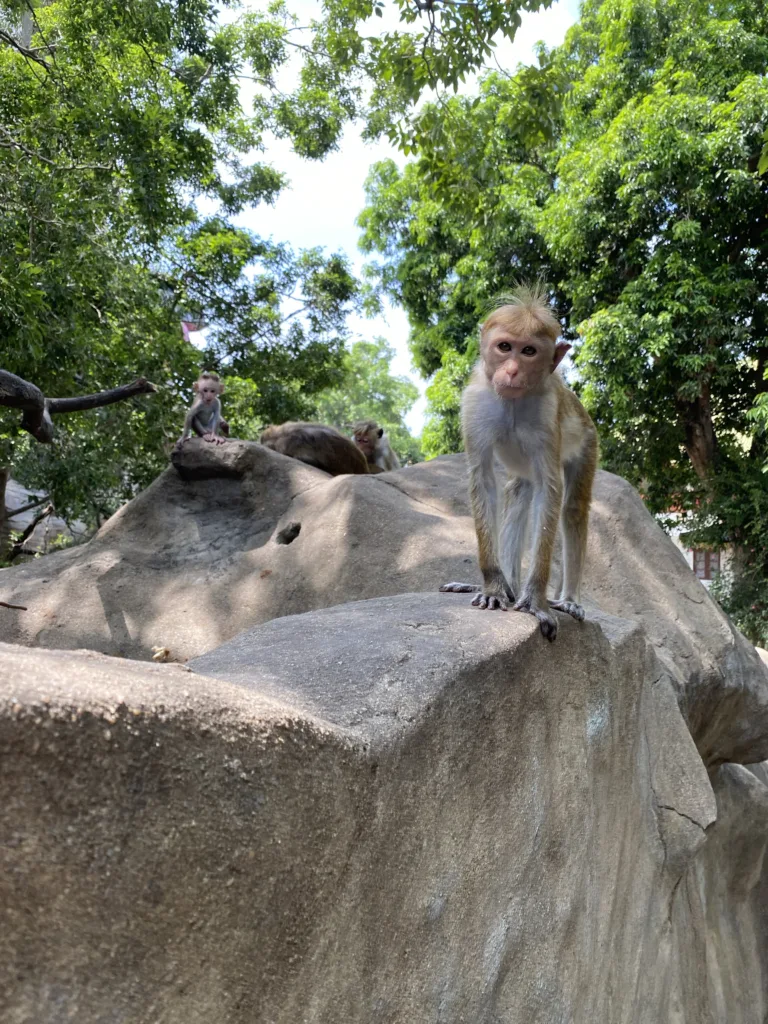
After the Cave Temples, continue hiking to the other side where you’ll pass by plenty of monkeys. Soon enough you’ll see the giant Golden Buddha from afar.
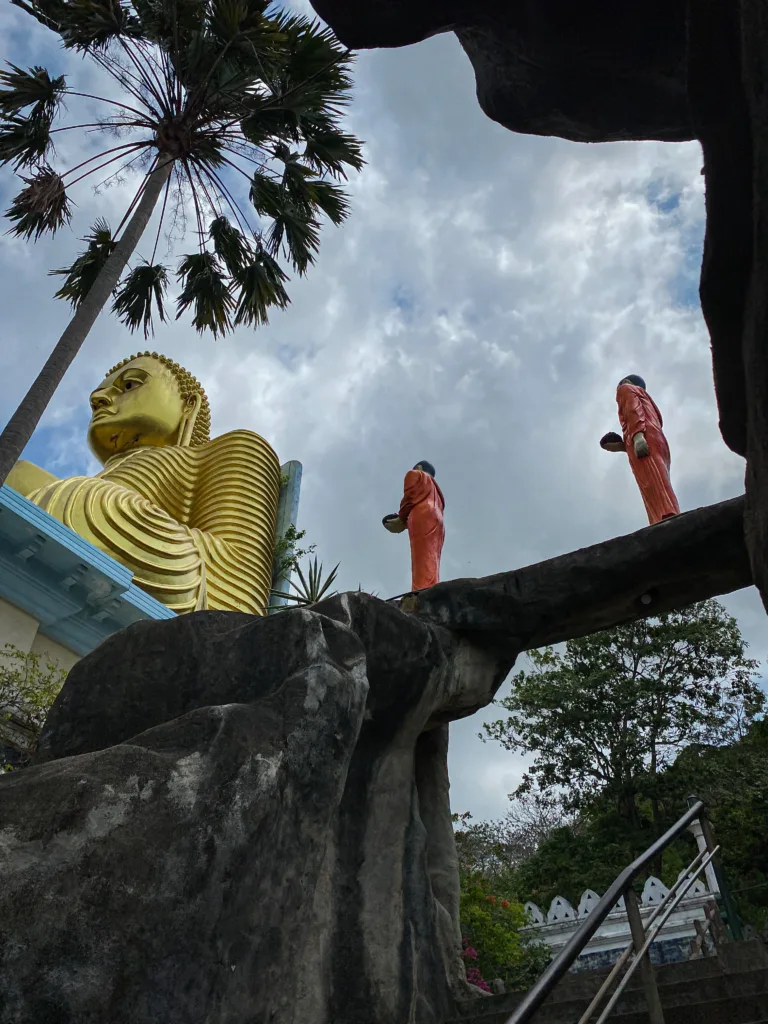
Construction of the Golden Buddha statue began in 1998 and reached completion in 2001. This remarkable feat of craftsmanship was constructed using concrete and bricks before being plated with gold. The Buddha is depicted in the “Dharma Chakka” or “Wheel of Law” mudra, symbolizing the Buddha’s first sermon in the Deer Park at Sarnath, where he set the wheel of the dharma in motion.
This statue is recognized as the largest Buddha in the world depicted in this specific posture (mudra).
3. Check out the Buddha museum
Beneath the towering Buddha, the three-story Buddhist Museum offers a journey through the history and evolution of Theravada Buddhism in Sri Lanka and Buddhism around the world.
Each floor is filled with artifacts, paintings, and sculptures that tell the story of the Buddha’s life, the spread of Buddhism, and its impact on culture and society across different epochs.
Together, the museum and the Golden Buddha statue offer a comprehensive overview of Buddhist heritage, from its ancient roots to its modern expressions.

4. Walk a Trail at Popham's Arboretum
Walking a trail at Popham’s Arboretum is a refreshing change of pace from the spiritual exploration so far.
This natural haven, named after British forester Sam Popham who founded it in the 1960s, is Sri Lanka’s first man-made arboretum. It provides a tranquil retreat into nature, showcasing a diverse collection of native trees and a serene atmosphere perfect for leisurely walks.
The arboretum is home to numerous species of flora, some of which are rare and endemic to the island, offering a unique opportunity for visitors to acquaint themselves with Sri Lanka’s diverse plant life.
Beyond the flora, the arboretum is also a haven for wildlife, including various bird species, making it a favorite spot for birdwatchers.
There are several trails to choose from that are color-coded with proper signage throughout the area. I had plenty of time as I was planning on catching the sunset at Pidurangala Rock that day so I took the longest one which took more than an hour or so.
5. Climb the Rose Quartz Mountain
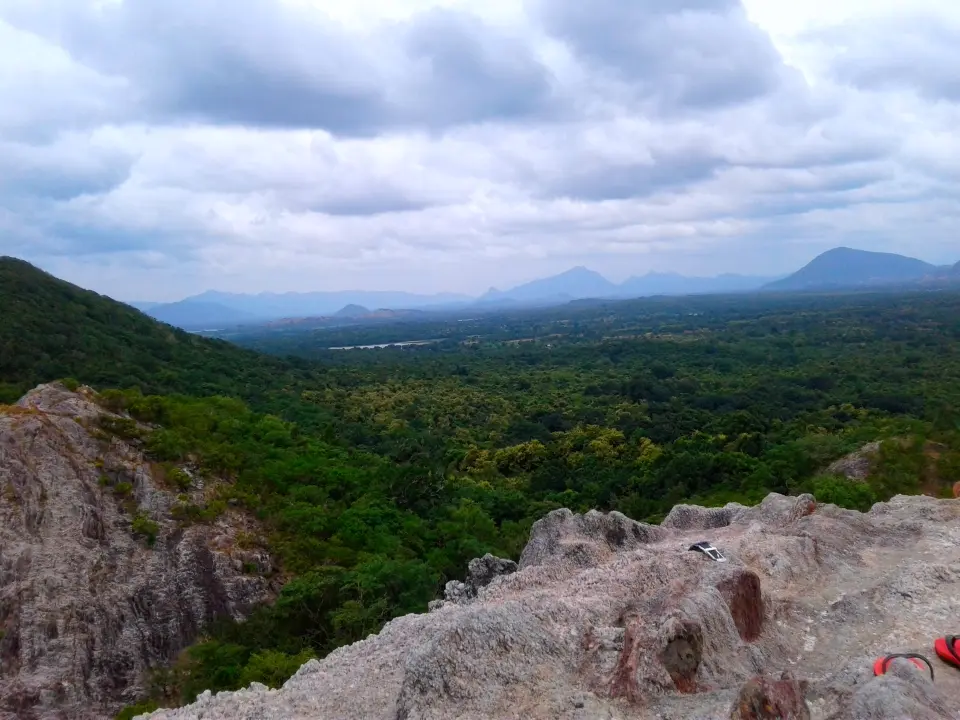
The Rose Quartz Mountain or Jathika Namal Uyana is famed for its extensive deposits of rose quartz. Spanning over 2500 acres, the protected area houses the rose quartz mountain range, believed to be over 500 million years old!
It’s a rare sight, with the mountain claimed to be the largest rose quartz deposit in South Asia, if not the world. This pink hue, ranging from soft pastels to deep vibrant tones, creates a surreal environment that feels almost otherworldly. The climb is relatively moderate, making it accessible to most fitness levels.
The Jathika Namal Uyana also shelters the largest ironwood forest in Asia. The ironwood forests trace their origins back to the reigns of ancient monarchs, notably King Devanampiyatissa.
It’s fascinating to learn that this forest, possibly the oldest and largest man-made forest in Asia, owes its expanse to a unique form of penance. Criminals seeking sanctuary within its bounds were spared by law but were tasked with planting ironwood trees.
This tradition, spanning over two millennia, has culminated in a lush, untainted expanse of Sri Lanka’s endemic trees.
6. Relax by Kandalama Lake
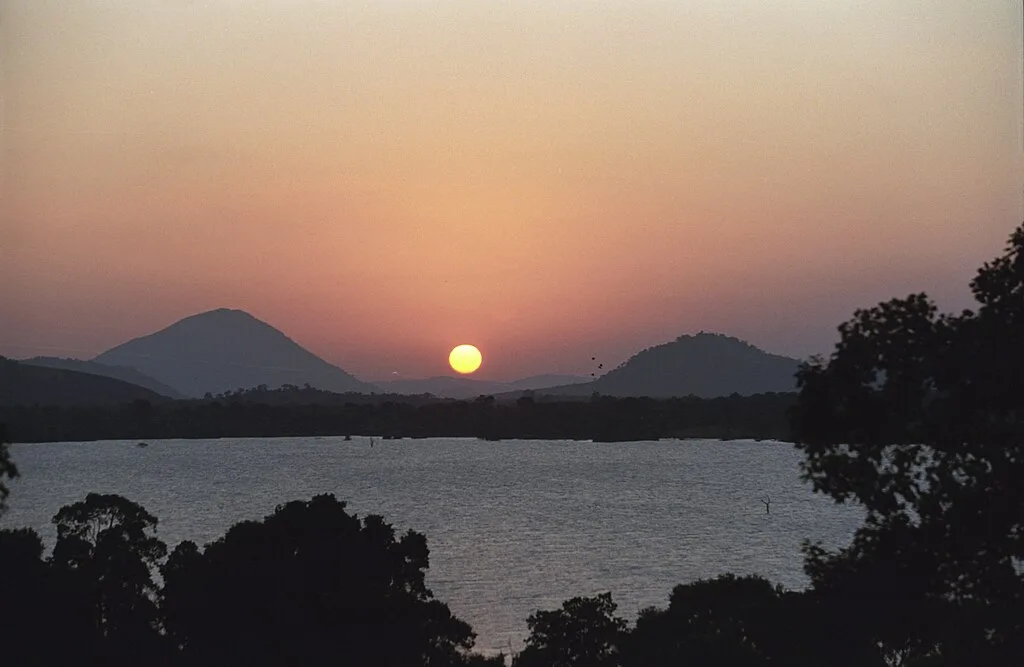
Kandalama Lake is man-made reservoir created to support irrigation and agriculture. Today, it has evolved into a picturesque locale.
Surrounded by lush greenery and the rugged outlines of nearby hills, Kandalama Lake serves as an idyllic spot to unwind. You can take boat rides that glide smoothly over the lake’s surface, offering up-close views of the vibrant ecosystem thriving along its banks.
The lake is a haven for birdwatchers, with many species of birds making their home in the surrounding trees and water’s edge, including the majestic eagle and playful kingfisher.
7. Hike Sigiriya Lion Rock
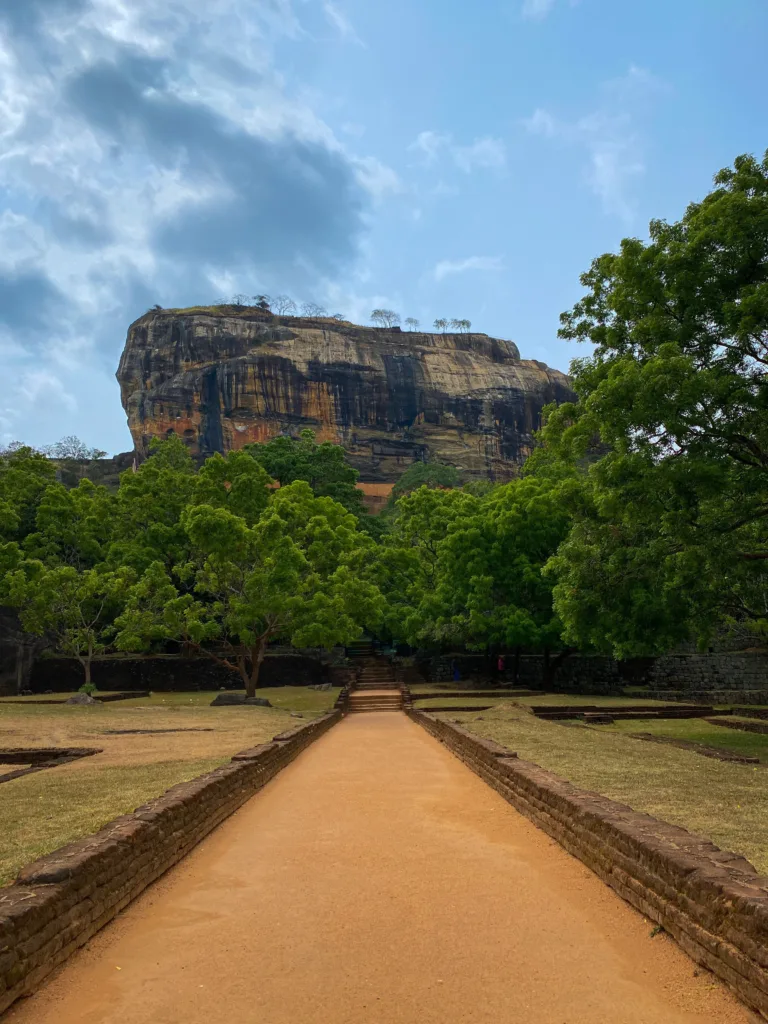
Sigiriya Lion Rock is one of the main draws and must-dos while in Sri Lanka and Dambulla provides the perfect location to embark on this journey.
This towering rock fortress, rising 200 m (656 ft) above the plains, holds the ruins of an ancient civilization dating back to the 5th century under King Kashyapa’s reign.
The ascent to the summit is an adventure, winding through staircases carved into the rock, leading past historical treasures such as world-renowned Sigiriya Frescoes and the Mirror Wall.
Reaching the top reveals the palace ruins, where panoramic views stretch across the jungle and countryside. Recognized as a UNESCO World Heritage Site, Sigiriya Lion Rock is best climbed at dawn or dusk, not only to avoid the tropical heat but also to experience the rock in the most magical light.
8. Catch the Sunset at Pidurangala Rock
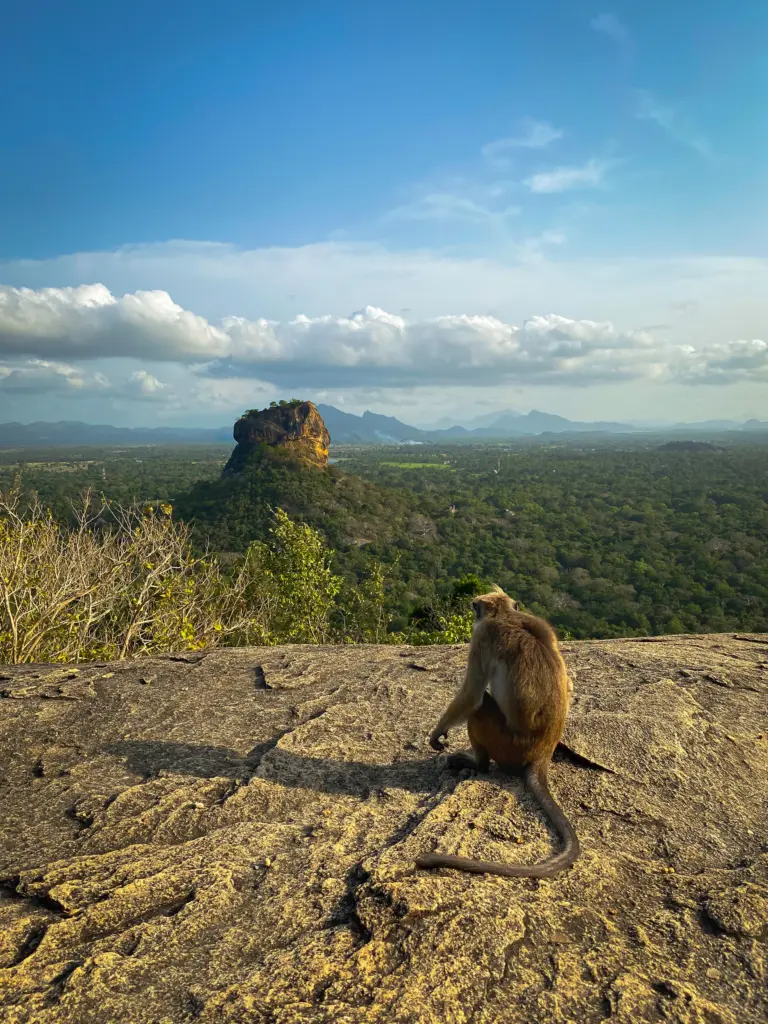
Pidurangala Rock, located a short distance from its more famous counterpart, Sigiriya Lion Rock, offers a unique perspective on the region’s natural beauty.
The climb to the summit of Pidurangala, which can takes approximately 30 minutes, is a moderately challenging trek as it’s more mountain than stairs compared to Lion Rock. Both Lion Rock and Pidurangala Rock are of similar height with Pidurangala just 1 meter shorter.
It’s well worth it though as it culminates in one of the most breathtaking sunset views in Sri Lanka.
Historically, Pidurangala was the site of a Buddhist monastery dating back to the first century. The initial part of the hike is relatively easy, passing through the ancient temple ruins at the base, including a large reclining Buddha statue and some cave temples.
The final ascent requires some scrambling over big boulders but totally manageable.
9. Go on a Safari at Minneriya National Park
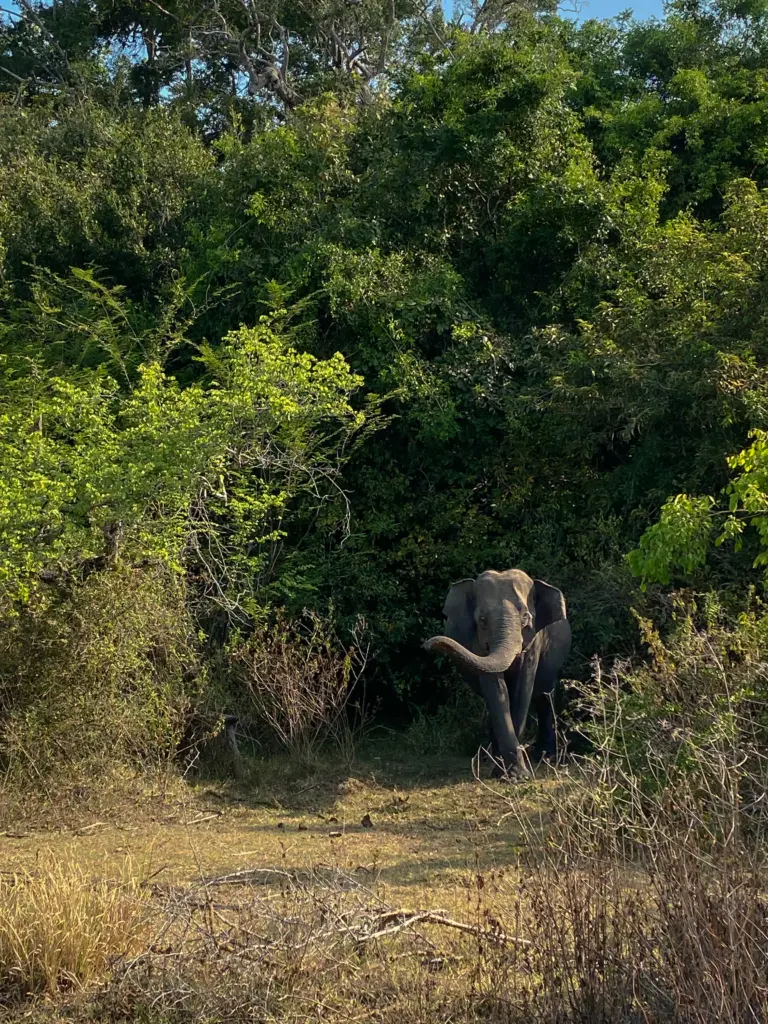
A jeep safari at Minneriya National Park immerses you in one of Sri Lanka’s most spectacular wildlife experiences. The park, renowned for “The Gathering,” provides a front-row seat to the world’s largest assembly of wild Asian elephants during the dry season from July to September.
This incredible phenomenon centers around the ancient Minneriya Tank, an expansive reservoir that becomes a magnet for wildlife as water sources in the surrounding areas dry up.
Covering about 8,889 hectares, Minneriya’s landscape is a mix of scrublands, forests, and wetlands, each supporting diverse flora and fauna. Beyond the majestic elephants, which can number up to 300 around the tank, the park is a sanctuary for many other species.
10. Cycle at Polonnaruwa
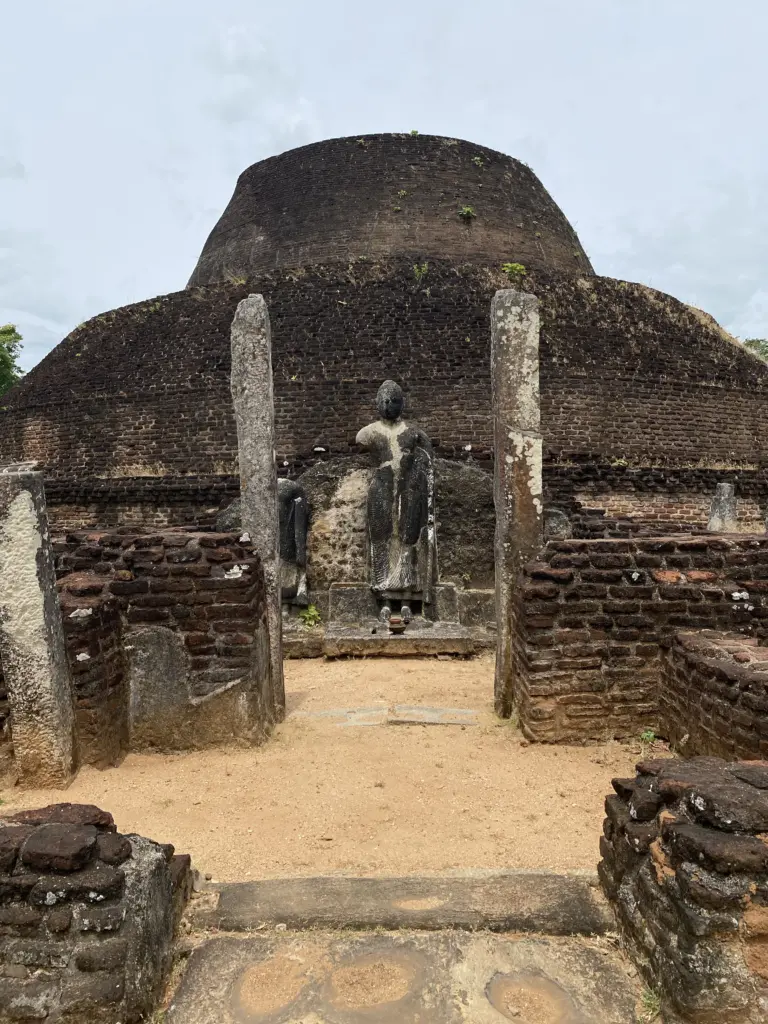
The ancient city of Polonnaruwa – this UNESCO World Heritage site, once the thriving capital in the 11th and 12th centuries, is now an open-air museum sprawling over a vast area.
Polonnaruwa’s well-preserved ruins, including magnificent stupas, imposing statues, and intricate carvings, tell the story of a bygone era. And cycling is one of the best ways to explore this extensive network of ruins, from the majestic Royal Palace complex and the Quadrangle to the serene Gal Vihara rock temple with its impressive Buddha statues carved into granite.
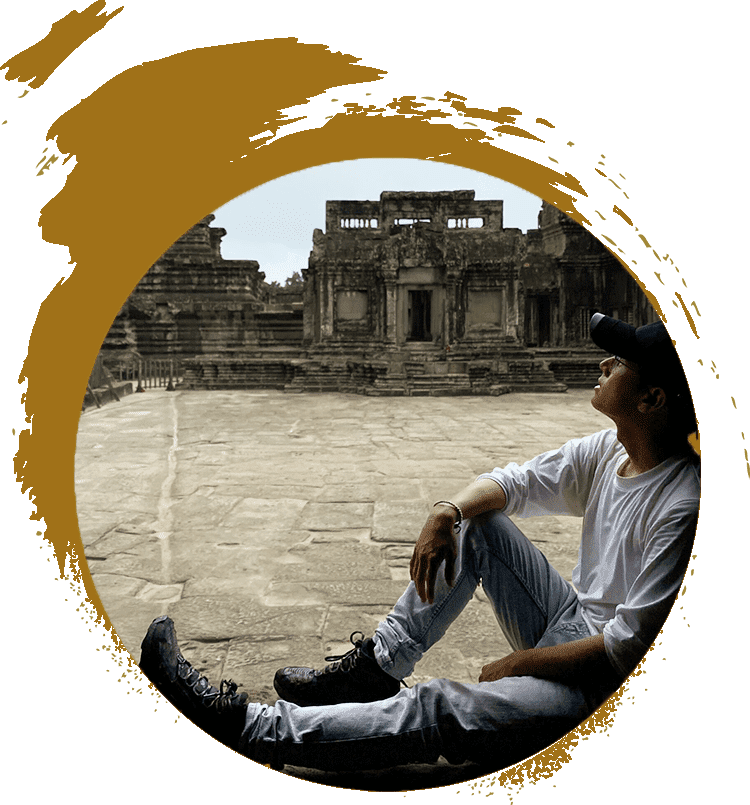
As you pedal along the ancient paths, the experience is enhanced by the natural beauty that surrounds Polonnaruwa reminiscent of our cycling trip around the Angkor Temples in the jungles of Cambodia.
11. Experience an Ayurvedic Massage
Getting an Ayurvedic massage especially after a day of exploring sites like Polonnaruwa or Sigiriya, offers a deeply rejuvenating and authentic experience. Ayurveda, an ancient system of medicine that originated in India over 5,000 years ago, has been an integral part of Sri Lankan culture and wellness practices for centuries.
It focuses on the balance between mind, body, and spirit to promote overall health and well-being.
An Ayurvedic massage in Sri Lanka is not just about relaxation; it’s a therapeutic ritual that uses herbal oils and traditional techniques tailored to your body’s specific needs. These massages often involve the use of warm oils infused with a blend of local herbs, applied with a variety of strokes and techniques that help to release tension, improve circulation, and detoxify the body.
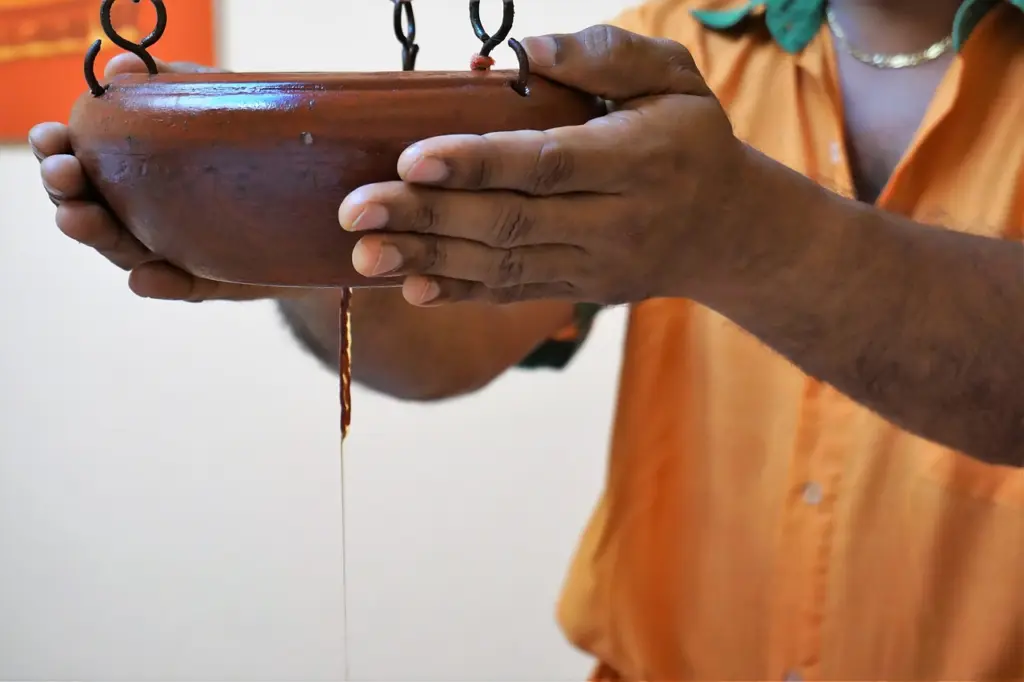
I recommend getting the Shirodhara, which is like a nervous system massage. The one I had in Habarana even had a herbal sauna before a hot shower which was icing on the cake!
Where to Stay in Dambulla
Dambulla is prime spot to make a base as functions as a crossroads to the other important sites in the Cultural Triangle such as Sigiriya and Polonnaruwa.
It’s also near Minneriya and Habarana if you’re after wildlife and safaris!
Here are some of the most recommended places to stay in Dambulla:
Best Hotels in Dambulla:
- The Green Village – inaugurated in 2016, offers air-conditioned accommodation with the luxury of free private parking. The guest house ensures a serene environment with soundproofed rooms that feature private entrances, bathrooms, safety deposit boxes, and complimentary WiFi.
- Simoya Nature Park – presents you with a tranquil garden view accommodation, complemented by complimentary WiFi and on-site parking. The guest house prioritizes guest security with around-the-clock front desk support and continuous security. Each air-conditioned unit is equipped with a flat-screen TV, a private bathroom featuring a bidet and hair dryer, and offers the comfort of a seating and dining area.
- The Green Edge – features a shared lounge, an on-site restaurant, complimentary WiFi throughout, and free private parking. Each room is equipped with amenities such as a private bathroom with hot/cold water shower, towels, refrigerator, air conditioning, fan, hair dryer, mineral water, coffee, tea, and a kettle, along with laundry services. For those interested in exploring the area, free bike rentals are offered.
Best Hostels in Dambulla:
- New Dambulla City Hostel – now relocated to a tranquil, nature-surrounded setting away from urban clamor, exclusively accommodates those seeking a blend of fun and relaxation. With amenities like a lush garden, hammocks, a bonfire pit, and barbecue facilities, it provides spacious accommodations with essential comforts, free WiFi, and parking.
- DormYard Dambulla – a city hostel curated by a New Zealander with expertise in hospitality, prioritizes high standards and quality service for travelers in Sri Lanka. The property features two spacious, air-conditioned bedrooms capable of accommodating up to 18 guests.
How to Get Around Dambulla
For getting around Dambulla and accessing its attractions efficiently, here are the specific transport options:
Tuk-Tuks: Commonly used for short distances within Dambulla, they’re a flexible and immediate mode of transport. It’s customary to agree on a fare before starting your trip. Tuk-tuks are your go-to for most travel around the Cultural Triangle
Car Rentals: Ideal if you want to explore beyond Dambulla. This option offers comfort and the advantage of a driver familiar with local roads and sites. Alternatively, you can also rent a car for your self.
Public Buses: Connects Dambulla with major cities and tourist destinations, making them an economical choice for longer distances. While cost-effective, this option may require more travel time and planning.
Best Time to Visit Dambulla
The best time to visit Dambulla is during the dry seasons, which span from January to April and again from July to September (“The Gathering” in Minneriya coincides with this time period).
Visiting Dambulla during these dry seasons ensures you can comfortably enjoy the outdoor and historical sites, from the majestic cave temples adorned with ancient frescoes to the natural splendor of the area’s national parks.
How to Get to Dambulla
Traveling to Dambulla from Colombo or nearby historical sites like Sigiriya and Polonnaruwa is relatively straightforward, given its central location in Sri Lanka’s Cultural Triangle.
From Colombo:
By Bus: Buses depart regularly from Colombo’s main bus terminal. The trip takes approximately 4-5 hours. This mode of transport is cost-effective and provides a real insight into local life.
By Car or Taxi: For those seeking comfort and flexibility, hiring a car or taking a taxi from Colombo to Dambulla can be the best choice. The drive covers around 150 km (93 mi) and takes about 3-4 hours via the Ambepussa-Kurunegala-Dambulla highway.
By Tour: Alternatively, you can also join a tour that visits Dambulla and Sigiriya from Colombo through here.
From Sigiriya or Polonnaruwa to Dambulla:
By Tuk-Tuk: Traveling from Sigiriya or Polonnaruwa to Dambulla by tuk-tuk is a common choice. The journey takes about 30 minutes and allows travelers to enjoy the local scenery at a leisurely pace. You might even spot some elephants along the way!

What to Know Before Going to Dambulla
When visiting the Dambulla Cave Temples or any other religious sites, it’s essential to dress modestly. Shoulders and knees should be covered. Carrying a scarf or sarong can be handy for covering up if needed. Though they are usually available for rent as well.
It is customary to remove your shoes before entering the temple complexes, including the Dambulla Cave Temples. There are facilities near the entrance where you can safely leave your shoes, for a small fee.
The climb to the cave temples and exploring the surrounding area can be physically demanding, especially in the heat. Carry water, wear sunscreen, and consider a hat or an umbrella for shade. Travel insurance can also go a long way.
Having some local currency on hand is useful for small purchases, donations at temples, or paying for shoe storage services.
Plan Your Trip to Sri Lanka | Best Travel Resources
Book Your Accommodations
- Booking.com – the world’s leading online booking platform for accomodations around the world, they have an extensive amount of available listings with zero booking fees and best price guarantees.
- Hostelworld – a backpacker’s best friend, Hostelworld has the largest collection of hostels and guesthouses for affordable prices.
Don’t Forget Insurance
- SafetyWing – from Nomad Insurance, an insurance by nomads for nomads. They understand our lifestyle well and have really comprehensive and flexible plans that cater to any traveler.
Find Cheap Flights
- Kiwi.com – my go-to for booking and finding the cheapest flights and it’s helped me save tons of money. They do virtual interlining which is connecting flights from airlines that do not codeshare, so you can find routes that you wouldn’t be able to find normally.
Join Tours & Activities
- GetYourGuide – is one of the best places to find unique tours and activities. I found that it’s an excellent way to meet fellow travelers and create fond memories. They are not only limited to tours as they also offer niche services such as skip-the-line tickets or private transfers.
Catch a Ride
- Rentalcars.com – nothing beats the freedom of the road, Rentalcars.com is the world’s largest online car rental service. They operate across 160 countries so they’re the perfect partner to work with if you find yourself wanting a ride.