
The Five Wisdom Dakinis hold a profound place in Tibetan Buddhism, embodying the essence of enlightened activity. Dakinis, often depicted as female deities, symbolize the dynamic and transformative aspects of spiritual energy. Wisdom Dakinis are enlightened beings who embody the highest spiritual realizations, guiding practitioners toward the ultimate truth.
Of the Five Wisdom Dakinis, each Dakini is associated with one of the five activities: peaceful, increasing, magnetizing, subjugating, and supreme activities. These activities encompass the full spectrum of spiritual actions necessary for achieving enlightenment and benefiting all sentient beings. Understanding and engaging with the Five Wisdom Dakinis is thus essential for practitioners seeking to embody these enlightened qualities and achieve spiritual transformation.
Table of Contents
Toggle
In Tibetan Buddhism
The origins of the Wisdom Dakinis are intertwined with the teachings of Padmasambhava, also known as Guru Rinpoche, who is credited with establishing Buddhism in Tibet during the 8th century. Padmasambhava’s teachings emphasize the importance of Dakinis in spiritual practice, highlighting their role in guiding practitioners toward enlightenment.
Mythological narratives often depict Dakinis as celestial beings who descend to the earthly realm to assist practitioners on their spiritual journey. These stories illustrate the profound wisdom and compassionate nature of the Dakinis, who use their enlightened energy to dispel ignorance and aid in the realization of the ultimate truth.
The Five Activities
The Five Activities in Tibetan Buddhism encompass a comprehensive spectrum of spiritual actions designed to aid practitioners on their path to enlightenment. These activities are: peaceful, increasing, magnetizing, subjugating, and supreme activities.
- Peaceful activities are aimed at pacifying negative forces and bringing about inner and outer tranquility.
- Increasing activities focus on the enhancement of positive qualities, wealth, and spiritual attainments.
- Magnetizing activities are concerned with attracting beneficial conditions and relationships that support spiritual growth.
- Subjugating activities involve the overcoming and control of obstacles and harmful influences.
- Supreme activities embody the ultimate expression of enlightened action, transcending the ordinary and embodying the highest spiritual accomplishments.
Connection to the Five Wisdom Dakinis
The Five Wisdom Dakinis are intimately connected to these activities, each embodying and perfecting one of the five. Through their meditations, practitioners can harness the transformative power of the Dakinis to master these activities:
- Peaceful Activity: White Vajra Dakini
- Increasing Activity: Yellow Ratna Dakini
- Magnetizing Activity: Red Padma Dakini
- Subjugating Activity: Green Karma Dakini
- Supreme Activity: Blue Buddha Dakini
The Five Wisdom Dakinis
1.Vajra Dakini
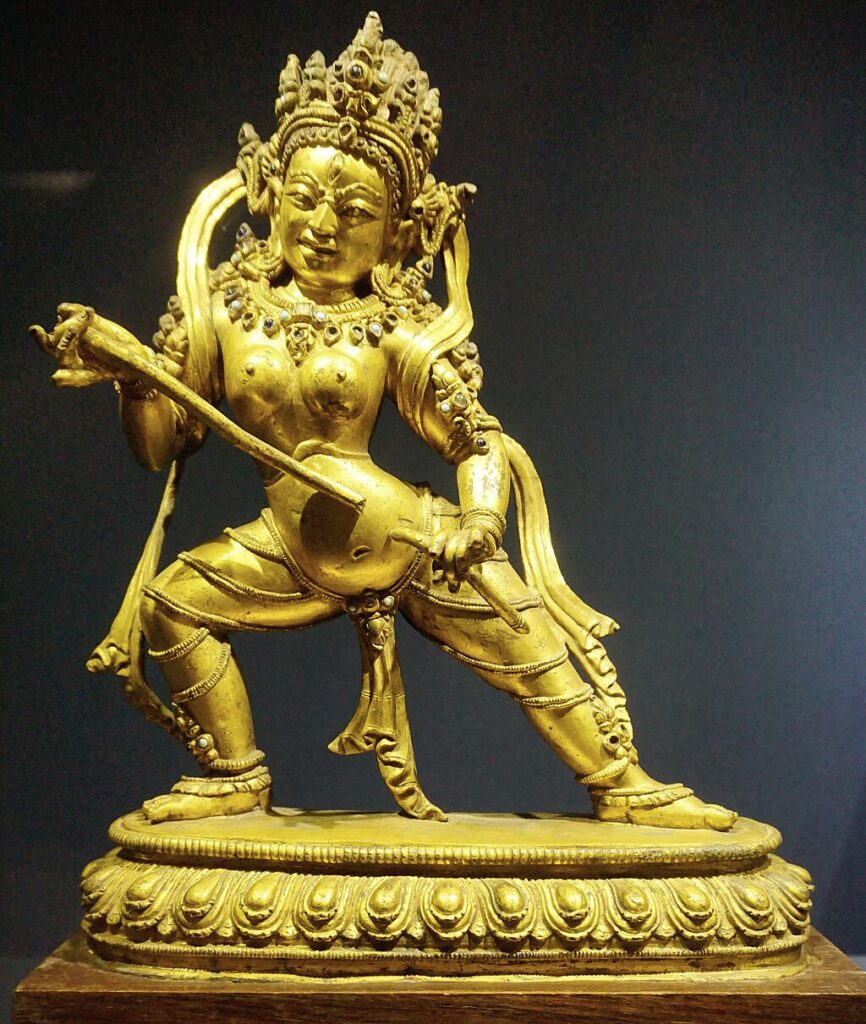
Vajra Dakini (Vajravarahi or Vajrayogini) is typically depicted with a fierce expression, symbolizing her ability to cut through delusions and ignorance. She often holds a vajra, representing indestructibility and the power of the enlightened mind. Her dynamic, dance-like posture indicates her active role in spiritual transformation. Attributes such as a flaying knife and skullcup symbolize her power to cut through ego and transform negative energies into wisdom.
Vajra Dakini embodies Mirror-like Wisdom, which reflects all phenomena impartially, much like a mirror. This wisdom allows practitioners to perceive the true nature of reality, free from the illusions of ego and duality. Recognizing the interconnectedness and impermanence of all things, Mirror-like Wisdom is crucial for understanding emptiness (shunyata).
In Tibetan art, Vajra Dakini is often depicted in a dynamic, dancing posture, symbolizing her active engagement in the spiritual process. She is usually blue, representing the element of water and the clear nature of the mind.
2. Ratna Dakini
Imagine Ratna Dakini with a gentle, nurturing expression. She often holds wish-fulfilling gem, symbolizing the endless resources she offers to those who practice her teachings. Her posture, regal and composed, mirrors the stability and generosity she embodies. The yellow hue often associated with her in art represents the earth and its qualities of nourishment and support.
Ratna Dakini embodies the Wisdom of Equality. This wisdom helps practitioners see the inherent potential in all beings and phenomena. It teaches that all experiences and beings are fundamentally the same, dissolving barriers of pride and discrimination. By embracing this wisdom, one can foster a sense of unity and compassion, viewing the world through a lens of inclusivity and balance.
In various artistic depictions, Ratna Dakini is shown surrounded by lush, fertile landscapes, adorned with jewels that emphasize her connection to abundance and prosperity. Her serene and compassionate demeanor reflects her nurturing nature and her ability to transform pride into the Wisdom of Equality.
3. Padma Dakini
Padma Dakini is a key figure within the Padma family and is closely associated with the wisdom of discernment. She represents the transformative power of love and compassion and is often linked with the element of fire. The imagery of the lotus, which blooms unstained from the mud, perfectly captures her essence of purity and spiritual awakening that emerges from the depths of human experience.
Padma Dakini is depicted with a gentle, inviting expression that reflects her nurturing and compassionate nature. She is often shown holding a lotus flower, symbolizing purity and enlightenment. Her red color signifies the element of fire, indicating her dynamic and transformative energy. This fire is not destructive but rather purifying, burning away the impurities and obstacles that hinder spiritual progress.
The wisdom Padma Dakini embodies is the Wisdom of Discernment. This wisdom enables practitioners to see the unique and beautiful qualities in each phenomenon, fostering a deep appreciation for the diversity of existence. It helps to transform attachment and desire into a profound understanding of interconnectedness and the intrinsic value of all beings.
4. Karma Dakini
Karma Dakini is often depicted with a fierce expression, symbolizing her unwavering commitment to overcoming obstacles and achieving success. She is usually shown holding ritual objects such as a sword or a staff, representing her ability to cut through ignorance. Her green color signifies the element of air.
The wisdom associated with Karma Dakini is the Wisdom of All-Accomplishing Action. This wisdom allows practitioners to engage in enlightened activities with skill and precision, transforming ordinary actions into powerful spiritual practices. It helps to transform jealousy into beneficial actions that contribute to the welfare of all beings.
Karma Dakini is often depicted in dynamic, powerful postures, surrounded by swirling winds or clouds, emphasizing her connection to the element of air.
5. Buddha Dakini
Buddha Dakini, also known Akashadhatvishvari, is a central figure within the Buddha family. She represents the universal and all-encompassing nature of enlightened awareness. Associated with the element of ether, Buddha Dakini embodies the boundless and infinite aspect of wisdom.
Buddha Dakini is typically depicted with a serene and composed expression, symbolizing her embodiment of ultimate wisdom and calm. She often holds a dharma wheel or a bowl, signifying the teachings of the Buddha and the sustenance of wisdom. Her white color reflects purity, clarity, and the all-encompassing nature of space.
The wisdom associated with Buddha Dakini is the Wisdom of Dharmadhatu, also known as Universal Law. This wisdom allows practitioners to perceive the true nature of reality, recognizing the interconnectedness and interdependence of all phenomena. It helps transform ignorance and delusion into a deep understanding of the nature of existence, fostering a sense of spaciousness and clarity.
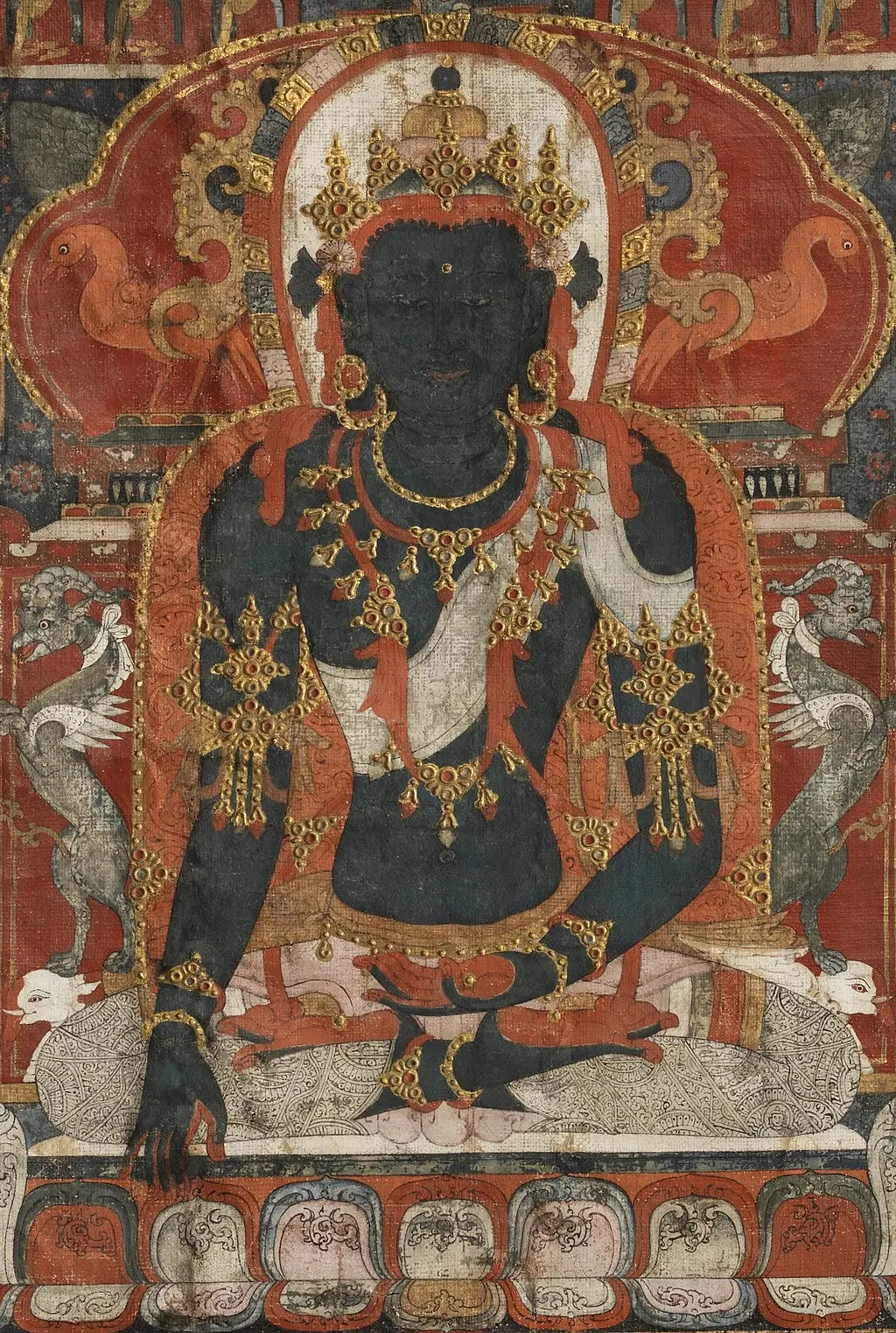
The Five Cosmic Buddhas
The Five Wisdom Dakinis are each connected to one of the Five Cosmic Buddhas, and through these connections, they transform specific negative emotions into enlightened wisdom.
- Vajra Dakini is associated with Akshobhya Buddha
- Ratna Dakini is connected with Ratnasambhava Buddha
- Padma Dakini is linked with Amitabha Buddha
- Karma Dakini is associated with Amoghasiddhi Buddha
- Buddha Dakini is connected with Vairocana Buddha









2 Responses
I am seeking 5 prayers to enter with each Dakini
I appreciate your kind guidance
Thank you so much
Cristián L de la Paz
Hi Cristian,
Thank you very much for your reply. I can recommend you the Dakini Mantra “Bam Ha Ri Ni Sa”
You can give a listen to Drukmo Gyal’s version as it is particularly wonderful and soothing: https://www.youtube.com/watch?v=YptsRqusw44
Hope this helps!