Amidst the rolling hills and rugged terrains of Nepal’s central highlands, the Gurung people are a community known for their indomitable spirit.
The Gurungs, or “Tamu” as they call themselves, are renowned for their profound connection to the natural world, a relationship that is reflected in their daily lives. While we were in Pokhara, we encountered a Gurung who later became our guide during our Ghorepani trek.
In this article, we delve into the colorful life of the Gurung people, exploring their cultural practices, traditional livelihoods, and the unique customs that define their identity. Together, let’s celebrate the heritage of this remarkable community, whose stories and traditions offer a window into the soul of Nepal.
Table of Contents
Toggle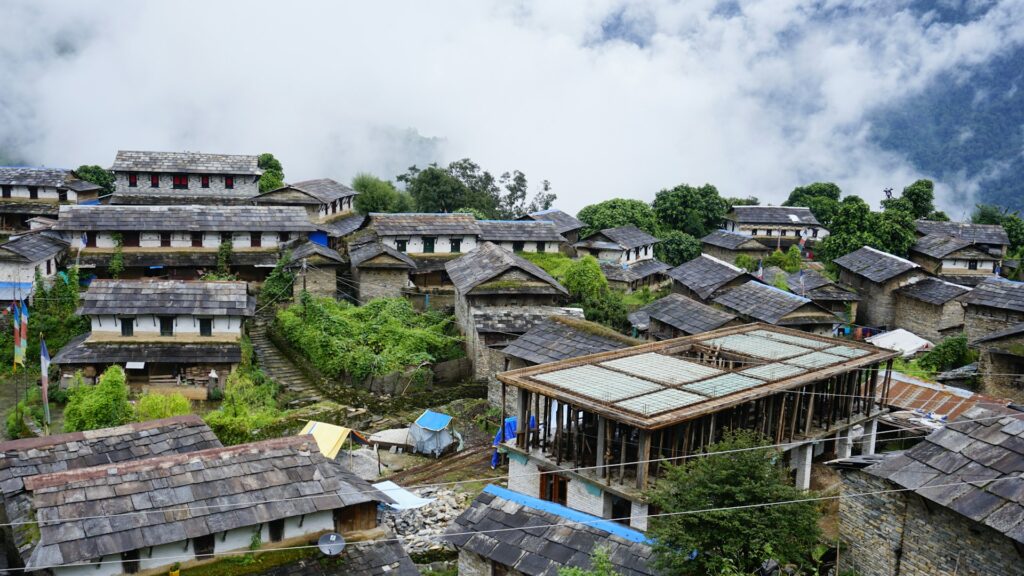
History of the Gurung
The Gurungs are among Nepal’s most ancient indigenous communities (along with the Tharu and Newari), with roots tracing back to migrations from Tibet several centuries ago. Settling in the central regions of Nepal, especially around the Annapurna range.
The Gurungs are well-known for their martial prowess, a characteristic that became prominently recognized during the expansion of the Gorkha Kingdom in the 18th century.
Their bravery and skills in warfare were further acknowledged by the British during the colonial era, leading to their significant role in the Gurkha regiments of the British and Indian armies. This association not only brought them honor but also improved their economic conditions through opportunities in military service.
Cultural Concepts of the Gurung
Mhechhyangmuk
Mhechhyangmuk represents the Gurung philosophy of balance and harmony, especially between humans and nature. This concept is often reflected in their daily practices, which aim to maintain balance in the environment, ensuring that neither the spiritual nor the natural world is disrupted by human actions. This philosophy underpins many of their agricultural and religious practices.

Pewa
Pewa is a unique Gurung concept related to social reciprocity and mutual aid, which extends beyond the simple exchange of labor (as seen in Parma down below). It involves a system of exchanging gifts and favors that strengthen communal bonds and ensure mutual support during times of need, such as weddings, funerals, and religious ceremonies. Pewa reinforces the interdependence among community members, ensuring no one is left unsupported in times of crises.
What is the Religion of the Gurung?
The Gurungs have a diverse religious landscape that encompasses elements from both animism and Buddhism.
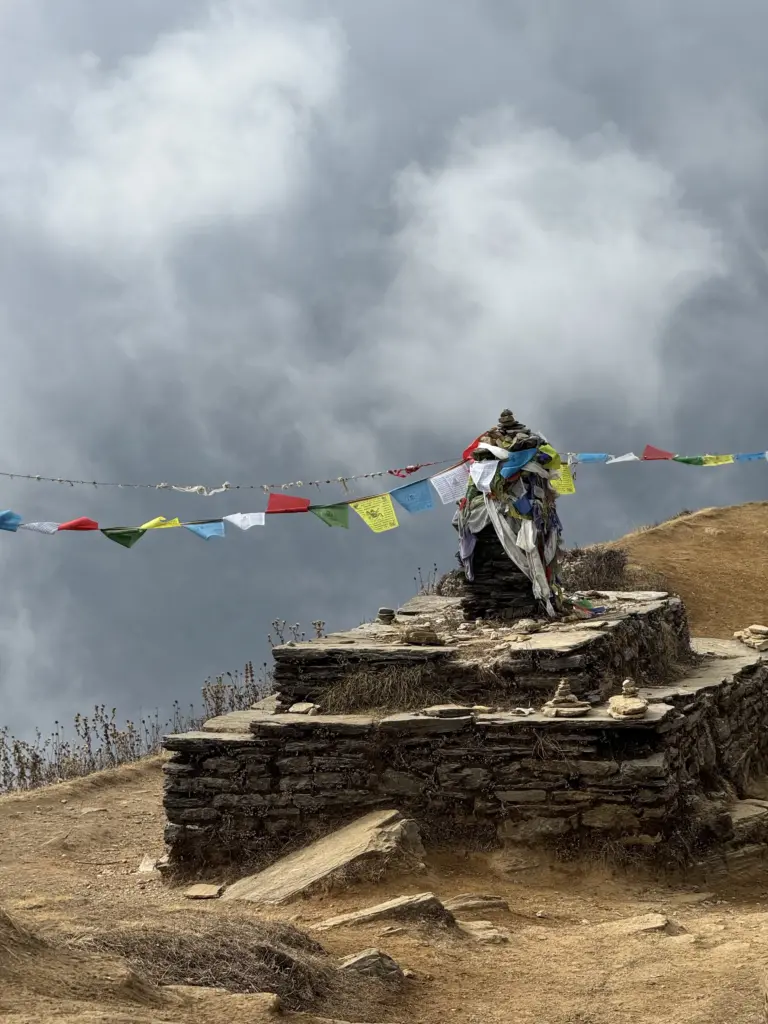
Historically, the Gurungs practiced an animistic form of religion, which is based on the belief that both animate and inanimate objects possess a spirit. This ancient belief system, known as Bon, involves the worship of nature spirits and ancestors. The Gurungs believe that spirits inhabit the natural world around them—such as trees, mountains, rivers, and stones—and these spirits influence their daily lives and must be respected.
Over time, as Tibetan Buddhism spread through the Himalayan region, it also influenced the Gurungs’ religious practices. Many Gurungs have incorporated Buddhist teachings and rituals into their spiritual lives, creating a syncretic blend of Bon and Buddhism. Their cultural practices have also been influenced by the broader Nepali cultural milieu, which includes Hinduism.
What are the Traditions of the Gurung?
Rodi
Rodi is an important cultural practice among the Gurung youth. Rodi groups are social gatherings where young people meet to sing, dance, and tell stories. These gatherings are significant for socializing and maintaining cultural traditions, often leading to lifelong friendships and sometimes marriages. The Rodi culture provides a platform for passing down songs, dances, and stories from older to younger generations.
Parma
Communal labor, known as “Parma,” is a practice where neighbors help each other in farm work. This not only aids in labor-intensive tasks but also strengthens community bonds.

Traditional Attire
Gurungs wear traditional garments that are both functional and symbolic. Men typically wear Bhangra, a white cloth shirt, and a Kachhad, like a sarong. Women wear Ghalek (blouses), Gunyo (sari-like garments), and heavy silver jewelry. These clothes are especially prominent during festivals and special occasions.
Gurung Traditional Dance
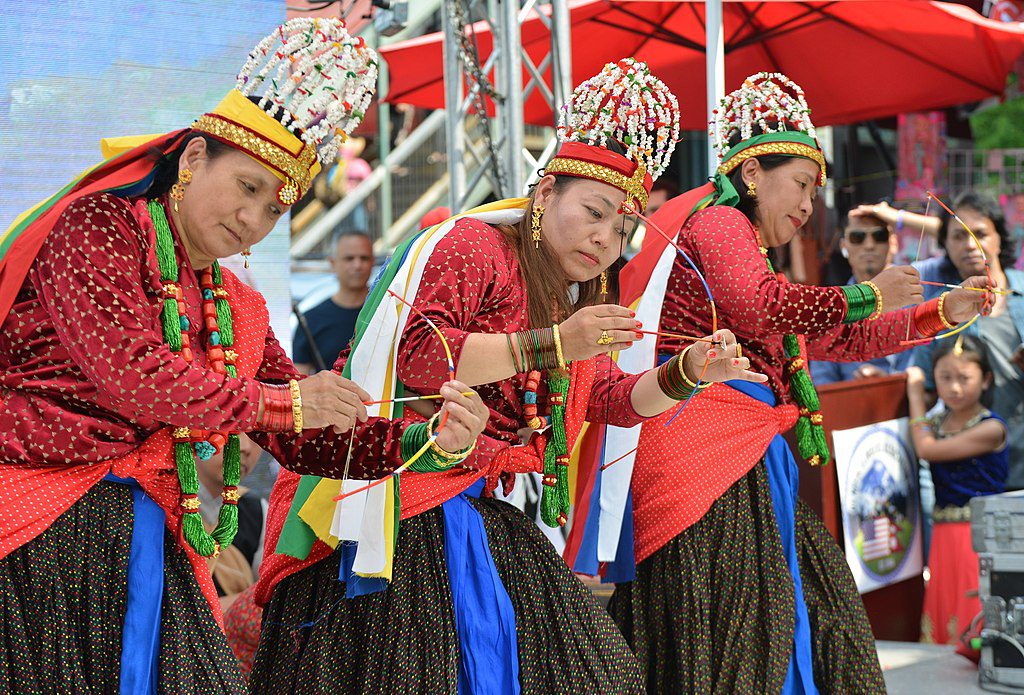
The Gurungs perform several distinct dances, each with its own significance and occasion. Some of the most notable dances include:
- Ghatu Dance: This dance is performed primarily by young Gurung women during the Ghatu festival, which takes place in the spring. It’s characterized by slow, graceful movements that narrate a story through dance.
- Krishancharitra Dance: This dance depicts episodes from the life of Lord Krishna, blending elements of drama with traditional dance.
Gurung Traditional Music
Gurung traditional music is an essential aspect of the cultural identity of the Gurung people, resonating through their celebrations, rituals, and everyday life. This music, deeply entwined with the rhythms of nature and the cycle of seasons, primarily features traditional instruments that produce distinct and resonant sounds:
- Madal: This hand-held drum is the most iconic and widely used musical instrument among the Gurung community. It is typically made of hollowed-out wood with leather drumheads on both sides, tied together with cords that can be tightened to adjust the tone.
- Tungna: The Tungna is a traditional plucked string instrument, resembling a lute. It is crafted from a single piece of wood and typically has four strings.
- Jhyamta: The Jhyamta is played by striking two cymbals together, creating a sharp, resonant sound that keeps the tempo and adds brightness to musical performances.

Gurung Cuisine
Gurung cuisine is primarily based on locally grown crops, including corn, millet, and barley, with a significant emphasis on meats and dairy products, which are staples given the pastoral lifestyle of many Gurung communities:
Dhido: A traditional and staple dish made from stone-ground cornmeal or millet flour. It’s cooked with water to a thick porridge-like consistency and usually served with homemade pickles or vegetable curries.
Gundruk: This is fermented leafy green vegetables, typically mustard, radish, or cauliflower leaves. Gundruk is sun-dried and then fermented to develop a distinct sour flavor and is often used in soups and side dishes.
Sekuwa: Barbecued meat, often made from pork, chicken, or goat, marinated in spices and grilled over an open fire.
Chyang: A traditional alcoholic beverage made from fermented rice or millet.
Yak Cheese: In areas where yaks are reared, yak cheese is a common dairy product, appreciated for its rich, creamy texture and nutritional value.
What is Gurung Language like?
The Gurung language, known as Tamu Kyi, belongs to the Tibeto-Burman language family. It is characterized by its tonal nature, where the tone in which a word is spoken can significantly alter its meaning.
Gurung language exhibits several dialects, which vary across different Gurung settlements. These dialects differ in pronunciation, vocabulary, and some grammatical structures, but there is enough mutual intelligibility to maintain a cohesive linguistic identity among the Gurung people.
Traditionally, the Gurung language did not have a written script and was passed down orally through generations. In recent years, there have been efforts to develop a script using Devanagari, which is also used for Nepali.
Traditional Gurung Festivals
Lhosar
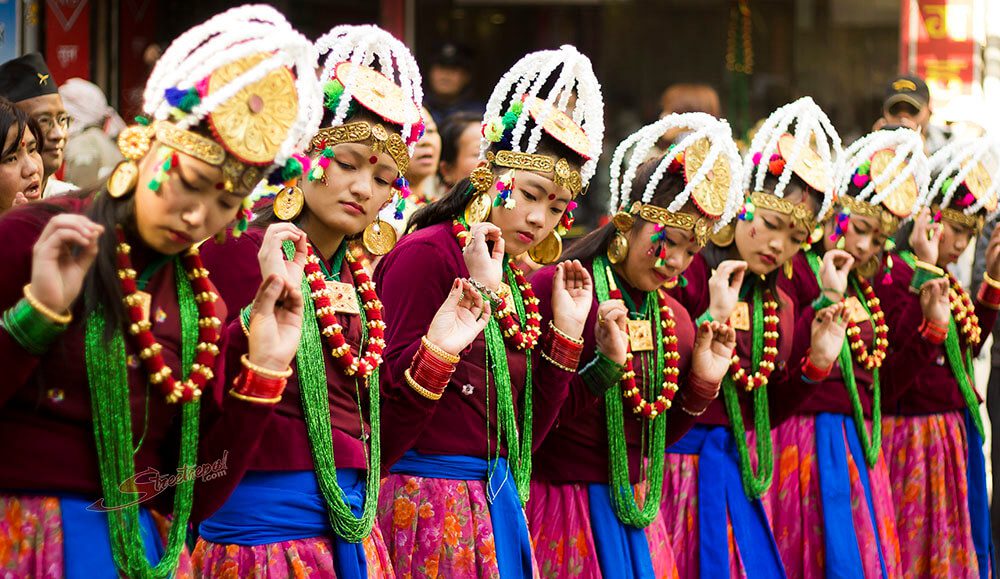
Lhosar is the Gurung New Year and is one of the most important and widely celebrated festivals. It marks the beginning of a new year according to the lunar calendar and is celebrated with great enthusiasm. Festivities include traditional music, dance, and the wearing of colorful traditional costumes. Houses are cleaned and decorated, special foods are prepared, and families gather to exchange gifts and good wishes. Lhosar is a time for renewing family and community ties.
Sebru
Sebru is a festival that involves the worship of ancestors and is linked to the agricultural cycle. During Sebru, the Gurungs pay homage to their ancestors to seek blessings for good harvests and the well-being of their livestock. Rituals are performed, and offerings are made, which include food, homemade alcohol, and animal sacrifices.
Tamuhar
Celebrated in the month of December, Tamuhar is another festival where the Gurungs honor their ancestors. Families prepare elaborate feasts and invite relatives and neighbors to share meals. The houses and surroundings are cleaned and decorated, creating a festive and respectful atmosphere to welcome the ancestral spirits.

Customs of the Gurung
- The Gurungs have a distinct naming ceremony for newborns, which is traditionally conducted on the eleventh day after birth. This ritual, known as Nwaran, involves a lama (Buddhist monk) or a village elder performing a blessing. The baby is given a name typically chosen based on the day of the week they were born, following astrological traditions. This ceremony marks the child’s formal introduction to the community.
- In Gurung culture, marriage is not only a union between two individuals but also between their families. One key custom is the Janti, the procession in which the groom, accompanied by friends and family, travels to the bride’s home or the place of the wedding. Post-wedding, the bride leaves with the groom in a custom known as Bidai, symbolizing her transition to her new family.
- When a person passes away, the body is washed, dressed in traditional clothing, and then cremated. The cremation is typically followed by a purification rite for the family members, which cleanses them of death’s impurity. Memorial services are held on specific days after the death, such as the 13th day, where family and community members gather to honor the deceased with prayers and offerings.
Plan Your Trip to Nepal | Best Travel Resources
Book Your Accommodations
- Booking.com – the world’s leading online booking platform for accomodations around the world, they have an extensive amount of available listings with zero booking fees and best price guarantees.
- Hostelworld – a backpacker’s best friend, Hostelworld has the largest collection of hostels and guesthouses for affordable prices.
Don’t Forget Insurance
- SafetyWing – from Nomad Insurance, an insurance by nomads for nomads. They understand our lifestyle well and have really comprehensive and flexible plans that cater to any traveler.
Find Cheap Flights
- Kiwi.com – my go-to for booking and finding the cheapest flights and it’s helped me save tons of money. They do virtual interlining which is connecting flights from airlines that do not codeshare, so you can find routes that you wouldn’t be able to find normally.
Join Tours & Activities
- GetYourGuide – is one of the best places to find unique tours and activities. I found that it’s an excellent way to meet fellow travelers and create fond memories. They are not only limited to tours as they also offer niche services such as skip-the-line tickets or private transfers.
Catch a Ride
- Rentalcars.com – nothing beats the freedom of the road, Rentalcars.com is the world’s largest online car rental service. They operate across 160 countries so they’re the perfect partner to work with if you find yourself wanting a ride.