From the snow-blanketed northern reaches of Hokkaido to the Russian Far East, a people known as the Ainu have long carved out a life in harmony with nature.
Their rich traditions offers a window into a deep bond between humanity and the world, a bond perhaps best exemplified by the Iyomante ceremony.
At first glance, the Iyomante might appear as a mere hunting ritual – taking a bear cub, raising it, and then sacrificing it.
But to label it so would be a disservice to the profound spiritual and cultural significance it holds.
The ceremony is a reverence of life and death, of gratitude and respect, of the earthly and the divine.
In a world rapidly distancing itself from its roots, traditions like the Iyomante challenge our perspectives on life, coexistence, and spirituality.
Through understanding ceremonies like these, we are reminded of the intricate webs of connection we share with all living beings and the ancient wisdom that advocates harmony over dominion.
Table of Contents
Toggle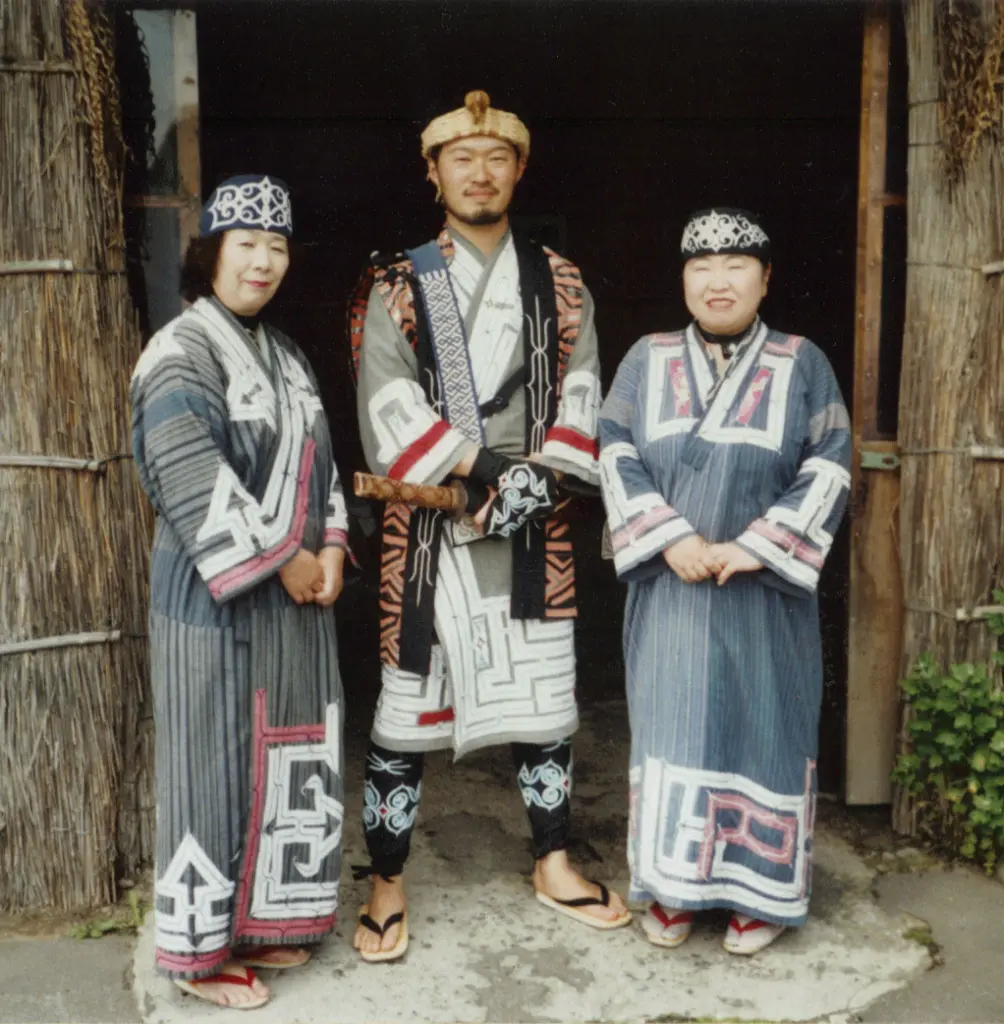
Who are the Ainu People?
The Ainu, an indigenous people often veiled in a shroud antiquity, have long inhabited parts of what is now modern-day Japan and Russia. Their traditions offers a stark contrast to mainstream Japanese culture.
The Ainu predominantly settled in areas like Hokkaido which became the primary homeland for the Ainu. In a pre-modern setting, there were roughly 25,000 Ainu residing in Hokkaido alone! You can find traces from Sapporo, Otaru, and all the way to Niseko.
The Ainu were essentially semi-sedentary hunter-gatherers. Rather than the intensive agriculture practiced in other parts of Japan, the Ainu’s subsistence was closely tied to the seasons and the natural bounty they offered.
Fishing was a central activity, given the proximity of their settlements to water bodies. Salmon, in particular, held not just nutritional but also cultural significance. From hunting deer and bears in the dense forests to foraging for wild plants, nuts, and other edibles, their diet was diverse and wholly dependent on nature’s produce.
They believed that spirits, or “Kamuy”, resided in practically everything — from animals to plants. Their profound respect for nature wasn’t just about survival; it was spiritual. (Kamuy is the same as Kami in Shintoism.)
For the Ainu, nature was a vast realm of spirits so taking a life, be it a fish or a deer, was a solemn act that required appeasing the spirit of the creature, ensuring harmony between the human and the natural world.
If you want to learn more about the Ainu, you can check out Upopoy, the National Ainu Museum near Noboribetsu.

Why are Bears Sacred in Ainu Culture?
In Ainu culture, the bear, with its strength, nobility, and imposing presence, is more than just a totem animal.
The bear, or the “Bear Kamuy”, stands distinctly as a deity.
But why?
The bear’s majestic presence in the forests, coupled with its significance as a source of food and materials, elevated its status to that of a god.
It was believed that the bear chose to descend from the mountains, offering itself to the Ainu, thereby becoming a kamuy of the world.
More than just a deity, the bear was also seen as a bridge between the earthly realm and the divine. These creatures, while of the earth, were believed to have a spiritual essence that could communicate with higher deities.
What is the Iyomante Ceremony?
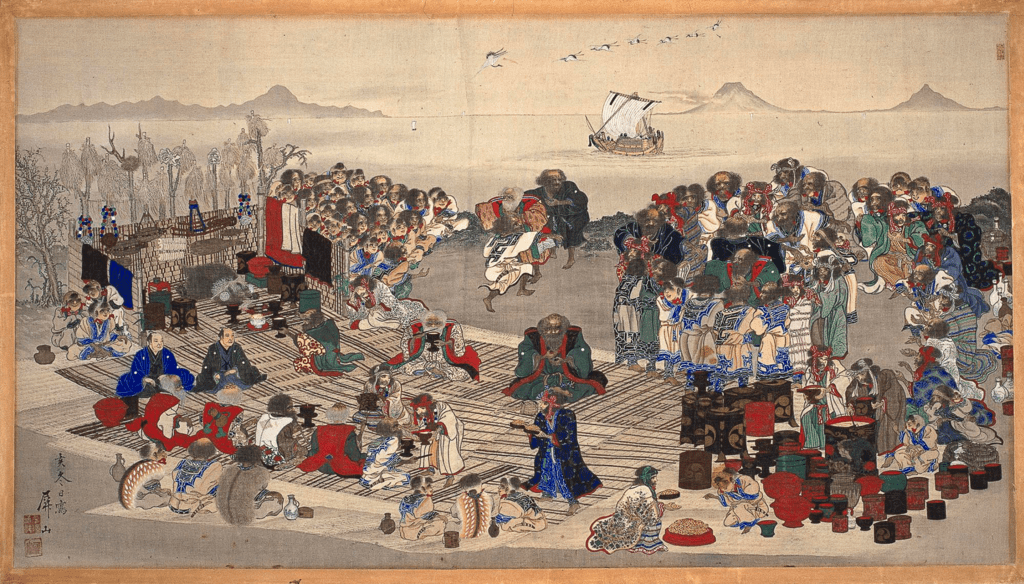
The Iyomante ceremony is a profound spiritual and cultural rite of the Ainu people. A celebration of the intricate bond between humans and nature, epitomized through the bear.
The bear is more than just an animal for the Ainu and the Iyomante ceremony is an enactment of this belief. It is a grand affair that encapsulates both joy and sorrow, illustrating the cycle of life, death, and rebirth.
The essence of the Iyomante is about honoring the bear’s spirit, celebrating its time on Earth, and ensuring its safe passage back to the divine world.
While it does involve the sacrifice of the bear, this act is neither casual nor cruel. Instead, it is a deeply reverent and ritualistic acknowledgment of the bear’s role in the grand cosmic scheme.
There are several stages of the Iyomante leading up to the sacrifice, and I feel like it’s really a journey that encapsulates the emotional essence of life.

1. The Adoption of a Bear Cub
The process begins when Ainu hunters, during their time in the forests, encounter and hunt a mother bear. This often leads to the discovery of her cubs.
Rather than leaving them, the Ainu bring the cubs back to their village.
The young bear cubs, now orphaned, become the central figures in a ritual that blurs the lines between man and nature.
Brought back to the village, these cubs are not treated as mere pets. Instead, they are “adopted” into Ainu families, where they assume a role that might be surprising to outsiders.
Here, in the heart of the community, the bear cubs are raised almost akin to human children. This is not an act of domestication, but a deep integration of the bear into the Ainu daily life.
The community’s care for these cubs is profound.
They are fed with the same dedication one would provide to a growing child, ensuring they are healthy, content, and well-nurtured.
As days turn into months, a bond forms—a bond that is both tangible and spiritual. The bear becomes a member of the family, sharing in their joys, sorrows, and daily endeavors.
By raising the bear with such care and devotion, the Ainu reaffirm their commitment to the harmonious balance of the universe, where every being, human or animal, has a divine purpose.

2. The Preliminary Rituals
As the adopted bear cubs grow and mature, usually reaching the age of 2 or 3 years, a sense of anticipation envelops the community.
The time for the main Iyomante ceremony is drawing near, and in preparation, the village plunges into a series of rituals.
These rituals are serve as a spiritual bridge, a transition from the everyday life to the sacred space of the impending ceremony.
They’re moments of reflection, gratitude, and preparation, drawing the community closer together in shared purpose.
Elders lead prayers, their voices carrying the weight of tradition and reverence. These prayers are directed not only to the bear’s spirit but also to the myriad gods and spirits in the Ainu pantheon. They seek blessings, guidance, and the fortitude to perform the ceremony with the respect and honor it demands.

3. The Main Ceremony
As winter cloaks Hokkaido in a blanket of snow, casting a serene hush over the landscape, the Ainu village is anything but dormant. The heart of the Iyomante has arrived: the main ceremony, a profound culmination of the bonds formed, the rituals conducted, and the anticipation that has been building over the years.
It’s a sight to behold. The entire village—men, women, children, elders—comes together, creating a tapestry of faces marked by reverence, joy, and solemnity. Every individual, irrespective of age or status, plays a crucial role in this communal act of devotion.
At the center of this gathering is the bear, now fully grown.
A guest of honor.
As it is paraded through the village, one can’t help but feel the weight of the moment.
Traditional songs fill the air. Accompanying these songs are dances and chants, their rhythms and patterns refined over centuries.
As the ceremony progresses, offerings are presented with the intent of appeasing the bear’s spirit and the gods it represents.
The duality of the Iyomante’s main ceremony—its simultaneous festiveness and somberness—is its defining trait.

4. The Sacrifice
In the quiet embrace of winter, the village is enfolded in a hallowed silence.
This moment is the crux of the entire ceremony, carrying with it a weight that every member of the Ainu community feels deep within their soul.
It’s the time for the bear’s sacrifice.
With the entire village gathered in anticipation, the bear finds itself in the village’s center, tethered to a sturdy post. This moment marks the culmination of a journey both for the bear and the community.
The males of the village step forward, bows and arrows in hand. Each archer aims with a heavy heart, knowing the significance of the act they are about to perform.
Despite the bear’s youthful age, its formidable size is evident.
The first arrow is released, followed by another, and then another.
Each shot weighed down by the gravity of the moment. The bear, though powerful, gradually succumbs to the numerous arrows, its strength waning with every passing moment.
With the bear now weakened and defenseless, a designated villager, approaches with a heavy sense of duty.
Drawing close, he ensures a swift and merciful end by shooting the bear point-blank in the neck. This act, while seemingly brutal, is steeped in reverence and respect.
It is believed that a quick end minimizes the bear’s suffering and helps its journey to the divine realm.
They then slit the bear’s throat, and in a symbolic act of unity with the creature, some drink its blood, believing it to be a conduit of its spirit and strength.
The bear’s body is then skillfully skinned, its meat considered a divine gift, to be shared among all present. This act of communal sharing reinforces the bonds of the community, reminding them of the interconnectedness of life.

5. The Feast
As the weight of the sacrifice begins to settle, the Iyomante ceremony enters a phase of communal celebration: the feast.
The village, having borne witness to the profound act of freeing the bear’s spirit, now comes together to honor its physical form in a different, equally significant way.
The air fills with the tantalizing aroma of the bear’s meat being prepared. Each cut, a blessing from the gods themselves.
To partake in this feast is to share in the divine blessings, to internalize a piece of the spiritual journey that the Iyomante represents.

6. The Send-Off
As the sun begins its descent, the Ainu gather once more for the Iyomante’s concluding rites.
The bear’s bare skull is gently mounted on a spear. The bear’s own fur is then wrapped around the skull. The resulting figure, a “doll” if you will, becomes an object that the Ainu believe captures the very essence of the bear’s spirit.
This figure then becomes a focal point of worship, a tangible link between the mortal realm and the divine.
And as the villagers gather around, their hearts heavy yet hopeful, there’s a collective understanding.
The bear, in its new avatar, has embarked on its final journey, being “sent off” to the world of the gods, carrying with it the hopes, blessings, and gratitude of the Ainu community.

Ethical vs Cultural Perspective
In today’s world, animal rights have taken center stage and the Iyomante can certainly be seen as a point of contention.
Yet, this debate isn’t black and white.
There is always the need to respect and understand practices within their cultural and historical contexts. Striking a balance between upholding evolving moral standards and respecting the integrity of indigenous cultures should be paramount.
For the Ainu, the Iyomante isn’t an act of cruelty but one of profound respect. The bear, from the moment it’s brought into the community, is treated with reverence.
Its sacrifice isn’t seen as a brutal end but a necessary part of its spiritual journey.
The bear is believed to willingly give up its physical form, knowing that in doing so, its spirit will be returned to the divine realm. The ceremony isn’t about taking life but celebrating it, ironic as it sounds. Honoring the bear’s spirit, and ensuring its safe passage to the world of the gods.
At the end of the day, modernization and cultural assimilation have left an indelible mark on the Ainu community. With younger generations moving away from traditional practices and the increasing influence of mainstream Japanese culture, the Iyomante is at risk of being lost to history.
This article simply aims to keep the spirit of this profound tradition alive.