The Ainu.
An indigenous group based in the northern regions of Japan, represent a world far removed from the neon lights that the country is famed for.
Their distinctive traditions, ranging from elaborate tattoo artistry to the spiritual bear-sending ceremony, evolved over millennia, creating a truly unique cultural identity.
But why is it essential to understand and more importantly preserve such cultures? Indigenous groups like the Ainu hold the key to alternative worldviews, sustainable ways of life, and age-old wisdoms that we, as modern societies, can learn a lot from!
Despite their rich cultural lineage, the Ainu find themselves on the margins of mainstream Japanese history. Over the years, a combination of assimilation policies, societal pressures, and rapid modernization has pushed their narrative to the sidelines.
This article seeks to help spread some awareness and keep the spirit of the Ainu people alive by celebrating their customs and traditions.
Table of Contents
Toggle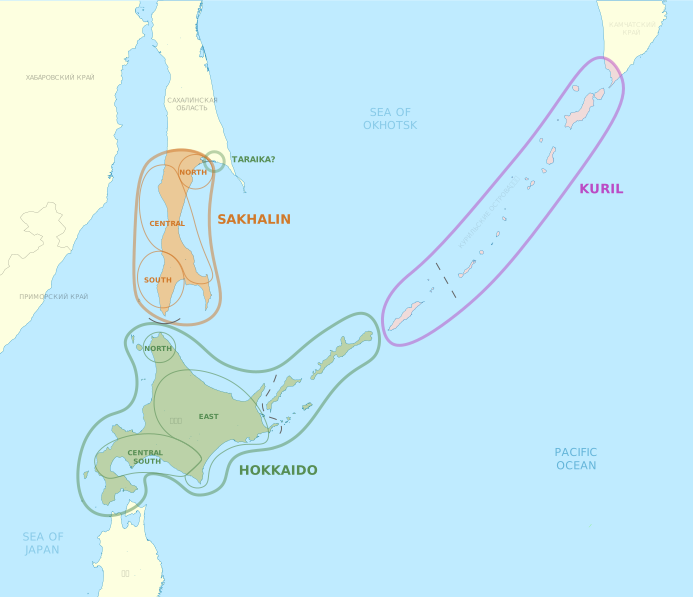
History of the Ainu
Some theories suggest that the Ainu might have descended from the Jomon people, Japan’s early hunter-gatherers who lived thousands of years ago. This is based on distinct similarities found between the pottery patterns, physical characteristics, and even certain rituals practiced by both groups.
The Ainu’s early interactions with other ethnic groups in Japan also played a pivotal role in shaping their history. The Yayoi people, who migrated from the Asian mainland, brought with them advanced agricultural techniques and metallurgy.
Later, the expansion of the Yamato dynasty and the establishment of the Tokugawa shogunate, brought significant pressures on the Ainu. They faced military campaigns, trade impositions, and cultural assimilation efforts.
Particularly noteworthy is the Battle of Kunasiri-Menasi in the 18th century, where the Ainu resistance against the Matsumae domain culminated in a significant conflict, eventually leading to greater Japanese control over Ainu lands.
The historical territories of the Ainu extended beyond what many might assume today.
While Hokkaido is commonly associated with the Ainu, their influence and settlements spanned from northern parts of Honshu to the Kuril Islands and even parts of Sakhalin in present-day Russia!
If you find yourself around Noboribetsu, I recommend checking out Upopoy, otherwise known as the National Ainu Museum to learn more!
Traditions of the Ainu
Ainu Daily Life
The Ainu community’s subsistence largely revolved around hunting, fishing, and gathering.
Hunting was a central occupation, with specific techniques employed based on the prey. Bows and arrows, as well as traps, were common tools. The Ainu held deer in high regard, not just for its meat but also for its skin, which was utilized for clothing.
Bears, especially in Hokkaido, were another favored game.
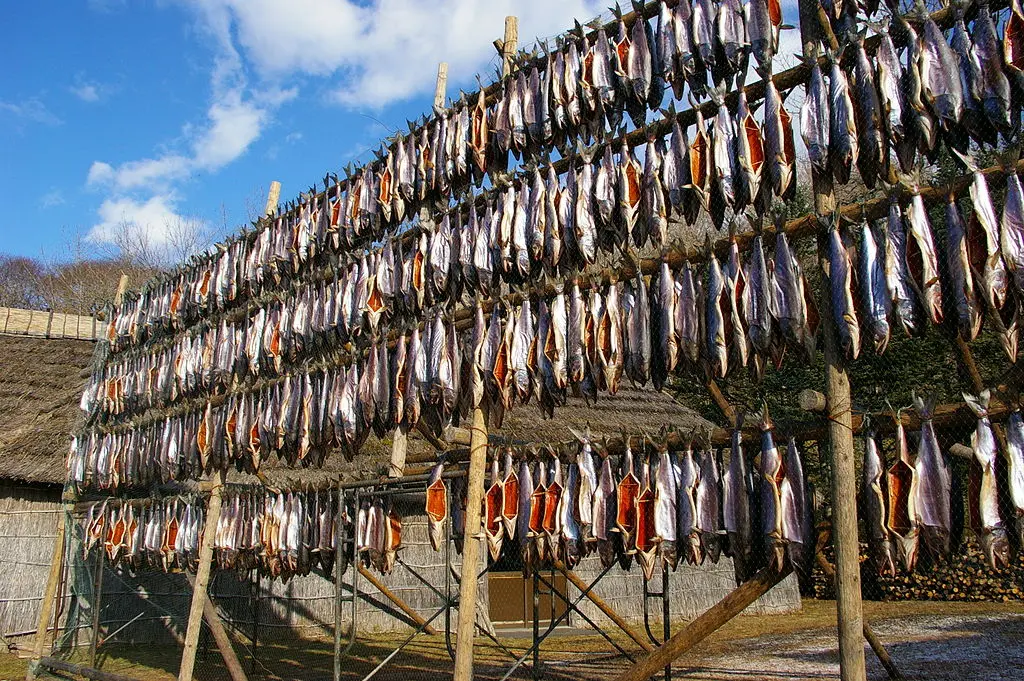
Fishing was equally vital. Salmon, in particular, was more than just a staple in their diet; it was a symbol of abundance and life. The Ainu used various fishing methods, from simple rod and line to constructing intricate weirs in rivers.
The annual salmon run was a crucial event, with entire communities participating in catching, preserving, and celebrating the fish’s return.
Chise
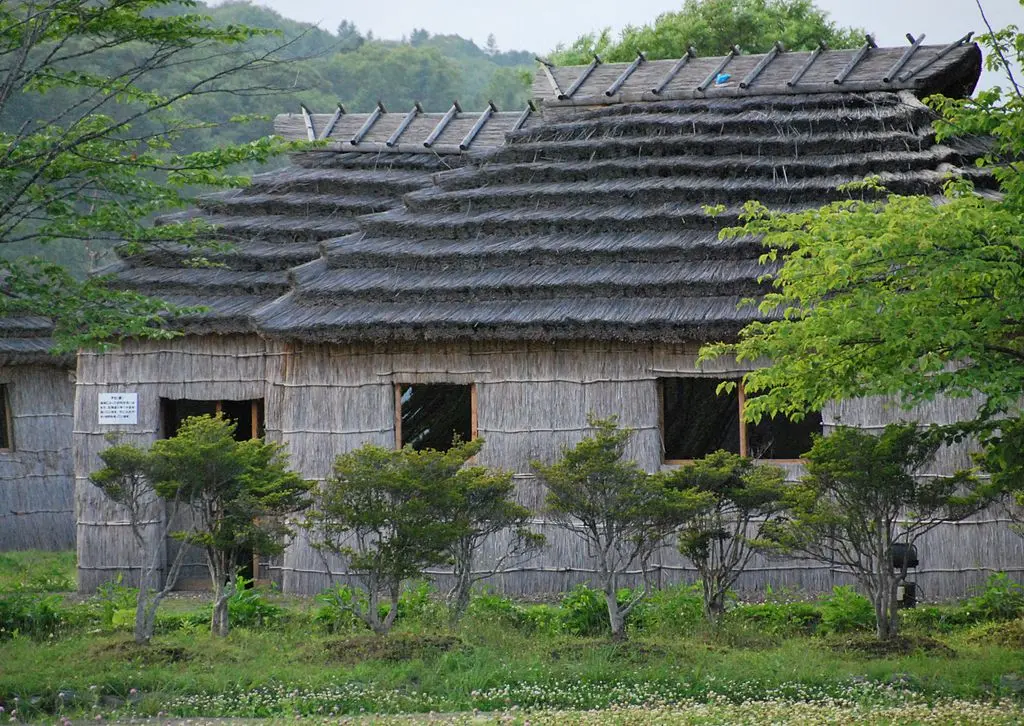
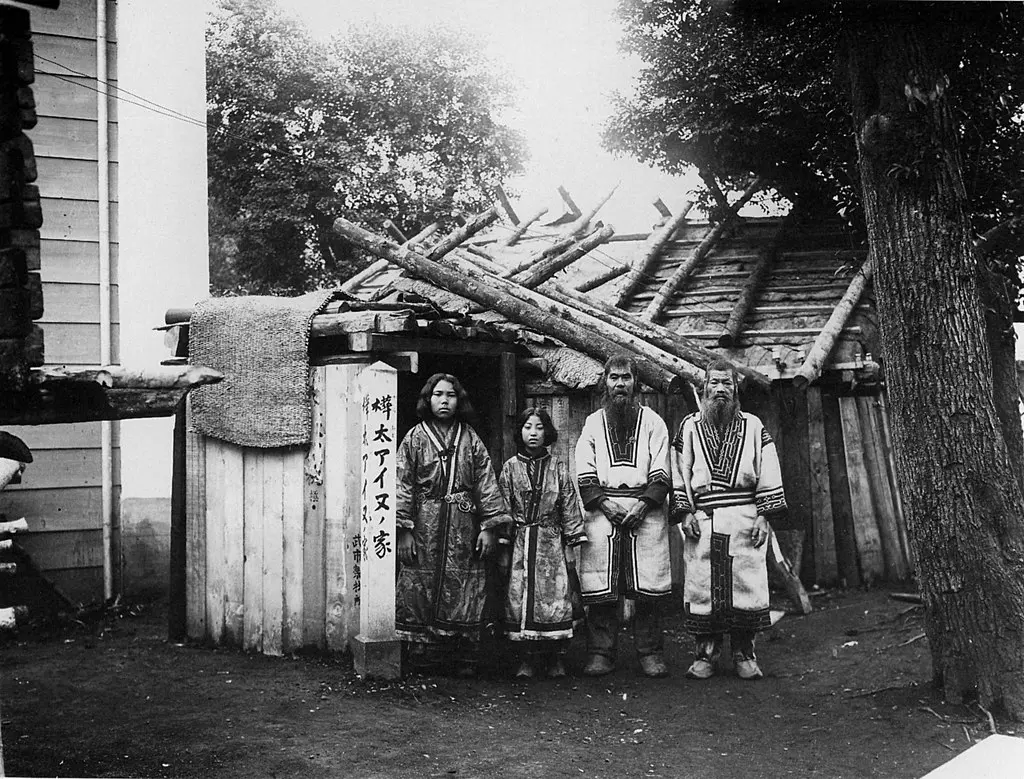
The chise is a traditional Ainu house, built mostly from indigenous materials such as bamboo, reed, and wood, primarily from the Japanese elm tree.
Its rectangular shape, thatched roofs, and a central hearth are the most distinguishing features.
Designed for communal living, a typical chise accommodates multiple generations under one roof. The central hearth plays a pivotal role, both functionally and culturally. Besides providing warmth and a space for cooking, it serves as the heart of social and familial interactions.
The smoke from the hearth, vented through an opening in the roof, helps to preserve the thatch and repel insects.
Ainu Attire
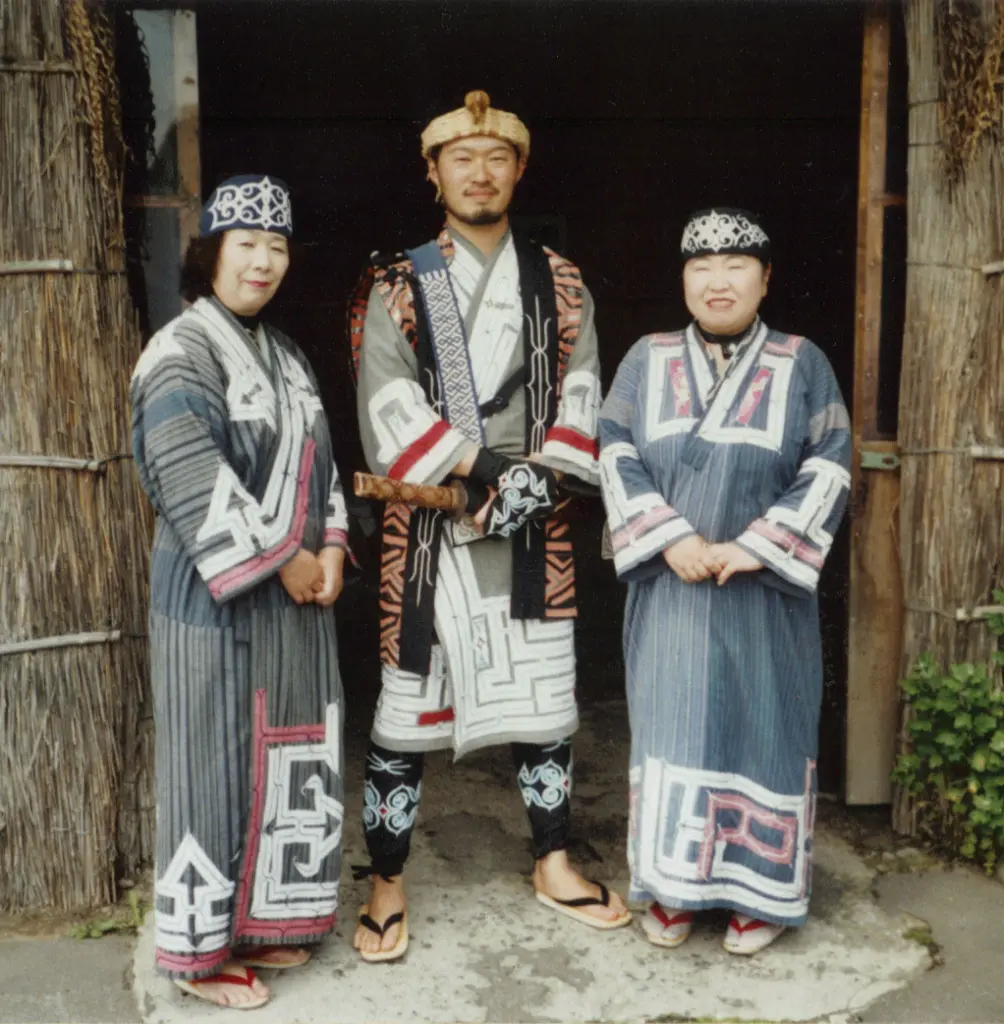
Attus robes are the traditional garments worn by the Ainu. Made from woven fibers of the indigenous ona (nettle) plant, the patterns sewn into these robes are specific to clans. They often serve as identifiers, depicting ancestral tales, spiritual beliefs, and experiences.
Kasuri refers to the traditional Ainu embroidery technique, distinguished by its intricate geometric patterns. The method involves a resist-dye technique, where bundles of threads are bound tightly and then dyed, ensuring that the bound sections remain undyed. When woven, these threads create really detailed patterns.
Tattoos
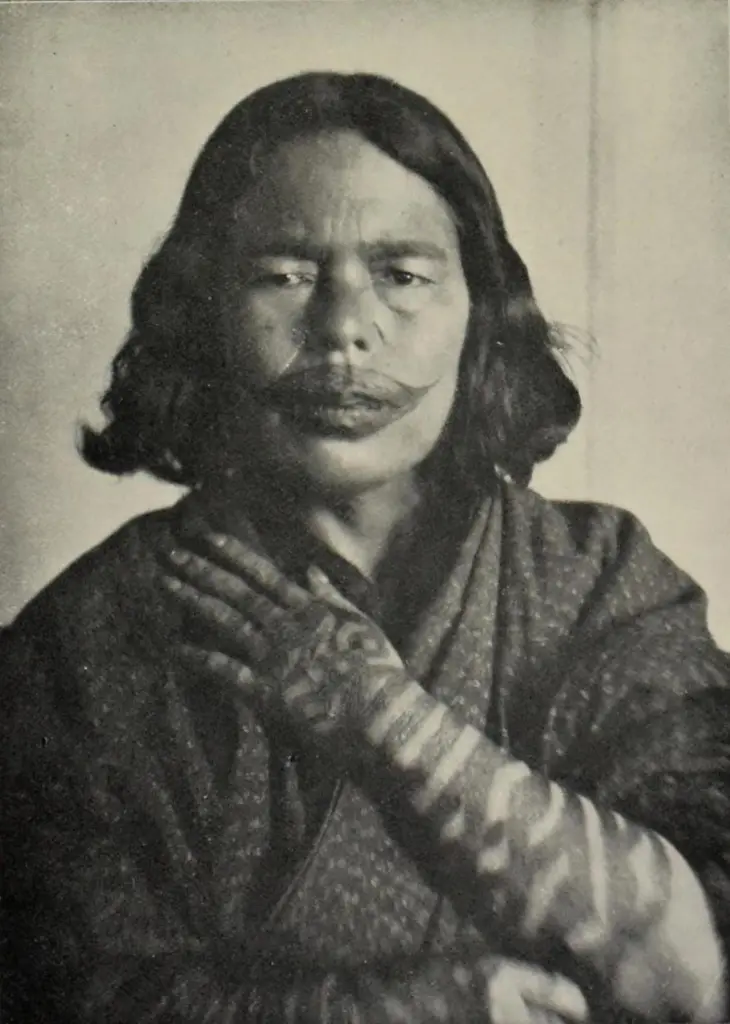
Ainu tattooing practices, known as anchipiri, were predominantly focused on women. This age-old tradition began in childhood and continued into adulthood, with each stage of life marked by additional tattoos.
Just like the holy Sak Yant tattoos of the Thai and Khmer, it was believed that anchipiri tattoos, particularly those on the hands and arms, would protect women from evil spirits. Additionally, they were deemed necessary for the afterlife.
One prevailing belief was that without tattoos, the spirits of deceased ancestors wouldn’t recognize an individual, potentially barring her from crossing into the spirit world. As such, the tattooing process, despite being painful, was seen as an essential rite of passage.
The initial tattoo was often a small dot on the back of the hand, given when a girl was as young as five!
Over the years, this would be built upon, with the designs growing more intricate and expansive, covering the hands and arms, and eventually extending to the mouth in a design known as the “kiss of the ancestors.”
The Ainu tattoos were not arbitrary designs; each held deep significance. Here’s a closer look:
Hands and Arms: As mentioned, the journey of tattooing began with the hands and arms. Designs here often featured geometric patterns, representative of the natural world – waves, mountains, and flora. This was symbolic of a woman’s connection to nature and her role in the household, given the hands-on nature of daily tasks.
Mouth Tattoos: One of the most distinguishing features of Ainu tattoo traditions is the mouth tattoo. Resembling a form of handlebar mustache, these tattoos, added post-puberty, were seen as signs of maturity. They also played a vital role in the afterlife, ensuring that the ancestors would “hear” the individual when she spoke.
Forehead and Cheeks: Occasionally, women also bore tattoos on their foreheads and cheeks. These were typically simple linear or dotted designs and were believed to provide added protection against malevolent spirits.
Ainu Spirituality

Kamuy
Ainu spirituality is fundamentally rooted in animism, the belief that every natural object possesses a spirit. The Ainu regard these spirits as kamuy otherwise known as kami in Shintoism.
Among the most revered are the bear (kimun kamuy) and the owl (repun kamuy). Bears, in particular, are seen as divine messengers, embodying the spirit of the mountains.
Owls, with their keen nocturnal vision, are regarded as protective spirits against evil.
Mountains, rivers, and other significant landscapes have their own kamuy. The Ainu believe these spirits oversee the well-being of the region and its inhabitants.
Ancestral Spirits
Ancestral spirits, known as inau, are believed to reside in the natural world after death, guiding and watching over their descendants.
Ritual offerings are a common way to honor these spirits. These can include food, sake, or crafted wooden sticks that are intricately shaven and adorned. Many Ainu households have a designated shrine where they pay homage to their ancestors.
Connection with Nature
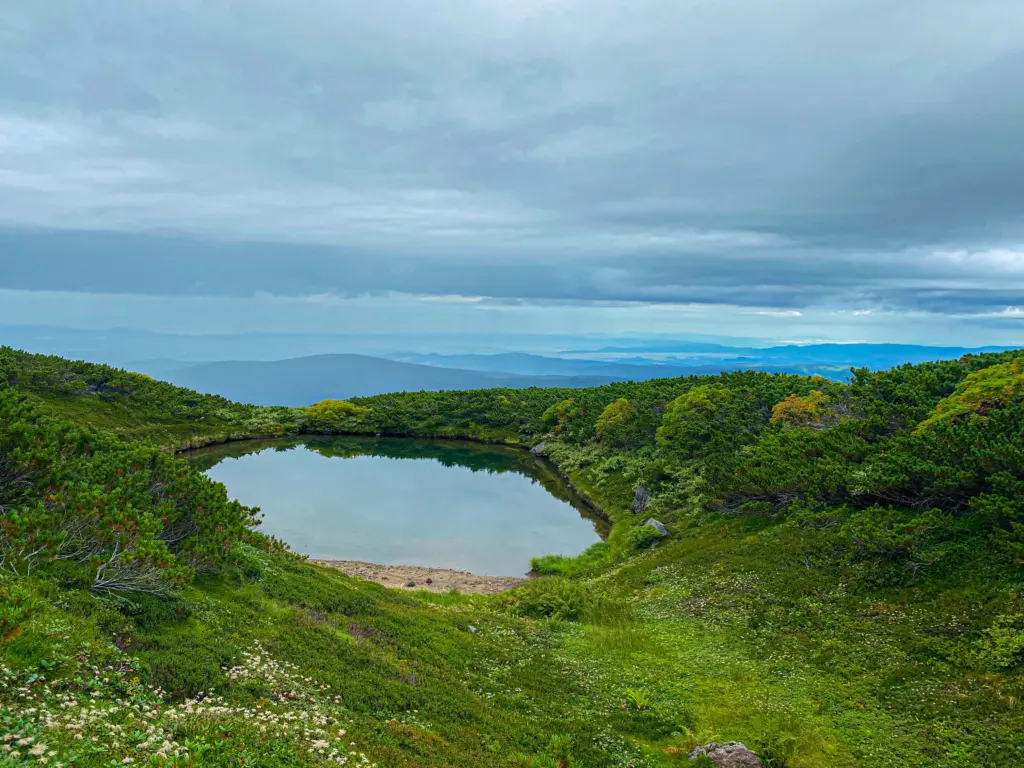
The Ainu people’s relationship with nature is profound, deeply rooted in respect, gratitude, and understanding.
The natural world for the Ainu is a living entity in its own right.
-
Mountains: Often referred to as the “roof of the world” in Ainu cosmology, mountains are revered as the dwelling places of deities. Peaks like Mt. Asahidake and Mt. Yotei in Niseko are viewed with particular reverence. Mountains are spiritual anchors, spaces where the earthly and the divine converge. This belief is similar to the Apus in Peruvian shamanism.
-
Rivers and Lakes: Rivers and lakes, are seen as life-giving entities. They’re sources of sustenance, pathways for travel, and spiritual conduits. For the Ainu, rivers like the Saru River are sacred.
Iyomante
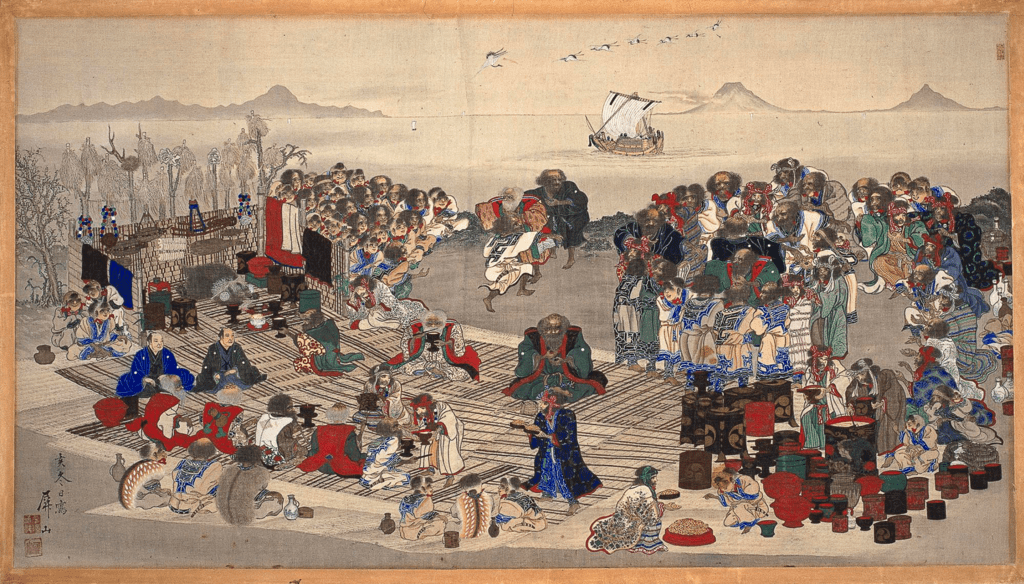
The Iyomante is one of the most sacred ceremonies in Ainu culture.
In Ainu belief, the bear is not merely an animal. It’s considered the physical embodiment of a kamuy. Specifically, the bear is often seen as the mountain god’s messenger, and it holds a special place of reverence among the Ainu people.
The bear is both revered as a deity and recognized for its essential role in Ainu sustenance, given its meat and fur.
The Iyomante ritual originates from the belief that the bear, a divine creature, voluntarily takes on its earthly form to offer itself to humans.
After living with humans and being sacrificed, its spirit returns to the divine realm, carrying messages and prayers from the human world. If we can treat all animals with that much reverence, wouldn’t it be wonderful?
While the Iyomante might seem contradictory – raising the bear with love, only to sacrifice it – it is deeply symbolic of the Ainu’s understanding of life’s cyclical nature. Life, death, gratitude, and rebirth are all intertwined in the Iyomante.
If you want to learn more about the intricacies and stages, you can read more on Iyomante, the Bear-sending Ceremony.
Afterlife
Death is seen as a passage to the spirit world. Funeral practices involve rituals to ensure the deceased’s safe journey to the other side. This includes offerings, songs, and sometimes dances. Over time, some of these practices have blended with mainstream Japanese customs, resulting in unique syncretic ceremonies.
Ainu Arts and Crafts
Yukar
Oral traditions have always been a foundational pillar in Ainu culture, among these, the Yukar, stand out as crucial tools in preserving the past. The Yukar is basically an epic poem, akin to the likes of the Ramayana and the Mahabharata.
The Ainu don’t possess a traditional written script. This makes the Yukar more than just tales; they’re the community’s memory keepers.
Delivered often in a dialogue format between an elder and a younger person, these epics encapsulate the essence of knowledge transition, passing down morals, history, and values.

Music
Some traditional Ainu instruments are the mukkuri and tonkori.
The mukkuri is a traditional Ainu mouth harp made from bamboo. It’s a small instrument, typically about 10 cm long, with a narrow strip in the middle which, when plucked, produces sound.
The tonkori is a plucked string instrument indigenous to the Ainu people of Hokkaido and the Sakhalin region. Resembling a zither, the tonkori has a distinct trapezoidal shape. It traditionally has five strings. The instrument is played by plucking the strings with fingers, much like a guitar.

Ikupasuy
Wood carving, or ikupasuy, has been a cornerstone of Ainu craftsmanship for centuries. Using local woods like elm or Japanese judas trees, Ainu artisans carve intricate patterns inspired by nature—animals, plants, and spiritual symbols.
Customs of the Ainu
The Council of Elders
The Ainu community places immense respect and reverence on its elders. Their accumulated wisdom, experiences, and knowledge of ancestral traditions make them invaluable pillars in the community.
In traditional Ainu villages, councils of elders were often convened to deliberate on vital decisions, ranging from settling disputes to planning hunting expeditions. Their word was considered final.
Elders are also the primary custodians of Ainu lore, history, and spiritual practices. Through oral traditions like the Yukar, they pass down stories, lessons, and moral values to younger generations.
Temporary Names
In the Ainu tradition, when a child is born, they’re initially given a temporary name. These names are deliberately unflattering or even derogatory, with meanings such as “lump of dirt” or “ugly.” The belief behind this practice is really interesting:
-
Protection from Evil Spirits: Giving a child an unattractive name was believed to protect them from malevolent spirits that might harm a well-named child. By giving an “ugly” name, parents were essentially hiding their child’s true nature from these spirits.
-
Protection from Mortality: Infant mortality rates in historical times, across cultures, were often high due to various reasons. By giving a child a temporary unflattering name, it was believed that the spirits would not become attached to them or take them away prematurely.
-
A Symbolic Transition: Once the child grew older and reached a certain age—demonstrating their resilience, health, and vigor—they would be given their true, permanent name in a special naming ceremony. This real name would reflect their character and aspirations.

Marriage
Marriage in the Ainu community is a union not just of two individuals but of two families.
Traditionally, a man would offer gifts like embroidered robes or beadwork to the woman he wished to marry. If the gifts were accepted, it signified her family’s consent.
These were simple affairs, often marked by exchanges of gifts, shared meals, and traditional songs and dances.
As previously mentioned, tattooing played a role in a woman’s journey. Her tattoos would be completed upon her marriage, marking her transition into full womanhood and her new role as a wife.
Challenges of the Ainu People
The Ainu’s distinct identity and way of life, for centuries, have been under relentless pressure. Historical records are fraught with tales of their marginalization — from losing vast tracts of their ancestral lands to forced labor and exploitative trade agreements.
The Meiji era in Japan was particularly harsh for the Ainu. The Hokkaido Former Aborigines Protection Act of 1899 stands out as it aimed at assimilating the Ainu by offering them farmland but effectively stripped away their traditional hunting and fishing rights. This law pigeonholed the Ainu into an agrarian lifestyle, alien to their traditional ways.
Japanese assimilation policies sought to integrate the Ainu into mainstream Japanese culture. This meant erasing their language, culture, and traditions. Children were educated in Japanese schools, taught the Japanese language, and discouraged, sometimes forcibly, from practicing Ainu customs or speaking their language.
Today, many Ainu continue to face socioeconomic challenges. They often fall below national averages in income, education, and employment. The invisibility of their identity in mainstream Japanese discourse poses political challenges, as they strive for more substantial representation and acknowledgment.
Preservation Efforts for the Ainu
However, not all is bleak. Modern movements, often led by young Ainu, aim for recognition, respect, and revival. They challenge both overt and covert discrimination and work towards a more inclusive narrative in Japanese society.
With the mounting realization of the importance of cultural preservation, both within and outside the Ainu community, various efforts have been put in place to ensure the survival of Ainu traditions and rights.
Over time, Japan has slowly been acknowledging the Ainu’s unique status and rights. Repealing past oppressive laws and implementing new protective ones has been at the forefront of these changes.
A monumental shift occurred in 2008 when the Japanese government officially recognized the Ainu as an indigenous people of Japan. Better late than never, this acknowledgment paved the way for increased cultural, social, and political efforts to rectify historical wrongs.
There’s also a very popular anime that’s become something of a poster-show for Hokkaido, Golden Kamuy. It shows in detail plenty of aspects of Ainu culture, including the Iyomante and the traditions concering tattoos.
Plan Your Trip to Japan | Best Travel Resources
Book Your Accommodations
- Booking.com – the world’s leading online booking platform for accomodations around the world, they have an extensive amount of available listings with zero booking fees and best price guarantees.
- Hostelworld – a backpacker’s best friend, Hostelworld has the largest collection of hostels and guesthouses for affordable prices.
Don’t Forget Insurance
- SafetyWing – from Nomad Insurance, an insurance by nomads for nomads. They understand our lifestyle well and have really comprehensive and flexible plans that cater to any traveler.
Find Cheap Flights
- Kiwi.com – my go-to for booking and finding the cheapest flights and it’s helped me save tons of money. They do virtual interlining which is connecting flights from airlines that do not codeshare, so you can find routes that you wouldn’t be able to find normally.
Join Tours & Activities
- GetYourGuide – is one of the best places to find unique tours and activities. I found that it’s an excellent way to meet fellow travelers and create fond memories. They are not only limited to tours as they also offer niche services such as skip-the-line tickets or private transfers.
Catch a Ride
- Rentalcars.com – nothing beats the freedom of the road, Rentalcars.com is the world’s largest online car rental service. They operate across 160 countries so they’re the perfect partner to work with if you find yourself wanting a ride.