Peru is a land steeped in ancient history that boasts a heritage deeply intertwined with spirituality and the natural world.
The ancient civilizations that flourished in this region, particularly the Inca Empire, revered their natural surroundings, embedding profound spiritual significance into the landscape and its inhabitants. worldview.
Central to this cultural heritage are three sacred animals: the condor, the puma, and the snake. Each of these animals holds a distinct and significant place in the Andean cosmology, representing different realms of existence and embodying various spiritual qualities.
Let’s take a closer look, shall we?
Table of Contents
Toggle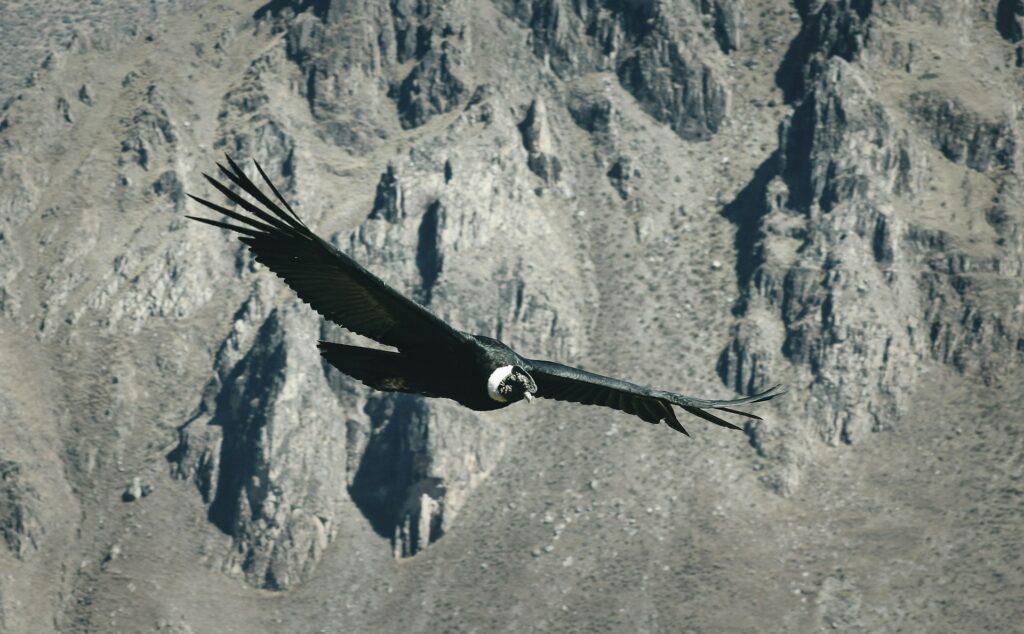
The Condor
Ecology
The Andean condor (Vultur gryphus) is one of the largest flying birds in the world, with a wingspan that can reach up to 3.3 m (10 ft) and a weight that can range from 7 to 15 kg (15 – 33 lb). Male condors are generally larger than females, and both sexes have a distinctive bald head.
The Andean condor inhabits the mountainous regions of South America, primarily the Andes Mountains, which stretch from Venezuela and Colombia in the north to Chile and Argentina in the south.
In the Andean ecosystem, the condor plays a crucial role as a scavenger. By feeding on the carcasses of dead animals, condors help to clean the environment and prevent the spread of disease.
Mythology
In Incan mythology, the condor is revered as a divine creature and is often depicted as a powerful symbol of the upper world (Hanan Pacha), which is the realm of the gods and celestial beings. The Incas believed that the condor had a special connection to the sun god Inti, and its majestic flight was seen as a physical manifestation of the divine.
The bird represents strength, freedom, and the ability to rise above earthly concerns. Its impressive wingspan and ability to soar to great heights symbolize transcendence and the connection between the physical world and the spiritual realms. The condor is often seen as a guardian of the Andean people, watching over them from the skies and providing a link to the divine.
It is believed that the condor carries the prayers of the people to the gods and brings back their blessings.
Cultural Practices
One of the most notable ceremonies is the “Yawar Fiesta,” which translates to the “Blood Festival.” This traditional festival is a dramatic and symbolic event where a condor, representing the Andean spirit, is tied to the back of a bull, symbolizing Spanish colonialism. The ensuing struggle between the two animals is a powerful representation of the clash between indigenous and colonial cultures and ultimately signifies the triumph of native traditions.
Although controversial and increasingly rare due to animal rights concerns, the Yawar Fiesta highlights the condor’s enduring symbolic importance.

The Puma
Ecology
The puma (Puma concolor) is a large feline native to the Americas. It is a versatile and adaptable predator, capable of thriving in a wide range of habitats. The puma is a solitary and elusive animal, known for its strength and agility.
The puma is characterized by its tawny coat, which can range from a light yellowish-brown to a darker reddish-brown. They have powerful limbs, sharp retractable claws, and keen eyesight and hearing, making them formidable hunters.
The puma plays a crucial role as an apex predator. The presence of pumas indicates a healthy, functioning ecosystem, as they require large territories and a stable prey base to thrive.
Mythology
The puma is often associated with the physical realm of Kay Pacha, the world of living beings. The Incas saw the puma as a symbol of earthly life, embodying the vigor necessary for survival in the harsh Andean environment. The city of Cusco, the historical capital of the Inca Empire, is said to have been designed in the shape of a puma.
The puma represents strength, power, and protection. As a master of stealth, the puma is seen as a guardian, capable of defending its territory with unmatched prowess. This protective quality extends to the spiritual realm, where the puma is believed to watch over the people.
Cultural Practices
Ceremonies involving the puma have long been integral to Andean spiritual traditions. One such ritual is the “Ayahuasca ceremony,” conducted by shamans who call upon the spirit of the puma to guide and protect participants during their spiritual journey. The puma’s presence is believed to offer courage and clarity, helping individuals face their inner fears and challenges.
Other contemporary rituals may include offerings of coca leaves, sacred herbs, and prayers to the spirit of the puma.

The Snake
Ecology
There are several species of snakes found in Peru, and among them the most significant is the anaconda. The anaconda, one of the largest snake species in the world, can grow up to 9 m (30 ft) in length and weigh over 227 kg (500 lb). Its robust body is covered in dark green scales with black oval patches, providing excellent camouflage in its aquatic habitats.
Snakes in Peru inhabit a variety of environments, from the dense Amazon rainforest to the arid coastal deserts and high Andean mountains. The anaconda is primarily found in slow-moving rivers, swamps, and marshes of the Amazon basin, where it hunts aquatic prey such as fish, birds, and small mammals.
Mythology
In Incan mythology, the snake is often associated with the underworld, or Ukhu Pacha, the realm beneath the earth where ancestors reside and where agricultural fertility is nurtured. The snake’s ability to move between different layers of the earth symbolizes its connection to both the physical and spiritual realms.
Snakes are often seen as powerful symbols of transformation, regeneration, and renewal. This symbolism is derived from their ability to shed their skin, a process that represents rebirth and the cyclical nature of life. In Andean culture, the snake’s shedding of its skin is analogous to the agricultural cycles of planting, growth, and harvest.
In addition to its association with renewal, the snake is also viewed as a guardian of mysteries. Its enigmatic nature to navigate both above and below ground grant it a unique perspective, making it a symbol of hidden knowledge.
Cultural Practices
There is an Andean ceremony known as the “Pachamama Raymi” or the “Festival of Mother Earth,” where snakes are honored as symbols of fertility. During this festival, offerings of food, coca leaves, and chicha (a traditional corn beer) are made to Pachamama, and participants pray for a bountiful harvest and the well-being of their community.
Snakes, as representatives of the earth and its cycles, play a central role in these rituals.

The Andean Trinity
The trinity of the condor, puma, and snake holds a profound place in Andean cosmology, representing the interconnectedness of different realms of existence. These sacred animals embody the three levels of the Andean world: the sky, the earth, and the underworld, each playing a crucial role in maintaining the balance and harmony of the cosmos.
These animals’ symbolic representation is intricately woven into Incan architecture and city planning, with Machu Picchu serving as a prime example. The Temple of the Condor, with its carved condor wings and head, is a direct representation of the sacred bird and its spiritual significance. Then there’s Cusco city, built in the shape of a puma.
Moreover, the snake’s symbolism is evident in the city’s alignment with natural features and its incorporation into agricultural terraces and irrigation systems. The terraces, which descend the mountainside, resemble the undulating form of a snake.
Conclusion
The condor, puma, and snake hold a place of immense importance in Peruvian spirituality, each embodying a distinct aspect of the Andean cosmological triad. The condor, soaring high above the mountains, symbolizes the sky and serves as a divine messenger between the earthly and celestial realms. The puma, powerful and protective, represents the earthly realm, embodying strength and resilience. The snake, with its sinuous movements between the surface and the underground, symbolizes the underworld, renewal, and the cyclical nature of life.
The cultural heritage preserved through the reverence for the condor, puma, and snake offers valuable lessons in resilience, strength, and transformation. These sacred animals encapsulate the Andean worldview, where every element of nature is respected and seen as part of a larger, interconnected whole. This holistic perspective fosters a deep sense of spiritual well-being and cultural identity, enriching the lives of those who continue to honor these ancient symbols.
Plan Your Trip to Peru | Best Travel Resources
Book Your Accommodations
- Booking.com – the world’s leading online booking platform for accomodations around the world, they have an extensive amount of available listings with zero booking fees and best price guarantees.
- Hostelworld – a backpacker’s best friend, Hostelworld has the largest collection of hostels and guesthouses for affordable prices.
Don’t Forget Insurance
- SafetyWing – from Nomad Insurance, an insurance by nomads for nomads. They understand our lifestyle well and have really comprehensive and flexible plans that cater to any traveler.
Find Cheap Flights
- Kiwi.com – my go-to for booking and finding the cheapest flights and it’s helped me save tons of money. They do virtual interlining which is connecting flights from airlines that do not codeshare, so you can find routes that you wouldn’t be able to find normally.
Join Tours & Activities
- GetYourGuide – is one of the best places to find unique tours and activities. I found that it’s an excellent way to meet fellow travelers and create fond memories. They are not only limited to tours as they also offer niche services such as skip-the-line tickets or private transfers.
Catch a Ride
- Rentalcars.com – nothing beats the freedom of the road, Rentalcars.com is the world’s largest online car rental service. They operate across 160 countries so they’re the perfect partner to work with if you find yourself wanting a ride.