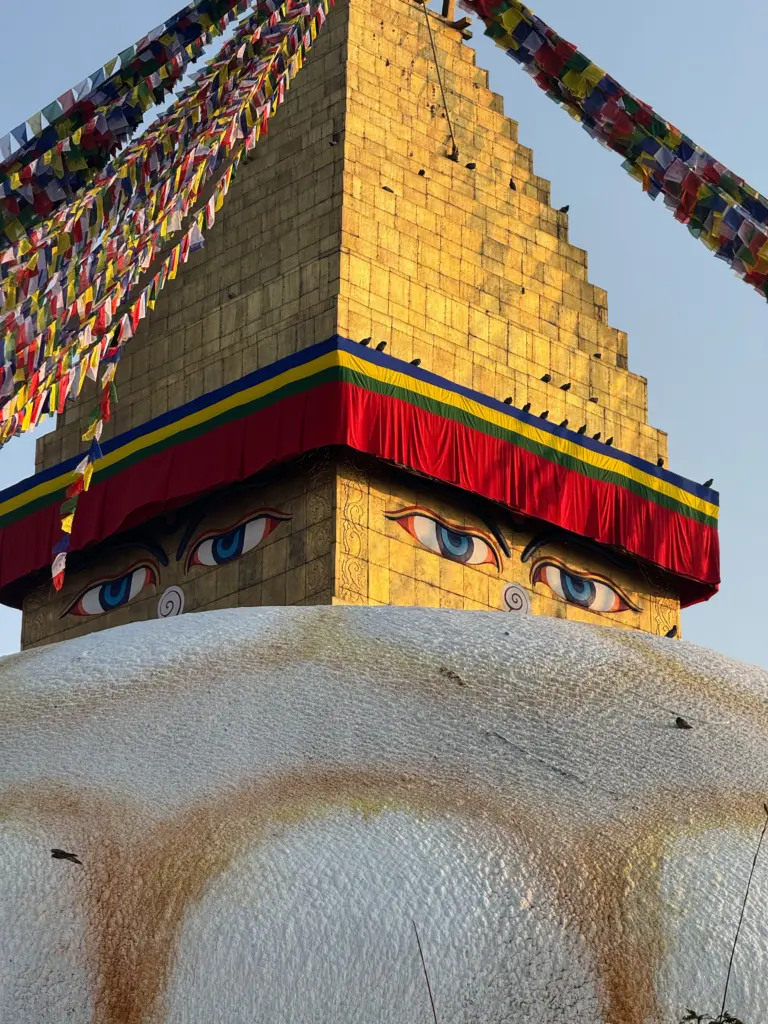
Nepal is a land where cultural richness thrives amidst stunning natural beauty. The country’s spirit is captured not just in the scenic Himalayas, but profoundly in the lives of its people. From the sacred rituals that resonate through temple walls to the welcoming smiles that greet visitors, the essence of Nepal is woven through its community and spiritual practices.
The vibrant cultural life of Nepal is deeply rooted in its diverse ethnic mosaic. Each group, whether it’s the Gurung, the Tharu, or the Newari, brings its own distinct traditions, enriching the nation’s cultural fabric. The Nepalese way of life blends ancient practices with the contemporary rhythms of life, showing a community united by its heritage and its ongoing journey into the future.
In this article, we’ll explore how these traditions are preserved and how they evolve. Together, let’s uncover the layers of history and humanity that make Nepal a truly enchanting country.
Table of Contents
ToggleCultural Concepts in Nepal

Namaste
While commonly known as a form of greeting, Namaste holds significant cultural and spiritual meaning beyond its everyday use. Derived from Sanskrit, “namah” means “bow“, and “te” means “to you“. Thus, Namaste translates to “I bow to you.” The gesture involves pressing both palms together near the heart in the Anjali Mudra, bowing the head slightly, and closing the eyes, reflecting a meeting of the minds and a recognition of soulful kinship.
Namaste is rooted in spiritual practices and is often associated with the belief in the “divine spark” within each person, located at the heart chakra. The gesture is an acknowledgment of one soul to another—“the divine in me recognizes the divine in you.”
Atithi Devo Bhava
Translated as “the guest is god,” this Sanskrit phrase captures the high level of hospitality that is deeply ingrained in Nepalese culture. Guests in a Nepali home are treated with the utmost respect and care.
Dharma
While a concept found in many South Asian cultures, in Nepal, Dharma encompasses duties, rights, laws, conduct, virtues, and the “right way of living.” It is heavily influenced by both Hindu and Buddhist ideologies, shaping the moral and ethical structure of Nepalese society.
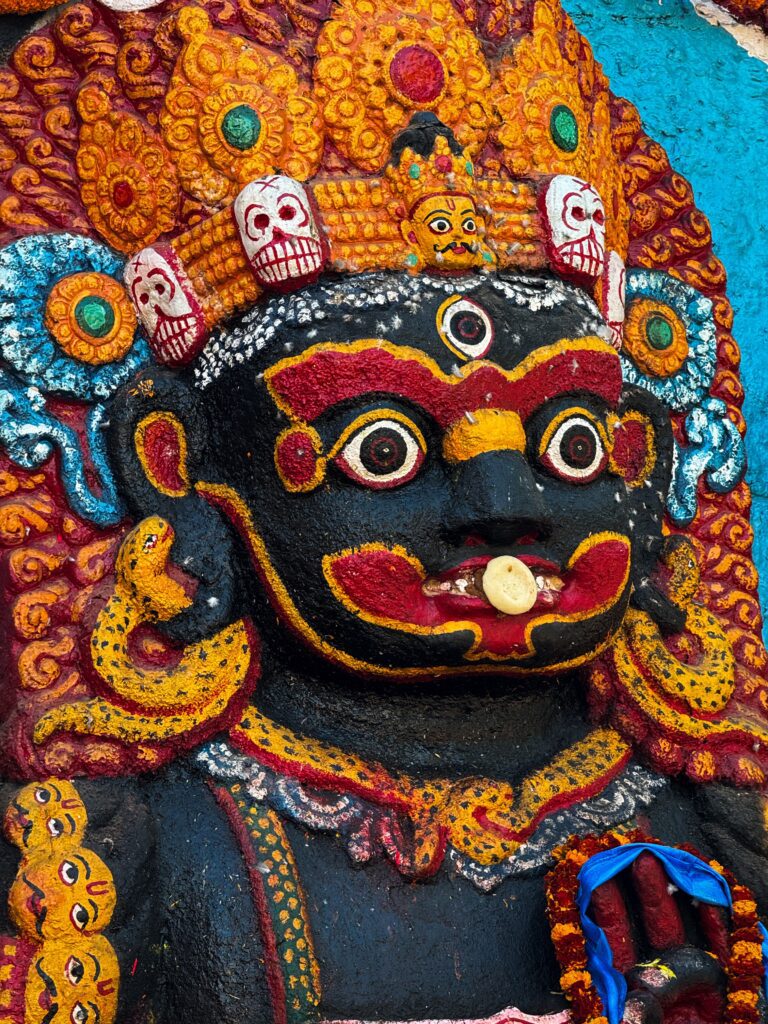
What is the Religion in Nepal?
The majority of Nepalese adhere to Hinduism, which accounts for about 81% of the population.
Buddhism is the second-largest religion, practiced by around 9% of the population, specifically the Vajrayana tradition or Tibetan Buddhism.
Islam is practiced by approximately 4.4% and Christianity with about 1.4% of the population.
Other religions practiced in Nepal include Bon, practiced by a small percentage of the population, primarily in the Himalayan regions, and Kiratism, an indigenous religion practiced by the Kirat people of eastern Nepal.
What are the Traditions in Nepal?
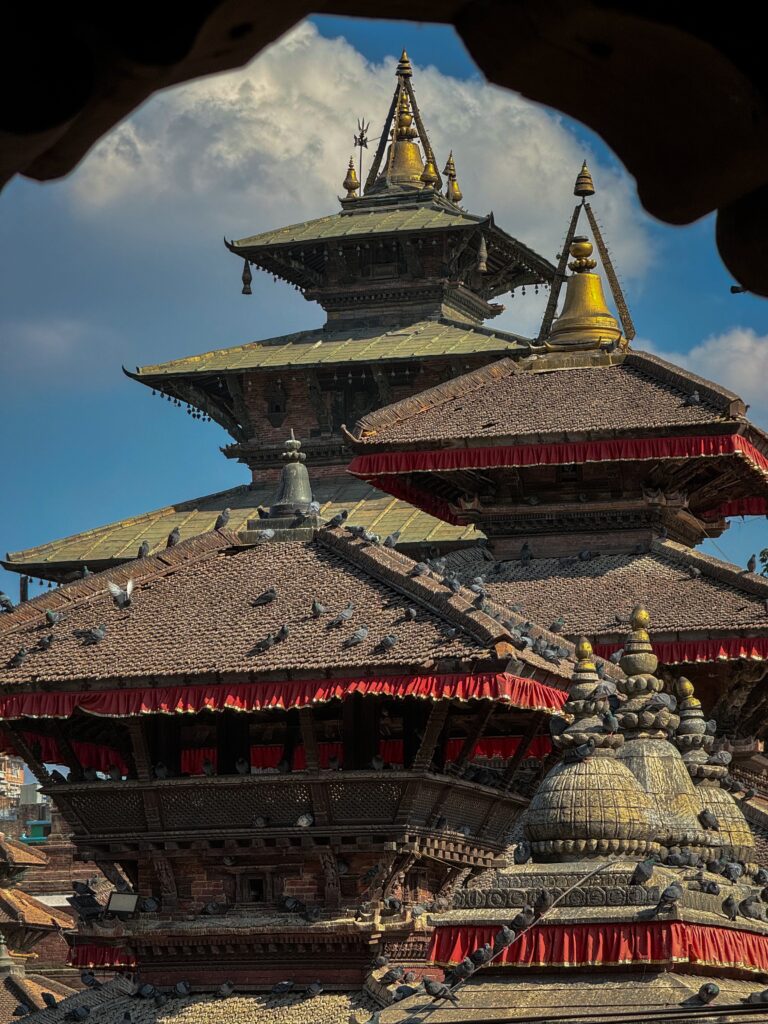
Kumari Puja
This unique tradition involves the worship of a young prepubescent girl as the living embodiment of the divine female energy or Devi. The Kumari is chosen from the Newar community under strict qualifications and is revered until she reaches puberty. Her public appearances are rare and considered highly auspicious. You might be able to catch a glimpse over at Kathmandu’s Durbar Square.
Jyotish
In Nepalese culture, astrological readings are commonly sought for various life events such as birth, marriage, and even before starting new ventures. The alignment of stars and planets is believed to significantly impact one’s life, and consulting astrologers for auspicious dates and practices is deeply rooted in daily practices.
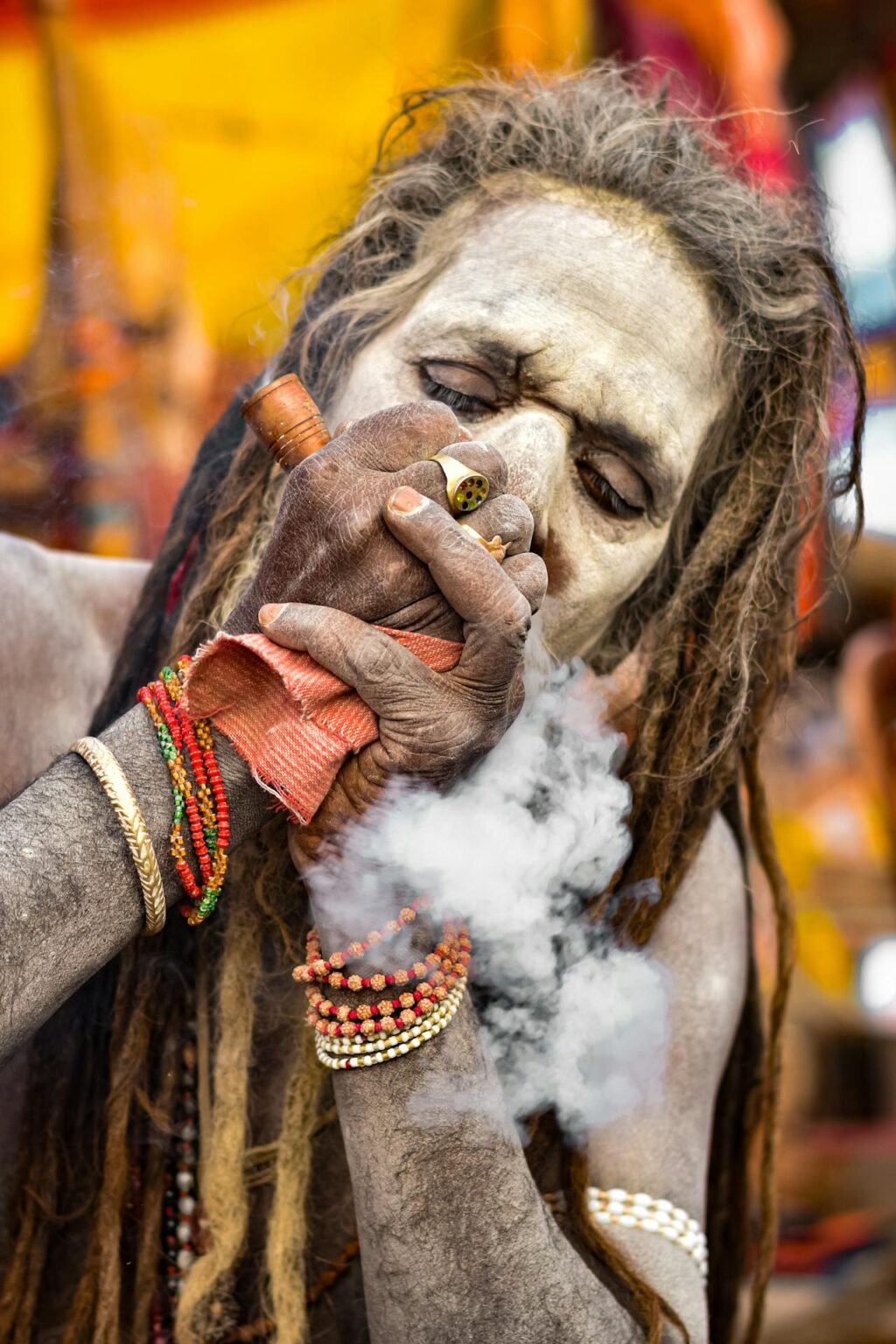
Chillum
A chillum is a traditional smoking device used to consume charas (handmade hashish) or other forms of tobacco and herbal mixtures. The chillum holds significance in Nepalese culture, particularly among sadhus (holy men).
Sadhus, in particular, use it as a medium for consuming cannabis, which they consider a sacred herb that aids in meditation.
Bala Chaturdashi
This tradition involves scattering seven types of grains along the prescribed paths at Sankhu, Kathmandu during a specific lunar day in late November or early December. It is conducted in memory of deceased loved ones, and the grains are offered to feed the souls of the departed, ensuring their peace and liberation.
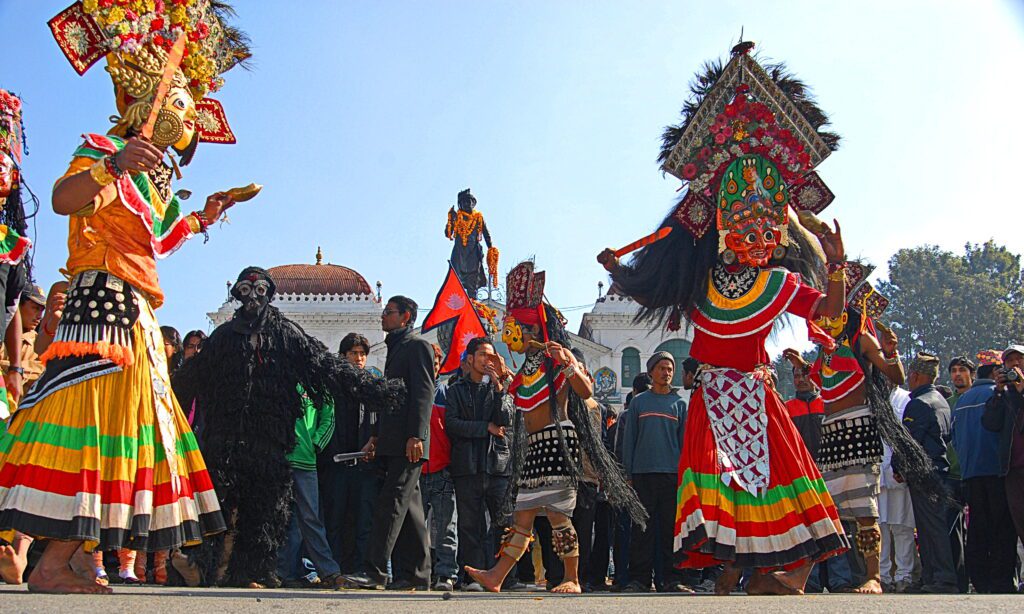
Nepalese Traditional Dance
Nepalese traditional dances are usually performed during festivals, religious ceremonies, and social gatherings, serving both as an expression of cultural identity and a means of storytelling. Here are a few notable traditional dances from Nepal:
- Lakhey Dance: The Lakhey dance is a popular dance performed primarily during the Indra Jatra festival in Kathmandu. The Lakhey is considered a demon god in Newar mythology, but one that protects children. Performers wear heavy, colorful masks and costumes, dancing wildly to the rhythm of traditional music.
Maruni Dance: This is one of the oldest and most popular dances in Nepal, typically performed during Tihar, the festival of lights. The dance involves intricate footwork and expressive gestures and is usually performed in groups. Traditionally, male dancers dressed in female attire lead the performance.
Sherpa Dance: Sherpa dances are an important aspect of the cultural practices of the Sherpa community, often seen during Losar (Tibetan New Year) and other Buddhist festivals. These dances are characterized by rhythmic movements and the use of traditional Tibetan musical instruments. They often depict scenes from daily life, Buddhist mythology, and the harmony between humans and nature.

Nepalese Traditional Music
Nepalese traditional music is a vibrant expression of the nation’s diverse cultural heritage, here are some of the most distinctive traditional instruments used in Nepal:
- Madal: The madal is the most popular drum in Nepal and is central to Nepalese folk music. It is a cylindrical drum with a slightly bulging middle and skins on both sides. It is traditionally made from hollowed-out wood and the skins are usually made from goat or buffalo hide.
- Sarangi: The Nepalese sarangi is a traditional stringed instrument, originally used by the Gandharva caste, who are known as traditional musicians. It is made from a single piece of wood, with a hollow body and typically three to four strings. It is played with a bow and has a haunting, resonant sound.
- Bansuri: The bansuri is a bamboo flute that consists of six to seven holes and produces a sweet, melodious sound.
- Tungna: The tungna is a plucked string instrument similar to a lute, traditionally used by the Tamang and Sherpa communities in the Himalayan regions of Nepal. It is made from wood and animal skin and typically has four strings.
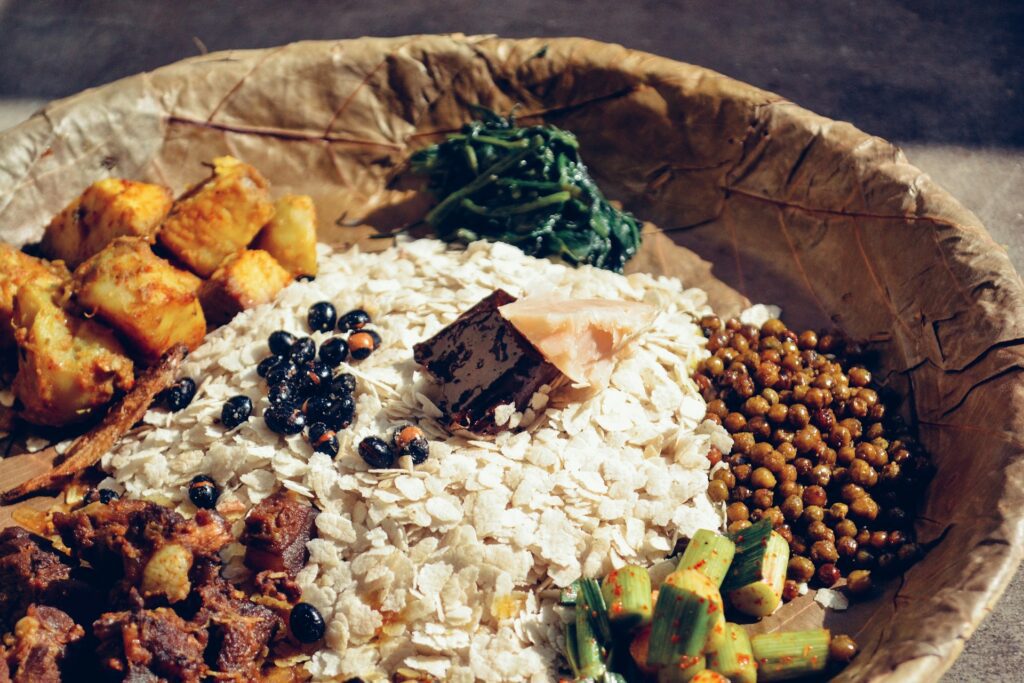
What to Eat in Nepal
Nepalese cuisine is a reflection of the country’s diverse geography and cultural influences. It ranges from Himalayan flavors to Terai spices and includes a variety of ingredients and cooking styles. Here are some must-try dishes when exploring the culinary landscape of Nepal:
Dal Bhat: The quintessential Nepali meal and a staple for most, dal bhat is a nutritious and satisfying dish consisting of steamed rice (bhat) and a lentil soup (dal). Dal bhat is enjoyed twice daily by many Nepalese and which is why there’s a saying in Nepal, “Dal bhat power, 24 hour.”
Momo: Momos are Nepalese dumplings that have become a beloved snack throughout the country. These are made from a simple dough filled with either vegetables, chicken, buffalo, or pork, seasoned with ginger, garlic, and onions, and then steamed or fried. Momos are usually served with a spicy tomato-based dipping sauce called achar.

Sel Roti: This is a traditional homemade, sweet, ring-shaped rice bread. Sel roti is crispy on the outside and soft on the inside, with a slightly sweet flavor from the addition of sugar and cardamom.
Thukpa: A noodle soup that originated from Tibet but has become a part of Nepalese cuisine, especially in the mountainous regions. Thukpa consists of meat or vegetables, noodles, and a flavorful broth seasoned with local herbs and spices.
Chatamari: Often referred to as the “Nepali Pizza,” chatamari is a traditional Newar snack. It is a thin crepe made from rice flour with toppings such as chopped onions, coriander, minced meat, egg, and spices. It is then cooked on a skillet until crispy.
What is Nepalese Language like?
Nepal is a linguistically diverse country, with Nepali serving as the primary and official language. Known formerly as Khas Kura or Gorkhali, Nepali is an Indo-Aryan language and acts as the lingua franca, bridging communication among the nation’s varied linguistic groups.
Nepali is written in the Devanagari script, commonly used in several other South Asian languages. This alphasyllabic script incorporates characters that represent consonants with inherent vowels, which can be modified by diacritical marks. The vocabulary of Nepali is enriched by Sanskrit and has absorbed terms from neighboring languages such as Hindi and Maithili, as well as from English and other global languages through modern influences.
Beyond the official language, Nepal is home to roughly 123 other languages spoken as mother tongues across its diverse regions.
Useful Nepalese Phrases for Travel
|
Nepali
|
English
|
|---|---|
|
Namaste
|
Hello
|
|
Dhanyabaad
|
Thank you
|
|
Tapaiilai kasto cha?
|
How are you?
|
|
Yo kati ho?
|
How much is this?
|
|
Menu palus?
|
Could I see the menu, please?
|
|
Mitho cha
|
It’s delicious.
|
|
Maile bujhina
|
I don’t understand.
|
|
Kripaya, feri bhannus
|
Please, say it again.
|
|
Sahayog garnus!
|
Help!
|
|
Malai sancho chhaina
|
I am not feeling well.
|
|
Kripaya, malai yaha dekhaunuhos.
|
Please, show me this place.
|
|
Yo kaha ho?
|
Where is this?
|
|
Ma yaha haraye.
|
I am lost.
|
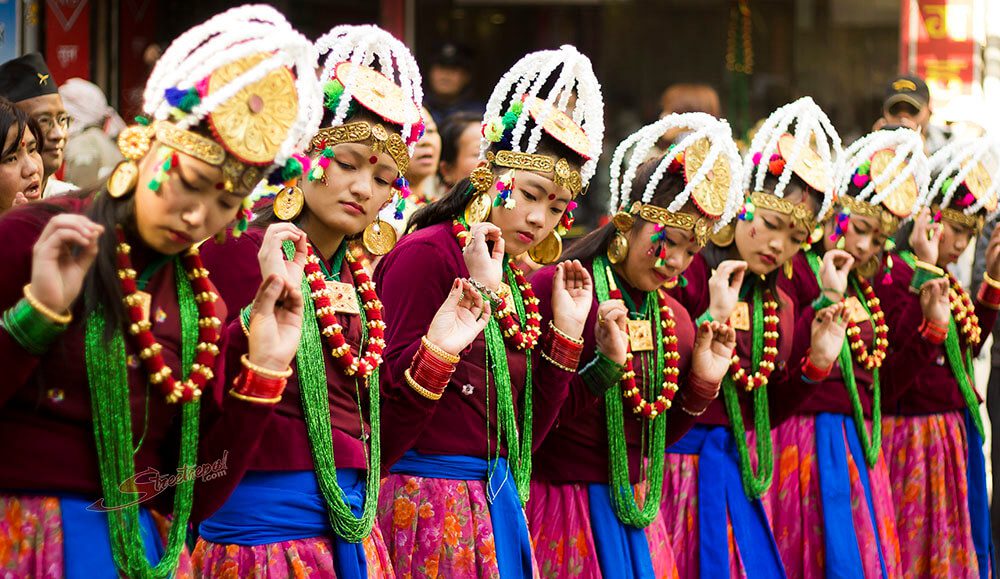
Traditional Festivals in Nepal
Dashain
Celebrated in late September or early October, Dashain is the longest and most significant festival in Nepal, lasting for 15 days. It honors the goddess Durga and symbolizes the victory of good over evil.
Tihar
Occurring in October or November, Tihar, also known as the festival of lights, spans five days. Each day is dedicated to honoring different figures such as crows, dogs, cows, and Lakshmi, the goddess of wealth. Homes are adorned with lights and colorful rangolis, and evenings are filled with the sounds of deusi-bhailo songs and dances.
Holi
Held in February or March, Holi is the vibrant festival of colors that marks the arrival of spring. It is a playful celebration where people smear each other with colored powders and splash water, enjoying festive songs and dances.
Buddha Jayanti
Buddha Jayanti occurs on the full moon day of the Nepali month of Baishakh (April-May), celebrating the birth, enlightenment, and death of Lord Buddha. It is especially significant in Lumbini, the birthplace of Buddha.
Customs in Nepal
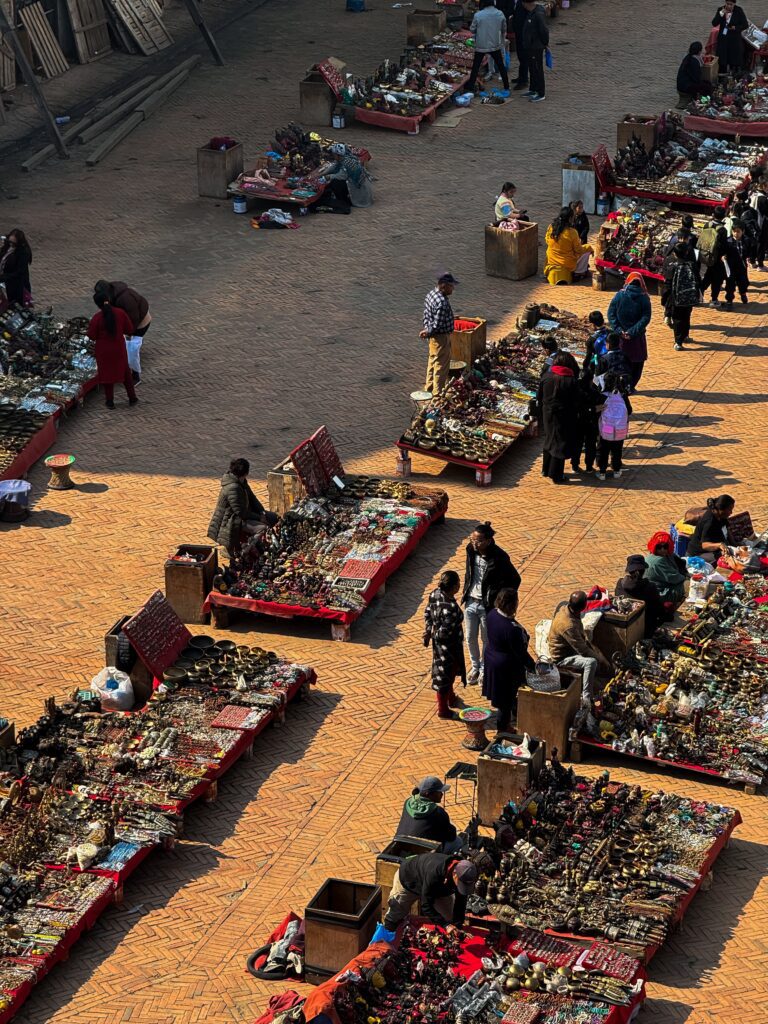
- Considered a form of impurity, “Jutho” refers to the concept of contamination associated with saliva and sharing food. It is taboo to share utensils or eat from the same plate once it has been touched by another’s mouth.
- Pasni, also known as the rice-feeding ceremony, is a traditional Nepalese celebration that marks a baby’s first intake of solid food, usually occurring at the age of six months for boys and five months for girls.
- In Nepal, as in many South Asian cultures, it’s customary to eat with the right hand, as the left hand is traditionally associated with unclean tasks, particularly those related to bathroom hygiene.
- Younger people often touch the feet of their elders as a sign of respect and in return, receive blessings. This is known as Ashirwaad.
- Before giving money to a temple or as a donation, it is customary for some to circle the money around their head. This act is believed to bring good luck and blessings by transferring one’s positive energy to the money.
Plan Your Trip to Nepal | Best Travel Resources
Book Your Accommodations
- Booking.com – the world’s leading online booking platform for accomodations around the world, they have an extensive amount of available listings with zero booking fees and best price guarantees.
- Hostelworld – a backpacker’s best friend, Hostelworld has the largest collection of hostels and guesthouses for affordable prices.
Don’t Forget Insurance
- SafetyWing – from Nomad Insurance, an insurance by nomads for nomads. They understand our lifestyle well and have really comprehensive and flexible plans that cater to any traveler.
Find Cheap Flights
- Kiwi.com – my go-to for booking and finding the cheapest flights and it’s helped me save tons of money. They do virtual interlining which is connecting flights from airlines that do not codeshare, so you can find routes that you wouldn’t be able to find normally.
Join Tours & Activities
- GetYourGuide – is one of the best places to find unique tours and activities. I found that it’s an excellent way to meet fellow travelers and create fond memories. They are not only limited to tours as they also offer niche services such as skip-the-line tickets or private transfers.
Catch a Ride
- Rentalcars.com – nothing beats the freedom of the road, Rentalcars.com is the world’s largest online car rental service. They operate across 160 countries so they’re the perfect partner to work with if you find yourself wanting a ride.