Athens.
Marbled columns against azure skies. Echoes in the Agora. Shadows from the Parthenon.
Tales of gods, heroes, and epoch-defining moments.
Here, the past doesn’t fade; it merges and breathes amidst the city’s modern facade. Being one of the first ever cities I backpacked in, Athens holds a very precious place in my heart and I still yearn to once again walk through its ancient cobbled streets.
It’s an amazing place to start in before heading out to the sun-kissed Mediterranean islands like Crete and Santorini.
In Athens, you’ll find that every step is like a journey. In every glance, a story. Larger than life; this is Athens, the Cradle of Western Civilization.
Table of Contents
Toggle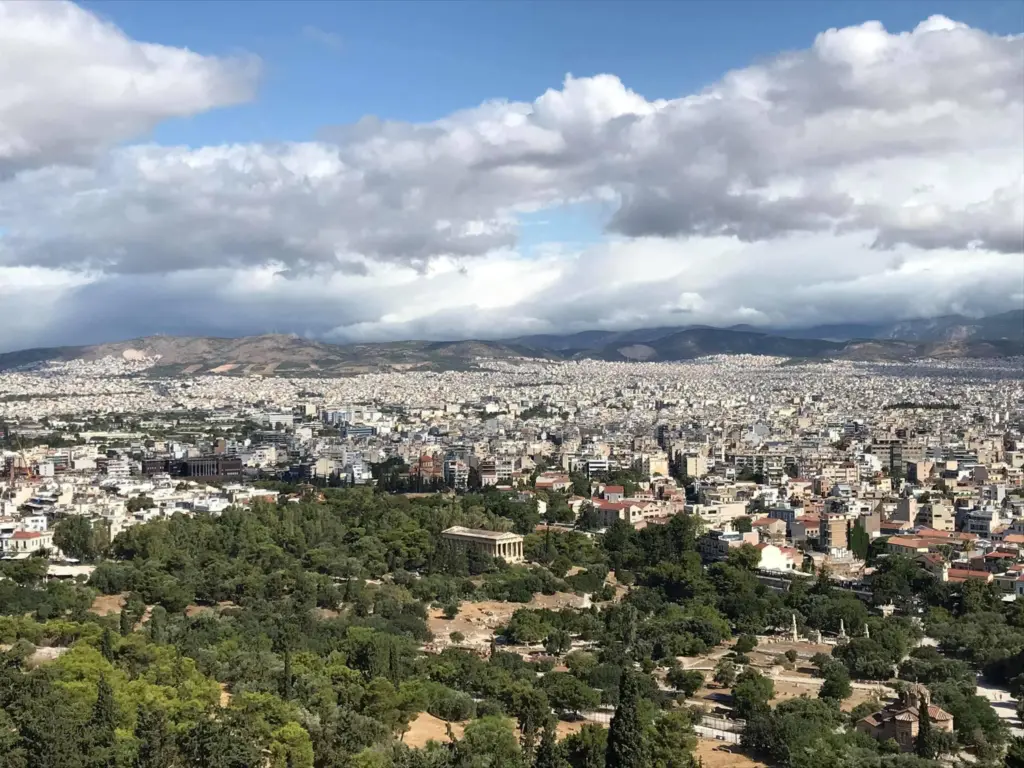
History of Athens
Athens is one of the world’s oldest cities with a history spanning over 3,400 years!
Its roots go as far back as the Mycenaean Period, around 1600-1100 BC, where the earliest traces of human settlement have been found. The fortified city was situated on the rocky outcrop of the Acropolis, a natural defensive position.
During the Dark Ages (1100-800 BC), the city’s progress was stunted, but it recovered and transitioned into the Archaic Period (800-500 BC). This era marked Athens’ initial steps into democracy.
By the 5th century BC, specifically between 461 and 429 BC, under the statesmanship of Pericles, Athens flourished in what is known as the Golden Age. During this time, the city was a significant cultural, political, and military power.
In 431 BC, the Peloponnesian War erupted between Athens and Sparta, lasting for 27 years and devastating the city-state. It wasn’t until 338 BC, when Philip II of Macedon conquered Athens, that the city was integrated into a larger political framework, eventually becoming a part of his son Alexander the Great’s empire.
The Roman Period saw Athens turn into an educational hub around 86 BC. The city continued to be an essential center of learning even during Byzantine times, from the 4th to the 15th century AD.
Under Ottoman Rule, which lasted from 1458 until 1833, Athens experienced significant decline, both culturally and economically. However, the city underwent a renaissance after it became the capital of the newly established state of Greece in 1834.
The 20th century was marked by rapid growth, with its population ballooning from around 473,000 in 1928 to 3 million in the 1980s.
Greek Culture Overview
Steeped in history, the culture of Greece spans thousands of years!
The philosophies of Socrates, Plato, and Aristotle, the wisdom of the Seven Sages, the tragedies of Sophocles, and the comedies of Aristophanes have laid the foundation of Western thought.
To this day, Modern Greece remains a bastion of culture. The legacy of ancient feasts can be tasted in every bite of today’s Greek cuisine, an embodiment of the Mediterranean’s rich bounty.
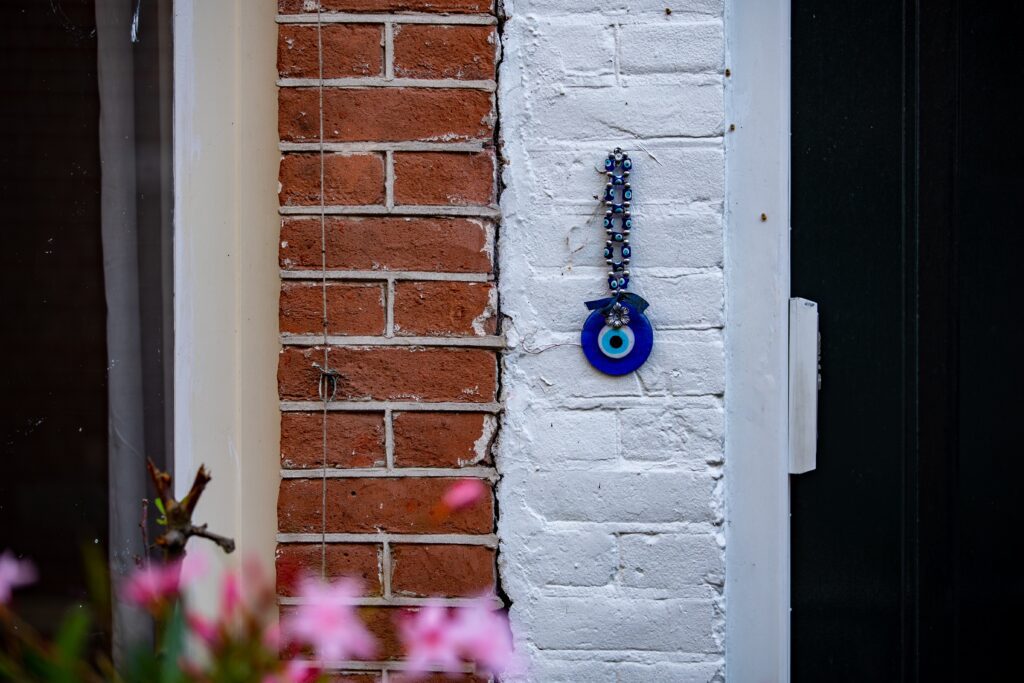
The Evil Eye, otherwise known as Mati locally is another interesting facet of the culture.
Yet, this is merely scratching the surface of the Greek culture which you are more than welcome to read more about!
Historical Sites to Visit in Athens
1. Ancient Agora
One of the first places I stepped foot in when I started to explore Athens and definitely a must-see.
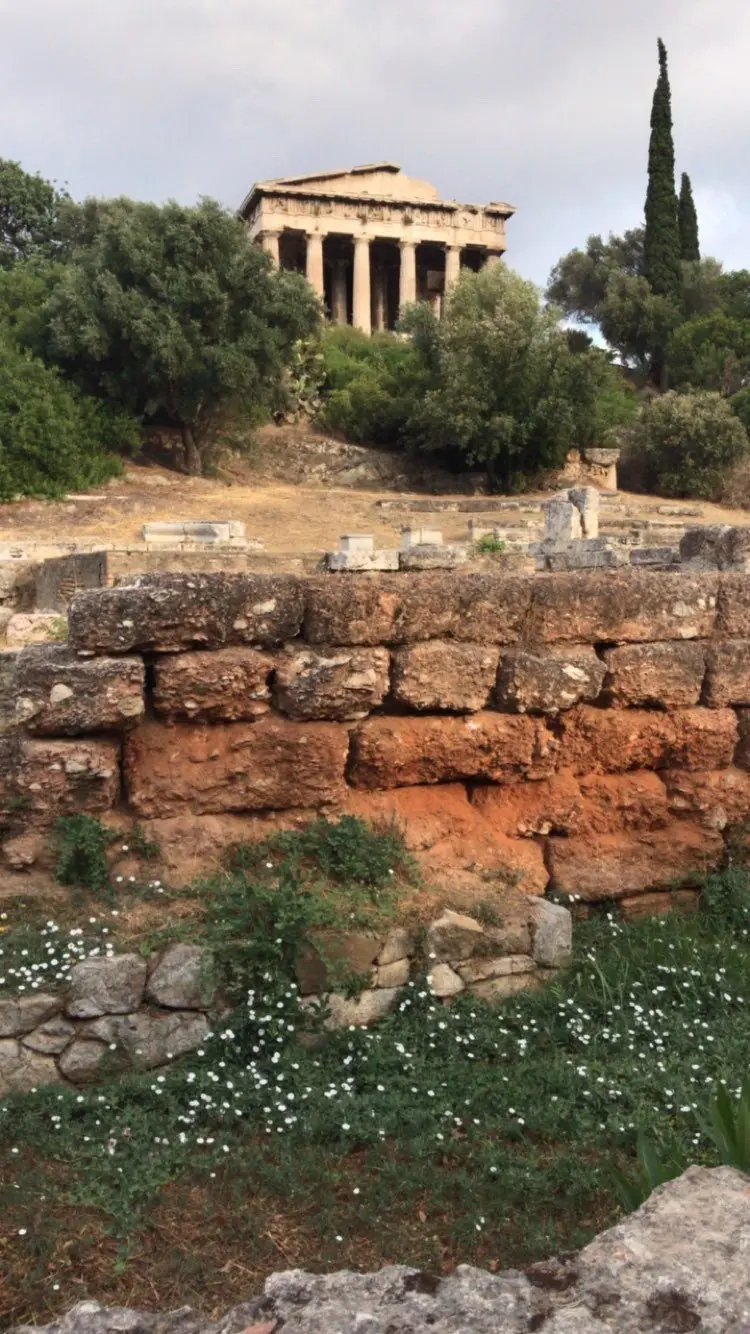
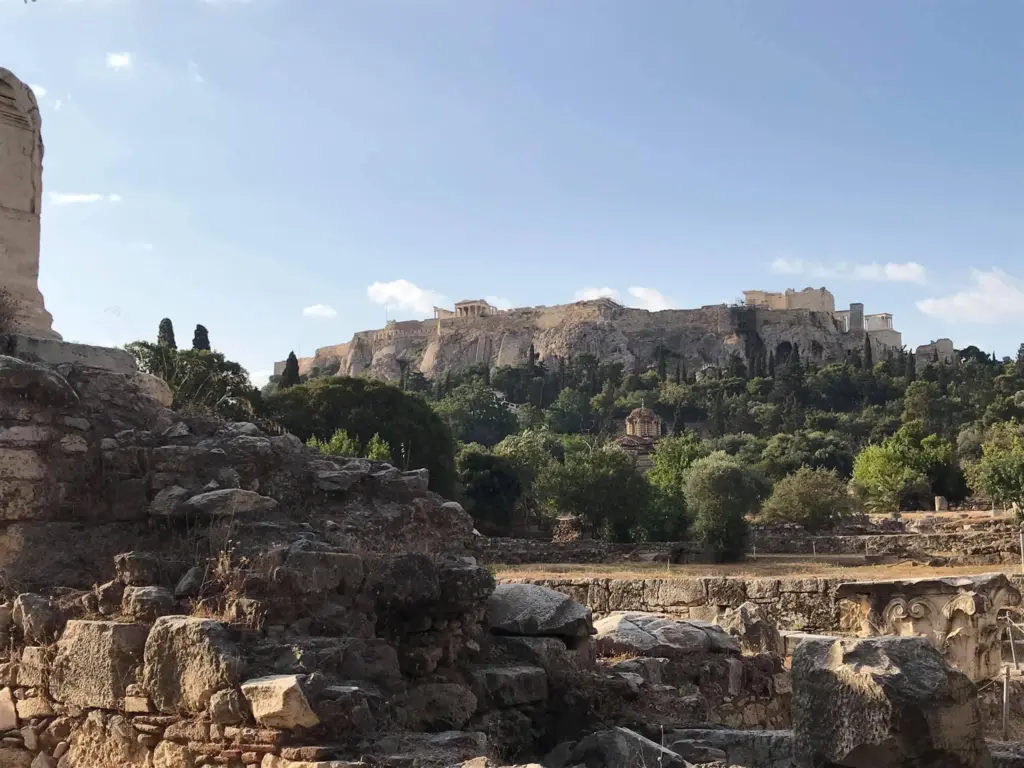
The Ancient Agora was a sprawling marketplace and civic center that once served as the hub of the city’s social, political, and economic life.
Dating back to the 6th century BC, the Agora evolved over the centuries, bearing witness to the city’s changing fortunes. In its prime, the site was lined with colonnaded buildings, statues, and stoas where Athenians would gather to discuss politics, philosophy, trade, and more.
Beyond these structures, wandering through the Ancient Agora also reveals a myriad of other ruins, from Byzantine churches to statues and even an ancient drainage system. We’ll also be covering some of the other notable sites around the Ancient Agora further below.
2. Acropolis
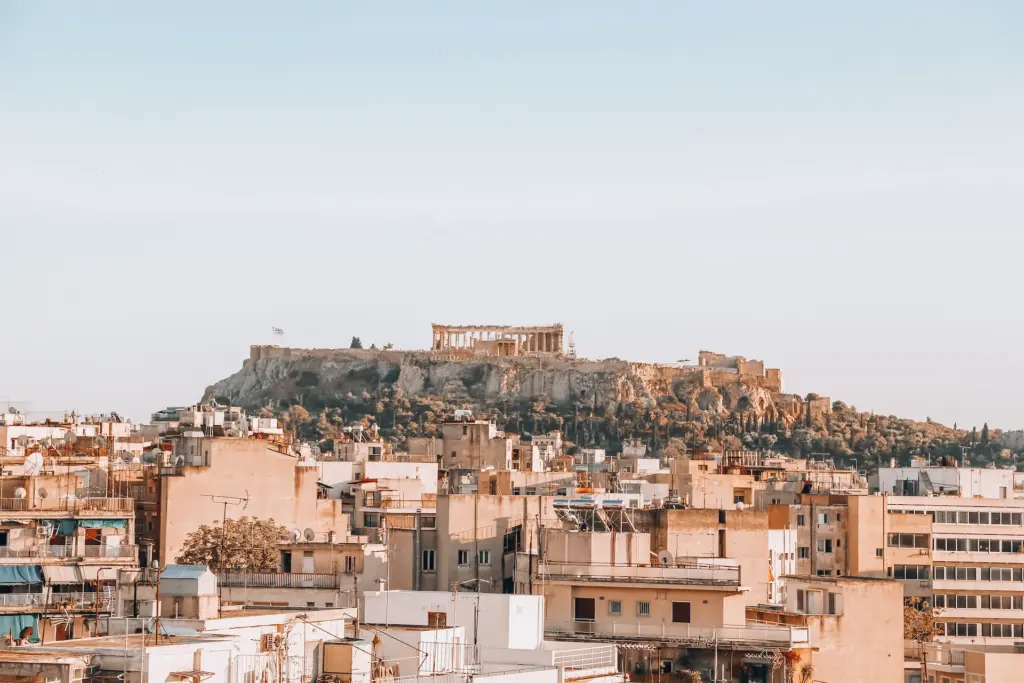
Dominating the skyline of Athens is the Acropolis, a rocky hilltop citadel that has stood as a beacon of ancient Greek civilization and ingenuity for millennia. Hiking up Lycabettus Hill is one of the best ways to reach this awesome site.
Often referred to as the “Sacred Rock,” the Acropolis is not just a single structure (which some people often mistake for the Parthenon) but a complex of architectural marvels that has deeply influenced Western culture.
The term “Acropolis” itself means “upper city,” and while there are many acropoleis across Greece, the Acropolis of Athens holds a special place due to its historical significance and architectural grandeur.
Over the centuries, the Acropolis has faced wars, invasions, and natural disasters. Various rulers have left their mark, converting temples into churches, mosques, or even using the rock as a fortress.
You can join a guided tour that visits the Agora, Acropolis and the Acropolis Museum through here.
3. The Royal Gardens
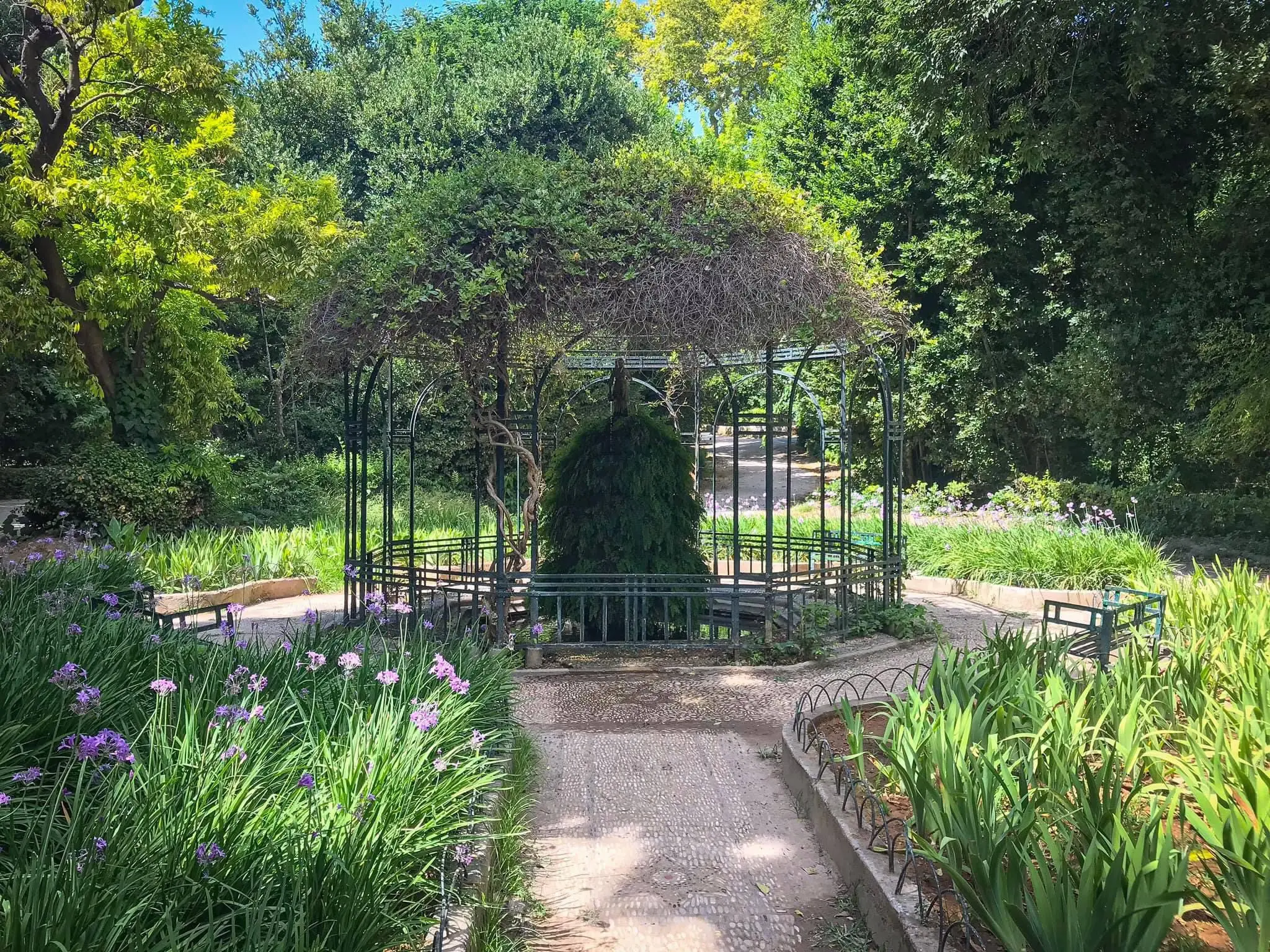
In the midst of Athens’ bustling urban landscape lies an oasis of serenity: the National Garden, formerly known as the Royal Gardens.
This expansive green space, covering approximately 15.5 hectares (38 acres), offers a well-earned respite after a day of exploration.
The National Garden’s origins date back to 1838 when Queen Amalia, the first queen consort of the Kingdom of Greece, envisioned creating a garden adjacent to the Old Royal Palace (now the Greek Parliament). With the assistance of German agronomist Friedrich Schmidt and later the Bavarian engineer Wilhelm von Weiler, the transformation of this once barren area began.
Within a decade, it evolved into a majestic garden with thousands of plants, trees, and flowers imported from various parts of the world.
4. Parthenon
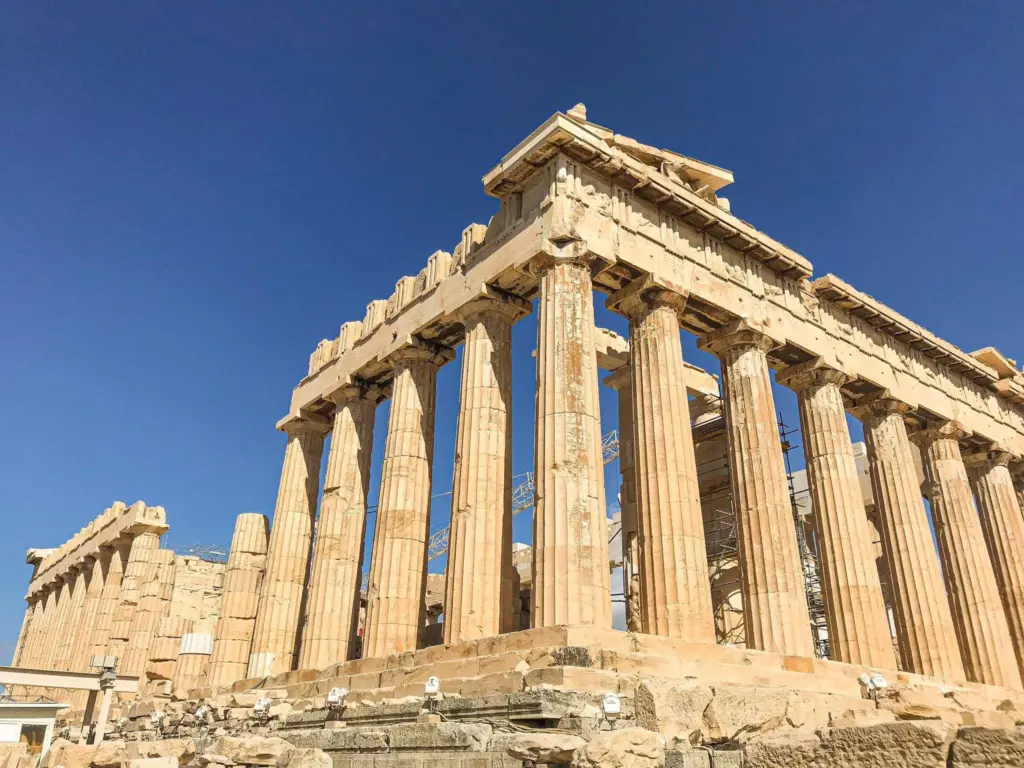
Perched atop the rocky Acropolis, stands the Parthenon — an enduring symbol of Ancient Greek civilization and one of the world’s most iconic historical monuments.
This majestic temple, dedicated to the goddess Athena Parthenos, embodies the pinnacle of classical architecture and serves as proof to the artistic and architectural genius of its creators.
Construction of the Parthenon commenced in 447 BC and was completed in 438 BC, under the leadership of the Athenian statesman Pericles. Architects Ictinus and Callicrates, along with the legendary sculptor Phidias, were at the helm of this ambitious project.
Characterized by its Doric columns, the Parthenon is primarily built of Pentelic marble, which gleams in the Athenian sunlight. While its external grandeur is evident in its iconic colonnades, the Parthenon’s internal artistry is equally compelling.
The temple originally housed a colossal chryselephantine (gold and ivory) statue of Athena, crafted by Phidias. Though this statue has been lost to time, descriptions from antiquity paint a picture of its breathtaking beauty.
5. The Roman Forum
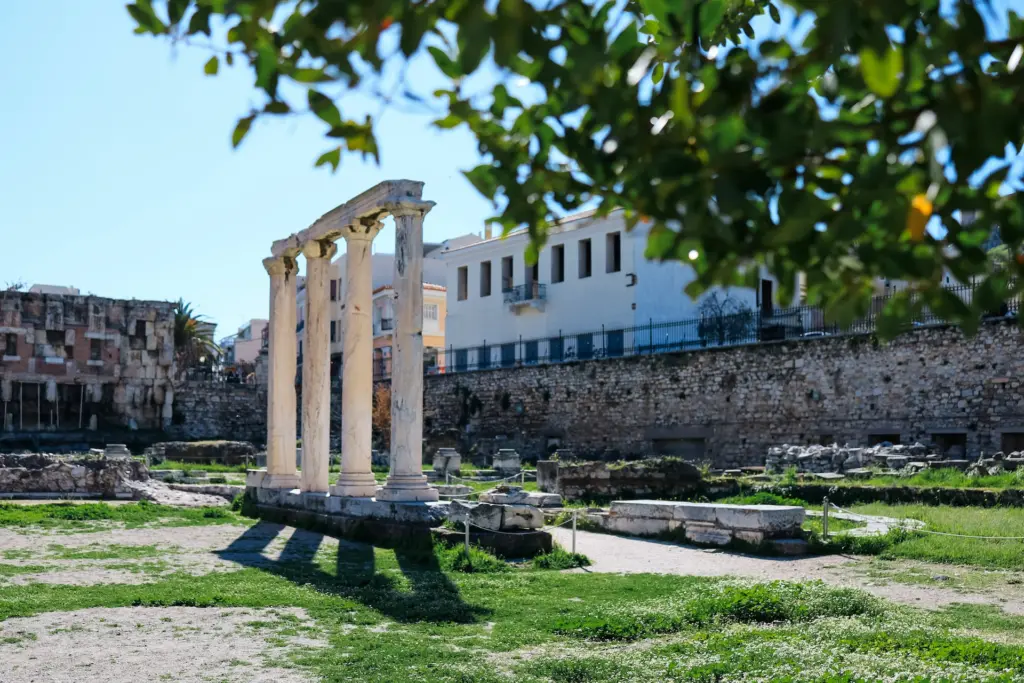
Just a stone’s throw away from the Ancient Agora, lies the massive Roman Forum.
Established during the 1st century BC, the Roman Forum was conceptualized to serve as the new commercial, social, and administrative hub, aiming to alleviate the congestion of the Ancient Agora.
The majestic Gate of Athena Archegetis, marked by its four Doric columns and intricately decorated architrave, welcomed Athenians as the primary entrance to this space.
This gate, a tribute to the city’s patron goddess Athena, was generously financed by the renowned Roman leaders Julius Caesar and Augustus. Their influence, along with other Roman architectural styles, is palpable throughout the Forum.
6. Temple of Athena Nike
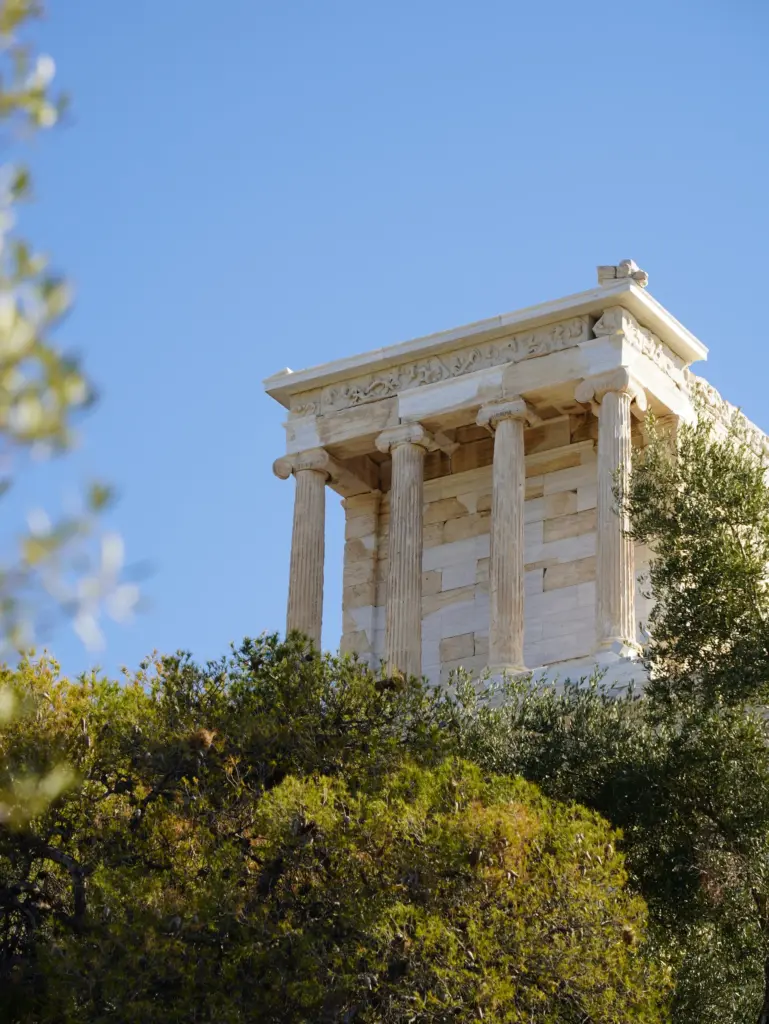
Located at the edge of the Acropolis, this compact yet architecturally significant temple is dedicated to Athena as the goddess of victory (Fun fact: Nike means “victory” in Greek).
Constructed between 427 and 424 BC, this temple is a prime example of the Ionic architectural style, distinguishing itself from other temples on the Acropolis, like the Parthenon, which is Doric.
Designed by the architect Kallikrates, the temple is small and amphiprostyle, meaning it has four columns at its front and back but none along its sides. These slender Ionic columns, with their distinctive volutes at the capitals, support a graceful entablature adorned with a continuous frieze.
The temple’s strategic position on a bastion at the southeast edge of the Acropolis, overlooking both the city and the sea, had symbolic and practical implications.
Not only did it serve as a beacon for returning Athenian sailors, but its location also fortified a vulnerable point of the citadel.
7. Temple of Hephaestus
Among the jewels of ancient Athens, the Temple of Hephaestus commands a special admiration.
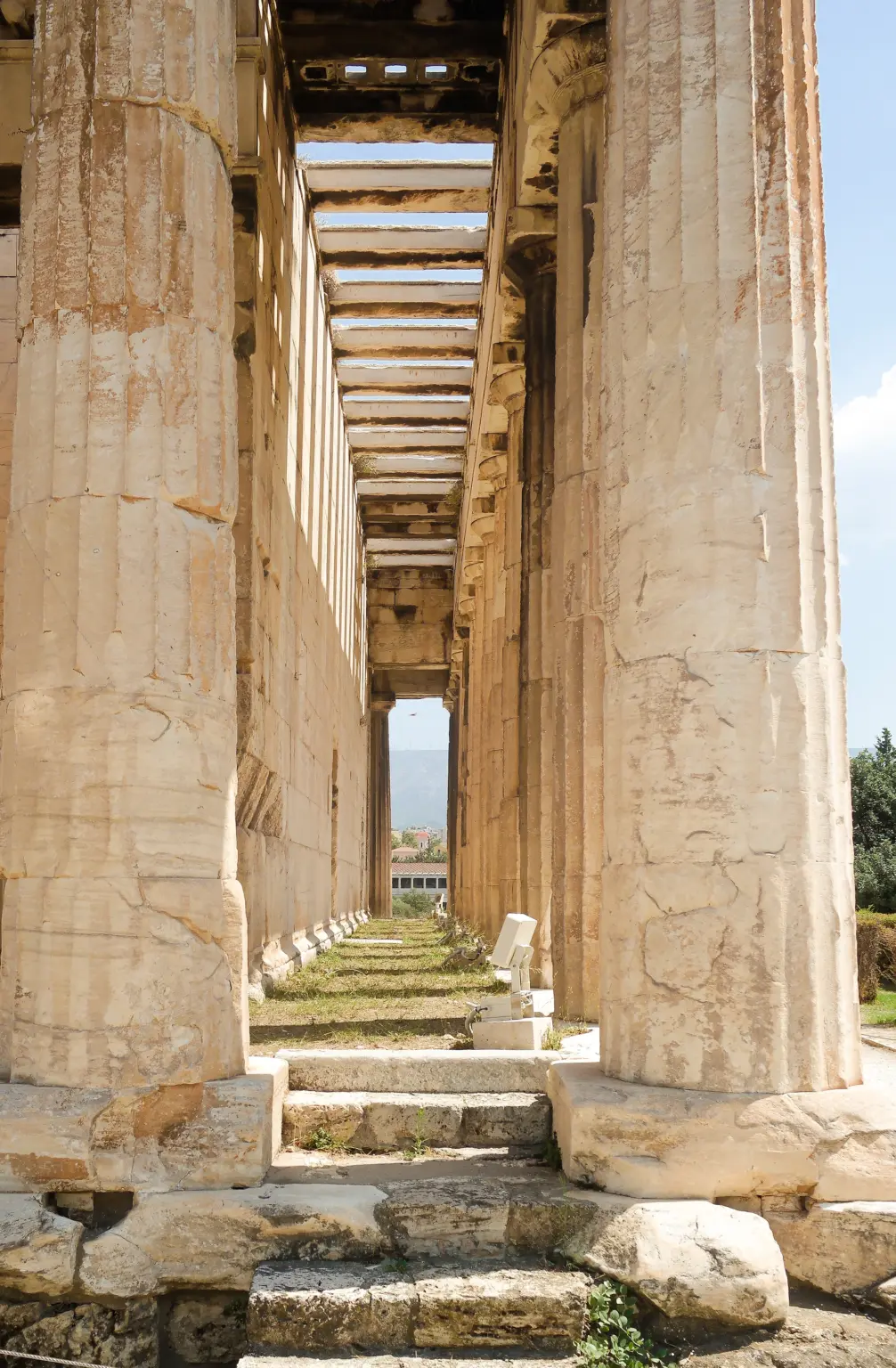
Built between 449 and 415 BC, the Temple of Hephaestus is one of the best-preserved temples of ancient Greece. This Doric peripteral temple, showcasing a rectangular floor plan surrounded by columns on all sides, was dedicated to Hephaestus, the god of metalworking, craftsmanship, and fire.
The temple’s design is attributed to Ictinus, one of the architects of the Parthenon, which might explain the similarities in their architectural styles.
Flanked by 34 Doric columns, the temple’s exterior, made of Pentelic marble, has gracefully withstood the test of time.
The temple’s interior was equally remarkable. It once housed statues of Hephaestus and Athena, both sculpted by the renowned artist Alkamenes.
Athena’s inclusion alongside Hephaestus was not random; the goddess was revered as the patron of various crafts, especially weaving.
Interestingly, over the years, the temple found new purposes. During the 7th century AD, it was converted into a Christian church, dedicated to Saint George, and served religious functions until the 19th century. This adaptive reuse played a role in the temple’s remarkable preservation.
8. Stoa of Attalos
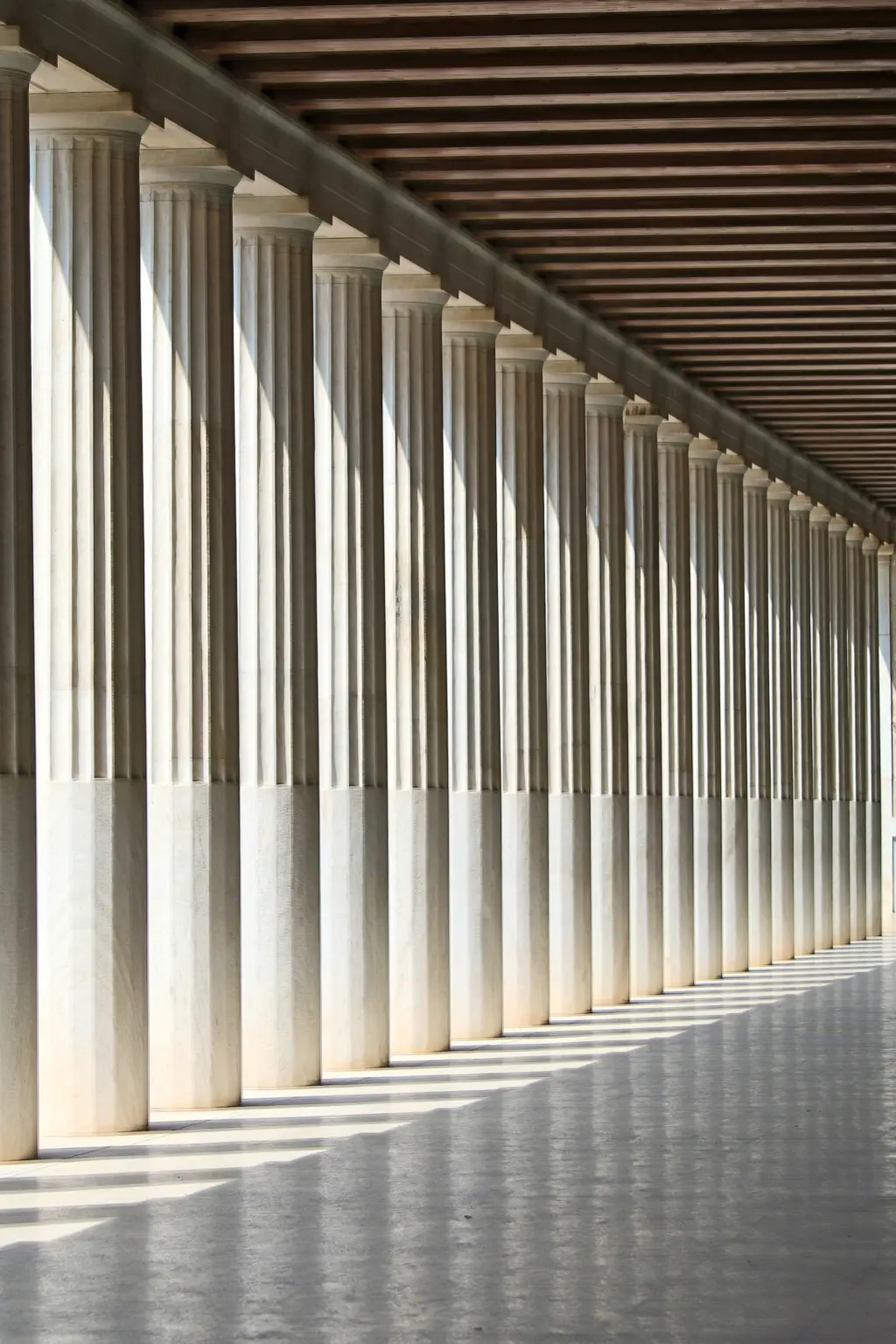
The Stoa of Attalos stands out due the Hellenistic influence in the city. This grand stoa (covered walkway) was a gift to Athens from King Attalos II of Pergamon, who ruled between 159 and 138 BC.
Stretching approximately 115 m (377 ft) in length and 20 m (65 ft) in width, the Stoa of Attalos was designed to be a multi-functional space. With two floors, it housed shops, offered shaded colonnades for social gatherings, and provided a scenic vantage point with views of the Agora below.
Architecturally, it combined Doric columns on the ground floor with Ionic columns on the upper level, showcasing a harmonious blend of the two classical styles. Rich in materials, the stoa’s construction utilized Pentelic marble for the columns and façade, while the rest of the structure was made of limestone from the nearby Mt. Hymettus.
However, like many ancient structures, the Stoa of Attalos fell victim to the ravages of time. It was destroyed in 267 AD during a raid by the Heruli, a Germanic tribe. For centuries, its ruins lay buried beneath layers of history, with only remnants of its foundations and columns hinting at its former glory.
The modern reincarnation of the Stoa of Attalos owes its existence to a significant reconstruction effort in the mid-20th century. Funded by the Rockefeller Foundation and guided by the American School of Classical Studies at Athens, this reconstruction, completed in 1956, sought to recreate the stoa’s original design meticulously. The result is a magnificent structure that offers visitors a tangible sense of the Hellenistic period’s architectural ambiance.
9. Temple of Zeus
This colossal structure is dedicated to Zeus, the king of the Olympian gods.
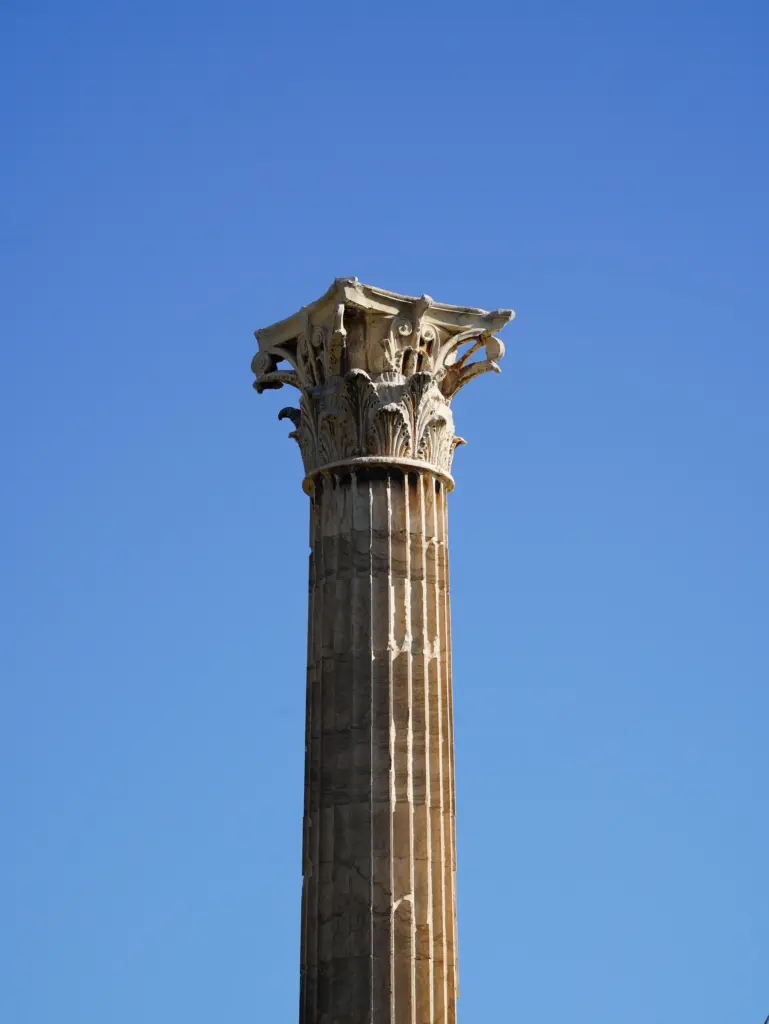
The Temple of Zeus’s inception dates back to the 6th century BC, during the rule of the Athenian tyrants. Originally envisioned to surpass all existing temples in its grandiosity, the temple’s construction turned out to be an odyssey in itself, spanning nearly 650 years.
It was only during the reign of the Roman Emperor Hadrian, an ardent admirer of Greek culture, that the temple finally saw its completion in 131 AD.
With its impressive dimensions of approximately 96 m (314 ft) in length and 40 m (131 ft) in width, the temple originally boasted 104 colossal Corinthian columns, each standing at 17 m (55 ft) tall. However, today, only 15 of these columns remain standing, with a 16th column lying on the ground, toppled by a storm in the 19th century.
The cella used to house a gigantic gold and ivory statue of Zeus, mirroring the similarly opulent statue of Athena in the Parthenon. While the statue no longer survives, historical accounts speak of its breathtaking scale, befitting the chief of the gods.
10. Odeon of Herodes Atticus
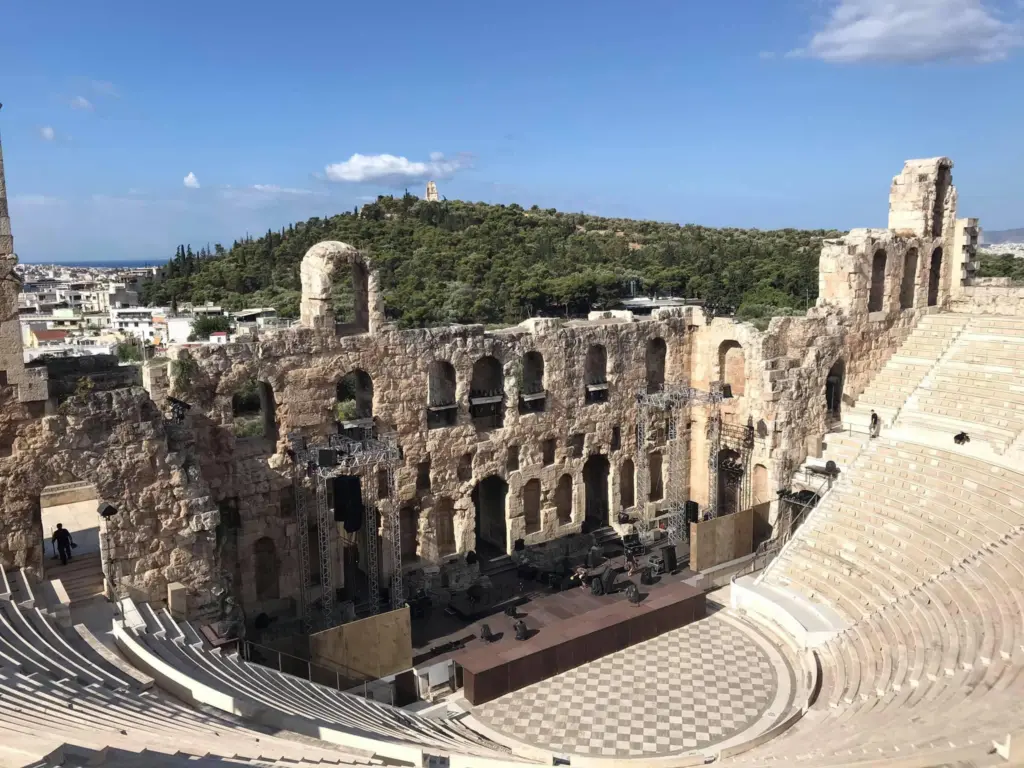
The Odeon of Herodes Atticus, simply referred to as the “Herodeon,” is one of the two theatres situated on the Acropolis, along with the Theatre of Dionysus.
Constructed in 161 AD, the Odeon was a gift from Herodes Atticus, a wealthy Athenian Roman senator and philosopher, in memory of his wife, Regilla. This gesture of love and remembrance resulted in one of the most impressive theaters of its time.
Designed to accommodate an audience of around 5,000, the theater’s semi-circular auditorium was initially covered with a cedar wood roof.
The Odeon’s stage, adorned with lavish sculptures, reliefs, and decorative elements, was the centerpiece for musical concerts, poetry readings, and other performances. Its multi-tiered seating, built with precision and care, ensured that every member of the audience had an unobstructed view of the performances while basking in the panoramic vista of Athens.
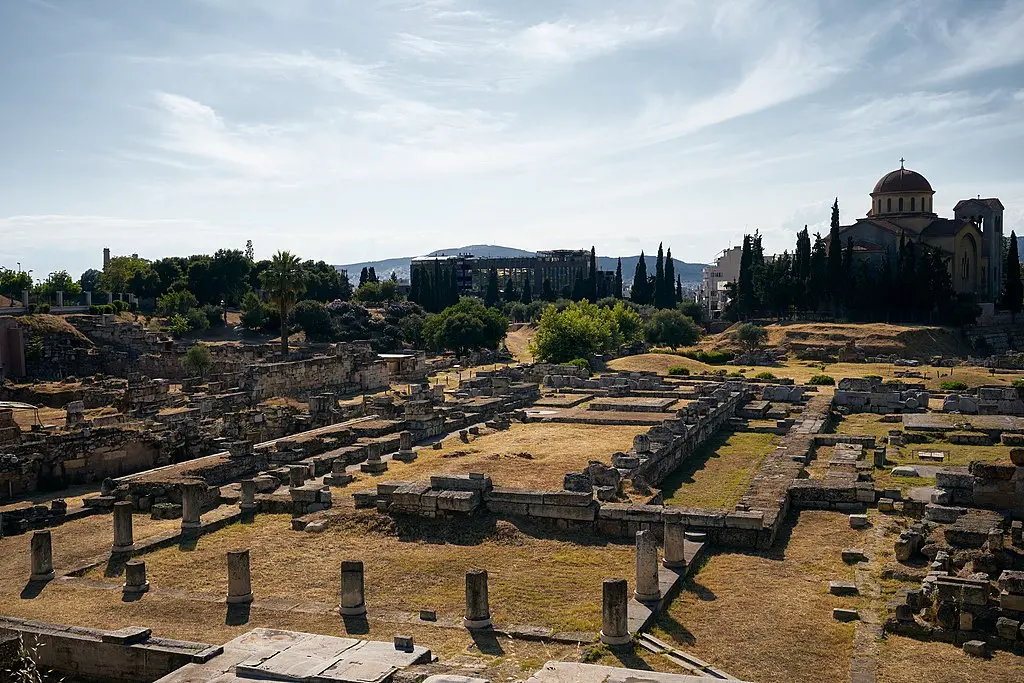
11. Kerameikos
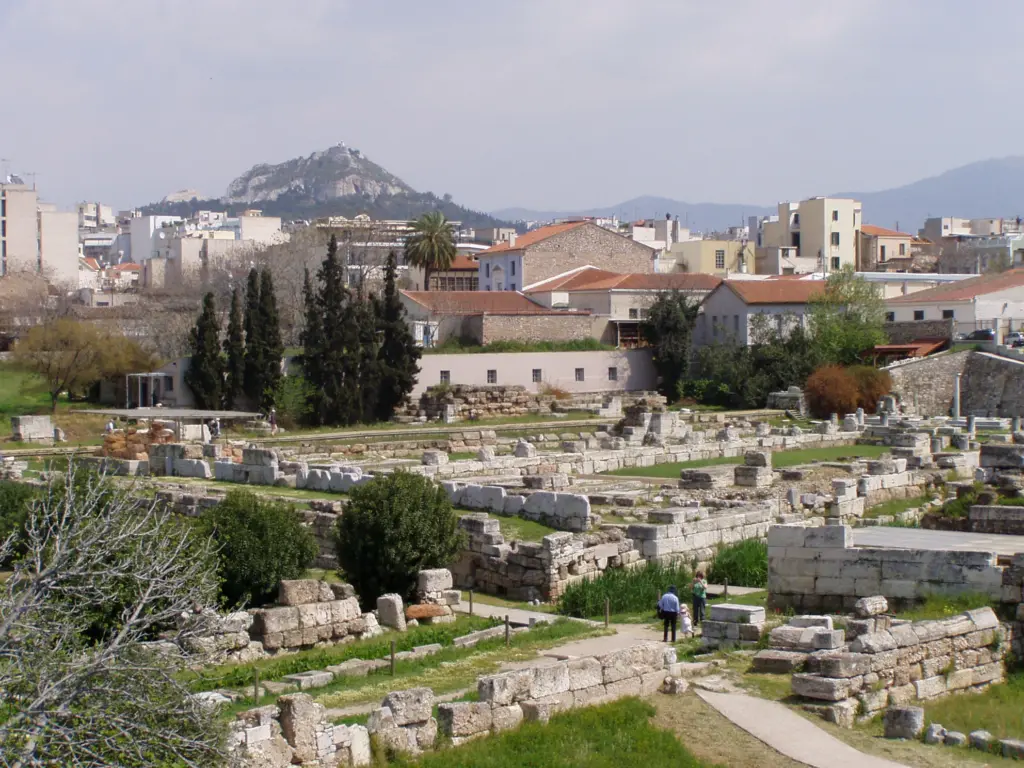
Venturing northwest from the Acropolis, you’ll find yourself in Kerameikos, one of Athens’ most historically rich yet often overlooked sites.
Kerameikos, derived from the Greek word “Keramos” meaning pottery, was once the hub of potters and vase painters, given its proximity to the clay deposits along the River Eridanos. But more than its commercial significance, Kerameikos was the primary cemetery of ancient Athens.
This expansive area has borne witness to countless funeral processions, grave offerings, and remembrance ceremonies, making it a crucial locus for understanding Athenian burial customs, societal norms, and beliefs about the afterlife.
The Sacred Way, a revered path leading to the Eleusinian Mysteries’ sanctuaries, also began its journey from here.
Several notable monuments grace the site. The Themistoclean Wall, built in the 5th century BC as a defensive fortification, cuts across Kerameikos. The Dromos, a broad road flanked by graves, led mourners from the city to the outer burial grounds. The imposing Dipylon Gate, once a significant entrance to the city, also stands within this archaeological site.
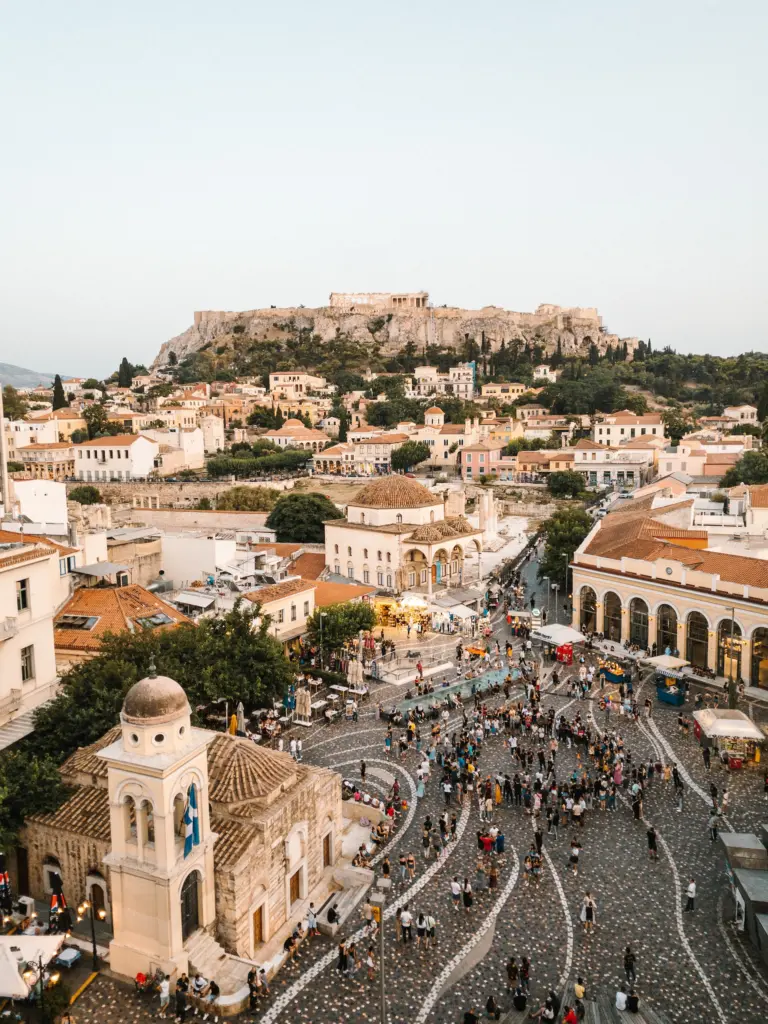
12. Plaka
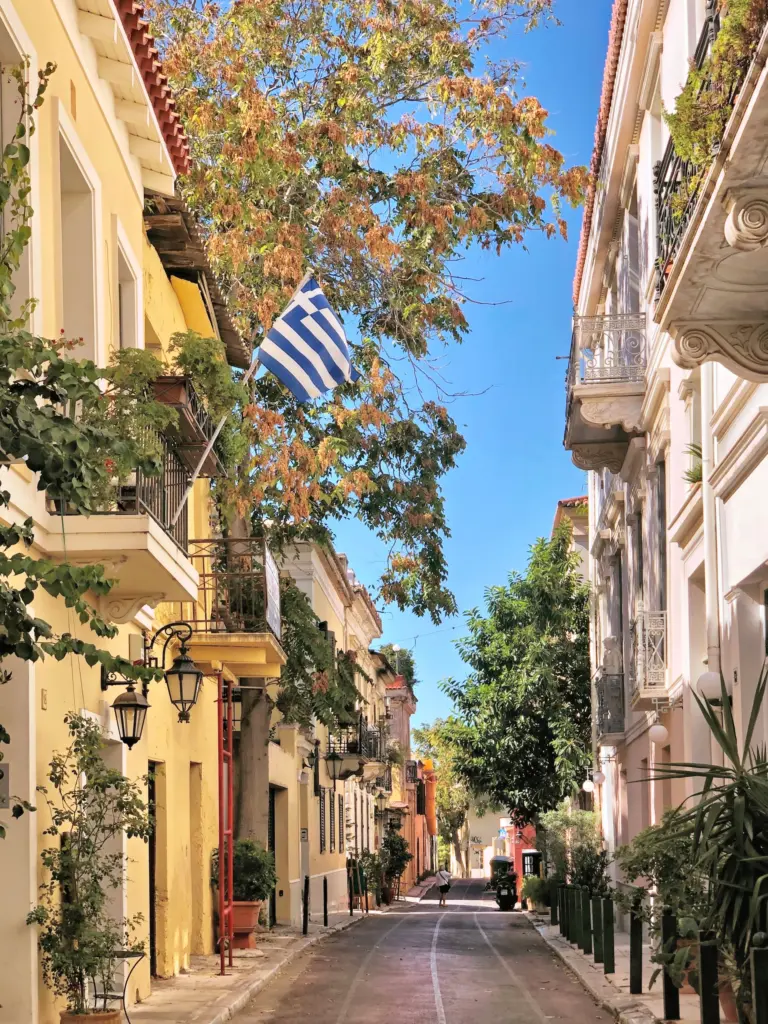
Plaka is often hailed as the “Neighborhood of the Gods,” a fitting epithet for one of Athens’ oldest and most charming districts. With its labyrinthine streets, neoclassical architecture, and an ambiance that oscillates between the ancient and the contemporary, Plaka is a living mosaic of Athens’ multifaceted history.
Established during the period of Ottoman rule, Plaka’s roots can be traced even further back, with its layout overlapping parts of ancient Athens.
Plaka is a visual feast.
The pastel-hued buildings, draped in bougainvillea, with their wooden balconies and intricate ironwork, evoke a sense of awe and nostalgia.
An integral aspect of Plaka’s allure is its vibrant street life. The area teems with quaint cafes, traditional tavernas, and artisanal shops with the enigmatic evil eyes.
Don’t miss the Lysicrates Monument, a circular structure from 334 BC. There’s also the Church of Agios Nikolaos Rangavas, with its iconic red dome,one of Plaka’s oldest Byzantine churches.
13. Panathenaic Stadium
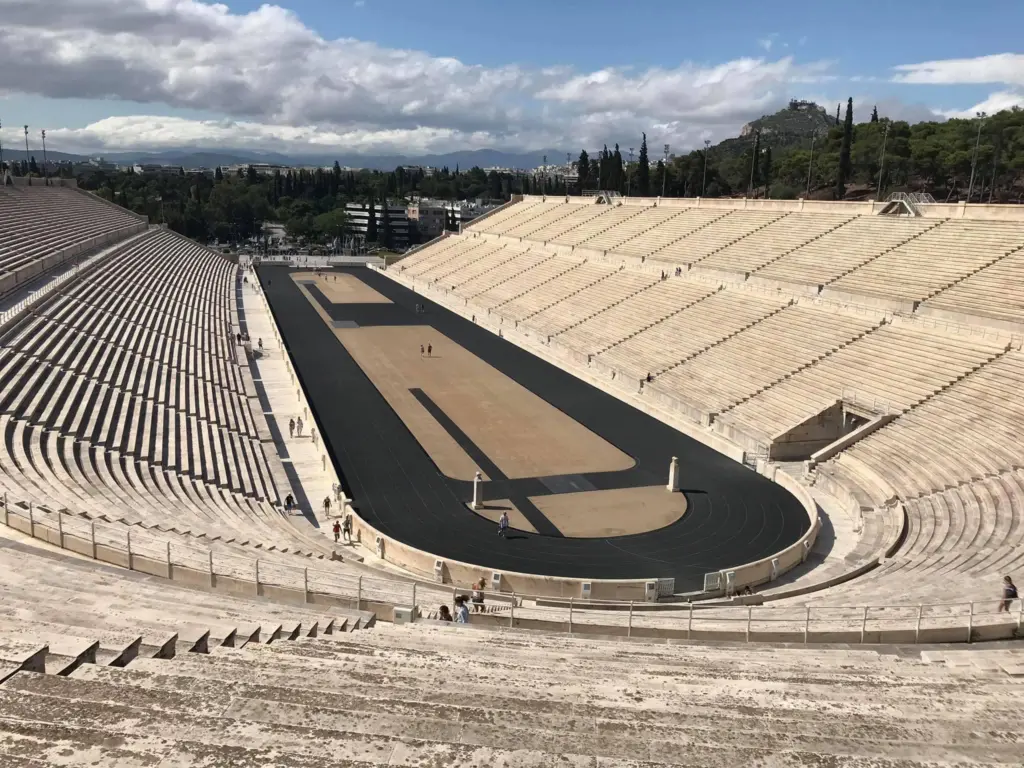
The Panathenaic Stadium captures the ancient origins of the Olympic Games, echoing the ancient motto: “Faster, Higher, Stronger.”
Carved entirely out of white marble, this horseshoe-shaped stadium is a symbol of Athens’ sporting legacy and its pivotal role in reviving the Olympic movement.
The origins of the Panathenaic Stadium date back to the 4th century BC, when it was built for the Panathenaic Games, a religious and athletic festival celebrated every four years in honor of the goddess Athena.
Initially, the stadium had wooden seating, but it underwent a significant marble transformation in 144 AD under the auspices of the aforementioned Herodes Atticus. This renovation expanded its capacity, allowing it to accommodate around 50,000 spectators!
However, with the decline of ancient Greek traditions and the rise of Rome, the stadium fell into disuse and was largely forgotten until the late 19th century. As the call for reviving the Olympic Games gained momentum, the Panathenaic Stadium was identified as the ideal venue to host the first modern Olympics.
So in 1896 Olympics, the Panathenaic Stadium witnessed 13 nations competing in 43 events, rekindling the Olympic flame and re-establishing a global sporting tradition. The stadium’s significance in the modern Olympic movement was further underscored when it hosted the archery events and the marathon finish in the 2004 Athens Olympics.
Additionally, it has been the venue for the handover ceremonies of the Olympic Flame from Greece to the host nations.
14. Theatre of Dionysus
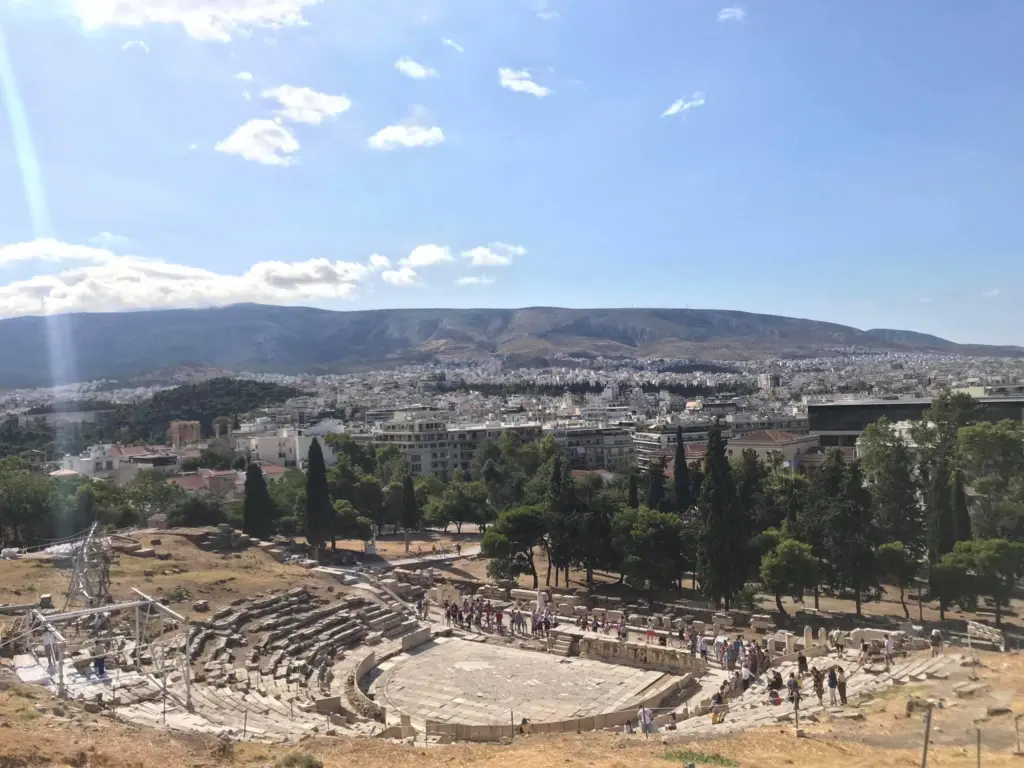
The Theatre of Dionysus is often regarded as the birthplace of European theatre. It’s the other theatre found on the Acropolis.
The theatre owes its name to Dionysus, the Greek god of wine, festivity, and theatre. Initially, in the 6th century BC, the site was used for the Dionysia, a festival in honor of Dionysus where choral songs and dances were performed. As the festival evolved to incorporate more elaborate dramatic performances, there arose a need for a more structured theatrical space.
By the mid-5th century BC, the theatre began to take a more recognizable form with tiered seating capacity that eventually reached around 17,000.
It was here that the Athenian audience first experienced the works of playwrights like Aeschylus, Sophocles, Euripides, and Aristophanes.
15. Hadrian's Arch
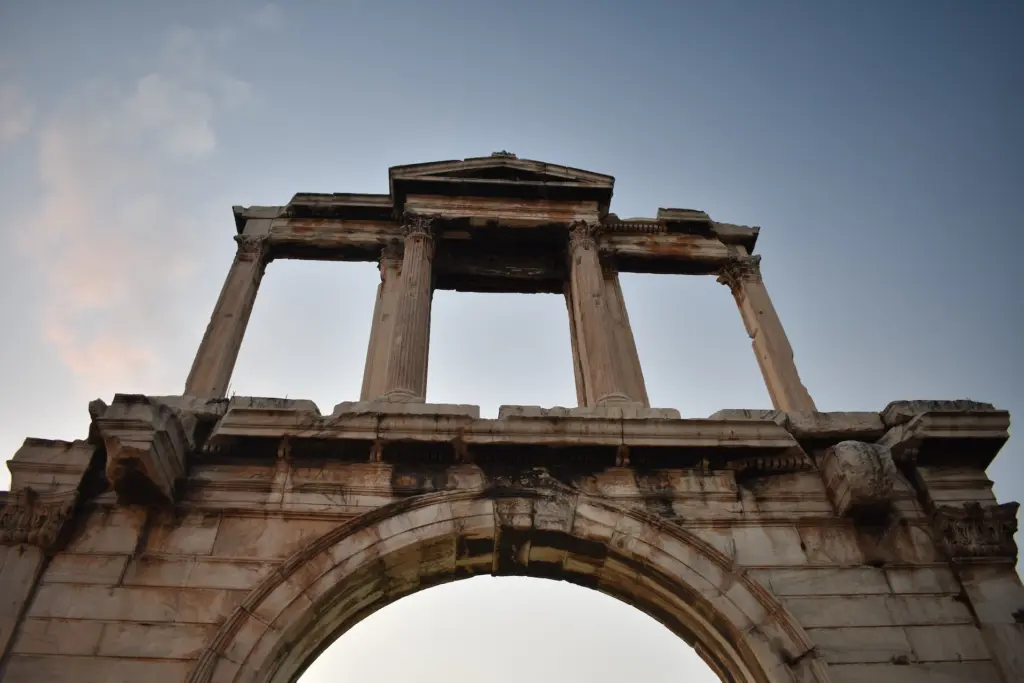
Located near the Temple of Olympian Zeus, Hadrian’s Arch was erected in honor of the Roman Emperor Hadrian, a great benefactor and admirer of Athens.
Constructed in 131 AD, the arch was both a tribute to Hadrian’s generosity towards Athens and a delineation point. It marked the division between the old city center and the new Roman district that Hadrian envisioned and funded.
The arch, made of Pentelic marble, reaches a height of about 18 m (59 ft) and spans approximately 13 m (42 ft) in width. Its design, while primarily Roman in architectural style, it still incorporates Greek elements.
Intriguingly, the arch bears two inscriptions. On its western side, facing the Acropolis, the inscription reads: “This is Athens, the ancient city of Theseus.”
Conversely, the eastern side, facing the Temple of Olympian Zeus and the new city, proclaims: “This is the city of Hadrian, and not of Theseus.” This duality not only showcases Hadrian’s admiration for Athens but also his ambition to be remembered as a second founder of the city.
16. Horologion of Andronikos Cyrrhestes
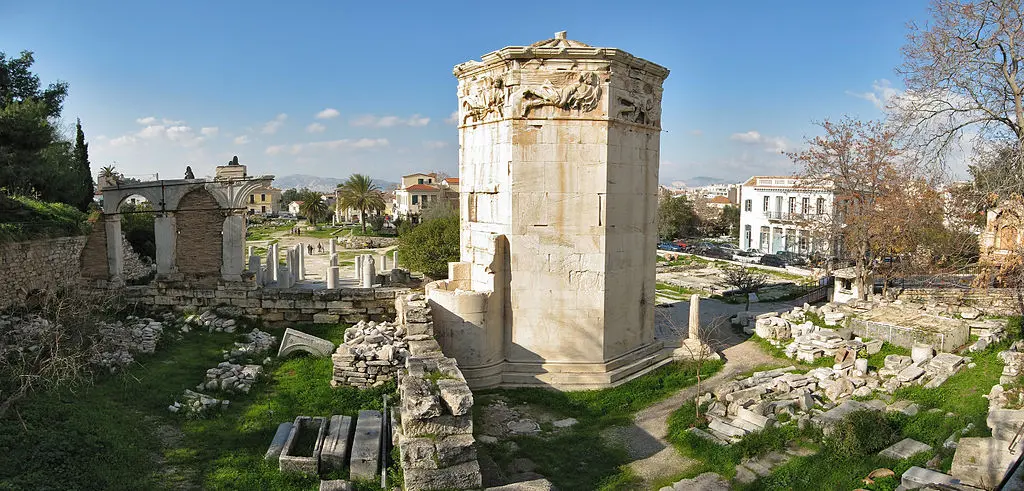
The Horologion of Andronikos Cyrrhestes, more commonly known as the Tower of the Winds, is found in the Roman Agora.
Built in the 2nd century BC by the Macedonian astronomer Andronikos of Cyrrhestes, the Horologion initially functioned as a hydraulic clock, utilizing water to measure time.
But wait, there’s more!
Each of the tower’s eight sides corresponds to a particular wind direction, and it is adorned with a relief of the wind deity associated with that direction. This made the tower an effective compass, providing Athenians with both the time and the prevailing wind direction.
The tower stands at a height of approximately 12 m (39 ft), and its diameter measures around 8 m (26 ft). Above the reliefs of the wind deities, there are traces of a series of lines, which were used as a sundial, offering yet another method to tell time.
Inside the tower, a spiral staircase leads to the top, where there was once a bronze weathervane in the form of the sea god Triton. This weathervane would rotate, pointing with its rod to the current wind direction, further enhancing the tower’s functionality as a weather station.
17. Hadrian's Library
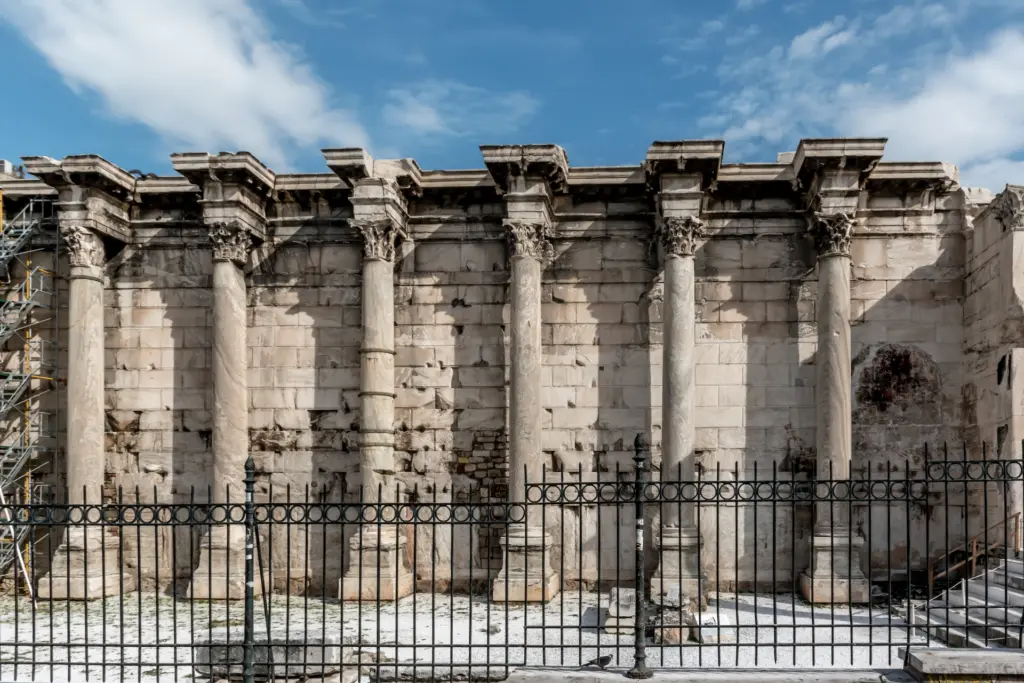
Not far from the Monastiraki Square, lies the remains of Hadrian’s Library.
Commissioned in 132 AD, Hadrian’s Library was not just a repository of scrolls but a comprehensive cultural complex. Spanning an area of approximately 122 m (400 ft) by 82 m (269 ft), the rectangular structure was surrounded by high walls, with an ornate Corinthian-style facade on the eastern side.
Within its confines, the library boasted a central garden, decorative pools, reading rooms, lecture halls, and a colonnaded courtyard.
However, like many structures of antiquity, Hadrian’s Library faced its share of adversities. It suffered damages from the Herulian invasion in 267 AD, leading to subsequent modifications and additions over the centuries.
During the Byzantine era, three Christian churches were erected within its premises, with the most notable being the 12th-century Church of Megali Panagia.
18. Erechtheion
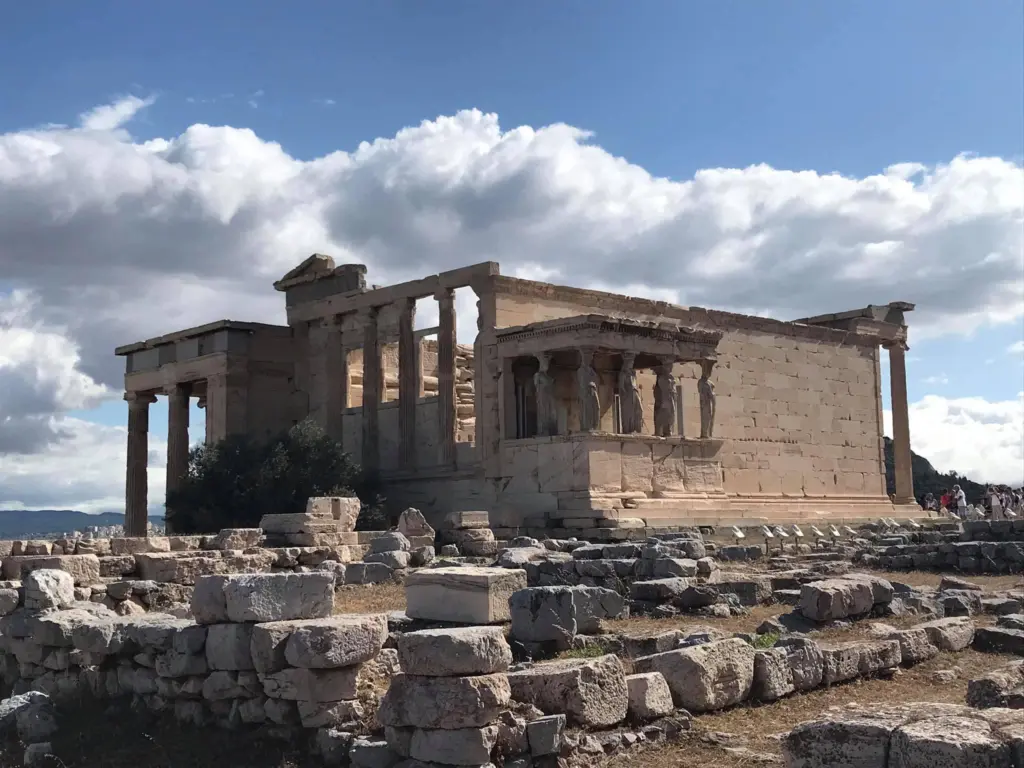
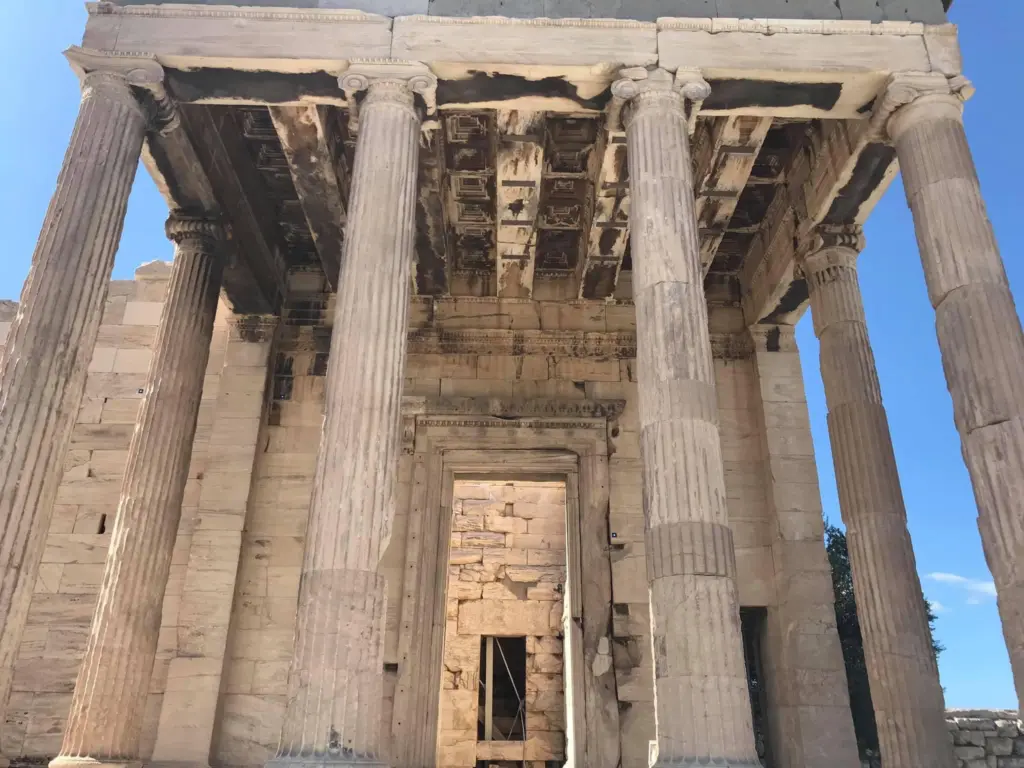
Constructed between 421 and 406 BC during the Peace of Nikias, the Erechtheion was designed by the architect Mnesicles. It was built to replace the older temples destroyed by the Persians and to house several ancient cults and sacred relics.
One of the most striking features of the Erechtheion is the Porch of the Caryatids. Six sculpted female figures, known as Caryatids, serve as architectural supports, taking the place of traditional columns. To preserve them from pollution and potential damage, the original Caryatids have been moved to the Acropolis Museum and replaced by replicas on the temple.
The main section of the Erechtheion was divided into two parts: one dedicated to Athena Polias, the patron deity of Athens, and the other to Poseidon-Erechtheus. This reflects the myth wherein Athena and Poseidon competed for the city’s patronage.
It’s said that Poseidon struck the ground with his trident, creating a saltwater spring, while Athena offered an olive tree, a symbol of peace and prosperity. Athena’s gift was deemed more valuable, and she became the city’s protector.
19. Zappeio Roman Baths
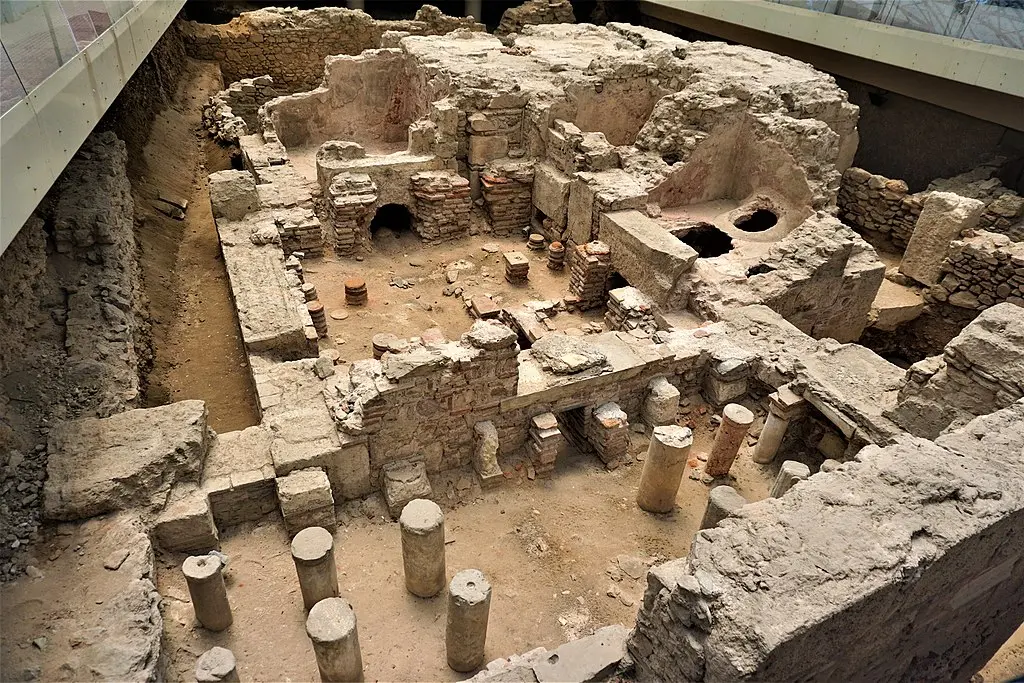
Located near the Zappeion Hall in the National Gardens, the Roman Baths are easily over-looked yet their scale is quite grand. When the Romans expanded and redeveloped the city, they integrated various amenities and among these were the public baths, known as “thermae.”
The Zappeio Roman Baths date back to the 1st century AD. These baths followed the standard Roman design, with rooms progressing from cold to hot. Typically, an individual would move through a series of chambers, starting with the “frigidarium” (cold room), proceeding to the “tepidarium” (warm room), and finally entering the “caldarium” (hot room). These chambers were equipped with underfloor heating, a Roman innovation called “hypocaust”, where hot air circulated beneath raised floors.
Best Tours in Athens
Athens is a great home base to use for excursions beyond, whether it’s for the cliff-perched monasteries of Meteora or the pristine beaches and islands. Here are some of the most highly-rated tours you can join:
- Agistri, Moni, and Aegina Cruise – Discover the islands of Agistri, Moni or Metopi, and Aegina on a full-day cruise onboard a wooden ship from Athens. Enjoy a traditional Greek buffet lunch and unlimited drinks as you explore.
- Delphi Day Trip with Licensed Guided Tour and Pick Up – Travel to the center of Ancient Greece on a full-day, and carbon-neutral, tour from Athens to Delphi. Discover the classical Greek world with a visit to the hilltop ruins, Temple of Apollo, and more.
- Meteora Day Trip by Bus – Join a full-day Meteora tour from Athens with a local guide and roundtrip bus tickets. Learn about the area’s history, go inside 3 monasteries, see all 8 of them, and enjoy an authentic Greek lunch.
Hidden Gems in Athens

20. Monument to the Unknown Soldier
Right in front of the Hellenic Parliament, the Monument to the Unknown Soldier stands as a somber and powerful tribute to all the unnamed and unrecognized Greek soldiers who sacrificed their lives for the nation.
Since its unveiling in 1932, this monument has played a central role in official military commemorative events.
The monument’s design is a blend of classical and contemporary symbolism. The primary feature is a large wall relief, which depicts a dying hoplite – an embodiment of the ancient Greek warrior spirit.
The Monument to the Unknown Soldier is also the official “eternal flame” site, where a perpetual flame burns in memory of the fallen. This flame is guarded round-the-clock by the Evzones, an elite infantry unit of the Greek Army.
The Evzones’ changing of the guard ceremony, with its precise and symbolic choreography, has become an iconic attraction. Their traditional uniform includes a fustanella (kilt), fez (red cap, and tsarouhia (shoes with pom-poms). Feel free to learn more about the fascinating life of the Evzones.
21. Zappeion
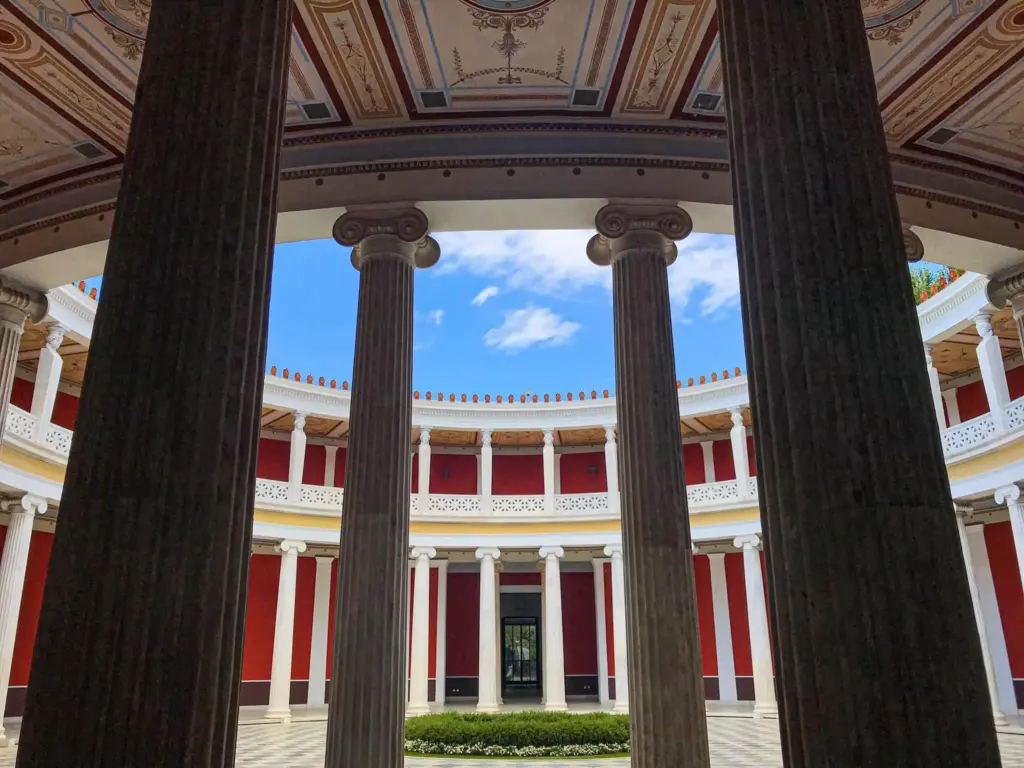
I stumbled across Zappeion as I was exploring the National Gardens and if you’re around the area, it’s worth dropping by to take a look at the symmetrical interior.
The Zappeion was conceived as part of the grand vision to modernize Athens in the late 19th century. The project was generously funded by the wealthy Greek philanthropist Evangelos Zappas.
Designed by the renowned Danish architect Theophil Hansen, the Zappeion was constructed in two phases between 1874 and 1888. The building is formed in a semi-circular shape, surrounding a central atrium.
22. Plato’s Academy Archeological Park
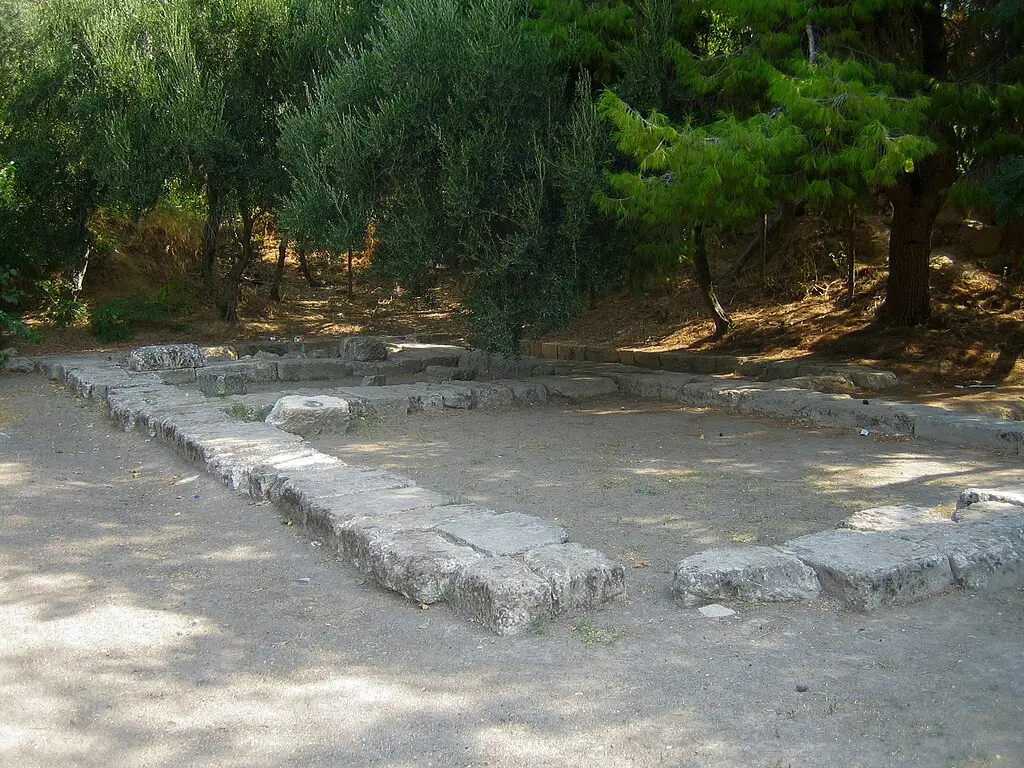
Plato’s Academy, or simply “the Academy,” was an institution founded by the philosopher Plato around 387 BC. The site was dedicated to the hero Academos and was a public space even before Plato’s establishment of his school.
Drawing inspiration from his teacher, Socrates, Plato established this institution to foster philosophical discussion, education, and research. For nearly three centuries, the Academy thrived as a center of intellectual pursuit, making significant contributions to philosophy, mathematics, and the sciences.
Ever heard of the Platonic Solids? Those were Plato’s contributions to the realm of Sacred Geometry.
The word “academy” and its use today actually trace their origins to this ancient institution.
23. Pompeion
The Pompeion was constructed in the late 5th century BC during the time of Pericles, though it underwent subsequent reconstructions, especially after its destruction during the Sullan sack of Athens in 86 BC.
The building’s primary function was to serve as a preparatory space and storage for the objects and paraphernalia used during the Panathenaic procession. This grand festival saw a majestic procession move from the Kerameikos, through the Agora, and up to the Acropolis.
Archaeological excavations have revealed that the Pompeion was a substantial building with a series of rooms organized around a central courtyard.
Adjacent to the Pompeion was a spacious open area, the so-called “State Agora.” This was a gathering point for the citizens participating in the Panathenaic procession. Here, Athenians would initiate the grand march towards the Acropolis.
Where to Stay in Athens
In Athens, you’re spoiled for choice when it comes to where to stay. Being a city that caters to travelers from all walks of life. Here are some of my recommendations on the best places to stay:
Best Hotels in Athens:
- St. George Lycabettus Lifestyle Hotel – offers amenities including a restaurant, private parking, a fitness center, and a bar. The hotel boasts family rooms and a terrace. With a 24-hour front desk, it also offers room service and currency exchange. Each room is equipped with a desk, air conditioning, a safety deposit box, and a TV.
- Athinaidos Quarters by K&K – provides accommodations with complimentary Wifi. These units have parquet flooring and are equipped with a kitchenette, toaster, flat-screen TV with streaming options, and a personal bathroom complete with a shower and bathrobes. Some units also offer air conditioning, terraces or balconies, and seating areas.
- The H Experience Boutique Apartments – offers free Wifi and complimentary private parking. Every apartment is equipped with a kitchen featuring a dishwasher and oven, a satellite flat-screen TV, ironing amenities, a desk, and a seating area with a sofa. Additionally, each unit has a private bathroom, complete with a walk-in shower, hairdryer, and free toiletries. The property also boasts a terrace.
Best Hostels in Athens:
- Athens Backpackers – features a two-tiered “Sunnies” Roof Bar offering panoramic Acropolis views and a lobby bar-cum-co-working space, “The Local,” serving all-day local cuisine. Equipped with 200MBPS high-speed WiFi throughout, the property provides modern POD accommodations that have individual amenities. Emphasizing contactless experiences, their doors can be accessed via smartphones.
- Safestay Athens Monastiraki – a welcoming hostel praised for its knowledgeable staff and stunning rooftop terrace that overlooks the city and the Acropolis. The year-round Rooftop Bar is weatherproof, offering a full view of Athens. The hostel comprises two adjacent buildings, ensuring full facility access including Wi-Fi, a 24-hour reception, and a communal kitchen. Bedding is included in the room price, with towels available for rent in dorms and included in private rooms.
- Mosaikon Glostel – offers air-conditioned rooms with complimentary Wi-Fi. The rooms have a minimalist design, with double rooms having private bathrooms and hostel rooms featuring ensuite bathrooms. All dormitory rooms are equipped with lockers. The hostel has shared amenities like a lounge, kitchen, and washing machine.
How to Get Around Athens
While the city boasts millennia-old landmarks, its transportation system is well-suited for contemporary travelers. Here’s a comprehensive guide to getting around Athens with ease:
-
Metro: Athens’ Metro system is efficient, clean, and punctual. With three lines – M1 (Green), M2 (Red), and M3 (Blue) – it connects major attractions. A standard ticket costs around 1.40 EUR and is valid for 90 minutes.
-
Buses and Trolleys: The city’s extensive bus and trolley network covers areas not serviced by the Metro. Routes are numerous, and services are frequent. Buses also connect Athens to its port, Piraeus, and coastal suburbs. The same ticket used for the Metro can be used for buses and trolleys.
-
Tram: The Athens tram connects the city center to the southern seaside suburbs. It’s a scenic way to reach the beaches of Glyfada or Voula. The tram has three lines – T3, T4, and T5.
-
Taxis: Yellow taxis are abundant in Athens. They’re reasonably priced, especially when shared among several passengers. Ensure the meter is on when starting a ride. Alternatively, ride-sharing services offer another option for convenient travel.
-
Car Rentals: While renting a car provides flexibility, it’s not recommended for central Athens due to heavy traffic, narrow streets, and limited parking. However, if you’re venturing beyond the city to explore Delphi or Meteora for instance, a rental car is the best way to go.
-
Hop-On Hop-Off Buses: These double-decker buses cater specifically to tourists, offering commentary in multiple languages. They cover major attractions and allow unlimited boarding and alighting.
How to Stay Safe in Athens
In popular tourist destinations like the Acropolis, Plaka, and Monastiraki, stay vigilant as these crowded places are hotspots for pickpockets. Keep your belongings close, and be aware of your surroundings.
While the city has a lively nightlife, avoid poorly lit streets and unfamiliar neighborhoods late at night. Stick to main roads and well-trafficked areas, and when possible, travel with a friend.
When choosing accommodations, whether a hotel, hostel, or vacation rental, make security a priority. Lock doors and windows when you step out or retire for the night, and always use safes for valuables. Unfortunately, I had friends whose place were broken into and robbed which is really scary!
No matter how well-prepared you are, the unexpected can and does happen. I always recommend to get travel insurance. SafetyWing has 24/7 global support, direct hospital billing, and efficient claims process ensure that during challenging times, you’re not alone.
Best Time to Visit Athens
Determining the best time to visit Athens depends on your preferences for weather, crowd sizes, and cultural events. Here’s a breakdown of what to expect throughout the year:
- Spring (March to May): Mild temperatures and blooming flowers make spring a delightful time to visit Athens. Daily temperatures gradually rise from around 12°C (54°F) in March to about 24°C (75°F) by May. Early spring sees fewer tourists, making it an excellent time for those who prefer a quieter experience. However, by May, as the weather warms, tourist traffic begins to pick up.
- Summer (June to August): Summers in Athens are hot and dry. Temperatures frequently exceed 33°C (91°F), and heatwaves with temperatures above 38°C (100°F) are not uncommon. This is the peak tourist season, so expect significant crowds, especially at major attractions like the Acropolis.
- Autumn (September to November): Fall sees a drop in temperatures, making it more comfortable for exploring. September starts warm, around 29°C (84°F), cooling down to around 18°C (64°F) by November. Tourist numbers begin to decrease in the fall, offering a more relaxed atmosphere.
- Winter (December to February): Winters in Athens are mild compared to many European cities. Temperatures average between 8°C (46°F) and 15°C (59°F). Rainfall increases, and while snow is rare, it’s not unheard of. This is the low tourist season, so if you prefer fewer crowds and a more authentic city vibe, winter might be ideal.
Plan Your Trip to Athens | Best Travel Resources
Book Your Accommodations
- Booking.com – the world’s leading online booking platform for accomodations around the world, they have an extensive amount of available listings with zero booking fees and best price guarantees.
- Hostelworld – a backpacker’s best friend, Hostelworld has the largest collection of hostels and guesthouses for affordable prices.
Don’t Forget Insurance
- SafetyWing – from Nomad Insurance, an insurance by nomads for nomads. They understand our lifestyle well and have really comprehensive and flexible plans that cater to any traveler.
Find Cheap Flights
- Kiwi.com – my go-to for booking and finding the cheapest flights and it’s helped me save tons of money. They do virtual interlining which is connecting flights from airlines that do not codeshare, so you can find routes that you wouldn’t be able to find normally.
Join Tours & Activities
- GetYourGuide – is one of the best places to find unique tours and activities. I found that it’s an excellent way to meet fellow travelers and create fond memories. They are not only limited to tours as they also offer niche services such as skip-the-line tickets or private transfers.
Catch a Ride
- Rentalcars.com – nothing beats the freedom of the road, Rentalcars.com is the world’s largest online car rental service. They operate across 160 countries so they’re the perfect partner to work with if you find yourself wanting a ride.