Lalitpur, often referred to as Patan, lies just a stone’s throw away from Kathmandu but offers a distinct atmosphere that sets it apart. This city, recognized as a UNESCO World Heritage site, is organized around courtyards, known as “bahals,” which serve as communal spaces for religious and social activities.
These courtyards are surrounded by beautifully preserved buildings, many of which date back to the medieval period. The intricate details of the architecture, from the finely carved windows to the ornate doorways, highlight the exceptional skill of Newar artisans.
Here you’ll find a multitude of temples that are quite unique in their own right, as the dynasties are different. For those seeking a deeper understanding of Nepalese culture, Lalitpur provides a very enriching experience and is a must-visit!
Table of Contents
Toggle
History of Lalitpur
Lalitpur is one of the oldest cities in Nepal, with a history that dates back over two millennia. It is believed to have been established in the 3rd century BC by the Kirat dynasty, which ruled the Kathmandu Valley before the rise of the Licchavi dynasty.
The city’s golden age came during the Malla period (12th to 18th centuries), when Lalitpur was one of the three main kingdoms in the Kathmandu Valley, alongside Kathmandu and Bhaktapur. The Malla kings were responsible for much of the city’s iconic architecture.
Under the rule of King Siddhi Narsingh Malla (1620-1661) and his successors, Lalitpur saw the construction of many of its most famous buildings, including the Krishna Mandir and the Golden Temple. These kings were also instrumental in organizing the city’s unique layout, with its numerous bahals (courtyards) and chowks (public squares) that are still a hallmark of Lalitpur today.
Top Things to Do in Lalitpur
1. Patan Durbar Square
Patan Durbar Square is a gem in the heart of Lalitpur, radiating historical charm.
At the center of this vibrant square is the Patan Royal Palace, which dates back to the 14th century. The palace complex, expanded and beautified during the Malla period, showcases intricate wood carvings and stunning stone sculptures that tell stories of gods, goddesses, and legendary battles. Wandering through the palace’s courtyards, you can’t help but feel the weight of history and the artistry that has stood the test of time.
The main courtyard, Mul Chowk, is particularly impressive, offering a glimpse into the ceremonial life of the Malla kings.
2. Hiranya Varna Mahavihar
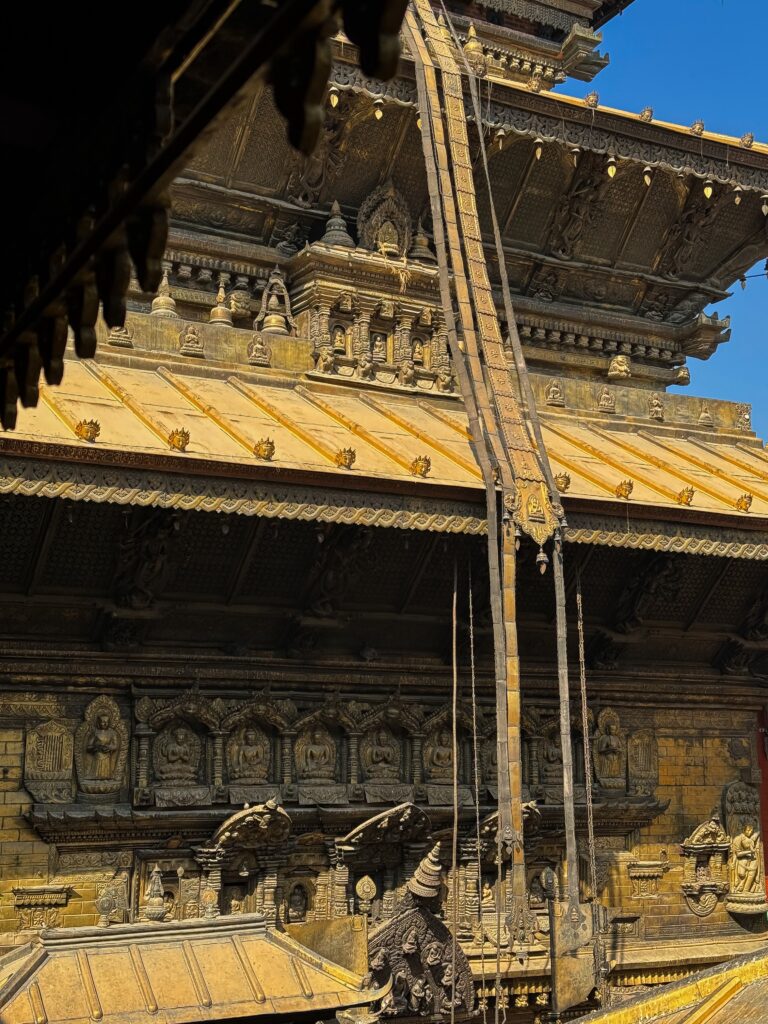
Hiranya Varna Mahavihar, often referred to as the Golden Temple, is a hidden treasure! This exquisite Buddhist monastery is tucked away in a narrow alley near Patan Durbar Square, the Golden Temple is a spiritually uplifting sanctuary that has been drawing visitors for centuries.
The temple’s history dates back to the 12th century, making it one of the oldest and most revered Buddhist sites in the Kathmandu Valley. As you step inside, you’re immediately struck by the temple’s stunning golden facade, which gives it its name.
Central to the temple’s charm is the three-story pagoda structure, which houses a beautiful statue of Shakyamuni Buddha. The upper floors, where you can find statues of Amitabha Buddha, are accessible through narrow staircases, and each level offers a different perspective of the temple’s ornate interior.
3. Oku Bahal
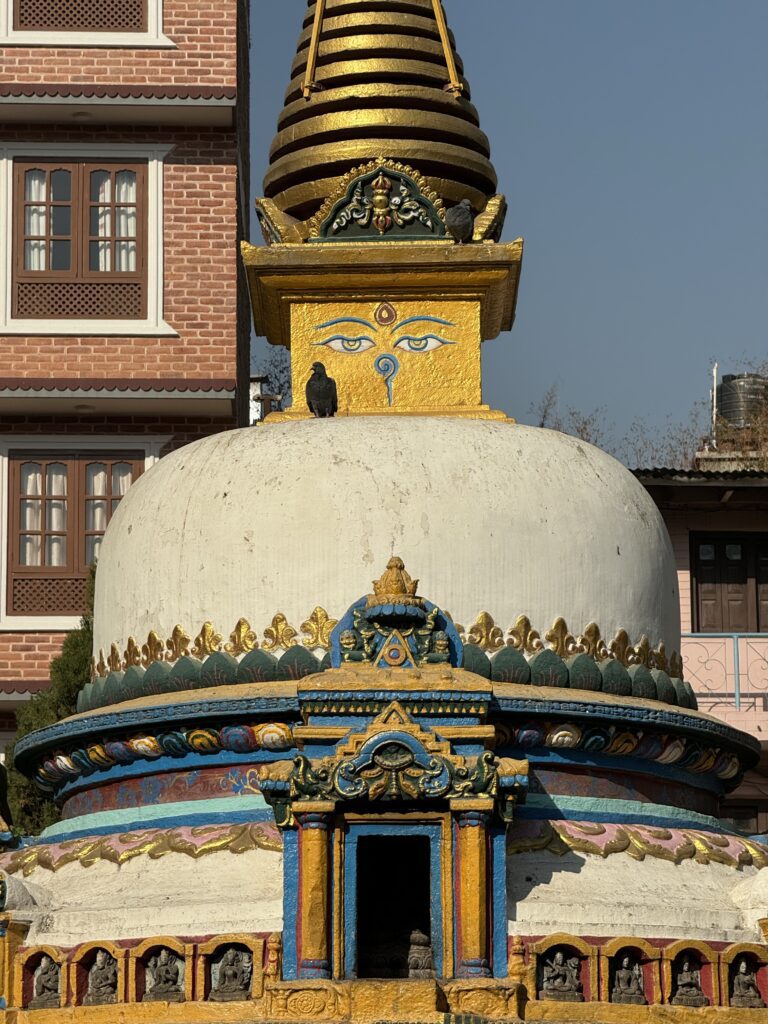
Dating back to the 10th century, Oku Bahal has been a vital center for Buddhist learning for centuries. The monastery is characterized by its traditional courtyard layout, surrounded by residential buildings.
The main shrine within Oku Bahal houses a revered statue of the Buddha, alongside various other deities important in Buddhist practice.
4. Mahabouddha Temple
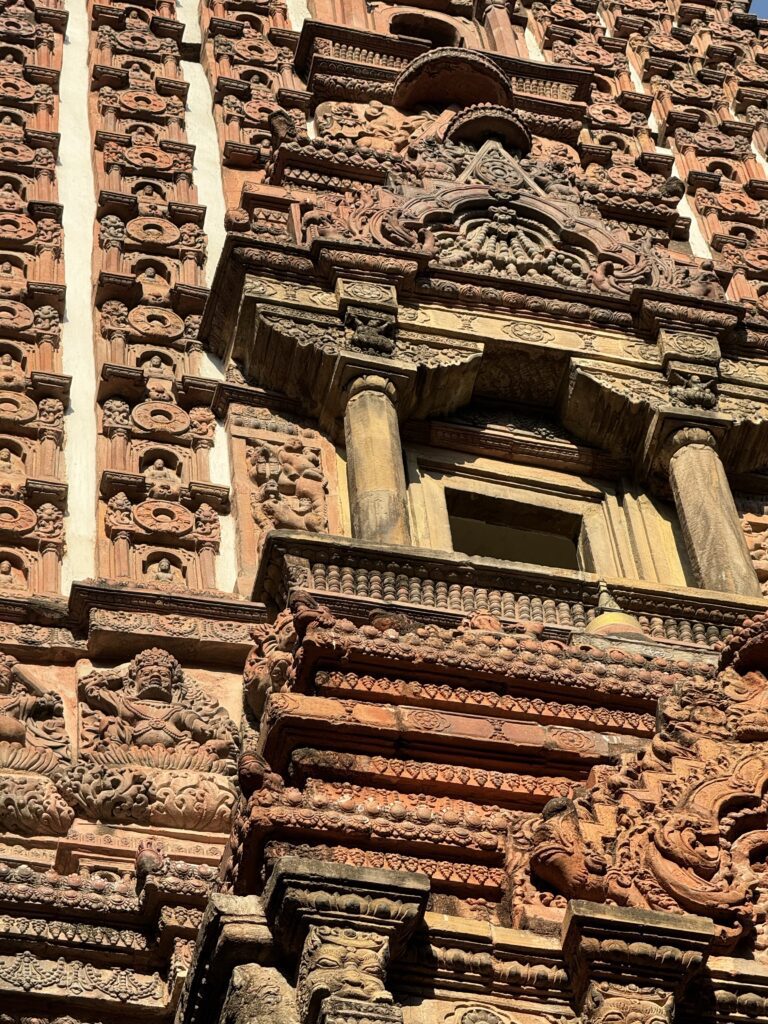
The Mahabouddha Temple, also known as the “Temple of a Thousand Buddhas,” was constructed in the late 16th century by priest Abhaya Raj. Mahabouddha is inspired by the famous Mahabodhi Temple in Bodh Gaya, India, where Siddhartha Gautama attained enlightenment.
The temple is renowned for its intricate terracotta tiles, each meticulously engraved with a tiny image of the Buddha. These thousands of Buddha images lend the temple its name and create a mesmerizing visual effect.
The temple’s design departs from the traditional pagoda style common in the region, instead showcasing a shikhara (tower) architectural style. This uniqueness makes Mahabouddha a standout structure in the Kathmandu Valley. The five-tiered shikhara rises gracefully above the surrounding buildings, its terracotta facade glowing warmly in the sunlight.
5. Krishna Temple
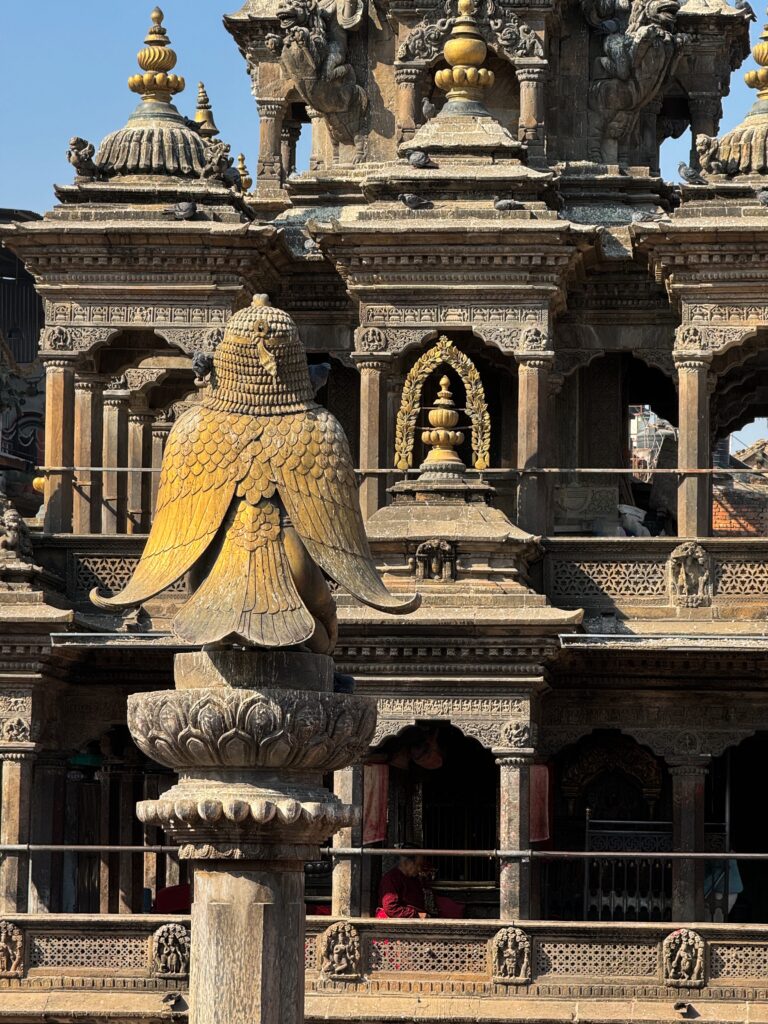
The Krishna Temple is a masterpiece of Shikhara-style architecture and is one of the most important and visually striking structures in the area.
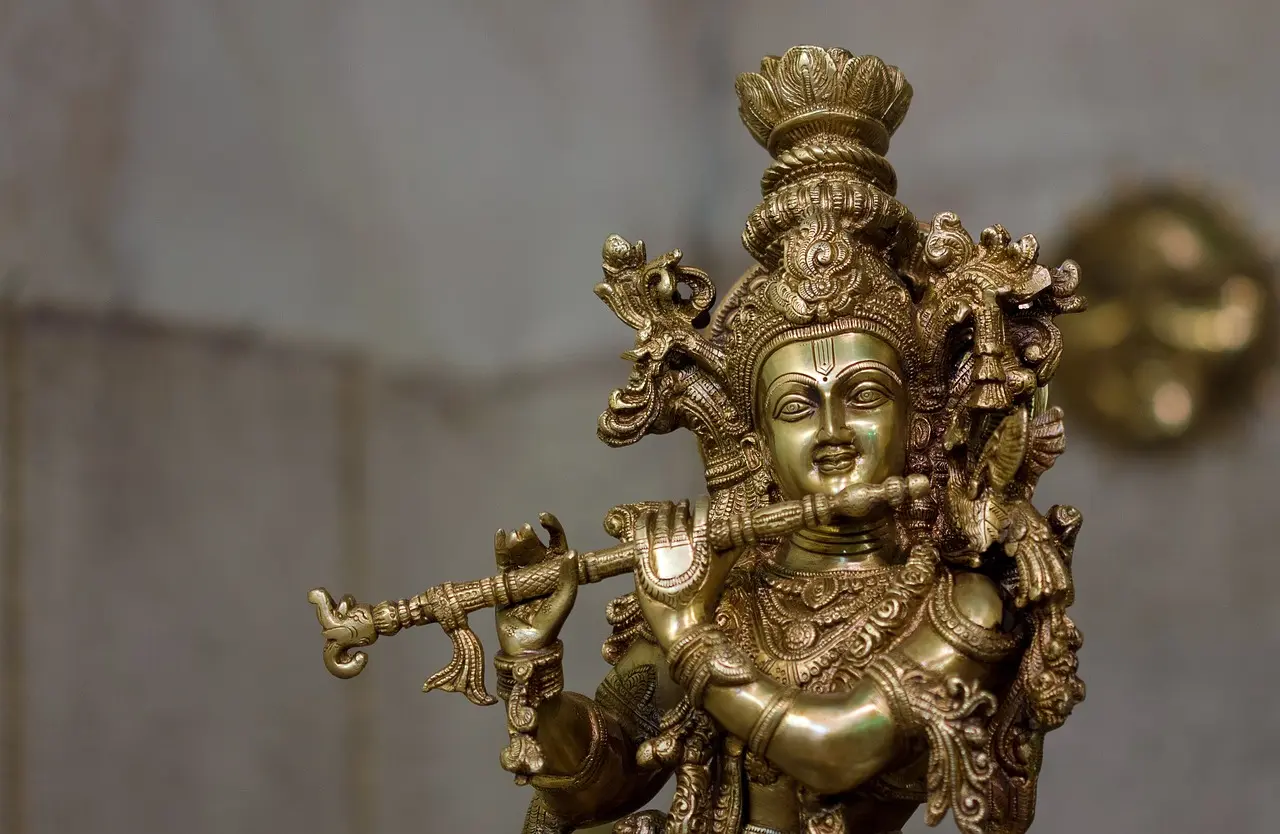
Built in 1637 by King Siddhi Narsingh Malla, the Krishna Temple stands out with its stone construction and intricate carvings. The temple is dedicated to Lord Krishna, one of the most revered deities in Hinduism, known for his role in the Mahabharata and his teachings in the Bhagavad Gita. The temple also honors Radha and Rukmini, Krishna’s consorts, whose statues are enshrined alongside him.
The temple features a three-tiered structure with 21 golden pinnacles that shine brilliantly in the sunlight. Each tier of the temple is adorned with detailed carvings depicting scenes from the Mahabharata and Ramayana. The ground floor of the temple is made of stone, while the upper floors are constructed from brick and wood, creating a harmonious blend of materials.
6. Rudra Varna mahavihar
Rudra Varna Mahavihar is renowned for its beautiful architecture and the array of artifacts that it houses. The monastery’s name, which translates to “the Great Monastery of Rudra Varna,” reflects its association with the fierce deity Rudra, a form of Lord Shiva.
One of the monastery’s most striking features is its elaborate courtyard, which is adorned with intricately carved wooden and stone statues of various deities, bodhisattvas, and mythical creatures.

7. Shree Bangalamukhi Temple
Shree Bangalamukhi Temple is dedicated to the goddess Bangalamukhi, a powerful deity in the Hindu pantheon known for her ability to control and subdue enemies.
It’s a bit off the beaten track but I found the central pagoda to be quite striking. It’s also the first time I ever saw a shrine dedicated to Kunti, one of the Panchakanya, and the mother of the Pandavas from the Mahabharata.
I particularly like the scent of the incense wafting through the air here though I never was able to find out which brand it was, even after spending time asking people around.
8. Ashok Stupas
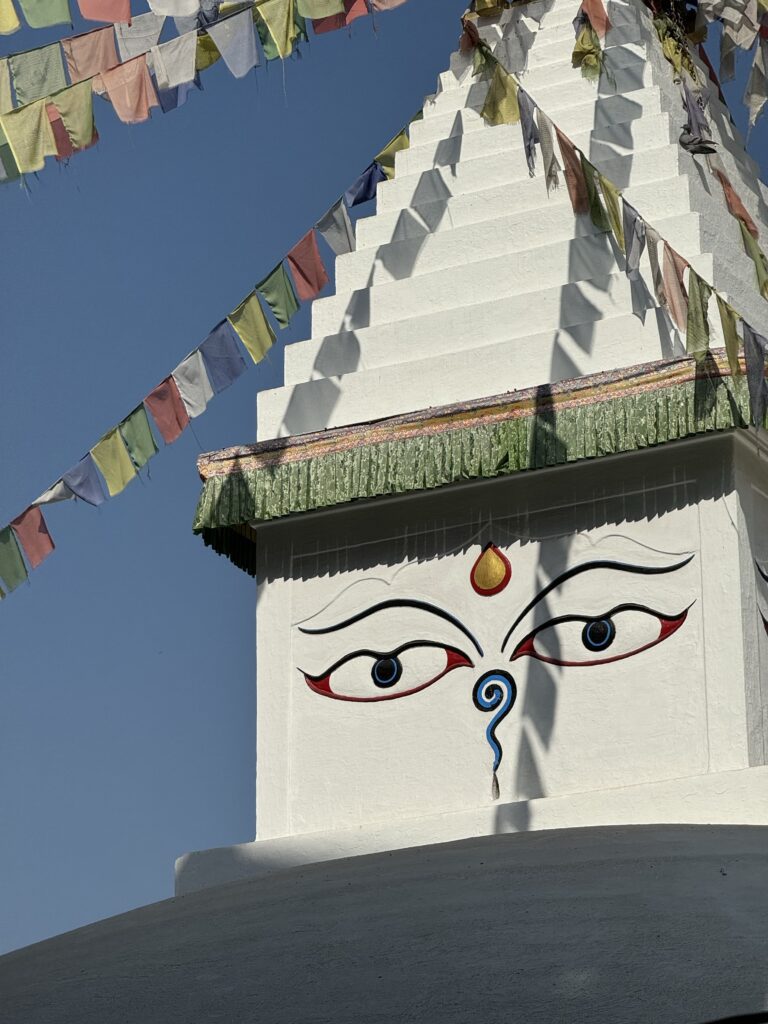
The Ashok Stupas are a group of four ancient stupas that are believed to have been built by Emperor Ashoka, the great Mauryan emperor who embraced Buddhism after the Kalinga War in the 3rd century BCE. The stupas are strategically placed at the four cardinal points around the historical core of Patan, symbolizing protection.
Each of the four stupas has its own unique characteristics but collectively they share common features typical of early Buddhist architecture. They are simple, mound-like structures made of bricks and earth, each with a central relic chamber.
The southern stupa, known locally as Lagankhel Stupa, is particularly notable for its relatively large size and prominent position near the busy area of Lagankhel. The eastern stupa, situated near the locality of Pulchowk, offers a serene environment despite its proximity to a bustling urban area. The northern stupa is located in the area of Ibahi Tole, and the western stupa is found near the region known as Kumbeshwar.
9. Bhaktapur
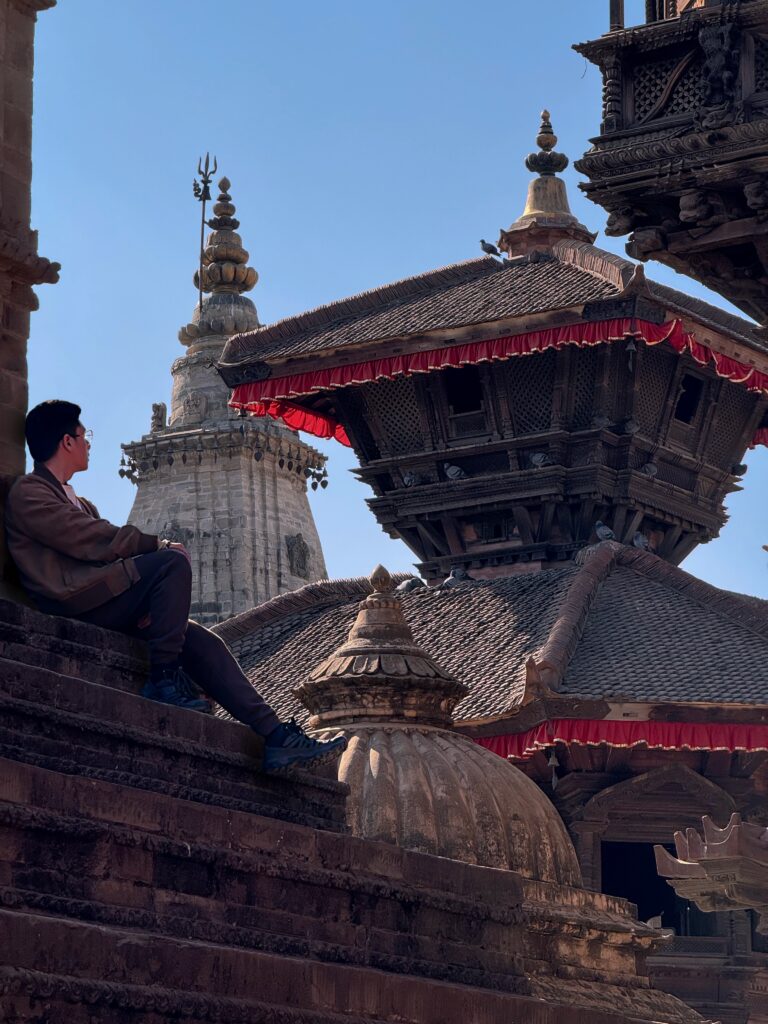
Bhaktapur is often referred to as the “City of Devotees” and is renowned for its well-preserved medieval architecture and traditional Newar culture. This ancient city, one of the three key historical cities in the Kathmandu Valley, offers an immersive experience that transports you back in time.
The easiest way to reach Bhaktapur from Lalitpur is by taxi, which takes approximately 30 minutes to an hour, depending on traffic. Public buses and microbuses are also available, offering a more budget-friendly option, though they can take longer to reach the destination and we found it harder to navigate as there’s not much English support.
Wandering through the narrow, cobbled streets of Bhaktapur, you’ll encounter countless architectural gems. For example, the Nyatapola Temple, a five-story pagoda, is the tallest temple in Nepal. (Though the two-story pagoda in Pokhara is also pretty cool!) Plus, many more!
10. Kathmandu
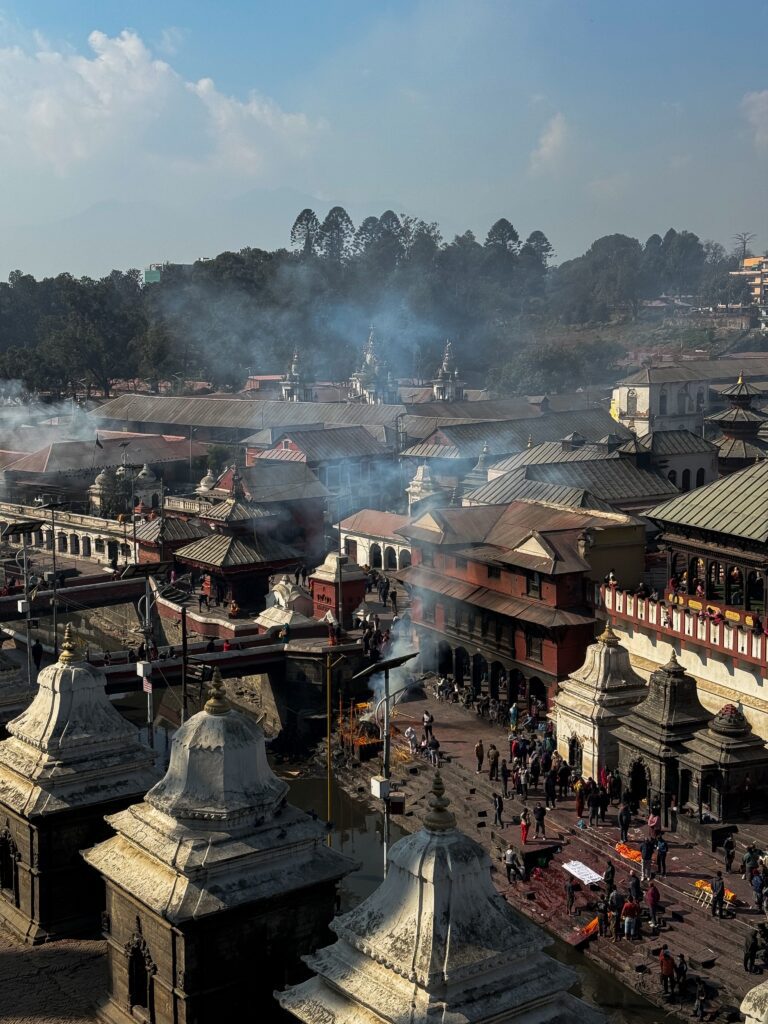
The capital city of Nepal, surrounded by the majestic Himalayas, Kathmandu is the gateway to Nepal.
The history of Kathmandu dates back over 2,000 years, making it one of the oldest continuously inhabited places in the world. The city’s origins are steeped in mythology, with legends suggesting that the valley was once a vast lake that was drained by the Bodhisattva Manjushri to make the land habitable.
Kathmandu is also known for its religious diversity. The Swayambhunath Stupa, often referred to as the Monkey Temple, offers panoramic views of the city and is a syncretic site for both Buddhist and Hindu worshippers. Similarly, the Boudhanath Stupa, one of the largest stupas in the world, is a focal point for Tibetan Buddhism in Nepal.
Where to Stay near Lalitpur
If you’re planning on finding a place to stay near Lalitpur, the best choice would be in Kathmandu. Lalitpur and Bhaktapur are easily doable via a day trip so it makes sense to make Kathmandu your base as it makes it easier for you to move around to your next destination in Nepal.
Here are some of the best places to stay in Kathmandu:
Best Hotels near Lalitpur:
- Swarga Heritage Hotel – provides free WiFi, a restaurant, free private parking, a bar, a terrace, and a shared lounge, with family rooms available. Each room includes air conditioning, a flat-screen TV with cable, an electric kettle, a private bathroom with a shower, slippers, a desk, and a closet. Daily breakfast options include à la carte, continental, or American.
- Kailash Boutique Hotel – features concierge services, non-smoking rooms, a restaurant, free WiFi, and a terrace. Amenities include free shuttle service, a 24-hour front desk, room service, a shared lounge, and currency exchange. Rooms are air-conditioned and come with a desk, electric kettle, minibar, safety deposit box, flat-screen TV, and private bathroom. Breakfast options include buffet, à la carte, or continental.
- Everest Boutique Hotel – features a fitness center, private parking, a terrace, and a bar. Amenities include a restaurant, a 24-hour front desk, a shared kitchen, free WiFi, room service, concierge service, and currency exchange. You can enjoy a buffet, continental, or Full English/Irish breakfast each morning.
Best Hostels near Lalitpur:
- Elbrus Home – a well-known hostel that has been around for a long time. This is where we stayed and all I can say is it feels like home. The rooms are unassuming yet it was enough, with a private bathroom and working hot water as well. I really enjoyed the laidback vibes of the mornings. Breakfast is always good with some fruits, grains, and tea. I particularly liked the portraits of Hindu and Buddhist deities around the halls and rooms. The garden is another nice place to relax and the staff are exceptionally friendly and accomodating.
- Flock Hostel Kathmandu – offers air-conditioned dorms with privacy curtains, luxury private rooms, a communal lounge, a library, a workspace, and a travel desk. Enjoy modern amenities like super-fast Wi-Fi, 24-hour security, smart RFID room access, luggage storage lockers, and a rooftop cocktail bar. Flock Hostel also has an excellent travel desk through its in-house agency to assist with treks, hikes, day tours, and adventure sports.
- WanderThirst Hostels – provides a warm, shared environment for travelers from around the world, offering clean and spacious rooms categorized into dorm rooms, private rooms, and female dorm rooms, all with comfortable beds and bathrooms with hot and cold water. Each room is uniquely themed to inspire your wanderlust spirit even while relaxing.

How to Get Around Lalitpur
Honestly, Lalitpur is a pretty compact city, and many of its key attractions, such as Patan Durbar Square and plenty of the sights listed on here, are within walking distance of each other. It’s what we did and we had no problems with it at all.
Walking is often the best way to explore the city’s narrow streets, hidden courtyards, and vibrant local markets. After Lalitpur, that’s when we booked a taxi to Bhaktapur.

Best Time to Visit Lalitpur
The best time to visit Lalitpur is during the spring (March to May) and autumn (September to November) seasons. These periods offer the most comfortable weather for exploring the city’s cultural and historical sites.
In spring, daytime temperatures range from 16°C to 25°C (61°F to 77°F). The weather is generally clear, with blooming flowers enhancing the city’s beauty. Autumn, with temperatures between 15°C and 24°C (59°F and 75°F), provides clear skies and dry weather, making it ideal for sightseeing and photography. The post-monsoon air is clean, and the visibility is excellent, allowing for stunning views of the surrounding landscapes.

How to Get to Lalitpur
Traveling to Lalitpur is relatively easy given its close proximity to Kathmandu. Here are several options for reaching Lalitpur from various points:
- Taxi: The quickest and most convenient way to get to Lalitpur from Kathmandu is by taxi. The journey typically takes around 20-30 minutes, depending on traffic. Taxis are readily available throughout Kathmandu, and you can either hail one on the street or book through a ride-hailing app like Pathao or Tootle.
- Microbus: Several public buses and microbuses run from various parts of Kathmandu to Lalitpur. The buses are an economical option but can be crowded and confusing for first-timers. Key routes include those starting from Ratnapark (where we got on ours) and other central locations in Kathmandu. What happened was that we really didn’t know if it was going to the Durbar Square or not and when we noticed it was going further and further, we just asked it to stop and walked the rest of the way back. Which still wasn’t that bad!
Plan Your Trip to Nepal | Best Travel Resources
Book Your Accommodations
- Booking.com – the world’s leading online booking platform for accomodations around the world, they have an extensive amount of available listings with zero booking fees and best price guarantees.
- Hostelworld – a backpacker’s best friend, Hostelworld has the largest collection of hostels and guesthouses for affordable prices.
Don’t Forget Insurance
- SafetyWing – from Nomad Insurance, an insurance by nomads for nomads. They understand our lifestyle well and have really comprehensive and flexible plans that cater to any traveler.
Find Cheap Flights
- Kiwi.com – my go-to for booking and finding the cheapest flights and it’s helped me save tons of money. They do virtual interlining which is connecting flights from airlines that do not codeshare, so you can find routes that you wouldn’t be able to find normally.
Join Tours & Activities
- GetYourGuide – is one of the best places to find unique tours and activities. I found that it’s an excellent way to meet fellow travelers and create fond memories. They are not only limited to tours as they also offer niche services such as skip-the-line tickets or private transfers.
Catch a Ride
- Rentalcars.com – nothing beats the freedom of the road, Rentalcars.com is the world’s largest online car rental service. They operate across 160 countries so they’re the perfect partner to work with if you find yourself wanting a ride.